

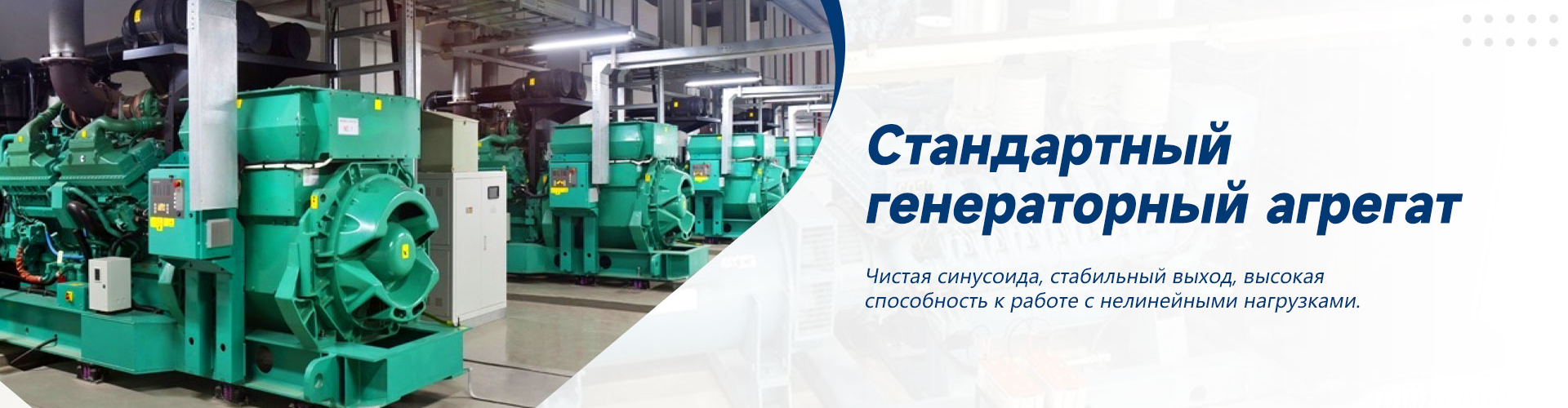
Chinese 400 kW generators: who is the main buyer?
2026-01-03
I often hear this question at exhibitions or in correspondence with new clients. Many people immediately think about large industrial facilities or mines - they say, who else needs such “workhorses”? In reality, the picture is more complicated and, to be honest, a little unexpected. Over the past seven or eight years, the market has been greatly reformatted, and those who purchased tons in the 2010s may not be in the top today. I’ll try to sort it out based on what I saw myself and what we had to go through with our supplies.
Waiting vs. Reality: where they look and where they find
When I first started working closely with Chinese power plants, I was sure that the main driver was the mining sector. Kazakhstan, Siberia, remote deposits. There really are a lot of us there400 kW generators, but this is no longer a growing segment, but rather a supporting segment. Prices for raw materials fluctuate, projects are frozen, and purchases are not used to expand, but to replace the outdated fleet. There are fewer new giant contracts.
But here is an unexpected leader that has grown before my eyes - the sector of medium-sized commercial construction and infrastructure. We are not talking about mega-constructions in Moscow, but about regional projects: logistics hubs, warehouse complexes, processing plants in regional centers. They just need reliable power in the region of 400 kW to supply a construction site or as a reserve for an already operating facility. The key word here is “reliable”. Not the cheapest, but one that won’t let you down in cold weather and during voltage surges in the local network.
This is often where the first stumbling block arises. Many contractors, trying to save money, bought frankly weak installations from untested assemblers. I remember a story near Novosibirsk: three generators were delivered at an attractive price, but at the very first -25°C, problems began with starting and frequency stability. As a result, the project stopped and the fines exceeded the savings. After this, the client came to us, at Uke Electric, with a clear request: “You need something that just works?”. And this is very significant.
Buyer portrait: not a company, but a task
Say “the main buyer is a construction company?” - means to say nothing. It is more important to understand what problem it solves. I would highlight three types.
The first is a “continuity provider”. These are the owners of data centers, refrigeration terminals, and hospitals. For them, a generator is an insurance policy. They rarely skimp on hardware, but they hold lengthy tenders, require certificates, and conduct load tests. Predictability and service are valued here. Our role often comes down to not just selling the installation, but designing the ATS connection nodes and providing an annual service agreement.
The second type is the “energy supply founder”. These are precisely those construction sites or temporary production facilities in places where there is no normal network. Their main pain is logistics and adaptation of equipment to harsh conditions. For example, for a project in Yakutia, it was necessary to modify the standard Chinese station: strengthen the frame, install pre-heaters of a different type, change the casing material. Without such customization, even a good unit will not last long.
The third type is ?reseller? or integrator. These are local energy companies that buy generators as a component for a larger solution - such as a mini-CHP or solar-diesel hybrid. Technical negotiations with them are the most difficult, but also the most interesting. They may ask about the compatibility of the controller with their SCADA system or the ability to operate on liquefied gas. Our site is for themvoyoko.ruoften becomes a starting point - there are technical specifications and diagrams that you can immediately send to your engineers.
Why China? And why not always?
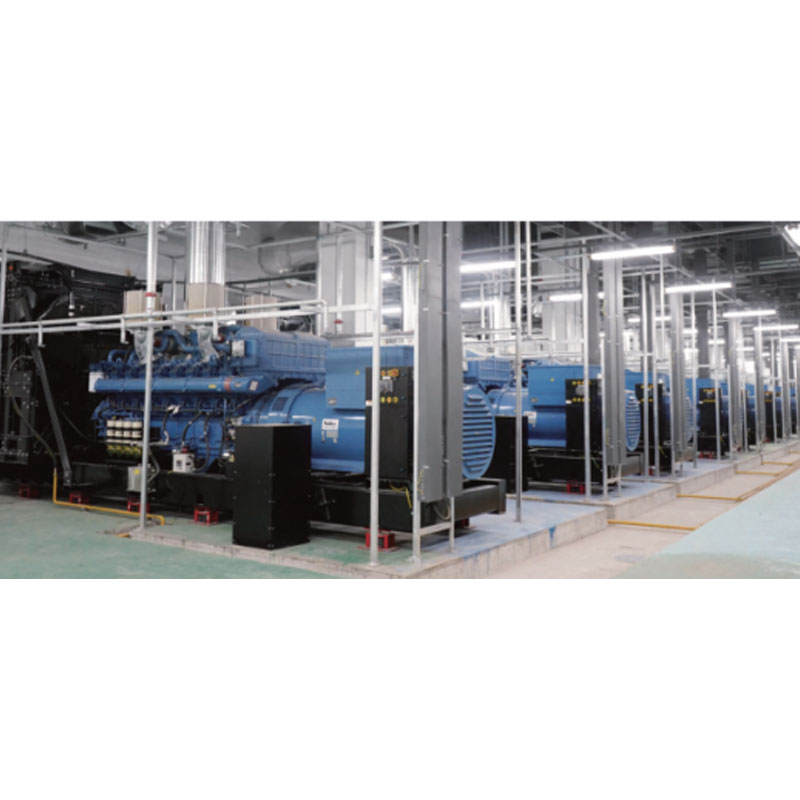
The answer seems obvious: price. But this is just the tip of the iceberg. Competitive price forChinese generators400 kW is a result of scale. The Chinese factories with which we work, for example, through a partnership with Yuke (Shandong) Electrical Technology, produce thousands of such motors and alternators. This allows us to keep the cost at a level inaccessible to European assemblers.
But there is a nuance that fly-by-night sellers rarely talk about. Cheap price?from the factory? often becomes a mirage by the time it is put into operation. It does not include the cost of competent customs clearance, certification (especially CU TR), adaptation to Russian standards and fuel, and, what is critical, the availability of spare parts in a warehouse in the Russian Federation. We at Yuke Electric stepped on this rake at the beginning of the journey. A batch was delivered, and six months later the client needed a replacement control unit. It turned out that this model has already been discontinued, and the analogue does not fit the connectors. I had to resolder the shield at my own expense. Since then, the principle has been the same: either we have key consumables for popular models in a warehouse in the Moscow region, or we do not offer this model for sale.
Another point is the myth about quality. General stereotype: “Chinese means short-lived?” In generators this is refuted very simply. The heart of the installation is the engine. Many Chinese manufacturers have been producing units under license from Perkins, Cummins, MTU technologies for many years, or using proven platforms like Weichai. The build quality of the generator module itself (stator, rotor) has also reached a very decent level. Problems usually lie not in the hardware, but in the little things: weak batteries included, thin wires in the control panel, bolts that rust over the course of a season. It is these details that we now pay attention to first of all during inspections at the plant.
Typical mistakes when choosing and using
I see the same scenarios over and over again. The first and main mistake is underestimating power. The client looks at the total power of his consumers, say, 350 kW, and takes a generator for 400, considering the reserve sufficient. But he forgets about starting currents, especially if there are electric motors and compressors. As a result, the installation operates at its limit, overheats, and its service life is reduced significantly. I always insist on calculations with a coefficient, and for reliability - a step higher, by 500 kW.
The second mistake is saving on the automation system (AVR). They install a simple shield that only starts the generator when the network goes out. But it’s important how it does it: with a pause for cooling, with an attempt to restart if it misfires, with monitoring of parameters. I once saw how, due to a primitive automatic transfer switch, a generator tried to start every 10 minutes with a floating voltage in the city and eventually “killed” it. starter and batteries within a week.
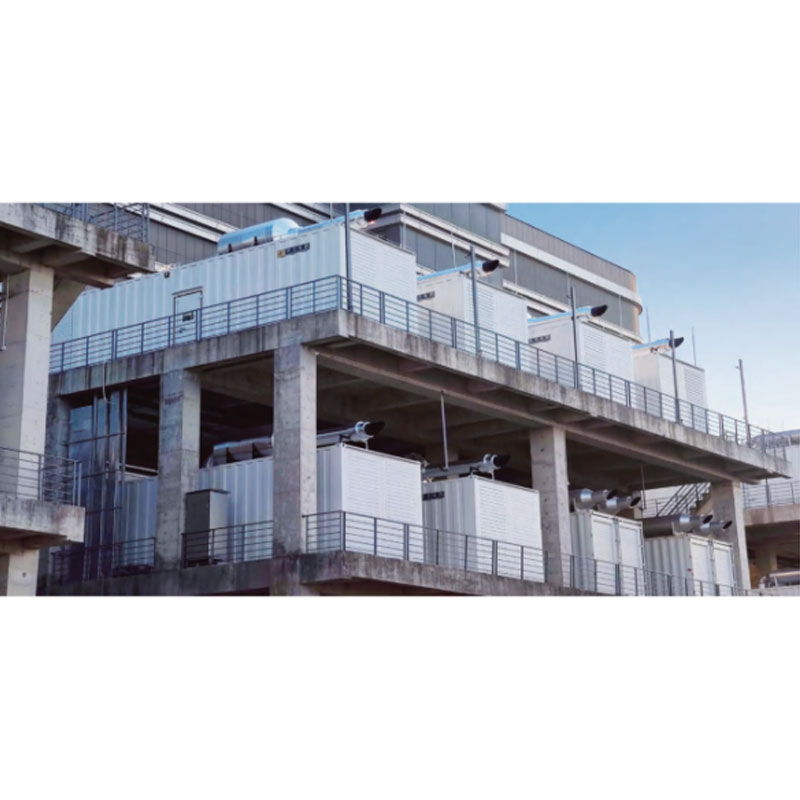
Third, complete disregard for operating conditions. The generator is placed in an unventilated container, the exhaust is not calculated, and no thought is given to the noise level. And then they are surprised by overheating in the summer or complaints from neighbors. For the northern regions, the quality of winter diesel fuel is a separate story. Fine filters must be a mandatory item in the contract, otherwise the injectors will fail by the end of the first winter.
What's next? Trends instead of conclusions
It is difficult to name one “main buyer?”. Rather, there are sustainable niches that feed the market. But I clearly see two trends that are changing the rules of the game.
The first is hybridization. Increasingly, the request sounds like this: “We need a generator that will work in conjunction with solar panels and batteries, as a reserve and to cover peak loads?” This requires the generator to not only produce 400 kW, but to be “smart” a controller capable of integrating into such a system and operating at variable speeds to save fuel. This is the next level, and here Chinese manufacturers are actively catching up, offering ready-made hybrid solutions.
The second trend is service as a product. The buyer is tired of being his own service engineer. Now the key question in the transaction is: “Who will service it and how?”. The success of a company like oursYuke (Shandong) Electrical Technology Co.,Ltd, is based not only on the sale of hardware, but on the fact that we have engineers who can come to the site, we have contracts with specialized service centers in the regions, and we have a spare parts warehouse. The client buys not just a unit, but confidence. This, perhaps, is the main secret of who becomes our main buyer today: this is the one who understands the value of this confidence and is ready to pay for it. Not the lowest price on the market, but a fair price to keep the lights on and production going.
-


-
-


WeChat

-
WeChat