

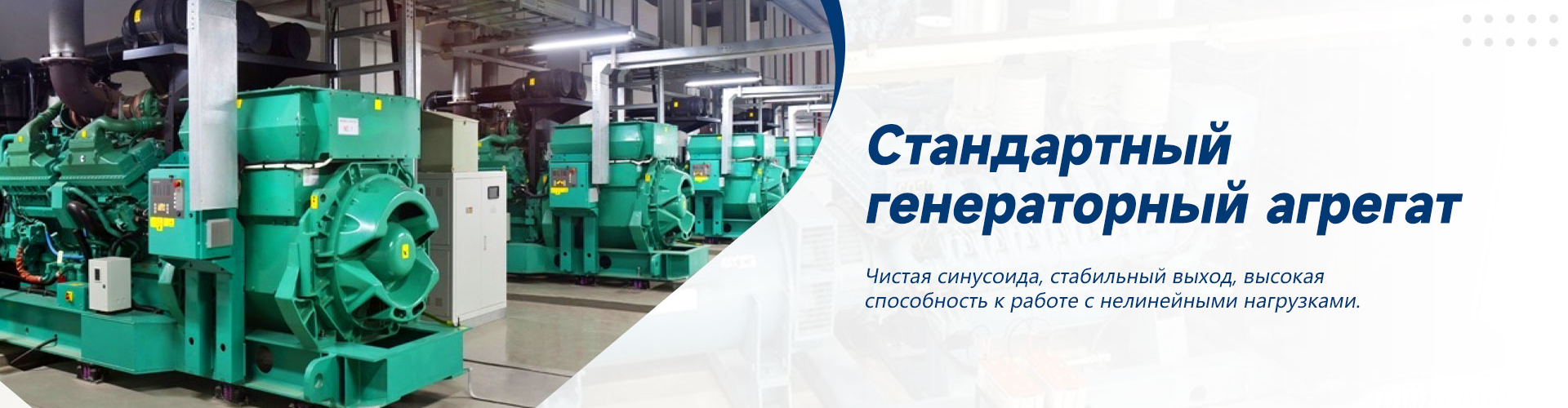
China: the main buyer of generators?
2026-01-03
This is a question that constantly comes up in conversations at exhibitions or in correspondence with suppliers. I’ll say right away - the wording “main buyer?” simplifies the real picture too much. Yes, the volumes are gigantic, but if you just imagine a country that indiscriminately buys everything, you are deeply mistaken. Working with this market, you understand that it is not a monolith, but a complex conglomerate of niches, requirements and, most importantly, internal capabilities.
Where do the legs of a myth come from?
The myth of the "insatiable" The Chinese market was not born out of nowhere. Look at the statistics on the commissioning of new capacities, infrastructure projects - from metro stations in million-plus cities to factories in the third tier of cities. The need for backup and main energy supplies is colossal. But the key word here is “need”, not “purchase”. A huge part of this need is met within the country.
I remember ten years ago many European manufacturers looked at China as Eldorado. They brought standard lines that sold well in Europe or the Middle East, and waited for queues of buyers. Often it ended in nothing. By that time, local manufacturers were no longer just copying, but offering technically adequate units, certified to local standards (GB, and large state-owned companies have strict internal requirements), and even with a service network in each province. Price pressure was (and remains) severe.
Therefore, when they say “China is buying?”, you need to clarify - what, from whom and for what purposes? The main imports now are not mass-produced diesel “workhorses?” at 500 kVA, but either very specific equipment (high power gas turbine units, specialized generators for marine equipment, biofuel systems) or components. Yes, yes, they often buy not a ready-made generator, but an engine, alternator or control system from a trusted German or American brand in order to integrate it into their assembly.
Where do they look for “holes”? on the market
Import finds its loophole where there is a shortage of competencies or absolute reliability under a well-known name is required. A classic example is objects with foreign investment. If a German automaker is building a plant, their technical specifications often directly require generator sets of specific brands, for example, Caterpillar or Cummins. Local contractors are forced to source them, often through official distributors or even directly from abroad.
Another segment is the premium segment of commercial real estate: five-star hotels of international chains, data centers of the Tier III-IV level. There, the cost of downtime is in the millions of dollars per hour, and backup power solutions are insurance. Not everyone is ready to take risks by installing equipment from a new, globally untested local brand, even if it offers good characteristics on paper. Although the trend is changing.
The third layer is precisely components and technologies. Chinese manufacturers are actively buying licenses, patents, and entire engineering teams. Purchasegeneratorsas such may only be the tip of the iceberg, underneath which lies the absorption of know-how. I have seen cases where a small batch of very expensive Italian industrial generators were purchased, which were then dismantled down to the screws in a research center in Shenzhen for six months.
A failed attempt and a lesson
I'll tell you from my own experience. Several years ago, we tried to promote a line of medium-speed diesel power plants for fish processing plants in one of the coastal provinces. The equipment is good, German assembly, but the price is 1.8 times higher than that of a local analogue of comparable power. The logic was this: reliability, fuel savings, long service life.
In fact, we encountered two insurmountable barriers. The first is financing. Many local businesses operate on very short cash cycles. For them, the difference in price, even if it pays off in three years, is an unaffordable sum here and now. It is easier for them to buy two cheap generators than one expensive one. The second barrier is service. Our partner could not guarantee the availability of an engineer on site within 4 hours, but the local plant provided such a guarantee. As a result, they sold three units to only one plant, which exported to Japan and had to comply with strict supply chain standards. The project was canceled as unprofitable.
This failure taught the main thing: in the Chinese market, technical specifications are just a plate. The real decision is made at the intersection of life cycle economics (which is considered differently there), service availability and, importantly, connections (guanxi) with local energy and regulatory authorities. Without a local partner who is deeply involved in this, it’s pointless to enter.
Case: how a local player works
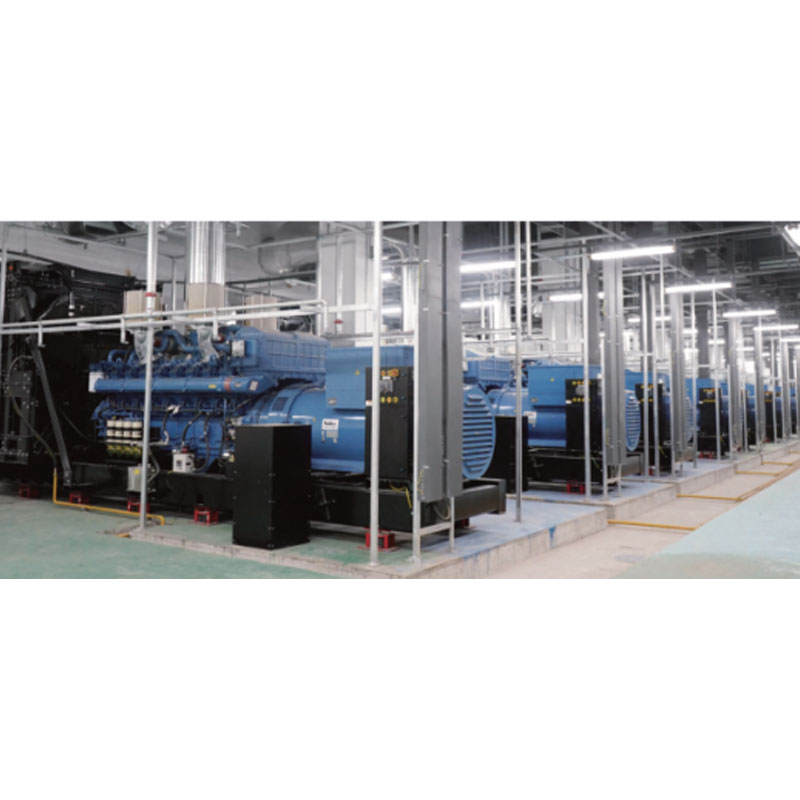
Let’s take for example a company that understands this market from the inside -Yuke (Shandong) Electrical Technology Co.,Ltd. Let's take a look at their websitevoyoko.ru. This is not just a trading house. This is a typical structure for modern China: an engineering-oriented company that grew out of the DEVER Electric team founded back in 2003 in Qingdao. Their model is not the import of ready-made products, but their own R&D, technical consulting and comprehensive “turnkey” solutions.
They don't "buy" as much. generators from the outside world, as they integrate technology, perhaps purchasing the best components (the same John Deere engines or Deep Sea control systems), into their design solutions. Their client is an industrial enterprise that needs not just hardware, but a guaranteed energy supply, taking into account all local regulations and approvals. They close the very “hole” I was talking about: complexity and local presence.
Companies like Yuke Electric are the answer to the question “Who is the main buyer?” Often they themselves become a channel for the import of high-tech components, but to the end user they no longer sell a “generator”, but an “energy supply solution” in which the generator is only part of the system. This is a level of competition at which the hardware seller simply has nothing to do.
What's the result? Looking to the future
So is China the main buyer? In quantitative terms, it is certainly one of the largest markets in the world for energy equipment. But in terms of quality, this is an increasingly mature, segmented and technologically advanced market, which has less need for ready-made imported products in the mass segment.
The trend of the future, in my opinion, is a further increase in demand for highly efficient and “green” products. solutions: gas generators (especially with the LNG boom), hybrid systems, installations integrated with renewable sources. Here there is still a window for foreign technologies. And also the demand for service, monitoring, remote control - ?software? around ?iron?.
Direct supply of finished diesel generators from Europe or the US will shrink, giving way to joint production, licensing agreements and the supply of critical components. The market is moving from simple purchase to technology assimilation. Therefore, answering the question from the title: China is becoming less and less the main buyer? in the classical sense, but more and more - the main adapter, integrator and, importantly, a future competitor in third markets, where companies such asYuke Electric.
-


-
-


WeChat

-
WeChat