

China: the main buyer of gas generators?
2025-12-31
Here's a question that keeps popping up in industry chats and in negotiations with suppliers. I’ll say right away: the answer is not as clear-cut as it seems. Many, looking at the overall import figures, immediately imagine giant industrial parks purchasing dozens of megawatt-class installations. Reality, as usual, is more complex and interesting. Yes, China is a huge market, but its structure and demand drivers are often overlooked. I’ll try to sort it out based on what I’ve seen myself over the past seven or eight years.
Where do the legs of a stereotype come from?
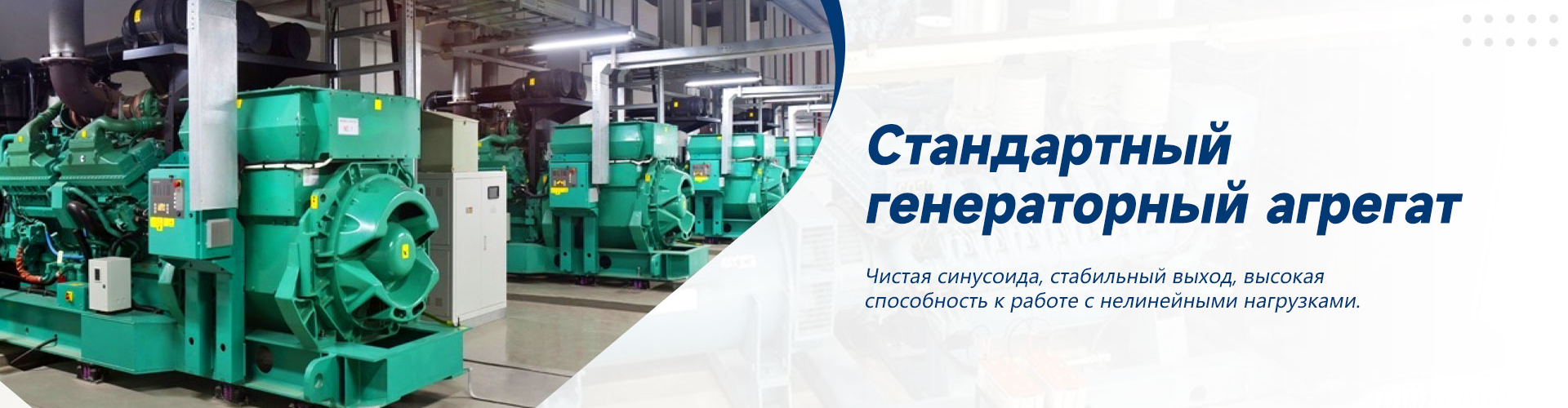
When they talk about the main buyer, they usually mean statistics. And, at first glance, it speaks for itself: in terms of volumes of purchases of gas piston power plants (GPU), China is really in the top. But if you dig, it turns out that the lion's share is not ready-madegas generatorsin the European sense we are accustomed to (as a single turnkey block-modular product), but rather components, licenses and localized assembly. Chinese energy companies and engineering giants have long learned to buy the heart - engines from Caterpillar, MWM, W?rtsil? - and tie them with your equipment. Therefore, the world shopping ranking is a little disingenuous.
The second stereotype is that demand is caused only by cheap gas or the Blue Gas policy. Of course, connecting remote areas to gas pipelines gave an impetus, but I would call this only one of the factors. Much more important, in my opinion, is the internal policy on decentralization of energy supply. After several serious network failures a decade ago, many industrial clusters, especially in the provinces of Guangdong, Jiangsu and Shandong, received strict recommendations (in fact, requirements) to have backup generation. And this is where the fun begins.
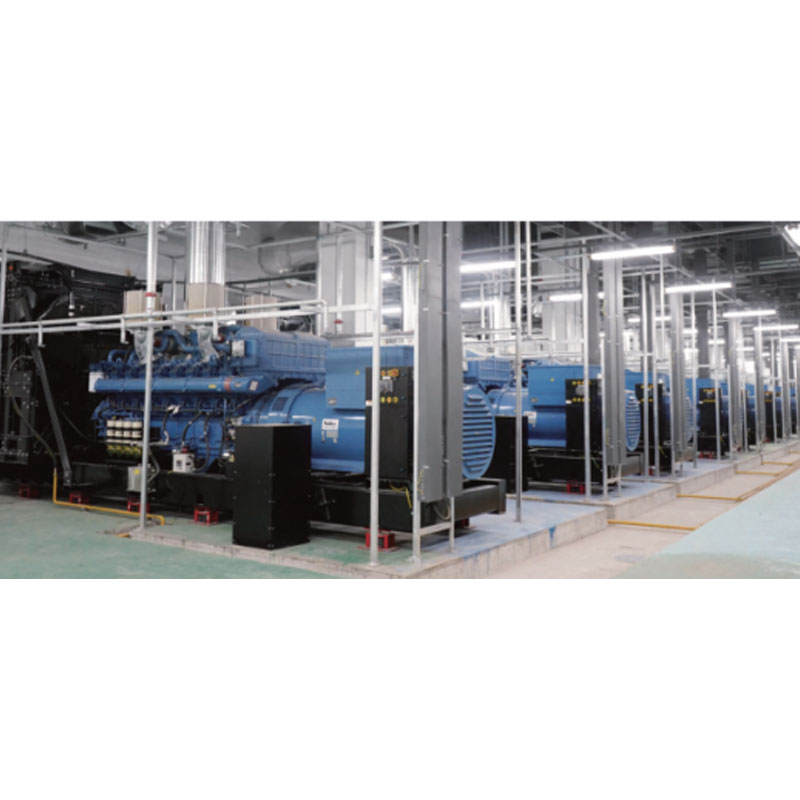
It is this segment - medium-sized industry, factories, textile mills, processing plants - that creates that same stable, invisible mass demand. They rarely buy directly from European brands. They often work through local integrators. Here, for example,Yuke (Shandong) Electrical Technology Co.,Ltd(Yuke Electric) is a typical example of such a player. The company has grown from the DEVER team, founded back in 2003 in Qingdao, and is now engaged in the full cycle: from R&D and technical consulting to delivery and construction. Their websitevoyoko.rureflects the approach well: it is not just selling hardware, but offering solutions for a specific customer task, often with deep adaptation. Ready for themgas generator- only part of a larger energy or technological system.
What they actually buy: the specifics of demand
Working with Chinese partners, you quickly understand that their priority is not maximum efficiency under ideal conditions, but survivability, maintainability and the ability to operate on non-ideal gas. Biogas from landfills, associated gas with low calorific value, coke oven gas - this is their daily routine. Therefore, European installations designed for clean natural gas often lose in competitions, even being technologically more advanced. Local manufacturers and integrators, like the aforementioned Yuke, are able to modify control and cleaning systems to suit these conditions.
Another important nuance is the attitude towards the service. A post-warranty service contract with European prices is unacceptable for many factories. They prefer to have their own supply of parts and train their own engineers. This creates a barrier for premium Western brands, but opens up opportunities for those willing to transfer technology and support localization. Often the winner is the one who offers not just a station, but documentation, training and the right to produce some components on site.
I had an illustrative case in 2019. They offered a solution for a building materials plant in Shandong. Our calculation, based on standard European standards for service intervals, showed one economy. The client, their chief engineer, immediately asked: And if we change the oil not according to your 500 hours, but according to our 750, what will this affect? We have such gas that we still need to change filters more often, and we are prepared for increased wear, but we want less downtime. This is a different type of thinking - pragmatic to the point of cynicism. As a result, they bought not from us, but from a local assembler who provided flexible, custom service regulations.
The role of the Green Transition and RES
Nowadays there is a lot of talk about hydrogen and green energy in China. This also affects the GPU market, but not as straightforwardly as it might seem.Gas generatorsincreasingly seen not as the basis of energy supply, but as a balancing power for solar and wind. Especially in the western regions, where renewable energy generation is growing at a faster pace, but the network is weak. Demand is shifting towards units with quick start-up and high maneuverability.
But there is a technological fork here. Part of the market is drawn to modern engines optimized for frequent start-stops. The other part, for reasons of reliability and price, prefers old, proven models, but paired with sophisticated control systems. I have seen projects where a relatively simple gas piston engine was controlled by such a complex AI-based system that predicted the load from a nearby solar farm and started it in advance. The result was a hybrid of cheap hardware + expensive software.
The prospect of hydrogen is also causing confusion. Chinese companies are actively investing in R&D of hydrogen engines. So far these are pilot projects, but many local players, including technological enterprises likeYuke (Shandong) Electrical Technology Co.,Ltd, are already positioning themselves as future integrators of hydrogen solutions. Their experience in adapting technologies for specific fuels can play a key role here. In the meantime, the dominant trend is the methanation of biogas for use in standard gas-fueled plants - this gives a quick economic effect here and now.
Logistics, payments and pitfalls
If we talk about the practical aspects of supplies, then China is not one market, but many different ones. Requirements and standards may vary even between provinces. CE or UL certification by itself means little. A local safety certificate is required, and the process of obtaining one often depends not only on technical parameters, but also on the relationship with the testing laboratory. We were once stuck for four months because our exhaust manifold did not meet their interpretation of the noise code for a residential area, even though the plant was intended for an industrial park 10 km from the residence.
Payments are also not easy. Expecting 100% advance payment from a new Chinese client is utopian. The standard scheme is 30% advance, 60% against shipping documents and 10% after commissioning. But this last 10% can sometimes be obtained only after signing the act on the end of the warranty period, that is, after a year or two. This requires serious cash flow planning. Large government projects can work through a letter of credit, but there is corresponding competition, often with political overtones.
Logistics from Europe or the USA have become more expensive and take longer. This has given an additional advantage to local assemblers in China, who can offer short lead times from stock. Many international brands now also localize final assembly in China or Southeast Asia specifically for this market. Integrators with strong engineering and construction expertise, as indicated in Yuke Electric's description (construction engineering and services), are in an advantageous position as they cover the entire chain from design to domestic commissioning.
So is the buyer the main one? Final Considerations
Returning to the title question. If we count by the number of installed gas piston generation capacities, of course, yes. If we count the volume of direct purchases of ready-made Western cars, this is no longer the case, and this share will decline. China is increasingly buying not boxes, but technologies, licenses, key components and engineering. The market has matured and entered a phase of deep segmentation and specialization.
The main driver now is not the thirst for new capacities as such, but the need for modernization, increased efficiency and integration with new energy. Demand is shifting from simply selling equipment to selling long-term solutions and service contracts. In this regard, the operating model of companies that, likeYuke Electric, combine scientific development, technical consulting and construction, looks more viable and meets market demands.
So, to answer in a simple way: China is the main consumer of gas generating capacity, but not always as a direct buyer in the classical sense. This is a market for complex, flexible solutions, where technical competence and willingness to adapt matter much more than the brand or price of the equipment. And those who understand this continue to work successfully here, despite all the competition.
-


-
-


WeChat

-
WeChat