

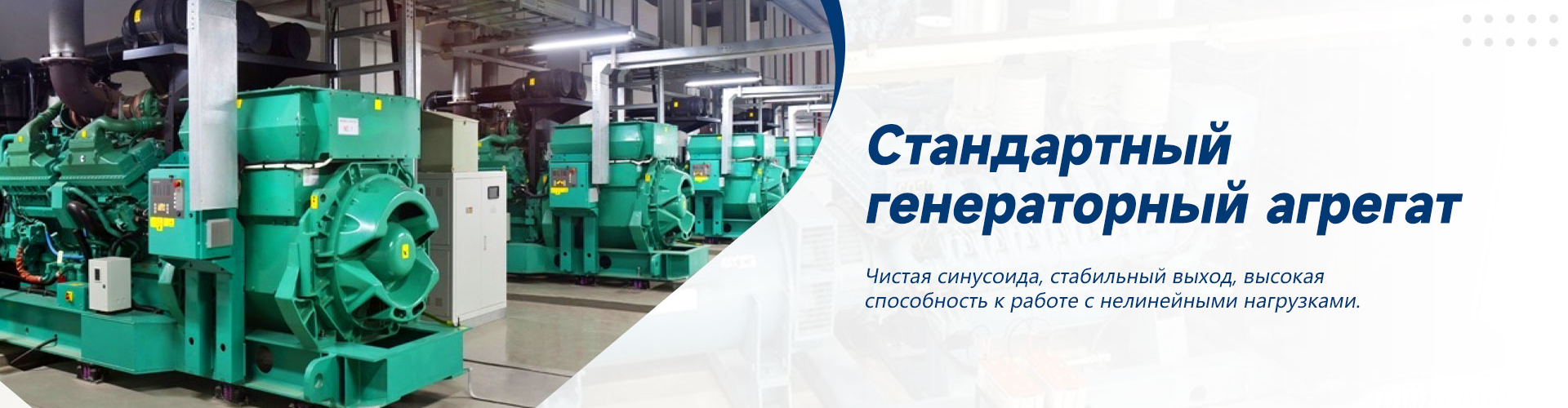
China: leader in noise-proof generators?
2025-12-31
This is a question that often comes up in conversations with customers from the CIS. Let me tell you right away: the answer is ambiguous. Many people immediately imagine just Chinese equipment - cheap, cheerful, and noisy like a tractor. This is the main misconception. Reality is more complex and interesting. If we talk about the mass segment, about those container and open-air installations of 50-500 kW that are used for construction sites, small villages or as a reserve for facilities, then yes - China sets the tone today. But a leader is not only about sales volumes. This is about technological depth, about working with materials and, critically, about understanding what is quiet for different markets.
From hardware to acoustics: how the approach has changed
Previously, about ten years ago, everything was more primitive. They took a proven engine, say, a Weichai or Yuchai, put it on a frame, covered it with a steel sheet with holes for air - and the generator was ready. Sound protection was an option, often amounting to an additional hood that made more noise than muffling. I remember they brought us one such installation for testing - the stated 75 dBA at seven meters. In fact, under load everything is 85, and the sound is nasty, resonant. The client, of course, returned it.
The turnaround began when Chinese manufacturers began exporting heavily to Europe and the Middle East, where regulations are strict and competitors like FG Wilson or SDMO have long learned to make quiet hoods. Here I had to not copy, but understand. Studying sound-absorbing materials of different densities, designing exhaust and air inflow labyrinths to dampen low-frequency hum is the most difficult part. This was no longer iron welding, but engineering acoustics.
Now top Chinese factories have their own anechoic chambers for testing. They don't just install a quieter engine (although this is important), but simulate the entire sound path. How the frame vibrates, how the noise from the radiator fan is reflected from the internal surfaces, how the exhaust is muffled not by one, but by a cascade of two or three elements. The difference with the products of the 2010s is colossal.
Case: when quieter means more expensive (and vice versa)
Let me give you an example from practice. We had a project for a private clinic in Kazakhstan. A 250 kVA backup generator was needed, but with the condition that the noise level should not exceed 65 dBA a meter from the hood. The installation location is a cramped courtyard surrounded by walls. The standard noise reduction version from many suppliers gave around 72-75 dBA. This was not enough.
We then worked with several factories and settled on the option fromYuke (Shandong) Electrical Technology Co.,Ltd. On their websitevoyoko.ruyou can see their approach: they position themselves not as a simple assembly shop, but as a full-cycle technological enterprise. What is important is that they were ready for modifications. Together with their engineers, we revised the ventilation scheme, added special sound-absorbing inserts to the air intakes and replaced the standard muffler with a custom one with a larger volume. The modification increased the cost by 15 percent, but the goal was achieved - upon acceptance, the measurement showed 63 dBA. For me, this is an indicative moment: leadership also means flexibility and willingness to solve non-standard problems, and not just churn out quiet boxes.
At the same time, their production model for a construction site, with a permissible level of 75 dBA, was competitive in price. That is, they understand segmentation: where you can save on materials without losing key characteristics, and where you need to squeeze out every decibel. This is a sign of a mature market.
Pitfalls: what to look for when choosing
The experience, of course, came with its share of bumps. One of the main problems is the quality of soundproofing materials inside the hood. Cheap foam rubber or mineral wool without proper density and lining over time (sometimes over a couple of seasons) cakes, is destroyed by vibration, or absorbs oil. As a result, after a year the generator begins to hum louder. Now advanced manufacturers use multilayer composites based on basalt fiber with protective membranes. When inspecting, be sure to look under the cover - don’t be shy.
The second common problem is saving on the cooling system. To make the installation quieter, sometimes the fan output is reduced or the air ducts are narrowed. The generator seems to make less noise at idle, but under load, in the heat, the engine overheats, the thermal relay trips, or even worse - increased wear begins. Goodnoise-proof generatoris always a balance between acoustics and thermodynamics. Check not only the rated noise level, but also the thermal data in the technical documentation.
And third - service. A complex acoustic cabin means additional elements that may require maintenance: door seals, latches, shock absorbers. Make sure that the supplier has spare parts for these components, and not just for the engine and alternator. Otherwise, in a couple of years, replacing a simple seal will turn into a headache.
Market and niches: where China is really strong
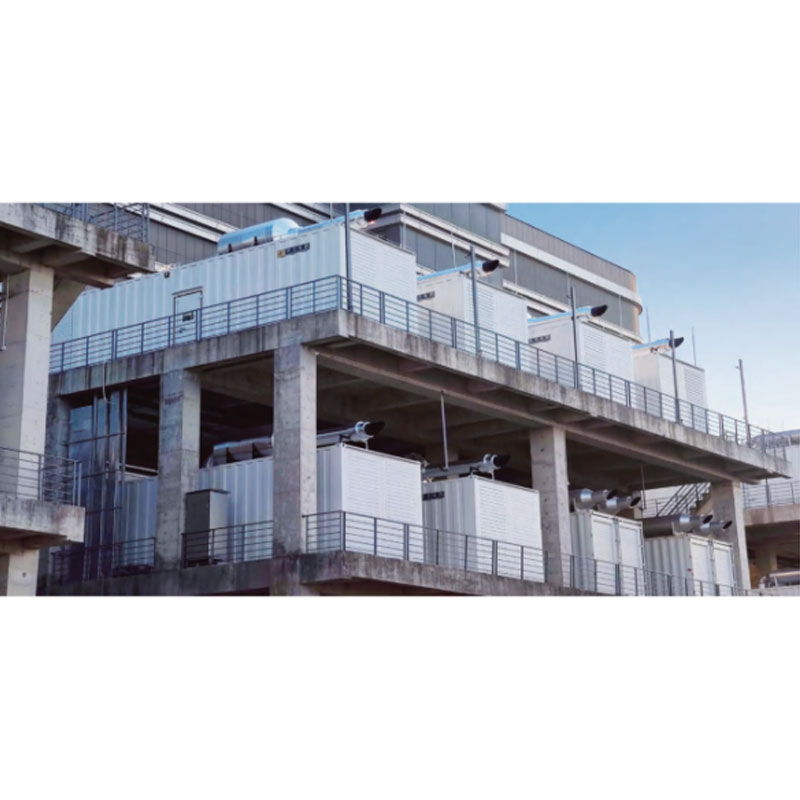
Globally speaking, China's absolute leadership is in the segment of medium-power diesel generators with a noise-proof casing. European and American brands either went premium (where the price is 2-3 times higher), or, like many, they simply moved production to China, leaving the brand and quality control for themselves. But the iron part itself is often from the same place.
An interesting area that is actively developing is hybrid solutions. The sameYuke Electric, which I mentioned, focuses on innovation in its materials. I saw their developments wherenoise-proof generatorintegrated into a system with solar panels and batteries. It does not work constantly, but only to recharge batteries or during peak loads, and its task is to turn on as quietly as possible and quickly return to mode. This is the next level, where silence is not an end in itself, but part of the overall energy efficiency of the facility.
But in the segment of high-power gas piston power plants or in specialized installations for critical facilities (such as hospitals, data centers) with extreme requirements for reliability and noise, the leaders are still different. But Chinese companies are already moving there, actively investing in R&D.
Conclusions instead of conclusions
So is he a leader or not? For most practical tasks, yes, absolutely. Based on the combination of price, technological level and flexibility, today's Chinese manufacturersnoise-proof generators- the first ones worth looking at. But with reservations. Leadership is not absolute, it is mass. It requires the buyer to understand his real needs (and not just the numbers in dBA in the catalog) and attention to the details of the specific model, and not just the brand.
When choosing, look not at the country of origin, but at the specific manufacturer, its history, the presence of its own developments and, most importantly, its readiness to support the project technically. As in the story with the clinic, this is what turns good hardware into a solution to a problem. And in this sense, companies that, likeYuke (Shandong) Electrical Technology Co.,Ltd, have built a full cycle from development to engineering, and have every chance to determine the face of this market in the future. Just making a box is no longer enough. You need to be able to make it smart and adaptive. And, apparently, the vector is just like that.
-


-
-


WeChat

-
WeChat