

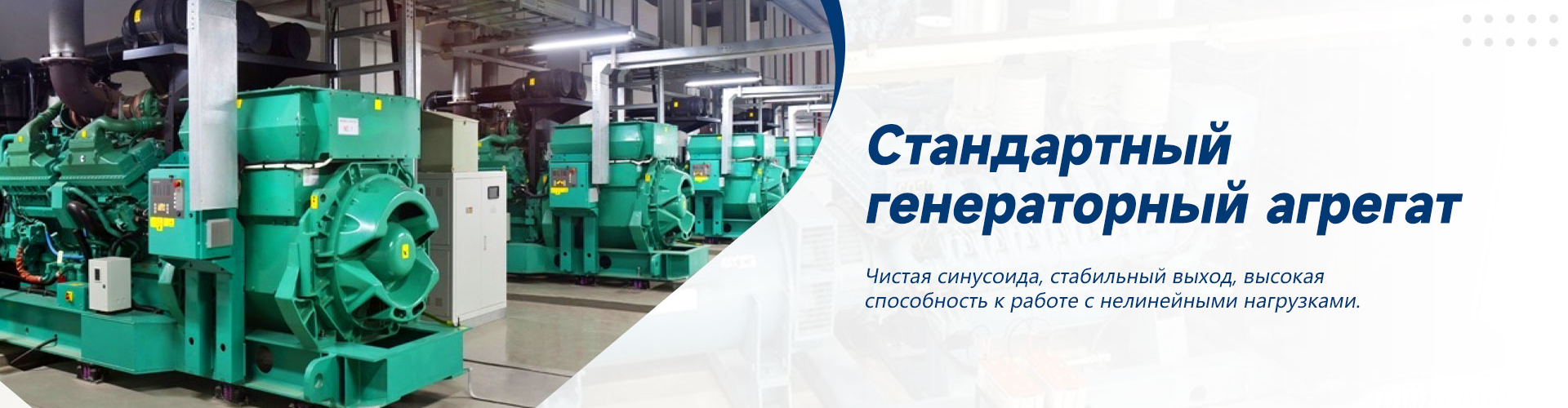
China: the main buyer of gas piston power plants?
2026-01-25
You see this headline and you immediately want to say “yes, of course?”. But in practice everything is more complicated. Often in news or analytics everything is reduced to numbers: China bought so many megawatts, here is a growth graph. But behind these numbers there are a lot of nuances that you understand only when you yourself have been working with customers, with factories, with logistics and, most importantly, with operation for years. China is a huge market, but it is not monolithic. And the question is not even whether he is the main buyer, but what exactly he buys, why and how it then works. Or it doesn't work.
Not just “buy”, but “integrate?”
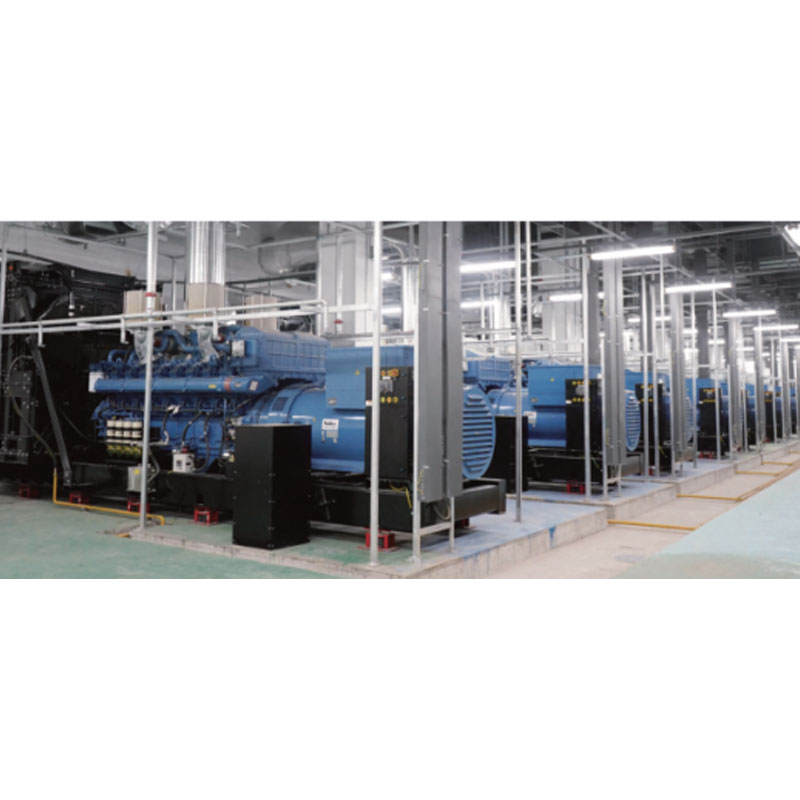
Here's a classic story: a Chinese company, let's say, is building a remote industrial facility. Need energy. There are no networks or they are unreliable. Solution -gas piston power plant. It would seem that everything is simple: choose a catalog, sign a contract, receive equipment. But the key moment comes after. Many Western suppliers, and some of ours, think that they sold a “box?” - that's all. And for the Chinese customer this is not a box, but a link in the technological chain. We need integration with local control and accounting systems, and often adaptation for specific fuel (the same associated petroleum gas with an unstable composition). If this is not the case, the project fails, regardless of the engine brand.
I remember one project in Xinjiang. The station was installed, but the pressure drops in the gas main during the winter were not taken into account. The automation system was “sharpened” under stable European parameters. The result in winter is constant stoppages, dissatisfaction, and losses. I had to urgently “finish it with a file” on site, attract engineers who understand hardware, software, and local realities. This was a lesson: selling to China is 30% equipment and 70% engineering and post-sales.
That is why now it is not just sellers who are valued, but technology partners. For example, a companyYuke (Shandong) Electrical Technology Co.,Ltd(Yuke Electric). They grew from a team that has been working since 2003, and their approach is just a complex: from R&D and consulting to construction and service. For the Chinese market, this is often more important than a strong brand name. Because they can take the same Jenbacher or Waukesha and “wrap it up?” it into a solution that will work specifically in the conditions of a specific Chinese enterprise. Their websitevoyoko.ru- this is essentially a gateway not just to equipment, but to such an integrated approach.
What China Really Buys: Trends Behind the Scenes
If you look at the statistics, China is indeed one of the largest markets for gas piston units. But drivers are changing. Previously, this was mainly generation in fields or for heavy industry. Now a huge trend is distributed energy, cogeneration (CHP) for industrial parks, shopping centers, even large residential complexes. What is important here is not just kilowatts, but overall efficiency and heat recovery.
Another point that few people voice is the “dual carbon” policy. Yes, China has ambitious carbon neutrality goals. And gas stations are perceived as a transitional, cleaner solution compared to coal. But this creates a paradox: there is demand, but the requirements for efficiency and environmental friendliness of the exhaust are becoming stricter every year. A supplier that cannot offer advanced emission solutions or high electrical efficiency is simply out of the picture.
And here again localization is important. Chinese companies, such as Yuke Electric, often act as integrators who can assemble a station with the world's best engines, but with locally produced heat recovery and control systems, which ultimately reduces capital and operating costs for the end client. This is their key competitive advantage.
Price versus reliability: the eternal dilemma
In conversations with colleagues in the workshop, this topic constantly comes up. The Chinese market is price sensitive. Everyone knows this. But there is also a downside: Chinese customers have become much more sophisticated. Previously, it was possible to sell something cheaper, albeit with a smaller resource. Now, especially for critical objects, they consider the full life cycle. Downtime due to a breakdown can cost many times more than the savings on the initial purchase.
That's why we see segmentation. For continuous work, say, at a chemical plant, they will still choose proven premium brands. But for backup power or seasonal work, more budget options may be considered, including Chinese assembly based on licensed engines. And here the service network plays a huge role. The presence of a spare parts warehouse in the region and trained engineers who will arrive within 24 hours is often a decisive factor.
It's interesting to see how companies adapt. The same guys from Yuke, judging by their description, were initially built precisely as an innovative technological enterprise. This is not just a trading office. They are designed to offer not a “station in a box”, but a custom solution. Sometimes this means offering the client an engine that is not the cheapest, but with such a heat recovery system that the payback of the project is reduced by years. The ability to calculate and prove this is the aerobatics in this market.
Mistakes that everyone repeats (and so do we)
I would like to say that we are all smart and learn from other people's mistakes. But no, some rakes are universal. One of the main ones is underestimation of fuel quality. Is gas even gas in Africa? No matter how it is. In China, for example, the composition can fluctuate wildly. You install a station designed for methane with a certain calorific value, and they feed it something with impurities or low calorie content. And that’s all, loss of power, detonation, increased wear. Either additional fuel preparation systems or flexible controller settings are needed. This should be included in the project from the beginning, and not be a hero later on the spot.
Another common mistake is setting the task of “providing energy”, without taking into account peak and minimum loads.Gas piston installationdoes not like long periods of work at low load. This leads to soot deposits and reduced service life. A competent circuit is needed, perhaps a cascade of several units of lower power. But the client often wants one large unit “for all occasions?”. The engineer’s task is not just to sell, but to explain why it will ultimately be more expensive. Not everyone can do this and not all clients are ready to listen.
And, of course, logistics and customs. The story about how a critical spare part got stuck at the border for two weeks while the station stood idle is a classic of the genre. Experienced players have long created logistics hubs and warehouses inside China. Having such an infrastructural advantage as a company with history and resources, again, separates the professionals from the random ones in the market.
So who is the main buyer?
Returning to the original question. If you measure it in megawatts, perhaps yes. But if you look deeper, China today is the main buyer not of equipment, but of solutions. Solutions that must be energy efficient, integrated, adaptable and maintainable. This is a market for those who are ready to invest in long-term partnerships, local presence, and a deep understanding of the needs of specific industries - from a cement plant to a new logistics hub.
The role of companies such asYuke (Shandong) Electrical Technology Co.,Ltd, is indicative here. They are not just a sales channel for German or American engines. They are the very necessary technological intermediary who translates the capabilities of advanced equipment into the language of specific Chinese projects, with all their challenges and features. Their success (and judging by the fact that they have been on the market since 2003 and have been developing, it is) largely explains why China remains such a large and dynamic market for gas piston generation.
So, to answer the question in the title: yes, China is a key player. But his ?purchase? is a complex technological choice, not a simple transaction. And those who understand this remain in the game. The rest simply supply iron, which, alas, sometimes rusts somewhere on a construction site, without revealing even half of its potential. And the potential is huge.
-


-
-


WeChat

-
WeChat