

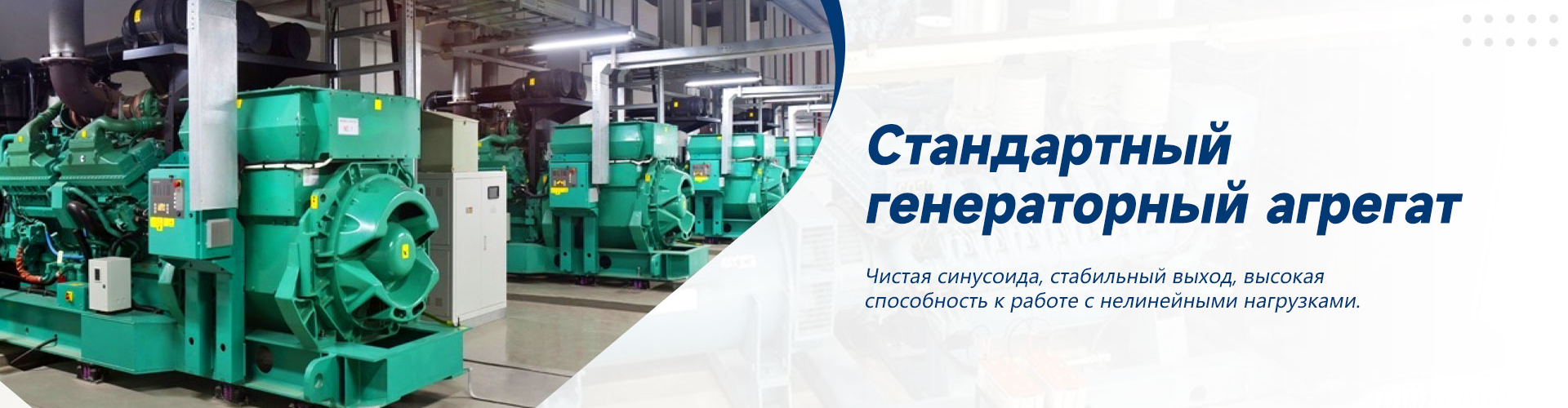
Who is the main buyer of Chinese biogas generators?
2026-01-24
I often hear this question, and many immediately think about large agricultural holdings or government projects. In reality, everything is much more interesting and not so obvious. If you had asked ten years ago, I probably would have also said about pig farms. But the market has changed a lot since then, and the main buyer is a floating concept. Depends on the region, politics, and, more importantly, on the real economy on the ground. I’ll try to sort it out based on what I saw myself.
Not a farmer, but a processor: where demand is born
The first and, perhaps, the most stable segment is organic waste processing enterprises. Not just farms, but processors. For example, cassava starch factories in Southeast Asia or palm oil refineries. They have a constant flow of raw materials, waste is a headache, and energy is always needed. Chinese generators, especially in the mid-power range, have taken root there well. Price and cost-effectiveness ratio they are satisfied.
The key point here is not to sell “iron,” but to offer a solution for a specific type of biogas. The gas composition differs from different substrates, and this kills many beautiful projects on paper. I remember a story with one plant in Thailand: they installed a standard generator with average methane parameters, and the gas from cassava waste turned out to have high humidity and impurities. The engine is wasting away month, then got up. We had to modify the gas treatment system on site. The client was not happy, but everyone learned the lesson.
Nowadays, more or less normal manufacturers, like those with whom we work, no longer supply the generator separately. Comes as a set: gas treatment, cogeneration unit (of the sameYuke Electric, for example), management. This is no longer just a generator, but a power unit. For such a buyer, it is reliability and service history that are important, because downtime entails losses not only from lost electricity, but also from stopping the waste disposal line.
Energy-deficient regions: when there is light on schedule
The second large layer is regions with chronic problems in energy networks. Sub-Saharan Africa, some countries in South Asia. There, the buyer is often not a specific enterprise, but a local energy project, sometimes financed by international donors. The goal is to provide electricity to a village or small community at a processing plant.
Here, interest in Chinese equipment is dictated primarily by budget. European or American installations are often too heavy for them. But there are also many pitfalls. Climate, dust, qualifications of local personnel - all this tests the equipment’s strength. I saw how in one country a radiator became clogged due to dust, and the system overheated over and over again. In the end, they found a simple solution - they installed an additional mesh and cleaned it more often. But this took time and nerves.
In such projects, simplicity of design and maintainability are critical. Complex electronics that require an engineer in Shanghai to set up are a failure. You need a mechanic that you can fix on your knees? available tools. Some Chinese manufacturers have realized this and are making special “simplified” ones. versions for such markets. Information about such customized solutions can sometimes be found on integrator websites, for example,voyoko.ruwhere is the companyYuke Electricpresents its technological lines.
Industrial giants and renewable energy sources: green image vs economy
There is a third, growing segment - large industrial enterprises that want to reduce their carbon footprint or recycle their own waste. For example, food factories, breweries, beverage manufacturers. For them, the biogas plant is part of their ESG strategy. But, as a rule, they buy not a separate generator, but the entire turnkey complex.
Here the main buyer is, in fact, an engineering company that won the tender to build the plant. And she chooses the equipment herself. And here the competition is tough. Chinese generators must compete not only in price, but also in efficiency (efficiency), emissions, and noise. European emission standards for cogeneration plants are very strict, and in order to get into such a project, you need to comply with them.
Our experience shows that those who can provide not just passport data, but real test reports on similar objects win. Once we lost a tender because a competitor had a case on a similar substrate (distillery stillage), while ours only had a case on manure. The client did not take any risks. Now we always collect and structure application information.
State programs and their real effectiveness
Many people think that the driver is state programs for the development of renewable energy sources. This is true, but with a huge caveat. In the same Russia or Kazakhstan there were support programs. The buyer was formally the state or an agricultural enterprise subsidized by it. But how many projects remain on paper or die out after installation?
The problem is often systemic. We installed a generator, but who maintains it? Where are the spare parts? Does the local technician understand how to work with it? I saw a facility where an expensive installation was used at a third of capacity because they were afraid to break it, and the service contract was drawn up in such a way that calling an engineer cost as much as six months of operation. This is a failure of procurement, not technology.
Therefore, now smart players, entering the market with government orders, immediately offer a package of “equipment + training + service contract”. Without this, there is no point in selling - you will kill your reputation with one project. Companies that deal with the full cycle, from R&D to construction, such asYuke (Shandong) Electrical Technology Co.,Ltd, here they are in a more advantageous position, since they can control more stages and be responsible for the final result.
Niche applications and the future of the market
If we look into the future, then the “main buyer?” may appear in unexpected places. For example, wastewater treatment plants in growing cities or solid waste landfills. There is a lot of biogas there, and it should not just be burned, but used for good. Or small modular installations for individual restaurants, hotel complexes in eco-tourism.
The trend is towards decentralization of energy supply and circular economy. Equipment must become smarter (remote monitoring, predictive analytics) and more flexible. Not a giant 5 MW plant, but several 100 kW modules that can be scaled. This, it seems to me, is the future.
So who's in charge? Answer: someone for whom biogas is not an experiment, but a daily practice and an item of savings (or even income). This is a waste recycler with nowhere to put the substrate; this is an energy project in the outback, where there are no alternatives; he is an industrialist who counts every penny and follows trends. Chinese generators have occupied their niche precisely because they offer a practical, often less capricious and more affordable solution to this very practice. Whether this solution will work for years depends not on the country of origin, but on how competently it is selected, installed and integrated into the technological chain. Everything else is details.
-


-
-


WeChat

-
WeChat