

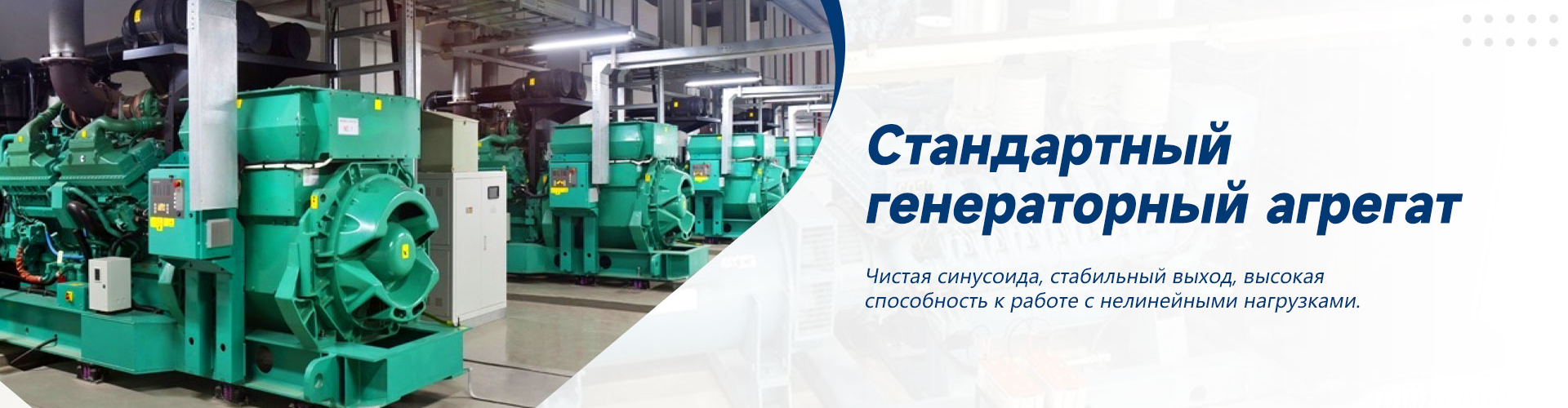
Is China the main buyer of generators?
2026-01-05
This is a question that often comes up in conversations at trade shows or in correspondence with suppliers. I’ll say right away that the wording is too simplified, even a little misleading. Yes, China is a huge market, but calling it the main buyer out of context is like saying the world eats bread. It is not clear what kind of bread and in what volume. If we talk about industrial diesel generator sets, the picture is complex. China is by far one of the largest consumers, but often not as an end buyer for domestic use, but as a critical link in the global supply and production chain. Many people forget that China itself is a giant manufacturer. And this is where the fun begins.
Market: demand that is not where it is sought
When we analyze the import of generators to China, we need to look not at the general tons or pieces, but at the specifics. The Chinese industry has long closed the mass, inexpensive segment of low and medium power on its own. Why should they import what they do cheaper and faster? Another thing is high-tech installations. Special designs for arctic conditions, ultra-high efficiency gas piston units, biofuel systems, or, for example, units for modern thermal power plants with emission requirements that local manufacturers are just mastering. This is where the demand is. But it is point-based, project-based.
I remember how several years ago we participated in a tender for the supply of generators for a plant under construction in Shandong province. The customer is a joint Chinese-European venture. Their technical specifications were translated from English, and the noise and harmonic distortion specifications on the network were clearly copied from the requirements of the German head office. Standard Chinese analogues, even well-known local brands, did not work. In the end, the European assembly won, but with an interesting nuance: the power unit was Japanese, and the control system was German. In this scheme, China acted as a place of integration and an end consumer, but not a manufacturer of key high-tech components. This is a typical picture for the premium segment.
Another layer of demand is spare parts and engines. This is where the volumes can get serious. Large Chinese generator manufacturers that assemble units for export often purchase Cummins, Volvo, MTU or John Deere engines abroad. The same story with Leroy Somer, Stamford, Mecc Alte alternators. Therefore, customs statistics on generators may actually reflect the import of components for subsequent re-export of completed power plants. This is important to understand.
Production and brands: where the Chinese generator is born
One myth needs to be dispelled here. Made in China does not equal Chinese technology. A huge number of factories are assembly sites. I've been to several in Jiangsu and Guangdong. I saw units coming off the same line under different brands: for the domestic market, for Southeast Asia, for Africa. The difference is often only in the color of the paint, the sticker and, critically, the quality of the components inside.
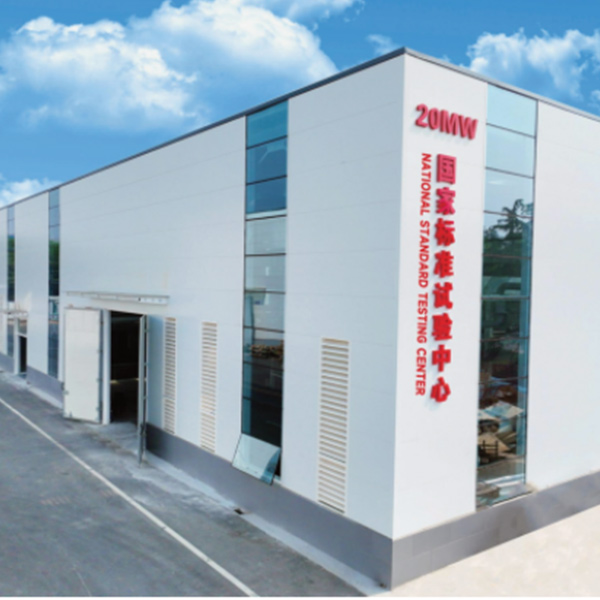
But there is another trend - the growth of proprietary technology companies. They don't just copy, but invest in R&D. Take, for example, the companyYuke (Shandong) Electrical Technology Co.,Ltd(Yuke Electric). It is no coincidence that they grew out of the DEVER team, founded back in 2003 in Qingdao. Their website (voyoko.ru) positions them as an innovative enterprise that combines development, technical consulting and engineering. This is the next level. Such companies are drivers of demand for advanced components and, at the same time, competitors to traditional Western brands in the markets of developing countries. Their emergence is changing the landscape: China is becoming not only an assembly shop, but also a center for applied engineering solutions in the energy sector.
However, their weak point is often not the hardware, but the software for control and monitoring systems. Complex algorithms for load forecasting, integration with renewable sources, remote control via IoT platforms - this is where a significant gap still remains. And this creates a demand for Western brains or talented software engineers who are lured back to China after working abroad.
Logistics and pitfalls of real deliveries
If you are thinking about supplying to China, forget about simple schemes. It has its own specifics. Certification is a different story. The GB standard is not just a translation of the IEC. Local testing by accredited laboratories is required, and the process can take months. We once lost a lucrative contract precisely because of this. The partner in Shanghai assured us that everything would be sorted out, but when it came to the fire safety certificate for the diesel unit, it turned out that our casing design did not quite comply with local heat dissipation regulations. I had to make changes and redo the samples. The client, naturally, did not wait.
The second point is logistics within the country. Delivery of a 40-foot container with a generator from the port of Shanghai or Ningbo to a plant inland, say, in Chengdu, is a whole epic. It is necessary to take into account size restrictions on some roads, approvals, and sometimes disassembly of the structure for transportation. And here Chinese buying companies have a huge advantage: they know these roads and procedures like the back of their hand. A foreign supplier without a local partner who will take care of the last mile has nothing to do.
And, of course, the price. The competition is crazy. Chinese procurement engineers count every penny. But what’s interesting is that in the last 5-7 years I’ve noticed a shift. Increasingly, in the technical specifications, in addition to the price, a separate significant item is the Total Cost of Ownership and the service interval. That is, they are no longer interested in just a cheap unit, but one that will work longer without breakdowns and with less fuel consumption. This opens the door to high-quality, albeit more expensive, solutions.
Use cases: from construction site to data center
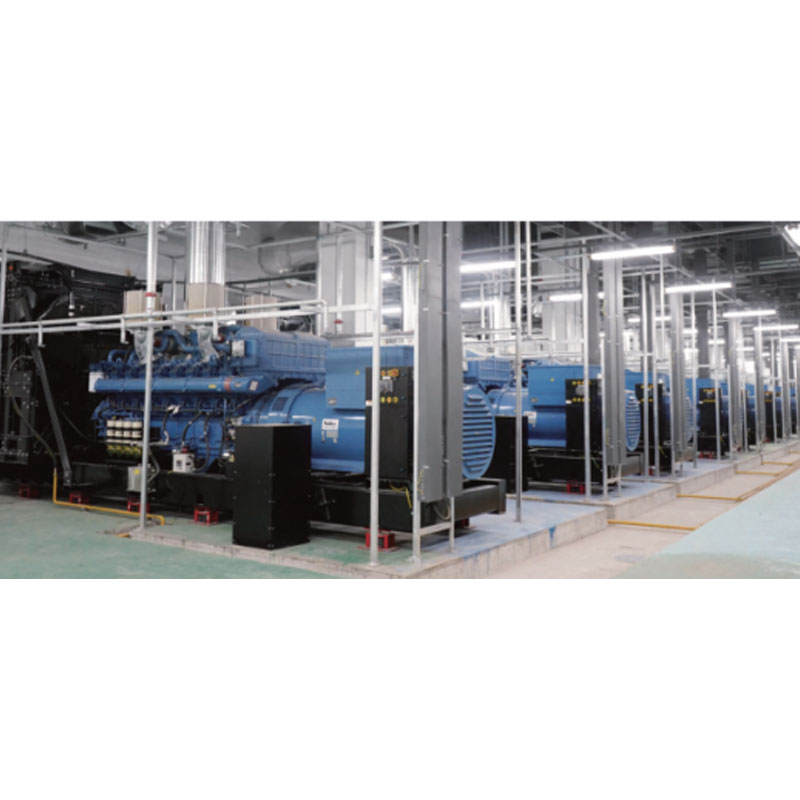
To understand the demand, you need to look at where generators are installed and why. Traditionally - construction sites, mines, remote fields. But the fastest growing segment now is providing backup power for critical infrastructure facilities: data centers, telecom stations, hospitals, financial institutions. In China, with its large-scale digitalization and construction of smart cities, this demand is colossal.
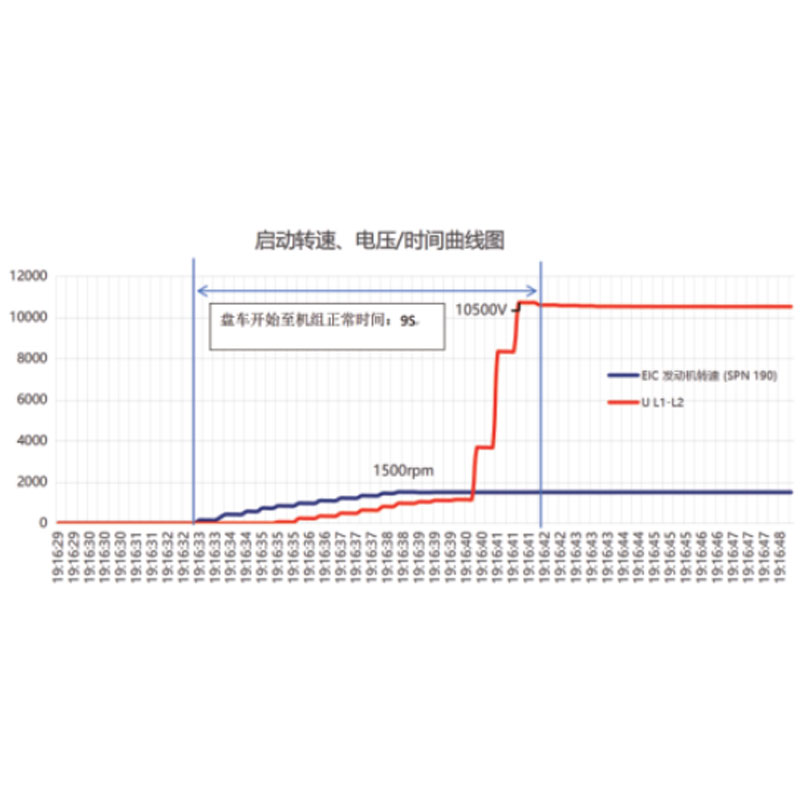
The requirements here are much higher. What is needed is not just power, but instant (literally in seconds) commissioning, seamless switching from the network, and fantastic reliability. For data centers, for example, power factor and output signal purity are also important. For such projects, hybrid systems are often created: generators + UPS + energy storage systems. And in such projects, China often acts as a testing ground for the most advanced technologies. They purchase samples, test them, and then begin to localize the production of key elements.
Another interesting trend is distributed energy. Small gas piston or even diesel (although the environment is difficult here) generators operating in cogeneration mode (heat and electricity) for individual residential complexes or industrial parks. This is especially true in regions where central networks are overloaded. And here again, there is a demand for efficient, smart solutions, and not for simple power units.
Looking into the future: buyer or trend setter?
So is China the main buyer? For the mass segment - no, it is its main producer and exporter. For the high-tech segment - yes, one of the key, but very demanding and pragmatic buyers, who increasingly want not just to buy a box, but to receive the technology and the rights to adapt it.
The main change I see is China's shift from being a passive consumer to being a co-developer and driver of specific requirements. Their requests for energy efficiency, integration with solar panels, or remote monitoring systems through WeChat-like interfaces are beginning to shape the product lines of global players.
Therefore, answering the question from the title, I would say this: China is the main shaper of a new type of demand. A market that buys not just generators as devices, but solutions for energy security and efficiency. And in this capacity, he dictates conditions to everyone: component manufacturers in Europe, assemblers in Southeast Asia, and technology companies such as the one mentionedYuke Electric. To ignore this transformation is to completely miss the point of what is happening in the industry. Now it is more interesting to look not at the volume of purchases, but at what specific technical specifications are written by Chinese engineers. This is where the real map of the future lies.
-


-
-


WeChat

-
WeChat