

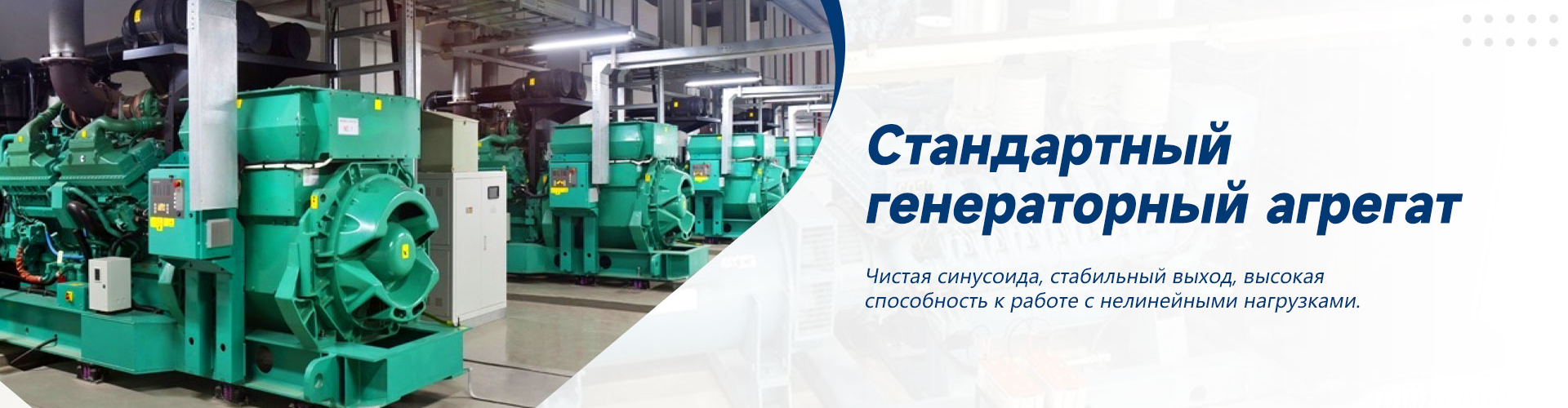
China: the main buyer of diesel thermal power plants?
2026-01-31
This is a question that often comes up in conversations at trade shows or on the sidelines of industry forums. Many people immediately imagine large-scale purchases of ready-made turnkey power plants. for Africa or Asia. But reality, as usual, is more complex and interesting. If we talk about the net import of finished high-power diesel thermal power plants, China has not been in the forefront for a long time. His role is different, and it often escapes the eye. It is more of a giant hub, processor and supplier of critical components. And it is in this context that the question of the “main buyer?” takes on a completely different meaning.
Not stations, but “guts”: where is the real demand
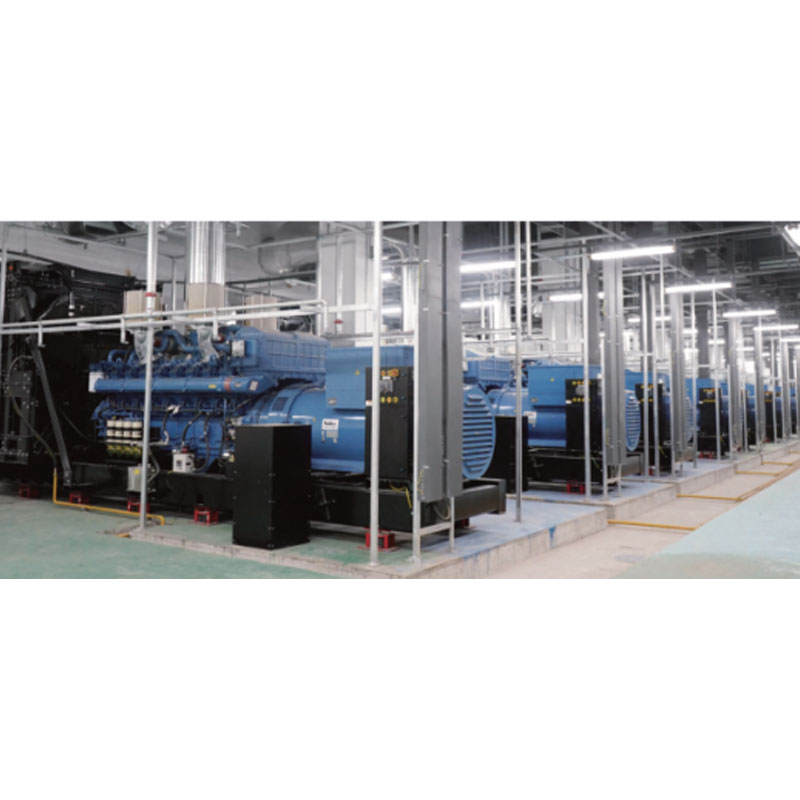
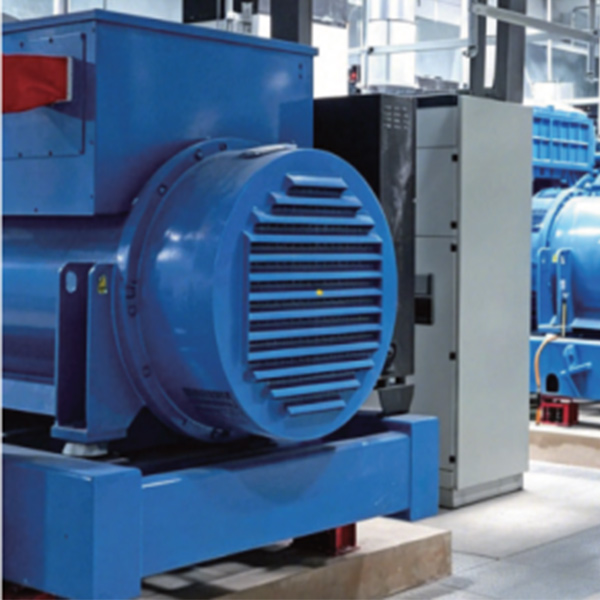
Having worked with supplies to the CIS and the Middle East, you see one clear trend. Large turnkey investment projects are now often carried out through Chinese EPC contractors. But they rarely purchase a completed thermal power plant from, say, a European manufacturer. Much more often “stuffing” is purchased: diesel engines, generators, control systems, transformers. And here the Chinese market is a colossal consumer of components. Why? Because local mechanical engineering, like Weichai, Yuchai, Cummins China, absorbs gigantic volumes for the production of their power plants. Some goes to the domestic market (reserve capacity, remote areas), but a huge flow is re-exported as part of more complex solutions.
I remember one project in Kazakhstan, where it was necessary to quickly deploy reserve capacity for a field. The European station had a delivery time of at least 10 months. We turned to the Chinese integrator. He offered a “designer”: a Weichai engine under license from MTU, a Stamford generator (which has also been produced in China for a long time), control panels based on Siemens or Schneider (assembled, of course, in China). We assembled everything on site in three months. Quality? Not ideal, there were some problems with laying cables and setting up the ATS, but for the money and time it was more than enough. The client was happy. Here it is, the essence: China does not buy stations, but technologies and components, in order to then sell ready-made solutions.
And here it is important not to be confused. There is a premium segment - Caterpillar, MTU, Perkins in the original still rule there. But their share in the total volume of “Chinese consumption?” diesel generation is falling. The market is being captured by localized brands and assembly. Therefore, when you see statistics on the import of diesel generator sets to China, you need to look at the breakdown: what is it? Completely assembled units from Germany or just engines for later assembly? I think it's the second one.
The role of integrators and niche players
Against this background, it is interesting to observe companies that have occupied their niche. They do not produce engines in the thousands, but they know how to assemble a reliable solution for a specific task. Here, for example,Yuke (Shandong) Electrical Technology Co.,Ltd(Yuke Electric). From their website (voyoko.ru) it is clear that they grew out of the DEVER team, which has been in the topic since 2003. This is a typical example of a modern Chinese technology integrator. They position themselves not as hardware sellers, but as an engineering company: R&D, consulting, supply, construction.
Who do they work for? Let's say there is a Russian or Central Asian customer who needs not just a “box with a generator”, but a solution for modernizing part of the power system of a mine or plant with outdated equipment. Standard TPP will not work - adaptation is needed. This is where companies like Yuke come into play. They can take a Chinese or licensed engine, add a specific control system, perhaps integrate with old turbines or solar panels. They are buyers of components, but to the end buyer they are sellers of complete solutions. Their client in Russia thinks that he is buying from a Chinese company, but in fact, this company is an aggregator and customizer.
It can be difficult with such companies. A striking example: in one of our old projects for the supply of excitation systems, we were faced with the fact that a Chinese integrator requested documentation for communication protocols under the pretext of integration. It turns out they were trying to ?reverse engineer? our software for your control unit. Competition occurs at all levels - from price to intellectual content. But this confirms the thesis: their demand is a demand for technology and knowledge, which is then packaged into a product.
Raw materials and logistics: the hidden side of the issue
There is another aspect that is not talked about much. To be the ?main buyer? or “chief assembler?”, a guaranteed flow of raw materials and components is needed. China has been playing its game here for a long time. Absorption of deposits of copper (for windings of generators and cables), cobalt, lithium (for hybrid systems with energy storage) is all part of one strategy. Control over the value chain.
In practice, this results in the following. The price of copper busbar or special electrical steel in China may be more stable and sometimes lower than in the world market for external buyers. This gives their generator and transformer assemblers a huge advantage. You purchase an engine, but everything else - tires, cables, housings, cooling systems - already has an “internal”, optimized price. Therefore, their final product can be competitive even with average build quality.
Logistics are a different story. Try shipping a heavy generator from Europe to Uzbekistan. Now look how a Chinese company does this through land corridors (the same Silk Road). Timing and cost often work in their favor. They have created an ecosystem where to be a ?customer? components is profitable because the next stage - export of the finished solution - is logistically and economically justified.
Environmental pressure and the future of diesel
Now they are increasingly talking about abandoning diesel. Europe has strict emissions standards. But in China the picture is twofold. On the one hand, in large cities and new facilities there is a real push towards gas and renewable energy sources. On the other hand, for thousands of industrial enterprises, mines, and ports in the interior of the country, diesel remains a “workhorse”. because of its simplicity and autonomy.
What does this mean for the market? China will (and is) buying exhaust cleaning technologies, catalytic reduction systems (SCR), and diesel particulate filters (DPF) for its engines. Again, not so much ready-made stations, but solutions for modernization and compliance with standards. We have seen requests from Chinese manufacturers for fairly sophisticated real-time emissions monitoring systems. This is a new layer of demand.
Moreover, the trend is toward hybridization. Diesel thermal power plant plus solar panels plus storage. Who are the main buyers and manufacturers of solar panels and batteries? China again. So diesel generation does not disappear, but is integrated into hybrid systems. And in this segment, China is not just a buyer, it sets trends and prices.
Conclusion: not the buyer, but the system integrator
So is China the main buyer of diesel thermal power plants? If we take the narrow interpretation - the purchase of ready-made powerful stations from foreign manufacturers - then no. But if you look more broadly - at the consumption of key components, technologies, raw materials for subsequent assembly, re-export and creation of hybrid energy solutions - then of course, yes. He is the main processor of this market.
Its strength lies in creating a complete chain: from ore to a finished power plant, adapted to the requirements of emerging markets. Companies likeYuke (Shandong) Electrical Technology Co.,Ltd- part of this ecosystem. They fill the niche of engineering refinement and integrated design, which is often more important than just selling “hardware”.
Therefore, the next time you hear this question, you can clarify: “Do you mean the buyer of ready-made stations or the one who forms the global market for components and solutions?” The answer will vary. And in the real projects that we are faced with, the Chinese presence is more often than not just a cheap engine in a container, but a proposal for modernizing a power unit with digital control. This is what truly changes the balance of power.
-


-
-


WeChat

-
WeChat