

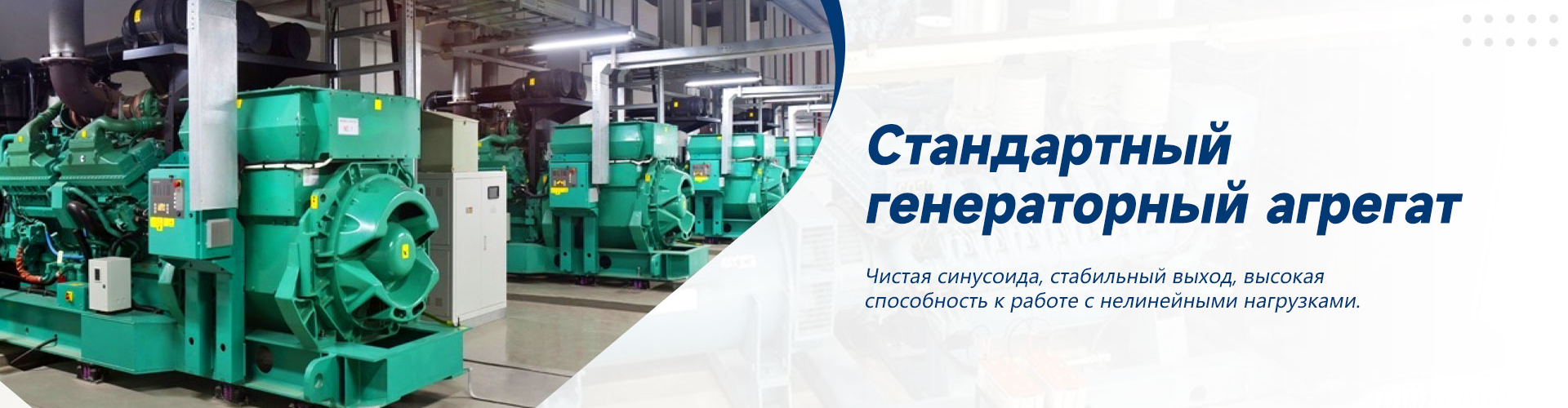
China: the main buyer of diesel power plants?
2026-01-20
You see this headline and you immediately want to ask: isn’t it obvious? It seems that everyone around is just talking about giant Chinese construction projects, infrastructure projects and industrial growth, which is simply bound to consume tons of diesel generators. But here’s the catch: when you’ve been in this business for years, supplying equipment, negotiating, you understand that the issue is much deeper than just buying a lot. China is not just the main buyer, it is an entire universe with its own logic, its own cycles and, most importantly, its rapidly changing face. Right now there is a quiet revolution taking place in the energy sector, and diesel generators in it play a completely different role than is attributed to them from the outside.
Market: not a monolith, but a mosaic
When viewed from Europe or Russia, China often appears as one bottomless market. Send containers and that’s it. The reality is much more prosaic. Yes, the volumes are colossal, but they are divided into dozens of segments, each with its own rules of the game. There are state megaprojects - bridges, ports, railways. There, purchases are carried out through tenders, where price is only one of the factors, and long-term service contracts and compliance with strict environmental standards Stage II, and now Stage III, are often decisive. A completely different world is the private industrial sector: factories, workshops, small-scale production. The main thing here is reliability and price, and delivery times are sometimes more important than the brand. And the third layer is backup energy supply for commercial facilities: data centers, hospitals, shopping centers. Here, uninterrupted operation and integration with ATS systems come to the fore.
And here’s what’s interesting: about ten years ago, demand actually came mainly from the state. Now the driver of growth is the private sector and commerce. Why? Because the quality of network electricity in developed coastal provinces has become very high, but the price is rising, and businesses cannot afford even a minute of downtime. The generator here is not a source of constant energy, but an insurance policy. And it is chosen accordingly: not the cheapest, but the one that is guaranteed to start at a critical second.
One incident comes to mind at a factory in Zhejiang Province. The customer bought two 500 kVA Perkins units from us. Installed, everything was assembled. Six months later the call: Does not start automatically! We're coming. It turned out that local electricians, in order to save money, installed cheap contactors in the ATS switchboard, which were stuck due to dust in the workshop. The generator itself was in perfect condition. This episode illustrates well a common problem: oftendemandin China it does not depend on the availability of equipment, but on the quality of engineering and subsequent service. Companies that understood this gained a foothold in the market.
Evolution of demand: from horsepower to smart watts
Previously, the key parameters were power and price per kilowatt. Now everything has changed. The Chinese customer, especially a young engineer or technical director, is well versed in technology. His questions are different: What is the degree of automation? Is there remote monitoring via GSM or cloud? How quickly does the ATS system respond? What is the actual fuel consumption at 75% load?
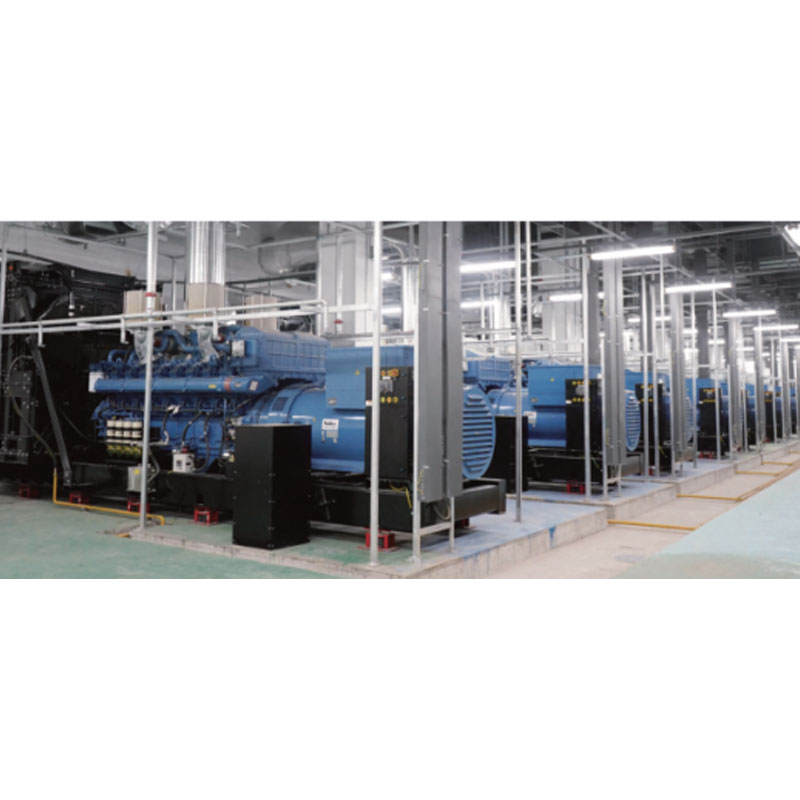
This is no longer just iron, it is an element of the general energy system of the facility. Therefore, companies such asYuke (Shandong) Electrical Technology Co.,Ltd(Yuke Electric), who grew out of the DEVER engineering team founded back in 2003 in Qingdao, feel like fish in water here. Their approach is not just selling a box with a motor, but a complex: R&D for a specific task, technical consulting, supply and turnkey engineering construction. Their websitevoyoko.ruis, in fact, a portal for professionals where you can not only select a unit, but also design a solution. In China, this approach is increasingly valued.
The trend for smart solutions is also spurred by the environment. In large cities and special economic zones, emission standards are comparable to European ones. Old diesel smoke generators will simply not be allowed into the facility. This paved the way for modern engines from Cummins, Volvo, MTU, as well as high-quality Chinese analogues, which have made a huge leap in recent years. It is interesting that sometimes the customer deliberately chooses not the most famous brand, but with the condition of installing an advanced exhaust cleaning and noise reduction system, the result is an optimal ratio of price and compliance with standards.
Logistics and pitfalls
To talk about the Chinese market without touching on logistics is to miss half the picture. Delivering a generator with a capacity of, say, 1 MW inland is a separate operation. It is necessary to take into account the dimensions, restrictions on roads and bridges, seasonality (during the rainy season in some regions it is simply impossible to pass). Once we were faced with a situation where, for a facility in the mountainous part of Yunnan, we had to disassemble the station into main modules (frame-fuel tank-engine-alternator), transport them by various means of transport, including a river barge, and assemble them on site. The time frame, naturally, doubled.
This experience led to an important lesson: success in this market often depends on flexibility and having reliable local partners. You cannot work from abroad by sending FOB incoterms from the port of Shanghai. You need to be on the ground: either have your own representative office, like Yuke Electric, or a close alliance with a local installation and service company. Chinese customers value speed of response. Breakdown - you need an engineer to be on site in a few hours, and not wait a week for a visa.
Competition: not only price, but also guanxi
The competitive field here is incredibly tight. Hundreds, if not thousands of manufacturers and integrators. The fight is fierce. But reducing the price to the limit is a road to nowhere, a dead end. Because there will always be someone who will do it even cheaper, even at the expense of quality. It is much more important to build long-term relationships—those guanxi.
This doesn't just mean drinking tea after signing a contract. This means being ready to come to the site a year after the warranty period and help solve the problem, even if it is not directly related to your equipment. This means sharing technical innovations, inviting them to existing facilities so that the client can see the operation of the station with his own eyes. Many large transactions are born not at exhibitions, but as a result of many years of such support. A company that positions itself asinnovative technology enterprise, which combines development and engineering, has a clear advantage here. It does not sell a product, but competence and reliability.
Let me give you an example from practice. We supplied a diesel generator set to a plastics processing plant. Two years later they expanded and thought about a new, more powerful station. Despite better financial offers from two other suppliers, they turned to us again. Why? Because in two years we have never failed with service, and our recommendation for upgrading the cooling system of their old unit saved them a decent amount of money on operation. Trust has become an asset.
The future: hybrids, gas and... hydrogen?
So is China the main buyer today? Of course, in terms of volume, yes. But will it remain so in the classical sense in five to seven years? Here's the big question. There is a clear shift. Firstly, there is a boom in hybrid systems: diesel + solar panels + energy storage. In remote areas, this is already more economically profitable than the constant operation of a generator. Secondly, the active development of gas infrastructure is pushing towards the use of gas piston units where possible.
And, of course, hydrogen is on the horizon. China is making huge bets on hydrogen energy. There are already pilot projects where diesel generators are adapted or replaced with hydrogen fuel cells. While it is expensive and exotic, the pace at which China is introducing new technologies makes us think seriously. The role of the diesel power plant is gradually transforming from a primary or backup source to an element of a more complex, flexible and green energy system.
Therefore, to answer the question from the title, I would say this: China has been and remains the largest market for diesel power plants, but the context of their use is rapidly changing.BuyerHe has become smarter, more demanding and looks far ahead. Success here awaits not those who simply bring equipment, but those who bring solutions, technologies and a willingness to grow and change along with this unique market. As the Yuke team does, for example, turning each project into a long-term partnership. This, perhaps, is the main secret.
-


-
-


WeChat

-
WeChat