

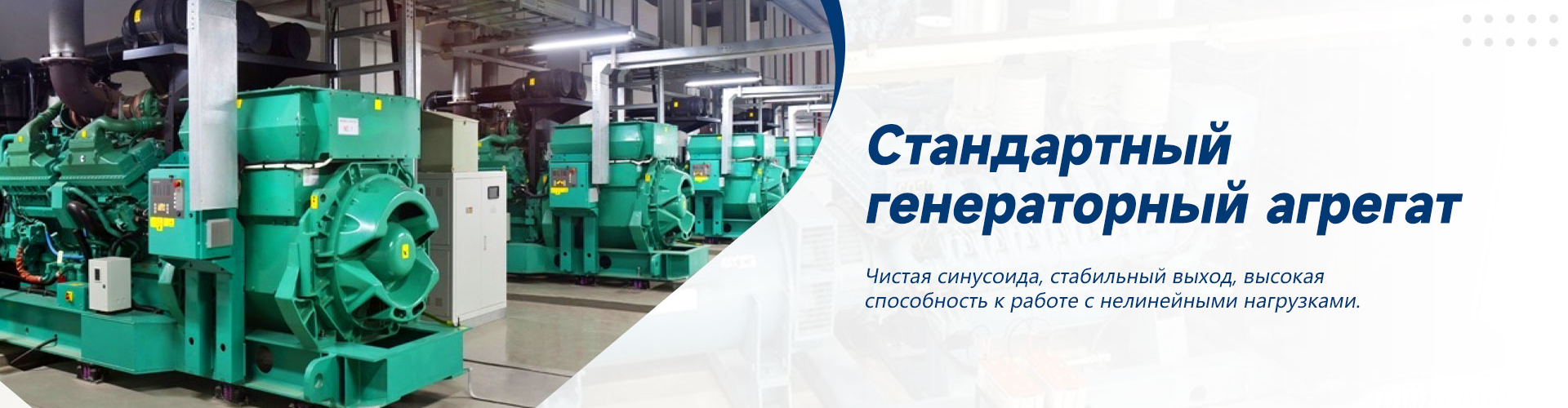
Is China the main buyer of diesel power plants?
2026-02-01
You see this headline and you immediately want to say both “yes” and “no”. The import figures are, of course, impressive, but behind them there is not just a “buyer”, but a whole tangle of reasons, segments and, importantly, changes. Many colleagues mistakenly reduce everything to giant infrastructure projects or reserve capacity for cities. Reality, as usual, is much more capricious and interesting.
Not just import: what statistics hide
If you look at the net import of aggregates, China is truly in the lead. But the key word is “clean”. A significant part of these imports is not final consumption, but intermediate consumption. China has long become the world's assembly shop, including for energy. Components, engines, control systems are imported, installed, and then the finished power plants or energy complexes are moved further - to Africa, the Middle East, and Southeast Asia as part of the “Belt and Road” projects. It turns out that the buyer’s statistics are often the statistics of the re-exporter and integrator.
The second point is segmentation. When they talk about “purchase”, they mean everything: from a compact 20-kilowatt installation for a remote geological exploration party to megawatt blocks for backing up a data center. The demand and acquisition logic in these cases are completely different. For the first, the minimum delivery time “from the wheels” is often important, for the second - months-long tenders, deep customization and reliability tests. China is active in both segments, but for different reasons.
And the third, most important point for understanding the trend, is the gradual but steady transition frombuyertomanufacturerand eventechnology exporter. Yes, ten years ago the premium segment (Cummins, MTU, Caterpillar assembled by Western or joint ventures) dominated in critical facilities. Now Chinese engineering companies, which grew out of installation teams, offer comprehensive solutions, where the diesel station is only part of the system. They learned not just to assemble, but to design for a specific task.
Field observations: from construction site to mine
Let me give you an example from practice. In 2018, we supplied equipment to supply energy to a temporary village at a large iron ore mine in Western China. The customer initially wanted “proven German engines”. But I encountered two problems: the delivery time for key components was six months, and complete inflexibility in adapting the control system to local conditions (they had their own, rather specific, monitoring protocols).
As a result, we turned to a local integrator, who took a licensed Chinese diesel engine as a basis (essentially the same Perkins or Volvo Penta under license), but “wrapped up” it. it with its automation and synchronization system, written specifically for those very protocols. And most importantly, I assembled and debugged everything on my site in three months. The facility was launched on time. It was not a choice between ?cheap? and “expensive”, and the choice is between “theoretically ideal?” and “practically working here and now?”. After such cases, trust in localtechnological solutionsgrows like an avalanche.
Another nuance that is rarely written about in reports is the service. Western brand offers perfect service... within a 100 km radius of the provincial capital. What if your diesel power plant is working on the construction of a gas pipeline in Xinjiang or in the mountains of Yunnan? An engineer from the regional center of a Chinese integrator company will get there faster and cheaper. This logistics and service network, built over the years, is a huge competitive advantage that directly affects the “customer” ability. Because they are not buying hardware, they are buying a guarantee of uninterrupted operation.
Case study: when imports are just part of the puzzle
I’ll tell you about one project that well illustrates the complexity of the chain. A Chinese mining company was developing a deposit in Central Africa. According to the contract, all major power equipment had to be European. That's what they did - they purchased diesel generators of a well-known brand. But! Auxiliary systems - fuel treatment, cooling, noise suppression, low voltage switchboards, remote control system - were all designed and supplied by a Chinese engineering firm. In fact, the “main buyer?” the imported core itself becameexporterrelated technologies and services for your own project abroad.
This is a typical picture today. Chinese companies are increasingly less likely to act as simple customers of ready-made boxes. They act as system integrators, for which the diesel power plant is a module. And they can buy this module from Cummins, they can assemble it themselves from imported and local components, or they can make it entirely at their own facilities, if the reliability requirements are not prohibitive. The choice depends on the economics of a specific project, and not on the abstract “brand prestige”.
It is worth mentioning here companies likeYuke Electrical Technology Co., Ltd. (Shandong). While studying the market, you come across their resourcevoyoko.ru. This is a good example of evolution. The company has grown from a team founded back in 2003 in Qingdao (Dever Electric Energy Technology), and now positions itself not as a simple hardware seller, but as an innovative enterprise combining R&D, technical consulting, custom processing and engineering. Their emphasis on brand building and technological innovation is precisely the answer to the market demand. Such players do not wait for someone to buy a diesel generator from them; they offer a comprehensive solution, where the generator may not be the most important part. And this is their strength.
Trends and doubts: what will happen next?
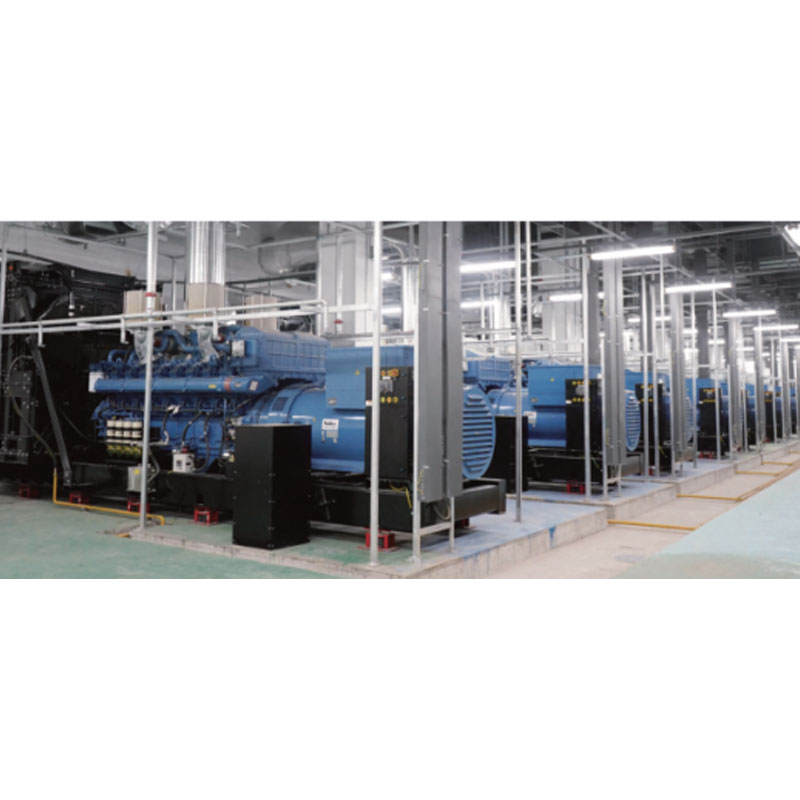
Now I see two differently directed trends. On the one hand, domestic demand for diesel generators forbackup powercommercial facilities (data centers, hospitals, factories) is only growing. Requirements for energy quality and speed of commissioning are becoming more stringent, which pushes for the purchase of highly reliable solutions, often with imported “filling”. This is a market for quality assemblers and integrators.
On the other hand, a strict policy to reduce emissions and the development of “green” power engineers create long-term risks for the entire diesel generation segment. Large cities are already limiting the use of diesel for constant energy supply. This is pushing engineering companies to look for hybrid solutions: diesel + solar panels + storage. And here Chinese manufacturers, who have extensive experience in photovoltaics and batteries, get a head start. They can offer a balanced turnkey hybrid package.
The question arises: will China remain the “main buyer”? I think the wording is outdated. He has already become the main oneconsumer, processor, integrator and exporter of solutionsin the field of energy supply, where diesel generators are an important tool that is gradually losing its monopoly. Do they buy a lot? Yes. But more and more often - not as an end goal, but as a component for a larger puzzle, which they themselves are putting together for the whole world.
Conclusions without gloss
So, returning to the title... If the question is taken literally - in terms of purchase volumes, perhaps yes. But this picture is deceptive. It does not reflect the main thing: China has emerged from the role of a passive consumer of finished equipment. Its industry has gone from copying and assembling to full-fledged engineering and the creation of its own technological standards in the field of energy supply.
Buying a diesel power plant today is often not about importing the final product, but about purchasing a critical component (for example, an engine) for your own, more complex system. Or even about the reverse process - when a Chinese company, having once purchased technology, now supplies ready-made energy solutions abroad, using, among other things, its accumulated competencies in diesel generation.
Therefore, when analyzing the market, it is worth looking not at dry import figures, but at what companies likeYuke Electric, do in this market. Their focus on R&D and comprehensive services is a true cross-section of the industry. They don’t just buy or sell units, they sell guaranteed energy security, under which they can put different technological units - diesel, gas, solar. And in this new reality, China is no longer just a buyer. He is one of the key architects.
-


-
-


WeChat

-
WeChat