

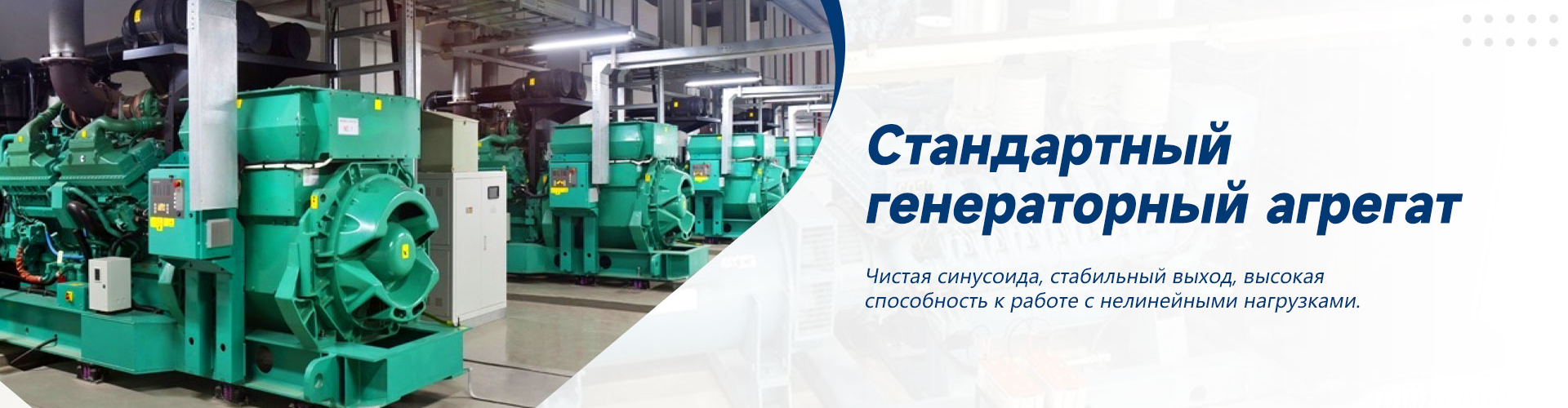
China: the main buyer of distributed power plants?
2026-02-01
You see this headline and you immediately want to say: Well, of course, China is buying everything! But in reality everything is more complicated. Over the past seven or eight years, I have observed how the very meaning of the word buyer in this context is changing. The distributed energy market is not about the purchase of ready-made container diesel power plants on a turnkey basis, as many still think. This is increasingly about complex technological partnerships, where Chinese players act not just as customers, but as co-developers and integrators of systems. And this is where the nuances begin that are usually lost in news reports.
From hardware to systems: how demand has changed
Previously, about ten years ago, a typical request from China sounded like this: We need a gas turbine of such and such power, fast delivery. Now the request has transformed. Now this: We need a 5 MW hybrid system integrating solar generation, LiFePO4 storage and a diesel generator for backup, with a control system that can operate on an isolated grid and optimize in real time for changing tariffs. The difference, as they say, is obvious.
Why is this so? The experience of local construction is enormous. They themselves have become world leaders in the production of solar panels, inverters, and batteries. But in the segment of highly efficient engines, low- and medium-power gas turbines, and also, critically, in software for managing complex hybrid microgrids (microgrid), they are still actively looking for partners. Not for copying, but for joint adaptation to your specific conditions: from industrial parks to remote villages in the western regions.
Let me give you an example from practice. One project in Sichuan province for a mining enterprise. Solar panels were also integrated locally, but the network control unit and gas piston units (GPU) were looked for abroad. The key was not the efficiency of the GPU itself, but how quickly its control system responded to load surges from crushing equipment and how accurately it linked with solar generation. The winner here was the one who offered not just equipment, but an open protocol for integration with their SCADA system. This is no longer the level of a purchase, but of a technological alliance.
The role of engineering companies: a bridge between technology and the market
This is where companies that understand both banks come to the fore. Let's take, for example,Yuke (Shandong) Electrical Technology Co.,Ltd(Yuke Electric). Check out their websitevoyoko.ruis a typical example of a modern player. They don't just sell hardware. Their history, coming from the DEVER Electric team since 2003, shows the evolution: from technical consulting and supplies to the full cycle - R&D, engineering, construction.
Such companies have become key conduits. They take, conditionally, German cogeneration technology, Japanese compressors, and also, possibly, their own developments in the field of monitoring and adapt this to the requirements of a specific Chinese thermal power plant that is modernizing its distributed network. They close that very gap: Western manufacturers are often not ready to deeply customize a product to local standards and bureaucratic procedures, and large Chinese energy companies do not want to bother with dozens of small foreign vendors.
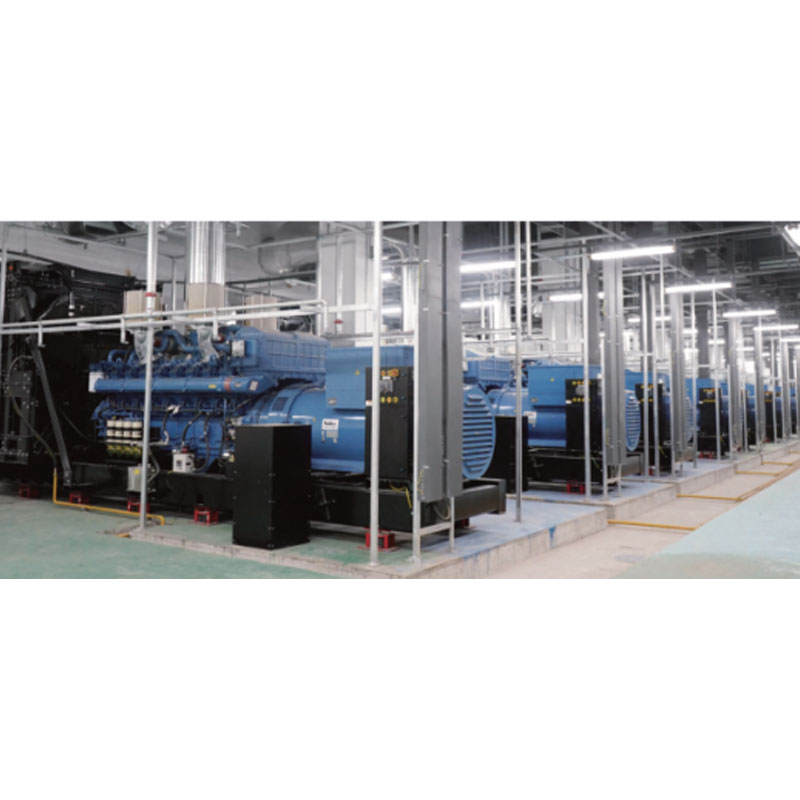
In practice, it looks like this: Yuke Electric can act as an integrator, offering a client in China not just a gas piston unit, but an entire energy center, where their own control system will be the brain, an imported engine will be the heart, and locally produced transformers and cooling systems will be the hands. Their value lies in this very seam, in the competence to assemble a working puzzle from dissimilar components. Without such integrators, many foreign technologies simply would not have found widespread use in the Chinese distributed generation market.
Not only buying: exporting models and frozen projects
Another big misconception is to consider China only as a buyer. Increasingly, they are becoming exporters of entire business models and distributed energy technologies, especially within the Belt and Road. Solar power plants, storage devices, smart control systems for micro-grids - they are already supplying this to Africa, Southeast Asia, and the Middle East. And often complete with financing. This changes the global picture.
But in China itself, not everything is smooth. I have personally seen projects that were frozen halfway through. The reasons are rarely technical. More often - changes in the policy of local authorities on land use or sudden adjustments in tariffs for connection to the general network, which made the economics of the project unviable. One project in Shandong for the construction of a biogas diesel power plant for the Buksul agricultural complex took two years precisely because of connection approvals and controversial tariffs for green energy. The equipment, by the way, had already been purchased - Italian, by the way.
This is an important point for any supplier: risk in China has shifted from technological feasibility to regulatory and administrative predictability. The success of the project now depends 40% on how well the local integrator partner understands this kitchen and can take the project through all levels. Simply bringing the best turbine in the world is no longer enough.
Focus on smart grids and hydrogen: the next round
Now the main excitement that I observe in professional circles and at specialized exhibitions in Shanghai and Guangzhou has shifted towards the integration of diesel power plants into broader smart grids and pilot projects with hydrogen. China is setting ambitious goals for carbon neutrality, and distributed energy is seen as a testing ground.
For example, there is an active search for solutions to use excess energy from wind turbines or solar parks to produce green hydrogen on site, and then use it in the same gas piston plants or fuel cells to cover peak loads. This is an area where no one in the world has ready-made solutions out of the box. And here China acts as not just a buyer, but a creator of demand for fundamentally new technological chains.
Integrator companies likeYuke Electrichere again in the center. Their expertise in custom machining, civil engineering and, crucially, research and development (R&D) becomes a critical asset. They can become a partner for a Western company developing, say, an electrolyzer, in order to test it in the real conditions of a Chinese industrial zone. This is no longer even a purchase of a station, this is participation in the creation of a new standard.
Bottom line: main buyer or main co-developer?
So is China the top buyer of distributed power plants? Yes, if we consider the volume of commissioning of new capacities. But this is a simplification that today hinders rather than helps us understand reality.
The reality is that China has become the main testing ground and co-developer of next-generation distributed energy solutions. He does not buy stations, but key technologies and competencies that he lacks, actively mixing them with his own and offering the world ready-made complex products and models. The market has become mature, capricious and demanding.
Therefore, for the supplier, the question now is not how to sell to China?, but how to integrate into this ecosystem? Through partnerships with competent engineering companies, through readiness for deep customization and joint R&D. Anyone who comes with a catalog of ready-made solutions can sell something else. But the real winners will be those who come with an open architecture, flexibility and a desire to co-write the code for the next energy transition. That, in fact, is the whole answer.
-


-
-


WeChat

-
WeChat