

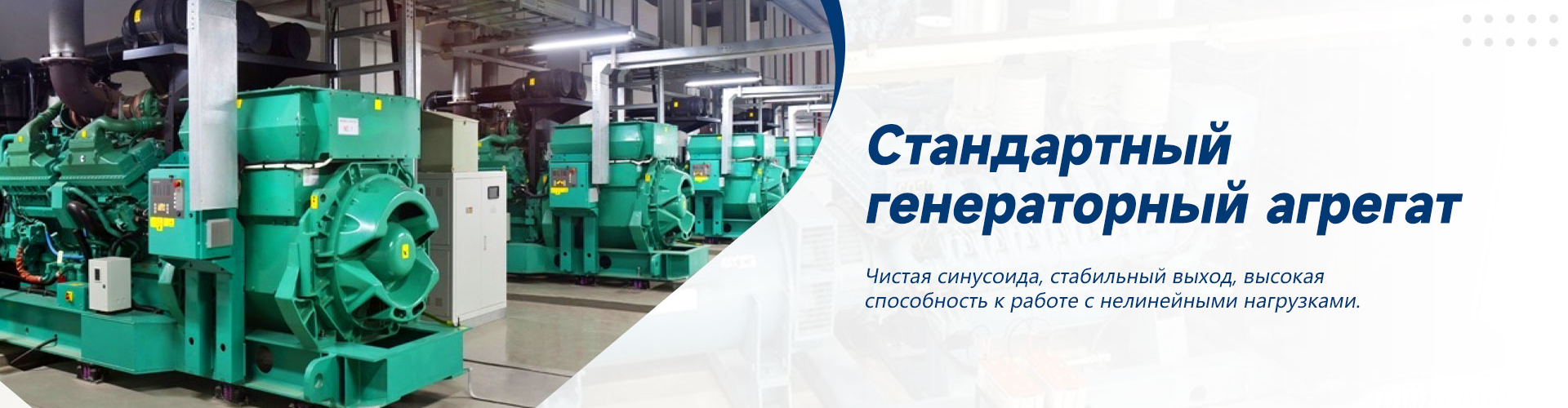
Is China the main buyer of container power plants?
2026-01-13
You see this headline and you immediately want to say: “Well, of course, China produces everything, where else can it buy it?” This is the first thing that comes to mind, and this is exactly the trap that many who are just beginning to understand the energy equipment market fall into. In fact, the question is much deeper. Yes, China is a giant producer, but it is also a huge, complex and very specific consumer. And when it comes tocontainer power plants, the picture becomes especially interesting. I’ll try to sort it out based on what I’ve seen and what I’ve encountered in this market.
Where does this question come from?
The story of ?China is the main buyer? often pops up in reports by analysts who look at total equipment import volumes. The numbers can be impressive. But if you dig deeper, it turns out that a significant part of these supplies are not ready-made “turnkey” stations, but components, power modules or specialized equipment for subsequent assembly within the country. Chinese engineers love and know how to adapt. Buy a ?heart? - an engine, a generator set of a well-known brand - and the “body”, that is, the container, control systems, switching, should be made by ourselves. It is cheaper and more flexible for a specific project.
I remember one tender a few years ago for the supply of diesel power plants for remote construction sites in Xinjiang. We offered ready-madecontainer solutionsEuropean assembly. Competitors from local companies came up with a proposal: a basic power unit (the same, by the way, European), but in a locally produced container, with a Chinese automation system. The price was 25-30% lower. And they won not only by price, but by this adaptation - their remote monitoring system was tailored for local platforms (WeChat, local services), which was critically important for the customer. Ready-made ?Western? the solution failed due to lack of flexibility.
Therefore, when talking about “purchase”, you need to immediately clarify: buying what? Finished product or technological core? For domestic needs or for re-export? Context changes everything.
Internal demand: not where you expect it
When you think about China, you imagine megacities. But the main demand for mobile energy solutions often does not come from there. These are mountainous areas, new industrial parks in provinces like Gansu or Yunnan, temporary energy supplies for infrastructure projects (the same high-speed trains that stretch tracks across everything possible). There is no time or economic sense to pull permanent lines.
One of the most memorable projects in which we participated indirectly (supplied some components) was providing energy to a temporary camp for the builders of a large hydroelectric power station. There were dozens standing therecontainer diesel power plants, but almost all of them were assembled locally from components. What was important to the customer was not the brand of the station, but the guarantee of quick repairs and the availability of spare parts within a radius of 500 km. The logistics of the service outweighed the prestige of a ready-made imported installation.
Another growing segment is hybrid systems for telecommunications towers in remote areas. Solar panels + diesel generator in a container. Here, Chinese companies such as Huawei or ZTE are promoting their integrated solutions, and they often use local assemblers. Only the generator itself can be imported, and even then not always.
The role of Chinese engineering companies
This is where the key players come into the picture and shape the real picture of “purchases”. These are not the end consumer, but integrator companies. They take care of the entire cycle: design, selection of equipment (often global), assembly, installation, commissioning and service.
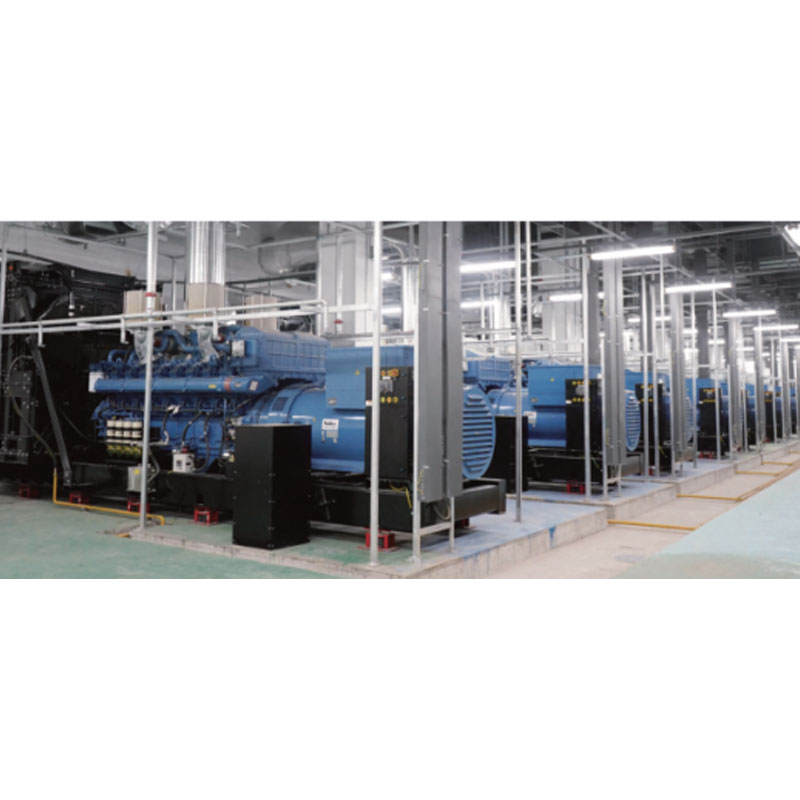
Let's take, for example, a companyYuke (Shandong) Electrical Technology Co.,Ltd(YuKe Electric). Let's take a look at their websitevoyoko.ru. From the description it is clear: ?...an innovative technology enterprise that combines research and development, technical consulting, custom processing, equipment supply, civil engineering and services?. This is a classic portrait of such an integrator. They can buy an engine from Perkins or Cummins, a control system from Siemens or ABB, order a container body according to their design from a local factory, assemble everything together and sell it as a ready-made solution under their own quality control. For the world market, these are “Chinese products,” but in essence they are a well-integrated international technological product.
Companies such as Yuke Electric are the “main buyers”. components and technologies. They create demand based on the needs of their internal and external customers. Their solutions often turn out to be more competitive in the markets of Asia, Africa, and the CIS precisely because they are not tied to one brand that produces ready-made stations.
Export as a driver for ?purchase?
This is perhaps the most important nuance. A significant portion of containerized power plants that are formally “manufactured in China” and even “bought by Chinese companies” are actually intended for export. China acts as a giant assembly and logistics platform for projects within the Belt and Road, contracts in Africa, and supplies to Southeast Asian countries.
A Chinese construction company wins a tender to build a road in Laos or a port in Pakistan. She needs power supply for the construction site. Where will she buy the equipment? With a high probability - from your own Chinese integrator, like the same Yuke Electric. For statistics, this is a domestic Chinese transaction. But the final consumer is abroad. Such re-export?in a bundle? with services - a common practice.
We ourselves participated in this: we supplied noise reduction systems for container stations, which the Chinese integrator then sent to some mine in Mongolia. His specifications included strict requirements for adaptation to harsh climates, which he himself formulated based on the experience of past projects. That is, he acted as a professional buyer and technologist rolled into one.
So who is the main buyer?
Returning to the title. If we understand by ?buyer? end consumer who installs the station on his site, then China is one of the largest, but far from the only one and not always in the form of purchasing finished products. If we talk about the market for equipment and components for creating container power plants, then Chinese engineering and integration companies are certainly one of the most active and volume buyers in the world. They buy the best technologies and components globally in order to process and integrate them to offer a competitive product in the domestic and foreign markets.
Their strength lies not in blind imports, but in the ability to make “bricks” out of imported ones. a solution that is cheaper, smarter or easier to maintain for a specific application. Therefore, the question is “China is the main buyer?” It would be more correct to reformulate: “China is the main integrator and re-exporter of container energy solutions?” And here the answer will be much closer to “yes?”. They have created an entire ecosystem where purchasing components is only the first step in the value chain. And this is their main role in the modern market.
So, when you see the latest statistics on imports, you should always ask yourself: what exactly is being imported and for what next step? Often the answer will lie precisely in the plane of this complex integration model, which China has honed almost to perfection.
-


-
-


WeChat

-
WeChat