

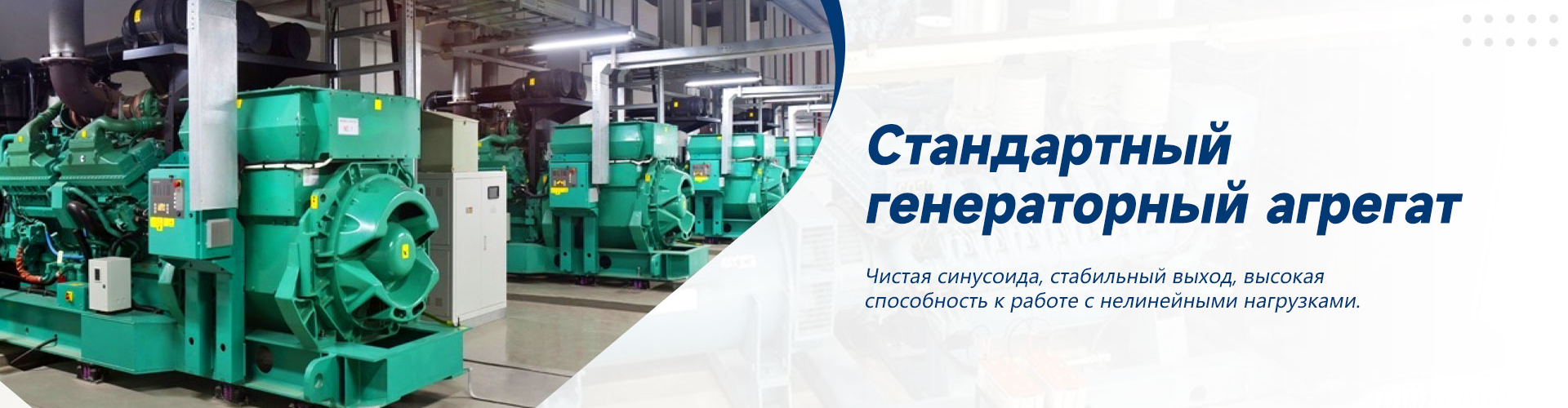
China: who is the main buyer of 1 MW gas power plants?
2026-01-21
When do you hear about “1 MW gas power plants?” and China, you immediately think about giant industrial parks or government networks. But the reality, at least from what I have seen over the past seven or eight years, is much more interesting and not so obvious. The main demand often does not come from where you expect it.
Not industrial giants, but network periphery
The paradox is that large industrial enterprises in China rarely order single units of 1 MW as their main solution. They either have their own larger thermal power plants or are connected to a powerful network infrastructure. Where is this segment then? He's unfocused. One of the key buyers isregional energy supply companiesin small towns and villages, especially in those regions where the network is weak or the seasonal load “jumps”. They don’t need a mega-installation, they need a reliable, relatively quick-to-install source to cover peaks or to power a new microdistrict until a normal line is laid out.
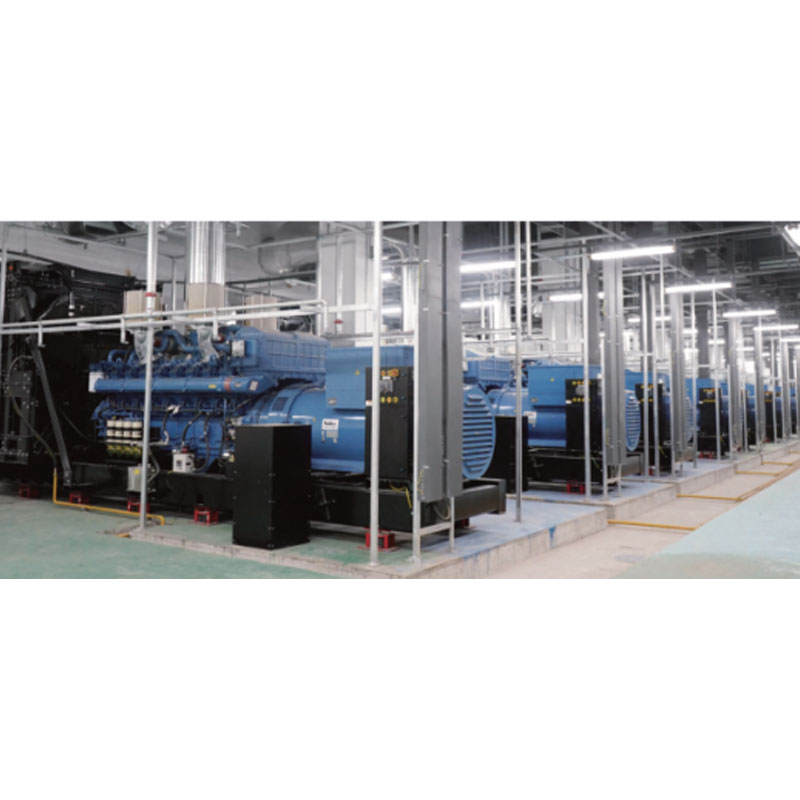
The second large segment is distributed energy facilities. For example, modern logistics hubs, medium-sized data centers, hospital complexes in satellite cities. For them, 1 MW is often the power of a backup or combined (heat and energy) source. What is important here is not so much the kilowatt itself, but integration into the existing infrastructure and automation. I remember a project near Jinan, where two such installations were installed in parallel for a data storage center. The main headache was not with the engines, but with the system of synchronization and control of heat flows.
And the third, often overlooked buyer is mining and processing enterprises in remote areas. Oil rigs, mines, quarries. Where there is no point in stretching power lines hundreds of kilometers away. For them, a gas station using associated or liquefied gas is often the optimal solution. But here’s a nuance: in such orders, the technical specifications can be very specific - requirements for dust protection, vibration resistance, operation in a wide temperature range. A standard catalog product will not always work here; adaptation is needed.
Errors in selection and pitfalls
Many buyers, especially those who are experiencing this for the first time, focus on the price per kilowatt and the brand of the engine. This is of course important. But from experience, the main problems arise later, at the operation stage, and they are related to the periphery and service. The gas treatment system is where the dog is buried. Chinese gas, even mainline gas, may have unstable pressure or composition. If you don't install the right filters, dryers, and regulators, your expensive engine will quickly fail. There was a case in Hebei, where a customer saved money on a gas purification system, thinking that “it goes through the pipe as normal?” After 400 engine hours, problems with the injectors began, downtime and repairs ate up all the initial savings.
Another point is the heat recovery system. For many projects, the payback is calculated precisely through cogeneration. But if there is nowhere to put the heat (for example, in the summer there is no need for heating or hot water at the site), then the efficiency of the entire installation drops significantly. We have to design absorption chillers or look for a neighboring consumer. This needs to be laid out at the very beginning, and not thought about after the fact.
And of course, the service. A station is not a refrigerator; you buy it and forget it. We need scheduled maintenance, spare parts, and the ability to quickly dispatch an engineer. Often the winner is the supplier who does not have the lowest price, but has a clearly built service network in the region. A buyer, especially a commercial one, fears downtime more than overpayment.
Who is on the market and how do the players survive?
The market is saturated. There are large Chinese manufacturers, such as those that make stations under well-known engine brands (Cummins, MTU, Caterpillar under license or in cooperation). There are more niche players who specialize in customization. Their strength is flexibility. They can assemble an installation for a specific type of gas (mine methane, biogas, liquefied propane-butane), for non-standard dimensions or climatic conditions.
An interesting niche is occupied by companies that entered production from the energy audit and design side. They understand the client's ultimate goal not as selling “hardware,” but as solving an energy problem. For example,Yuke (Shandong) Electrical Technology Co.,Ltd(YuKe Electric). I encountered their approach when exploring options for a combined energy project. They don't just offer a catalog, but start with technical consulting. Their websitevoyoko.ru— it’s more of a showcase; the real work comes from correspondence and site visits. As they themselves write, the company grew out of the DEVER Electric team, founded back in 2003 in Qingdao, and relies on innovation and the full cycle: from R&D to construction. For the buyer of a 1 MW station, such an integrated approach can be decisive, because it removes the headache of coordinating multiple contractors.
Those who survive are those who move away from simple equipment trading towards turnkey solutions. with guaranteed parameters. And those who can quickly respond to changes in regulation, for example, on environmental emissions standards. Now the requirements for NOx emissions are becoming stricter, and this immediately changes the list of recommended technologies and, accordingly, manufacturers.
Practical case: from application to launch
I will describe in general terms what the process usually looks like. Let's say there is a customer - the management company of a new residential complex with 300-400 apartments in the suburbs. The main electricity is from the network, but a reserve and a heat source for hot water are needed. A gas piston cogeneration unit of ~1 MW is selected.
The first is not a purchase, but a feasibility study. Supplier (take for example the sameYuke Electric) considers not only the cost of the station, but also installation, gas supply, integration with the heating circuit of the house, expected savings from cogeneration and possible state support programs for energy-efficient solutions. At this stage it may be more profitable to take two 500 kW units for greater flexibility.
Then comes the design and adaptation stage. The exact location (noise, vibration, exhaust), gas supply system, connection points are agreed upon. Delays often arise here - you need to obtain permits from local gas and energy authorities. A good supplier will take care of these processes or at least provide clear instructions.
And finally, installation supervision, commissioning and personnel training. A critical stage. You can supply the best components, but if the control system is not configured correctly or the operator is not trained, there will be no benefit. Successful projects are remembered precisely by the coordinated work of all parties at this final stage.
A look into the future of the segment
Where is this market heading? 1 MW is no longer just a generator in a container. The trend is towards digitalization and remote monitoring. The buyer increasingly wants to see online not just “works/doesn’t work?”, but detailed analytics: efficiency, gas consumption, forecast of maintenance requirements, calculation of savings in real time. This is becoming the standard for new projects.
The second is hybridization. Gas station + solar panels + energy storage devices. For the same remote sites or neighborhoods, this allows us to further reduce dependence on the network and optimize fuel costs. It is difficult to manage such hybrid systems, but the technology is already there.
And third - ?green? gas. So far this is more of a topic for Europe, but in China they are also starting to talk about biomethane and hydrogen. Adaptation of gas piston units to these types of fuel is a matter of time. Those manufacturers who already have R&D in this direction will benefit when demand appears. In the meantime, for the main buyer - the one from small cities and distributed energy - the key remains reliability, total cost of ownership and the availability of competent technical support on site. Everything else is secondary.
-


-
-


WeChat

-
WeChat