

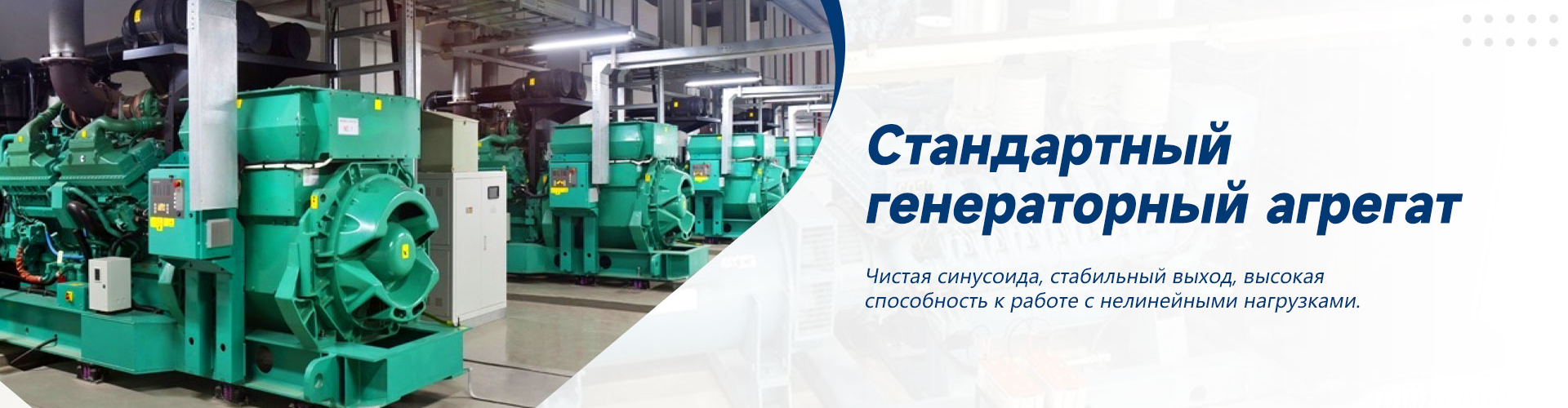
China: the main buyer of gas generators?
2026-01-21
This is a question that often comes up in conversations at trade shows or in correspondence with suppliers. I’ll say right away that the answer is not as clear-cut as it seems. Many, looking at the scale of Chinese industry, automatically think: Well, of course, they will buy everyone. But in reality, everything depends not on the desire to buy, but on the specifics of demand, energy policy and, more importantly,end use. China is not one giant market with uniform needs, but a patchwork of regions with different access to gas, different electricity tariffs and different environmental regulations. And this is where the fun begins.
Where do the legs of a myth come from?
The idea of China as a bottomless consumer of gas-fired power plants often comes from the equipment manufacturers themselves, especially European ones. They see plans to phase out coal, the development of the Power of Siberia gas pipelines and, in general, draw a logical conclusion. But on the spot everything looks different. State networks in China are monstrously powerful and, critically, very stable. For mainstream industry, backup power is often provided by diesel generators as a more common and versatile solution. A gas generator is not just plugged in and works. Infrastructure is needed: gas supply, approvals, special safety requirements. In densely populated industrial areas this is strict.
Where is the niche then? It exists, but it is spotty. Firstly, facilities that already have access to main gas, but are located in regions with a less reliable network. Secondly, cogeneration projects (CHP) at the local level to provide heat and electricity to residential complexes or industrial parks - this direction is supported. Thirdly, specific industries where exhaust purity is critical, or where associated gas is a by-product. But this market has not become as widespread as diesel units and, I think, will not become in the foreseeable future.
I remember about five years ago we actively monitored this segment for one of our partners. We ran into two main barriers: the first was competition with local manufacturers like Weichai, who offered cheaper units, albeit with slightly worse environmental performance. The second, and main one, is the issue of service. Chinese engineers are accustomed to diesel. Finding a specialist in gas piston installations at a reasonable price in Henan or Sichuan provinces is quite a task. Selling hardware is just the beginning. Without a ready-made service network and a pool of trained technicians, the project is doomed.
Case: when a gas generator makes sense
I will give a specific example to make it clearer. A few years ago we worked on a project for a food processing plant in Shandong. They had their own gas-fired boiler room and constant problems with limits on electricity supply from the network, especially during the summer peak period. Installing a high-power diesel generator promised huge fuel costs and problems with environmental inspections. The solution came in the form of a gas piston cogeneration unit.
The installation burned the same main gas as the boiler house, produced electricity to cover peak loads and shortages, and the recovered heat was used to heat water for process needs. The overall efficiency of the system jumped to 80-85%. The economic calculation of the payback fell within 3-4 years acceptable to the plant management. The key was the presence of already supplied gas and the need for heat. Without the thermal component, the project would not have taken off.
Here it is worth noting the role of companies that do not just sell equipment, but offer engineering solutions. For example,Yuke (Shandong) Electrical Technology Co.,Ltd(Yuke Electric), which grew out of the DEVER team, founded back in 2003 in Qingdao. Their approach, judging by the projects, is precisely from this area - not a generator, but a complex: research and development for the task, technical consulting, supply and integration of equipment. For gas projects, such a full-cycle approach is not a luxury, but a necessity. You can view their portfolio atvoyoko.ru— it is clear that the emphasis is on technological innovation and custom solutions, rather than on warehouse trading.
Failed attempts and lessons
There were, of course, failures. One of the most revealing is an attempt to promote compact gas generators for small businesses, such as restaurant chains or small hotels. The logic seemed ironclad: stable gas, quieter and cleaner than diesel. But in practice, it turned out that it is easier and cheaper for the owner of a small business to negotiate with the local power grid or install a simple diesel generator for a rainy day. The complexity of installation, higher initial costs and the need for specialized maintenance were a killer economics.
Another stumbling block is gas quality. In different regions of China, the composition and pressure of the main gas may fluctuate. Equipment that works perfectly at a stand in Europe may begin to act up somewhere in Hubei province. Adaptation and additional cleaning and stabilization systems are required, which again comes at a cost. We somehow lost a good tender precisely because our estimate included an expensive gas preparation module, and local competitors forgot to indicate this article, having won on price. What happened to their equipment after six months of operation is not difficult to guess, but the contract is already theirs.
An important conclusion follows from this: success in this market is not about sales volumes, but about deep immersion in the customer’s specific problem and the willingness to bear responsibility for the entire life cycle of the system. These are long, slow projects.
What happens to demand in the end?
So is China the main buyer? In quantitative terms, probably not. The world leader in installing new gas piston generator capacities remains the region with a developed gas infrastructure and a liberalized energy market: the Middle East, North America, and partly Europe. But in a qualitative, technological sense, the Chinese market is extremely important. It forces suppliers to think not in the paradigm of selling a unit, but in the paradigm of integrating an energy solution.
The demand here is structured, rational and tied to specific economic calculations. It is not fueled by momentary panic or government subsidies for everything. The buyer (we are talking about serious industrialists) asks tough questions about the payback, reliability and localization of the service. And that's right.
The future, in my opinion, lies not in flooding China with generators, but in creating local engineering and service alliances. It is along the path of integration, customization and responsible support that those who remain in this market for a long time follow. Like the sameYuke Electric, positioning itself as an innovative full-cycle technological enterprise - from R&D to construction and service. This is the answer: China is the main buyer not of gas generators as such, but of complex, smart and efficient solutions for energy supply, where the gas generator can be just one piece of the puzzle. And understanding this difference is what separates real players from observers.
-


-
-


WeChat

-
WeChat