

China: who is the main buyer of 100 kW diesel power plants?
2026-02-01
I often hear this question, and many immediately think about large construction sites or factories. In reality, the picture is more complex, and the key buyer has shifted significantly over the past 3-5 years. If previously these were mainly contractors at government facilities, now the driver is a medium-sized business that solves the problems of autonomy and redundancy, and often in conditions where the network is not so simple.
Where do the legs of demand come from?
100 kW power is a very specific segment. This is not a small ?carrying? 10 kW for a store, and not a megawatt unit for an entire microdistrict. This is the golden mean that meets the needs of a small production, logistics complex, agricultural enterprise or hotel. Why her? Experience suggests that this is often the minimum sufficient power to run critical loads: refrigeration units, compressors, part of a conveyor line, life support systems.
Previously, many people took, say, 200 kW with a reserve, but now they consider money more strictly. And it turns out that a correctly calculated load of 80-90 kW ideally falls on a station of 100, giving a small reserve. The key word here iscalculation. I have seen many cases when people bought by eye? and either overpaid for unused power and fuel, or, worse, overloaded the unit. The latter is a direct path to early overhaul.
An interesting shift has occurred with the emergence of more private industrial parks and remote manufacturing sites. There, infrastructure, especially electricity supply, often lags behind development plans. The entrepreneur rented a workshop, but connecting a powerful line takes six months. What to do? Putdiesel power plantas a temporary but full-fledged source. And then often she remains as a backup. This is a typical scenario.
Buyer profile: not who you expect
So who is he? Most often, this is not a state tender, but the owner or technical director of a private company. He comes with a more or less clear task. His pain is not the lack of information, but the excess of offers and the complexity of choice. He has already called several suppliers, received a bunch of offers with different engines (Perkins, Cummins, Yuchai, Deutz are often mentioned) and generators (Leroy Somer, Stamford, Marathon) and is now trying to understand where the price-quality ratio is adequate, and where they are trying to sell him old stuff under the guise of new.
A very important point is a package purchase. Often an order comes not for one unit, but for several at once for different objects of the same network. For example, a network of car washes or food production facilities in one region standardizes equipment. Here, not only the unit itself is important, but also the ability of the supplier to provide service at different points. This is the very point where many local dealers sag.
Another type of buyer is contractors, but not giants, but regional firms that have won a contract for, say, the construction of road infrastructure in the region. They have a limited budget, tight deadlines, and they need a reliable “workhorse” that will stand in the field under a canopy for a season and work out its hours. For them, it is often not the engine brand that is critical, but the availability and speed of delivery of spare parts in their region. I saw how they were choosing between a more famous brand and a less popular one, but with a spare parts warehouse 200 km from the facility. We chose the second option.
Errors of choice and pain in places
We can talk for a long time here. The most common mistake is saving on the automation and switching system (ATS). They install the station, but connect it through a manual changeover switch. Looks like we saved money. And then, when the network is turned off, the technological cycle is interrupted, and the raw materials go to waste. Losses for one such case cover the cost of a high-quality AVR shield. You explain this to the client, but not everyone hears until they encounter it.
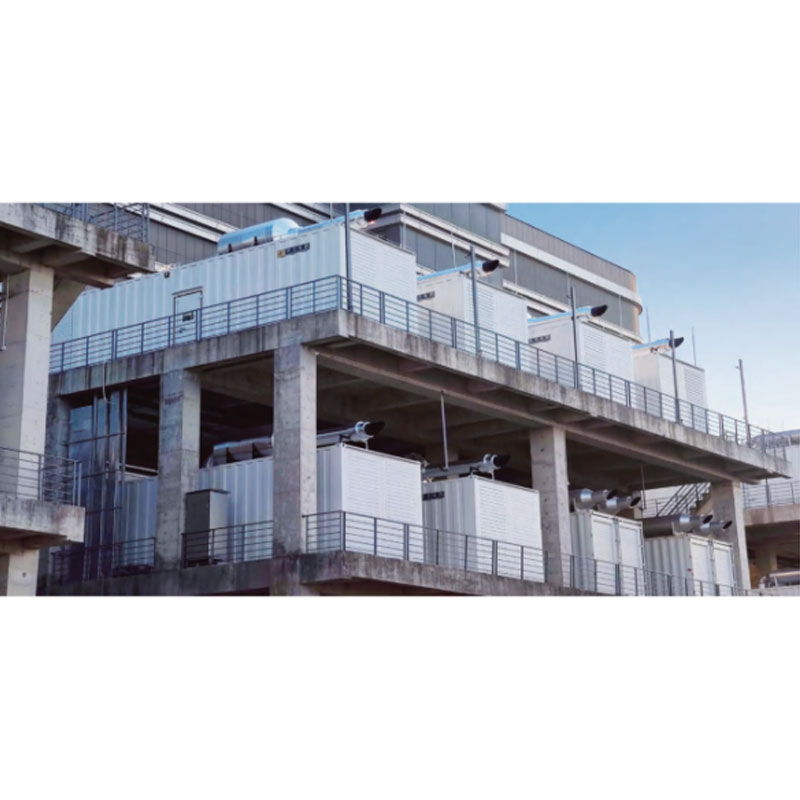
The second pain is noise and exhaust. Especially for objects that are located near residential buildings or inside some complexes. The client buys the station, installs it, and then inspections come or neighbors complain. We have to screen it, build casings, install additional mufflers. This is an additional cost and location. Now smart buyers immediately put this into the project and look fordiesel power plantsin a ready-made all-weather casing (hood) with a reduced noise level. This is a trend.
And of course, fuel. The quality of diesel fuel in the regions is a different matter. Fine filters are changed many times more often than according to regulations. Good suppliers always focus on this and recommend specific solutions for fuel preparation. But this is often perceived as an attempt to sell too much. Then the client calls and says: “The engine is not working, the soot is clogged?” You open the history - the operating time is 500 hours, and the fuel filter is like original. No questions.
Case: from request to launch
Let me give you an imperfect but real example from practice. A client contacted us - a small meat processing plant. We need a backup source during planned network outages (they had these once a month for 8-10 hours). The load is refrigeration chambers and part of the lighting. We counted the peaks, it turned out to be about 85 kW. The client wanted to save as much as possible.
We proposed an option with a Weichai engine and a Stamford generator on a common frame, with a basic control panel. The client found an offer on the Internet that was 15% cheaper from an unknown supplier. I bought it there. Six months later the call: “It starts, but under load the voltage floats, the equipment turns off?”. We came to see. It turned out that the generator set was not new, but with mileage (the clock had been reset), and even the frequency converter was for the European market (50 Hz, but with different settings). As a result, the client spent another 20% of the original estimate at our station to get everything in order. Moral: the market is full of “over-shoeed” people. offers, especially in this power range.
In contrast, there is a story about a company that was engaged in sand mining. They needed a mobile source to power the pumps and flushing equipment at the new site. We chose the chassis option -100 kW diesel power plantwith casing. The factor of mobility and resistance to vibration was important. It has been in operation for three years now, more than 7,000 hours of operation, maintenance according to regulations. Here the client initially went to a specialized manufacturer who understands the specifics.
Where to look for a reliable supplier?
This is perhaps the most difficult question. The Chinese market is huge, from artisanal workshops to high-tech factories. My advice is to look not at pretty pictures on the website, but at the history of the company, the presence of its own engineering capabilities and, what is critical, open information about projects. If a company has been on the market for 10+ years and has completed projects that can be verified, this is a good sign.
For example, let's takeYuke (Shandong) Electrical Technology Co.,Ltd (Voyoko). The company was formed from a team that has been operating since 2003. This is not just a reseller. Their websitevoyoko.rushows that they deal specifically with complex solutions: from development and consulting to delivery and construction. For the buyer of a 100-kilowatt station, this is important. Why? Because such a supplier will most likely be able to correctly calculate the load, offer a hood or container design, assemble the required configuration of the control panel, and not just sell “iron from the motor”. Their background at DEVER Electric Energy Technology speaks of a technological background.
When choosing, always ask questions: “Do you have your own production of frames and assemblies?”, “Do you provide a manufacturer’s passport for the generator?”, “Can you adapt the ATS to my specific inputs?”. The answers will immediately cut out a lot of noise. A supplier like Yuke Electric, which positions itself as a full-service innovative enterprise, is usually ready to answer such questions in a detailed and technically competent manner. This is felt in the dialogue.
Instead of a conclusion: a short checklist
So, to summarize my experience, the main buyer of a 100 kW diesel power plant in China today is a pragmatic medium-sized business. He doesn’t want the cheapest, but the unit that is optimal in price/reliability/service. He is increasingly looking not for a “motor-generator”, butturnkey solution, including calculation, delivery, installation and service.
When choosing, look at the history of the supplier (minimum 5-7 years), request real cases, pay attention to the possibility of customization. Don't skimp on the automation system and wiring. And be sure to consider future operating costs—the availability and cost of parts for your chosen powertrain in your area.
The market has matured, and the main buyer has become smarter. He does not buy kilowatts, but a guarantee of the continuity of his business. And 100 kW is exactly the power that often finds itself at the epicenter of this problem.
-


-
-


WeChat

-
WeChat