
China: the main buyer of diesel power plants ?Azimuth??
2026-02-01
You see this headline and you immediately want to clarify it. Because the question is posed too straightforwardly. Yes, China is a huge market for power equipment, but when it comes to specific brands, like Azimuth, things become less clear-cut. A common mistake is to consider the Chinese market monolithic and easy to enter. In fact, this is a complex puzzle of government tenders, private projects, local manufacturers and specific certification requirements. And the position of the “main buyer?” — it is floating, depends on hundreds of factors.
Who are ?Azimuth? on a Chinese field?
When you hear about diesel power plants ?Azimuth? in China, the first thought is that this is a Russian brand, quite famous in the CIS and some Asian markets. But in China their name is not heard. Not because they are bad, but because the local market is tied to its giants like Weichai, Yuchai, Cummins (yes, they are fully localized there). ?Azimuth? It comes here more often as a niche solution - for projects with Russian equipment, for remote sites where specific compatibility is needed, or through subcontractors.
I personally encountered a situation where equipment with an “Azimuth” engine was supplied to a site in Xinjiang. Not as a main power plant, but as a backup source for auxiliary systems that served equipment from Russia. The customer chose them not because of their global brand, but because they already had positive experience with service and spare parts for other equipment. This is the key point: in China they often buy not an abstract “brand”, but a specific solution for an existing infrastructure or for future maintenance costs.
And here it is important to understand the structure of imports. China does not purchase ready-made power plants ?Azimuth? wagons. More often we are talking about the supply of engines or power units, which are then integrated into generator sets at local assembly plants. Or, less often, about ready-made stations for very specific projects. Therefore, to say that China is the main buyer is a little incorrect. Rather, this is one of the potentially significant markets for components or specialized solutions of this brand.
Market landscape: where is the place for imported solutions?
Imagine a Chinese engineer responsible for the power supply of a new mining and processing plant. In front of it are catalogs of dozens of local manufacturers with excellent prices, full GB certification and instant service support in any province. Why will he consider ?Azimuth?? Only for a very good reason.
There are such reasons. Firstly,climate adaptation. Equipment originally designed for the cold of Siberia may have an advantage for projects in the cold highlands of China. Secondly,politics and long-term contracts. Joint Russian-Chinese ventures or projects within the framework of the Belt and Road Initiative? sometimes they prefer to use familiar technology that has been tested in joint work. The risk of breakdown is lower when both parties understand its design.
But there was also the opposite experience. I remember the story when a batch of ?Azimuth? for standby generators has encountered problems in coordinating environmental regulations at the local level. Chinese diesel emissions standards are changing rapidly and may vary from region to region. The customer had to urgently modify the exhaust cleaning system, which ate up some of the savings from the initial purchase. This is a typical "underwater rock" for any imported equipment in China.
The role of local players and integrators
Here we cannot fail to mention companies that operate at the intersection of international brands and the Chinese market. They act as a bridge. Take, for example, the companyYuke (Shandong) Electrical Technology Co.,Ltd(YuKe Electric). Looked at their websitevoyoko.ru- a typical profile of a modern technology integrator. The company positions itself as an innovative enterprise combining R&D, technical consulting, supplies and engineering.
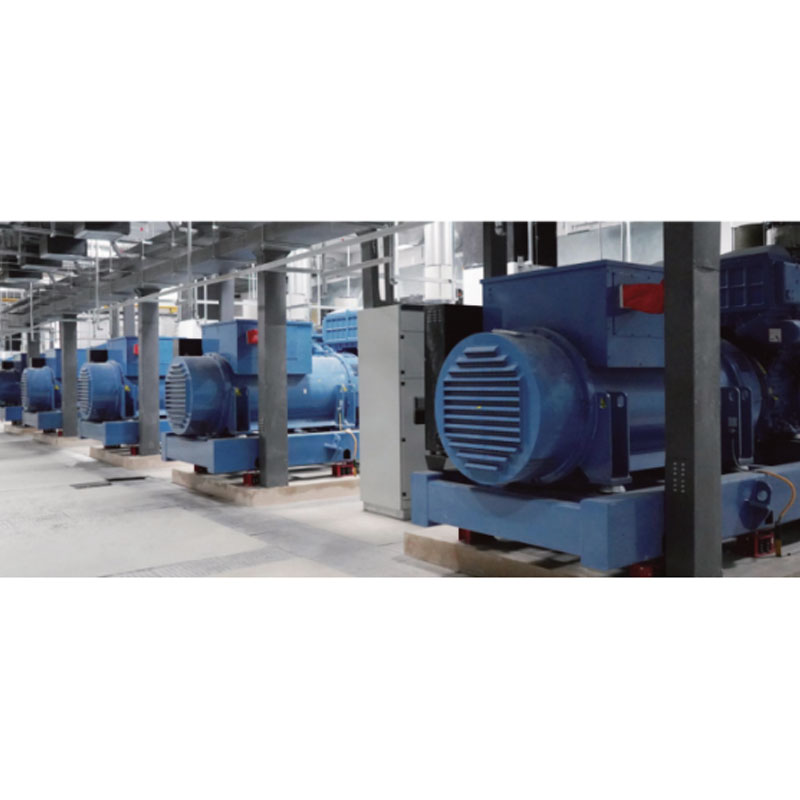
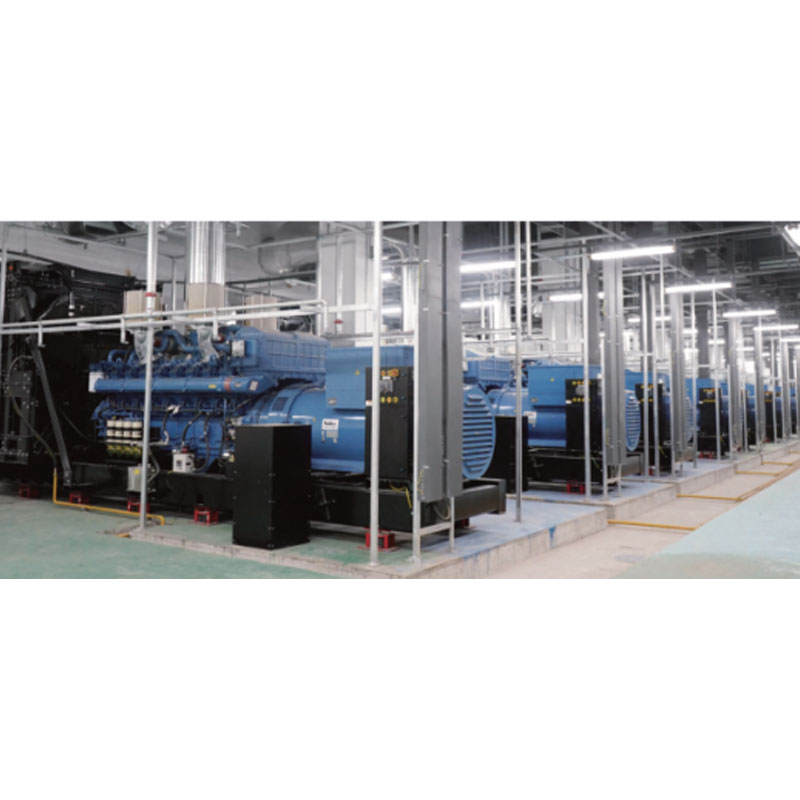
Such companies are key agents in the market. They don't just sell hardware. They can take an Azimuth engine, supplement it with a Chinese or European-made generator, package it in a noise-absorbing casing that meets local standards, and offer the customer a ready-made, certified and guaranteed turnkey solution. For a brand like ?Azimuth? cooperation with such integrators asYuke Electric, often the only effective way to enter the complex Chinese market.
From the description of the company it is clear that it grew out of a team founded back in 2003 in Qingdao. This means that they have behind them not just a trading history, but real engineering experience and an understanding of local specifics. It is precisely such partners who can competently “package” imported equipment, making it attractive and legal for the Chinese customer, be it a construction site or an industrial enterprise.
Practical difficulties and pitfalls
Let's say the decision on a trial delivery has been made. What's next? Customs clearance is a separate saga. HS codes, certificates of conformity, quality checks. Chinese customs officers are very scrupulous. One inaccuracy in the documentation and the cargo will get stuck in a temporary storage warehouse, and this is a direct loss. We need a local agent who knows all the procedures from the inside.
Service and logistics of spare parts is the second sore point. If for a local engine a spare part can be obtained within 24 hours anywhere in the country, then for ?Azimuth? the period may take weeks. This means that when planning a project, you need to either create an increased guarantee stock of critical parts, or have firm agreements with the distributor on urgent deliveries. Without this, even the most reliable engine will lose to a Chinese competitor simply due to the risk of prolonged downtime.
And the third point is the price. It is rarely competitive at the level of a simple single purchase. Benefits arise within the framework of a large long-term contract where the total cost of ownership is taken into account, or in specialized projects where non-standard characteristics are important (for example, operation on a specific fuel or in an extreme temperature range).
Conclusions: not a buyer, but a strategic partner
So is China the main buyer? In quantitative terms, hardly. The market volumes of local producers are not comparable. But in qualitative, strategic terms, China can be a critical partner. This is a market that tests a brand’s strength, flexibility, and ability to work in a complex regulatory environment.
Success here depends not on mass sales, but on choosing the right niches: remote northern territories, joint interstate infrastructure projects, facilities with an existing fleet of Russian equipment. And, more importantly, from choosing the right local partners - engineering companies that understand both technology and the market.
Therefore, returning to the title. Question ?China: main buyer?? better to reformulate. More accurate would be: ?China: a strategic platform for testing and adapting the brand ?Azimuth? in conditions of fierce global competition??. And the answer to this question will be much more interesting and meaningful for any professional in the industry. This is not a story about one-time sales, but about a long game in one of the most demanding markets in the world.
-


-
-


WeChat

-
WeChat