

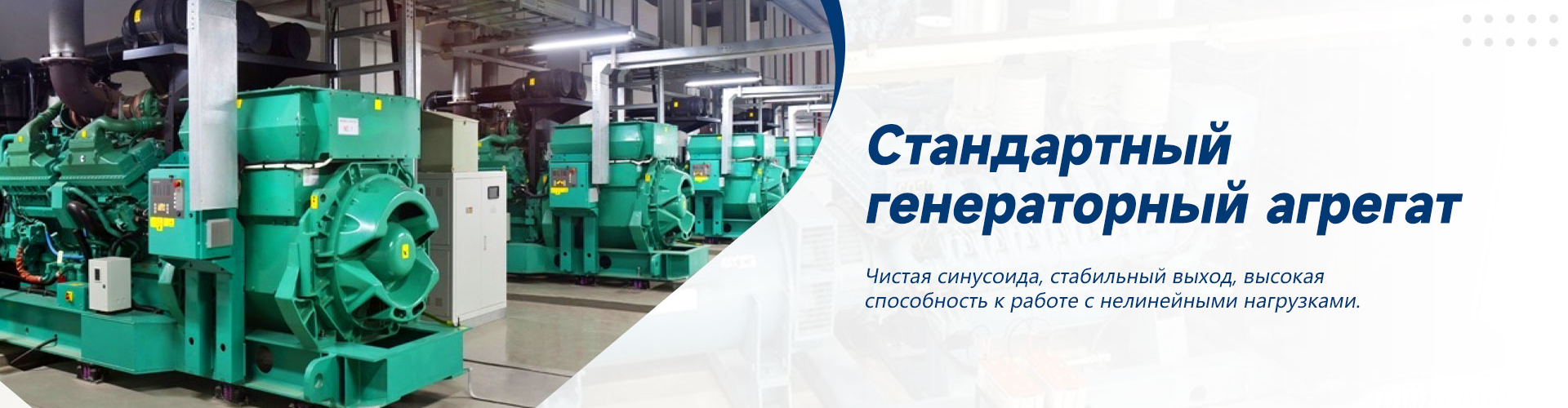
Is China the leader in diesel generators?
2026-01-13
This is a question that constantly comes up in conversations with clients and on industry platforms. Many people immediately imagine endless factories and the lowest prices. But leadership is not only about volumes. This is about what happens in a warehouse in Novosibirsk at -30°C, when you need to start a backup source, or on a construction site somewhere in Kazakhstan, where the delivery date of the project depends on the reliability of the unit. I’ll try to sort it out based on what I’ve encountered myself.
What's behind the production numbers?
Yes, in terms of the number of units produced, China is certainly in the first position. But if you dig deeper, it turns out that the market within the country and products for export are often two different worlds. Many local factories work on internal projects, where price requirements can dominate everything else. We almost never see their products outside of China.
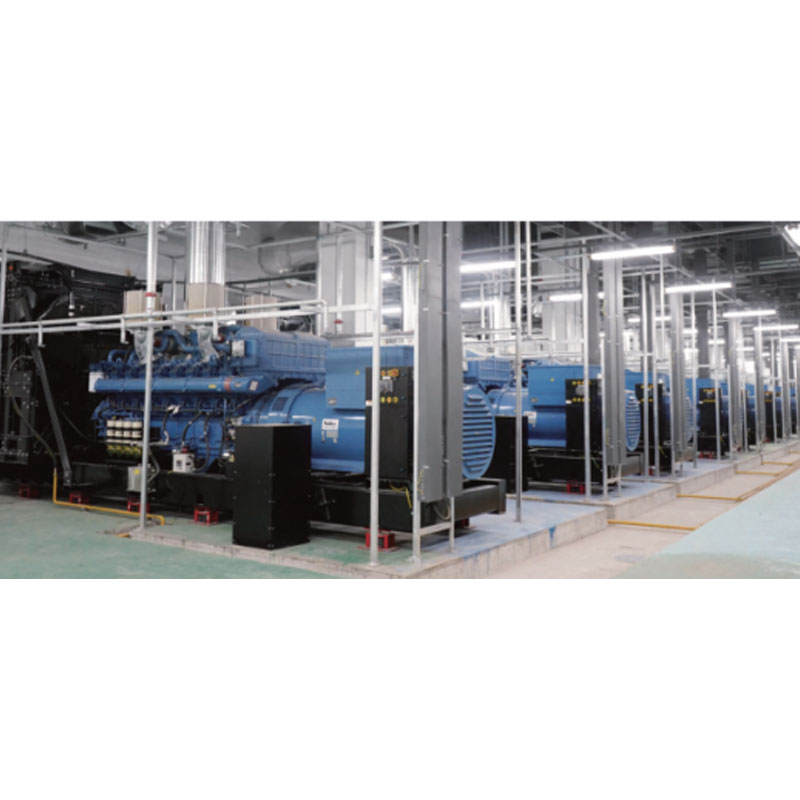
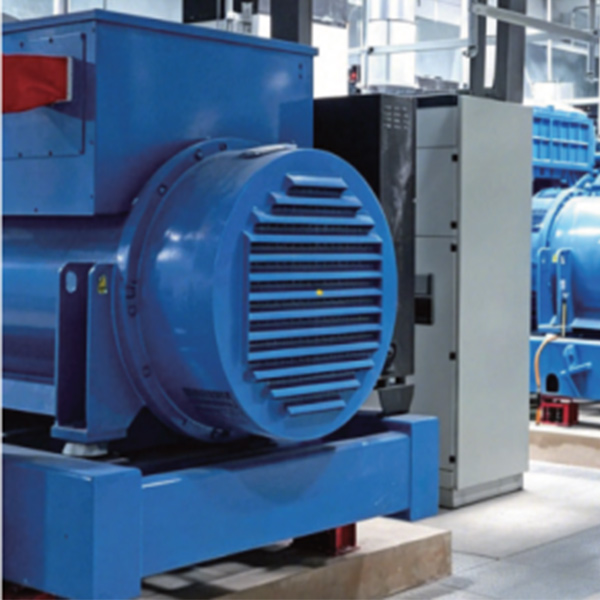
But those who have reached the international level are a different story. They have gone from simple copying to serious investment in R&D. Take engines, for example. Previously, everything revolved around the licensed production of Perkins, Volvo, and MTU. Now Chinese manufacturers, such as Weichai, Yuchai, have made serious progress in their own developments. I won’t say that they have already caught up with the leaders in all parameters of service life and specific fuel consumption in the premium segment, but for most commercial and industrial tasks theydiesel generatorsoffer more than adequate value for money.
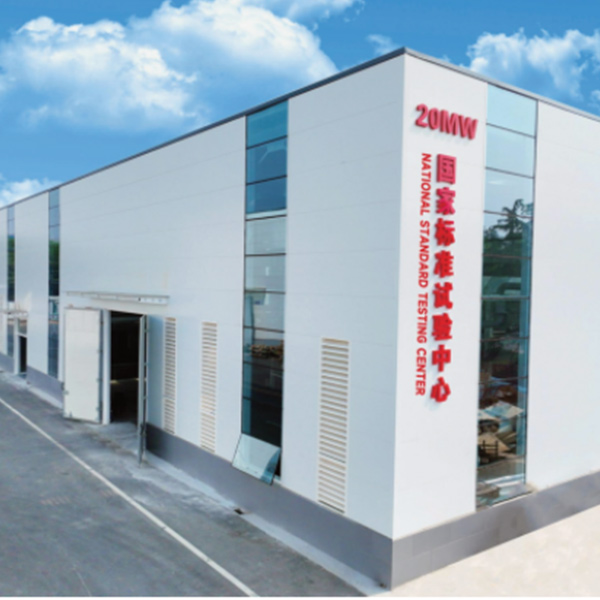
It is worth mentioning here about companies that have relied on the full cycle and brand. Here, for example,Yuke (Shandong) Electrical Technology Co.,Ltd(Yuke Electric). They grew out of the DEVER team, which has been working since 2003. Their approach is not just about assembling from purchased components. They position themselves as an innovative enterprise with their own developments, which is now a key trend for the Chinese market. Check out their websitevoyoko.ru— it is clear that the emphasis is on technology and integrated solutions, and not just on price. There are more and more such players, and they form a new level of perception.
?Made in China?: from vocabulary to specification
Previously, the main argument was cost. Now, working on projects for the CIS, I see that the demand has shifted. Clients ask about compliance with GOST, about adaptation to cold climates, about the availability of service centers. And Chinese factories are reacting to this.
I remember the story of the supply of power plants for a chain of stores. The customer initially wanted a European brand, but the budget was limited. We offered an option from one of the large Chinese manufacturers, but with a key condition: everythinggenerator setshad to be equipped with starters and batteries with increased starting current, and also have pre-heating as standard. The factory agreed to accommodate without a significant increase in price. In Europe, such customization would cost many times more and take longer.
And this is their strength - flexibility. You can order a batch of 50 units with specific requirements for control panels (say, with Russian language support and an interface for ASKUE), and they will do it. Try to negotiate this with some European brands for small series - they will run into standard cataloged solutions.
Where are the weak points?
Don't flatter yourself. Flexibility and speed sometimes come at the expense of consistent quality. One of the main headaches is control at the exit from the plant. A batch may arrive where 9 out of 10 units are ideal, and one will have overtightened bolts on the frame or an incompletely soldered terminal on the panel. It’s a small thing, but at the facility it results in downtime. Therefore, now any serious importer either has a representative at the factory for inspection before shipment, or works only with those suppliers who have strict internal quality control.
Another point is the long-term availability of spare parts. Everything is clear with the Cummins engine; the dealer network is global. What if you have a custom control panel or a factory-designed alternator? Do they guarantee delivery of the same board in 7-10 years? This is a question about the reputation and sustainability of the manufacturer itself. Companies like Yuke Electric, which claim a full cycle from design to construction, should theoretically have better control over this chain.
Not just a generator: ecosystem and integrated solutions
Leadership today is not just about selling hardware. This is to offer a solution. And Chinese companies quickly learned this. We are talking about container designs with noise insulation, hybrid systems with solar panels, and monitoring systems with remote access via cloud platforms.
At one of the exhibitions in Moscow, I saw how a Chinese engineer, right at the stand, connected via a tablet to a working generator somewhere in Shanghai and showed diagnostics in real time. It makes an impression. Of course, behind a beautiful interface there must be a reliable hardware base and stable software, but the very fact that such technologies have become the standard for the middle price segment speaks volumes.
It is an integrated approach, as stated in the description of Yuke Electric - “research and development, technical consulting, equipment supply, engineering construction and services?” - becomes a new competitive advantage. They are no longer just a factory, but an engineering company that can take on part of the design work.
Practical view: what to enter the CIS market with?
Based on experience, if we talk about commercial success, then ?Chinese? the generator must be more than just cheap. It must be properly selected and adapted. Here are a few things I always check:
Firstly, the climate. Standard equipment for Southeast Asia will not work. It is necessary to demand ?Arctic? package: coolant and oil heaters, insulated casing, frost-resistant rubber products. The best manufacturers have such options in their catalog.
Secondly, documentation and support. Availability of an operation and maintenance manual in Russian is a must have. But even more important is the presence of clear electrical diagrams and manuals for diagnosing the controller. Without this, service engineers will have a hard time.
Thirdly, logistics and customs. A story with one of our competitors: they ordered powerfuldiesel power plants, and during customs clearance it turned out that the certificates were missing some HS codes for components. Downtime in warehouse for months. Therefore, now we always work out this issue with the supplier in advance and require a full package of documents for certification.
Bottom line: leader by what parameters?
So is China a leader? If you measure it by volumes and availability of solutions for the mass market - no doubt. If we talk about technological parity in the highest, premium segment, where every percent of efficiency and decibels count, this is not yet the case; here traditional players from the EU and the USA retain an advantage.
But the main change over the past 10 years is the transition from the role of “the world's factory?” to the role of “global innovation workshop” in the middle segment. They learned not only how to do things, but also how to design for tasks, quickly implement digital services and build long-term partnerships. Companies likeYuke Electric LLC, is a good example of this trend: from assembly to complex engineering solutions under its own brand.
Therefore, when answering a client’s question, I usually say this: for 80% of practical problems, from the backup power supply of a shopping center to the main source of energy in a remote mine, modern Chinesediesel generatorfrom a trusted manufacturer - this is an absolutely competitive and often optimal choice. But its success at your facility depends 50% on the correct choice of supplier (not just a factory, but a partner with expertise) and 50% on competent commissioning and maintenance. Leadership is created not on the shop floor, but on the job site.
-


-
-


WeChat

-
WeChat