

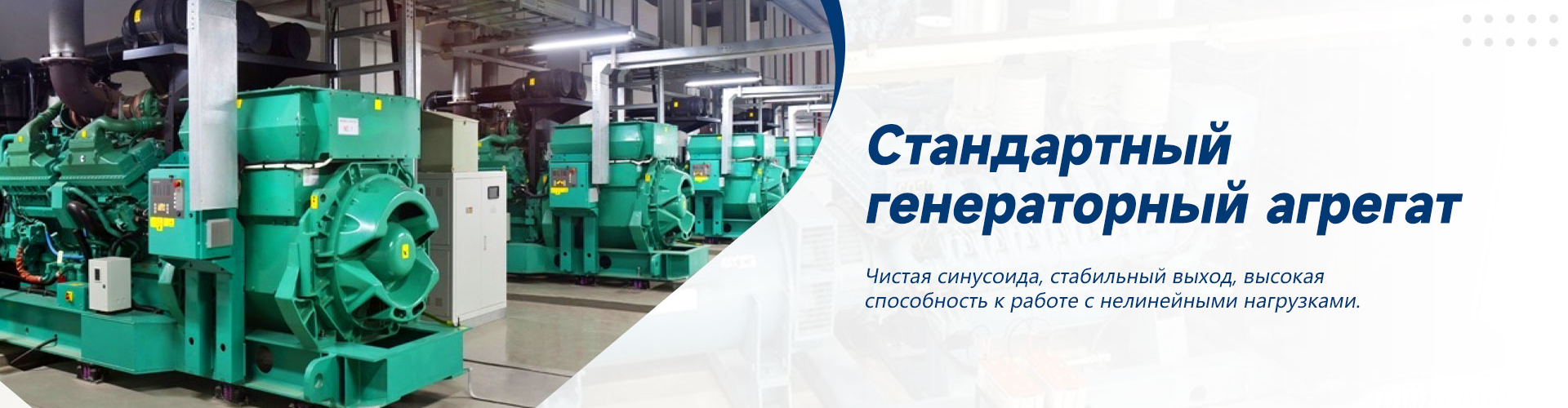
China: leader in diesel generators?
2026-01-01
The question in the title is, of course, provocative. Many will immediately think about quantity - they say, China produces everything, which means it is the first here. But in our business, with diesel generators, everything is not so simple. Leadership is not only about production volumes, but also about technology, about reliability in specific conditions, about how the unit behaves in the fifth year of operation in the Siberian taiga or in tropical humidity. And this is where the nuances begin, which only those who were directly involved in supplies, installation or maintenance know about.
From volume to quality: the evolution of perception
Previously, about ten years ago, Chinese diesel generators in our market were associated primarily with an affordable price. And often - with a certain risk. I remember a story with a batch of generators for a small construction base. The engines seemed to copy well-known models, but the cooling system was clearly designed according to different temperature standards. As a result, at a constant load of 80%, they overheated after just a few hours. We had to urgently modify it and install additional fans - crutches, in general. This was a typical example of the “make it similar, but cheaper” approach.
However, the situation was changing, and quite quickly. The key turning point, in my opinion, began when large Chinese manufacturers stopped simply copying and began to actively invest in their own R&D and, importantly, in quality control at all stages. We are not talking about giants like Weichai or Shangchai, which have been known for a long time, but about more specialized companies that have relied on technology. They began to invite engineers with experience working for European brands and got seriously involved in control systems (automatic control systems, digital monitoring panels).
Now the gap in basic quality between the average Chinese and, say, European unit for standard applications (backup power supply for warehouses, commercial facilities) is no longer so dramatic. The problems have shifted to another plane: compatibility of additional equipment, availability of specific spare parts in the region and, oddly enough, sometimes excessive “sophistication”? electronic systems to the detriment of maintainability in the field.
Case: specialization instead of mass production
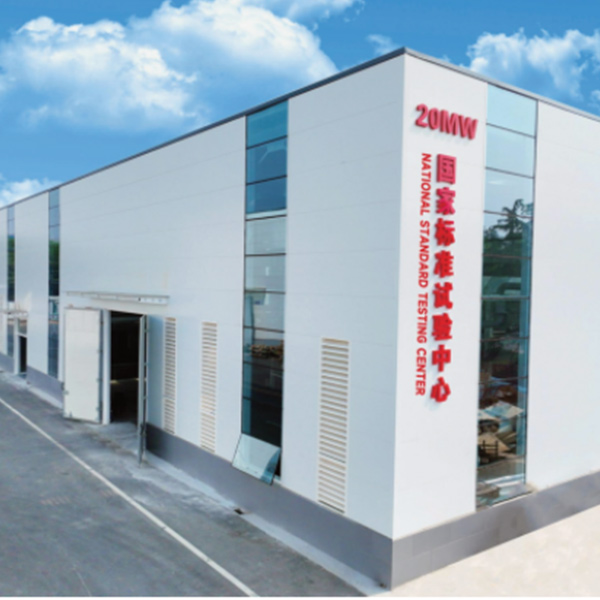
This is where it’s interesting to look at companies that have chosen not the path of gigantic circulation, but the path of deep specialization. Let's take for exampleYuke (Shandong) Electrical Technology Co.,Ltd(Yuke Electric). Their website (voyoko.ru) is not just a directory. It is clear that the company grew out of an engineering team (DEVER Electric, founded in 2003 in Qingdao), and this is felt in the approach. They position themselves not as a factory, but as a technology enterprise that combines development, consulting and engineering.
What does this mean in practice? In my experience of interacting with such suppliers, this means a willingness to take on non-standard tasks. Don’t just sell a generator from a catalog, but request technical specifications for the facility, offer layout options, and possibly modify the control system to meet specific customer requirements regarding communication protocols. For their niche -diesel generatorsand power equipment for projects is critical. Their brief description does just that: “an innovative technology enterprise that combines R&D, technical consulting, custom processing...?”.
Such companies often become the link between advanced Chinese production facilities and the complex requirements of international, including Russian, projects. They can provide the kind of “engineering” that large, flow-oriented plants often lack.
Where are Chinese generators really strong?
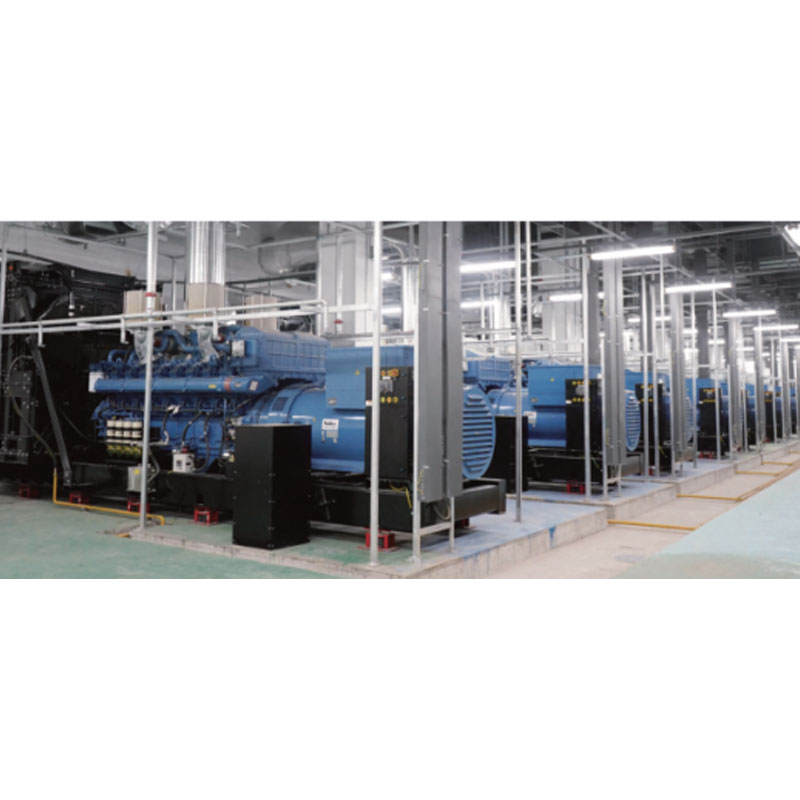
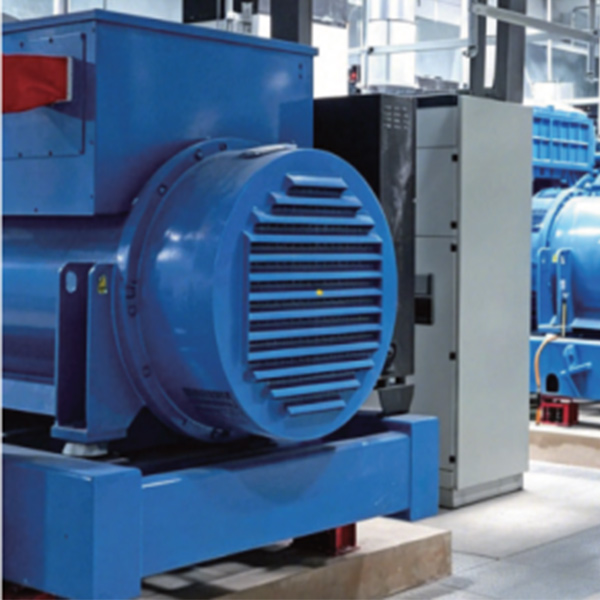
If we put marketing aside and talk about facts, then China’s strong position today is, firstly, the segment of powerful industrialdiesel power plants. The price offer with comparable characteristics (Perkins, Cummins, MTU engines under license or in-house assembly, Leroy Somer, Stamford generators) remains very competitive. Secondly, this is the rapid implementation of “smart” ones. solutions: integration of monitoring systems via IoT, remote control. Sometimes they are even ahead of some conservative Europeans.
But there are also pitfalls. For example, the environmental class of the engine. Tier 3 or Stage IIIA compliance is already standard for many manufacturers, but when it comes to more stringent regulations, it can sometimes be difficult to document or maintain stability in these modes. Or noise reduction: a standard enclosure may not provide the claimed 75 dBA at 1 meter in real-world conditions, not in a laboratory.
Another point is logistics and customs. It would seem like a routine. But this is where delays occur, negating any cost benefits. A good supplier is one that has established not only assembly, but also a “turnkey” delivery chain, taking into account all the certificates and customs nuances of the EAEU.
Comparison not head-on, but by application
Therefore, the question is: leader or not? need to be divided into segments. For mission-critical facilities, such as hospitals or data centers, where the cost of failure is extremely high, trust in decades-tested European or American brands still prevails. This is not so much a question of current quality as of accumulated operating experience and the availability of a deep service network.
But to provide energy to mining sites, construction sites, medium-sized industrial enterprises, and backup power to shopping centers, there are Chinese solutions, especially from such technology-oriented integrators asYuke Electric, have become an absolutely competitive and often optimal choice. The total cost of ownership is important here: purchase price, installation cost, availability of spare parts, maintainability.
In this segment, they are no longer just catching up, but in some ways setting trends. For example, in terms of combined solutions - the same diesel generator set complete with an automatic transfer system and switchgear, fully assembled and tested at the factory. This saves time and reduces the risk of errors on site.
Bottom line: Leadership is contextual.
So is China unconditional?leader in diesel generators? In terms of global production, yes, no doubt. In technological terms, he has become a powerful player who has gone far beyond the simulator. In terms of price and functionality for a wide range of applications - often yes.
But there is no absolute leadership in engineering, by which I mean the ability to produce equipment with a predictable service life for decades under any, even the most extreme conditions. This is the path that all the current titans of the industry have gone through. Chinese companies are on this path, and some, especially those that focus on complex engineering solutions, and not just the production of hardware, have moved very far along it.
Therefore, for an engineer or buyer today, the key skill is not to divide the world into “Chinese?” and “quality”, but to be able to distinguish within the Chinese market itself: where are conveyor products, and where is a truly technological partner capable of completing a complex problem. And in this second category the choice is already more than worthy.
-


-
-


WeChat

-
WeChat