

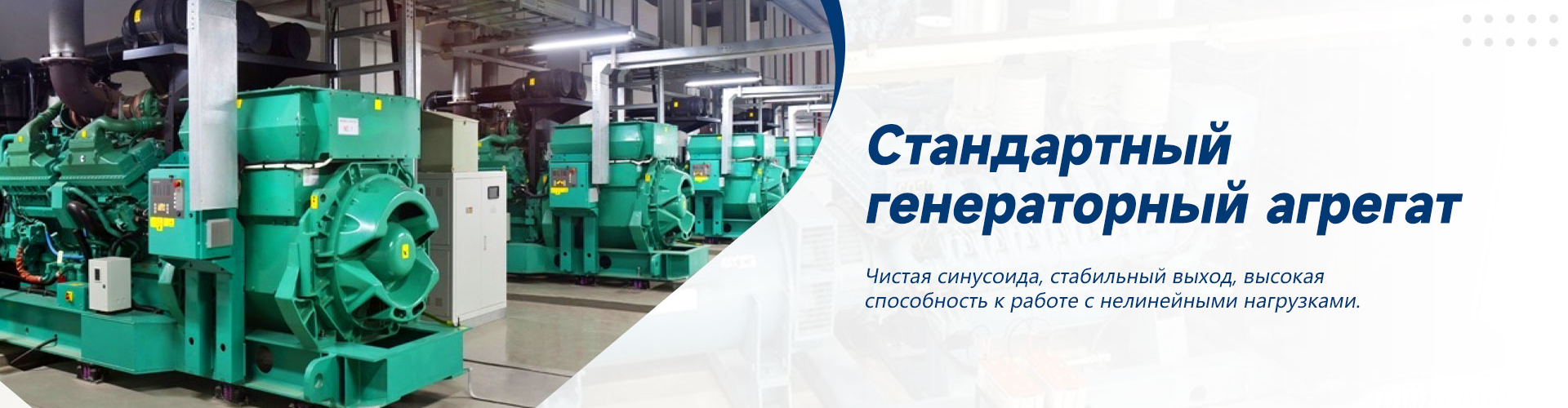
Is China the main buyer of gas power plants?
2026-01-25
A question that often comes up in industry conversations, especially after recent events. The short answer is no, not the main one in the global sense, but a key and very specific player in certain market segments. Many people confuse the total volume of equipment imports with targeted purchases of gas installations. China is a giant in energy production and consumption, but its diversification strategy and carbon targets make the picture more complex than it first appears.
Gas market in China: not only power plants
When people talk about Chinese gas demand, they are often talking about pipeline LNG for heating and industrial applications. Electric power is only one of the consumers, and not always a priority. There is a constant tug-of-war within the country between coal, renewable energy sources and gas as a maneuverable reserve. Public policy ?blue skies? is spurring the transition from coal to gas in the distributed energy sector, but this is not a massive transition to large Western-style gas turbine plants.
It is important to understand the structure here. Large basic gas thermal power plants, like ours or European ones, are not so many, and they often depend on long-term contracts for gas supply. The main growth is in the segment of medium and small cogeneration (CHP) or backup power plants, especially in industrial parks, hospitals, and data centers. This is where Chinese companies are extremely active, both in purchasing technology and in their own production.
Personal experience: participated in a tender for the supply of gas piston units for one industrial cluster in Shandong. Chinese customers were interested not just in “hardware”, but in a complete solution: efficiency at partial load, integration with heat recovery systems, the ability to run on biogas. Their engineers asked questions at a level of detail that is rarely seen in other regions - it is clear that they have accumulated serious experience.
Local production vs. imports: where is the real demand?
This is perhaps the main misconception. China has long been no longer a passive buyer of finished power plants. Giants such as Harbin Electric, Dongfang Electric, CSIC produce medium- and low-power gas turbines, often under license or in joint ventures (for example, with Siemens or GE). Their share in the domestic market is huge.
Imports are carried out mainly in niches where either unique technologies are needed (very highly efficient high-power turbines, specific emission control systems) or ready-made turnkey solutions. for projects with foreign funding. Often, procurement is not just a purchase of a station, but part of a technology transfer. The Chinese skillfully structure contracts in such a way as to obtain not only equipment, but also know-how for subsequent localization.
There was an illustrative case with one project in Jiangsu province. The customer initially requested European gas piston units, but in the end chose a local assembler who used licensed engines and generators, but made his own control and heat recovery system. Price/quality were not in favor of pure imports. This is a trend.
The role of integrator companies and technology intermediaries
This is where the picture gets especially interesting. Direct sales of large Western OEMs (Original Equipment Manufacturers) to China are the tip of the iceberg. A much more active layer is engineering and technology companies that adapt solutions to local standards, network requirements and, critically, to available types of fuel.
For example, a companyYuke (Shandong) Electrical Technology Co.,Ltd(YuKe Electric). If you go to their websitevoyoko.ru, it is clear that they position themselves not as a simple distributor, but as an innovative enterprise that combines R&D, technical consulting and engineering. This is a typical model for a modern Chinese player. They grew up from the DEVER Electric team, founded back in 2003 in Qingdao, that is, they have more than 20 years of experience in energy technologies.
Such companies often act as ideal partners for foreign manufacturers. They understand the local market, have connections with end customers - industrial enterprises, developers of energy complexes - and can “package” imported core (engine, generator) into a complete solution, including installation and service. Their interest in purchasing gas power plants abroad is often targeted: they need specific components or technologies to enhance their own product. When working with them, you are faced not with the abstract “Chinese market”, but with concrete, pragmatic technocrats who clearly know what they need.
Impact of the energy transition and geopolitics
China's plans to achieve carbon neutrality by 2060 create a paradox for gas. On the one hand, gas is a “bridge?” from coal to renewable energy sources. On the other hand, the large-scale development of solar and wind energy, as well as hydropower and the nuclear program, is pushing gas to the role of a peak and backup source. This means that the demand will not be for gigawatts of base power, but for fast start-up, flexibility and high efficiency over a wide range of loads.
This also changes the procurement profile. Instead of ordering dozens of large turbines of the same type, we are looking for solutions for virtual power plants, hybrid systems (gas+RES+storage), smart microgrid control systems. Chinese companies are now actively scanning the world market specifically for such digital and system technologies, and not just “hardware”.
Geopolitics adds its own layer of complexity. The desire for energy security is pushing for diversification of equipment supplies. If American and German technologies previously dominated, now there is an increasing focus on Japan, South Korea, as well as the accelerated development of their own analogues. Sanctions pressure on Russia, by the way, also made adjustments - some Chinese companies are very cautious about supply chains associated with dual-use technologies.
Practical challenges and future trends
When working with Chinese counterparties, you encounter not only commercial, but also technical barriers. For example, standards. Chinese GB standards (Guobiao) are a separate universe. Certification of imported equipment is a long and expensive process. It is often easier and faster to work through a local integrator partner who already has all the necessary permits and experience in completing these procedures.
Another point is fuel. The quality and composition of the gas, especially in remote regions or when using biogas, can vary greatly. The equipment must be ready for this. Saw a project almost fail because the imported gas valves couldn't cope with impurities in the local gas. We had to urgently look for a replacement and modify the cleaning system.
What's next? I think China will remain a large but selective buyer. The main focus will shift from the procurement of finished power plants to the procurement of key components, technology licenses and software. There will be an increase in projects outside of China, where Chinese EPC contractors (Engineering, Procurement, Construction) build projects using a mixture of Chinese and imported equipment. And in this sense, companies likeYuke Electric, with their experience in R&D and integrated solutions, are in a very good position. They are the very bridge that allows foreign technologies to find their place in the complex ecosystem of Chinese energy. So to answer the question in the title: primary buyer? No. But one of the most important, complex and technologically savvy - absolutely.

-


-
-


WeChat

-
WeChat