

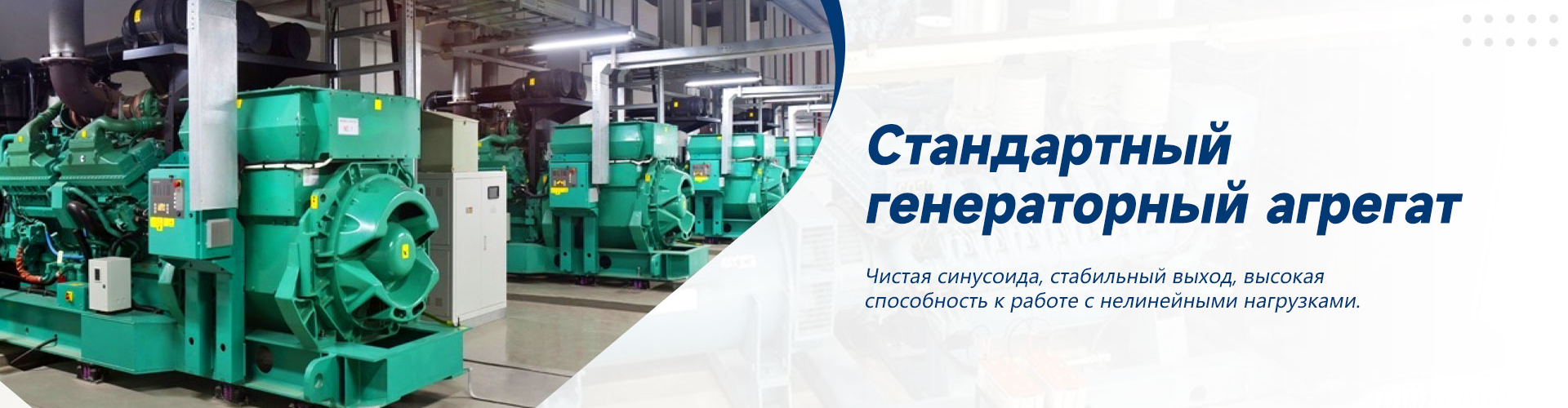
China: the main buyer of coal gas generators?
2026-01-25
When you see a headline like this, your first thought is, of course, yes. Huge market, industry, energy shortage in some regions. But if you dig deeper, working with projects in Shandong and Hebei about ten years ago, you realize that everything is not so simple. The demand for gas generators in general and specifically forcoal gas generators. China is, yes, a giant consumer of generator sets, but its energy policy in recent years has placed a huge emphasis on gas and renewable energy sources. So where is the place for good old coal? This is an interesting question that is being decided not in offices, but at specific industrial sites, where the price of a kilowatt and the availability of fuel decide everything.
Reality versus statistics: where do installations go?
If you look at production volumes, China is undoubtedly the leader. But most of this production, especially from provinces like Fujian or Jiangsu, is exported to Africa, Southeast Asia, and the CIS countries. Internal demand is specific. It is concentrated not in megacities, but in remote industrial zones, in mines, in areas where main gas has not yet reached, and there are problems with diesel supplies. Therecoal gasifier- not a choice, but a necessity.
I remember one project at a cement plant in Shanxi province. The grid connection was unreliable, and the process required stable power for the rotary kilns. There was no gas pipeline nearby. We considered diesel - too expensive to operate. We settled on a gas generator powered by local low-calorie coal. The key was not the unit itself, but the gas purification system. Chinese environmental regulations have become stricter every year, and engineers have had to modify scrubbers and filters on the fly to meet emissions limits. This is a typical story: buying a device is half the battle; making it work legally and economically in specific conditions is where the real work is.
This is why many Chinese manufacturers who grew up in the domestic market have become experts in adaptation. They learned how to make installations for different ash, for different moisture content of coal. This is know-how, which is then sold well abroad, to countries with similar problems. Companies likeYuke (Shandong) Electrical Technology Co.,Ltd(their website isvoyoko.ru) is a good example of this approach. They are not just hardware sellers, their team, which grew out of DEVER Electric, founded back in 2003 in Qingdao, often offers exactly the same package: from technical consulting and supply to engineering construction. For a buyer from Kazakhstan or Uzbekistan, this is often more important than the bare price per kilowatt.
Technological shift: don't just burn coal
Previously, the main question was: “Will it start?” Now: “How clean will it work and how will it integrate into the overall scheme?” Modern Chinesecoal gas generators- these are no longer cave aggregates. Emphasis on gasification with high efficiency and deep purification of synthesis gas before supply to the engine. This reduces wear and improves environmental friendliness.
But there are pitfalls here too. One of the most common problems at the start is that the fuel does not meet the declared characteristics. The contract specifies coal of a certain fraction and calorific value, and something more humid and dusty is brought to the site. The generator begins to “be capricious”: the power drops, the filters become clogged. You have to quickly change settings, sometimes even make design changes to the feed system. This is the same “practice” that is not in the catalogs.
Another point is heat recovery. The most progressive trend is cogeneration, when heat from exhaust gases and the engine cooling system is used for heating or technological needs. In China, for example, on new projects this is almost a standard requirement. Without this, the economics of the project may not work out. Therefore, when you see an offer from a serious player, you always look to see if they offer ready-made solutions for heat recovery, or if they only sell a “box?” — generator.
Case: why sometimes the choice does not fall on China?
For all the power of the Chinese market, there are niches where it does not dominate. For example, projects that require a very high degree of automation and integration with an existing European or American control system (APCS). Sometimes customers, especially in the post-Soviet space, are afraid of difficulties with protocol compatibility.
I had experience participating in a tender for the supply of equipment for the modernization of a thermal power plant in Siberia. The Chinese unit was beyond competition in terms of technical characteristics and price. But it lost to a more expensive European one. Why? Because the Europeans’ proposal included full responsibility for integration and long-term service with the presence of engineers in the region. The Chinese supplier, with all due respect, offered a standard warranty package and on-site personnel training. This was not enough for a complex object. This is a lesson: being the main buyer is not only about quantity, but also about the willingness to close the most complex, “custom” ones. client needs.
That is why some Chinese companies are now actively developing service and engineering areas. Take the same oneYuke Electric. From their description it is clear that they position themselves as an “innovative technology enterprise combining R&D, technical consulting, supply and construction”. This is a direct response to the market request. They understand that selling a unit to Russia or Central Asia means taking on part of the responsibility for its operation in local conditions.
A look into the future: ecology versus economics
This is the main dilemma forcoal gas generationin China and the world. On the one hand, the pressure of ?green? agendas. In China itself, in the rich coastal provinces, new coal projects are almost never launched - they rely on gas and solar power. On the other hand, there is economic feasibility. Coal is still the most affordable and widespread fuel for many developing regions within the country and abroad.
I see the future not in refusal, but in transformation. Hybrid solutions will be in demand: a coal gas generator as a basic, reliable source, supplemented by solar panels or wind turbines to cover peak loads. Or installations capable of running on a mixture of coal and biomass. Syngas purification technologies will evolve to meet even the most stringent regulations.
Chinese manufacturers who are investing in these ?hybrid? and ?clean? technologies today will remain afloat tomorrow. Those who continue to churn out decades-old models may find sales for some time in the poorest countries, but this is a dead-end branch. The market is getting smarter.
Bottom line: Master Buyer or Master Adapter?
So is China the main buyer? If we talk about net consumption within the country, probably not anymore. The peak occurred in the mid-2010s. But if you look more broadly, China today is the main “laboratory testing ground” and an exporter of solutions in the field of coal gas generation. He digested colossal internal experience, got his head around, adapted technologies to harsh realities and now offers this package - “technology + experience?” - to the whole world.
A buyer from abroad does not come for an abstract “Chinese generator”. He's coming for a plant that has already proven it can run on low-grade coal somewhere in Inner Mongolia while meeting local environmental requirements. He is essentially buying a proven and tested methodology. In this sense, China is the main creator of practical knowledge in this niche. And companies that likeYuke (Shandong) Electrical Technology Co.,Ltd, rely on innovation and integrated engineering, are conductors of this knowledge. Their websitevoyoko.ru- this is just the visible part of the iceberg, behind which stands two decades of work in the field, with coal, metal and real energy supply problems.
So, to answer the question in the title: yes, but not in the sense in which it is usually understood. The main purchase that China is making and that it is now offering to others is not equipment, but field-proven competence. And this, as any practitioner knows, is much more valuable.

-


-
-


WeChat

-
WeChat