

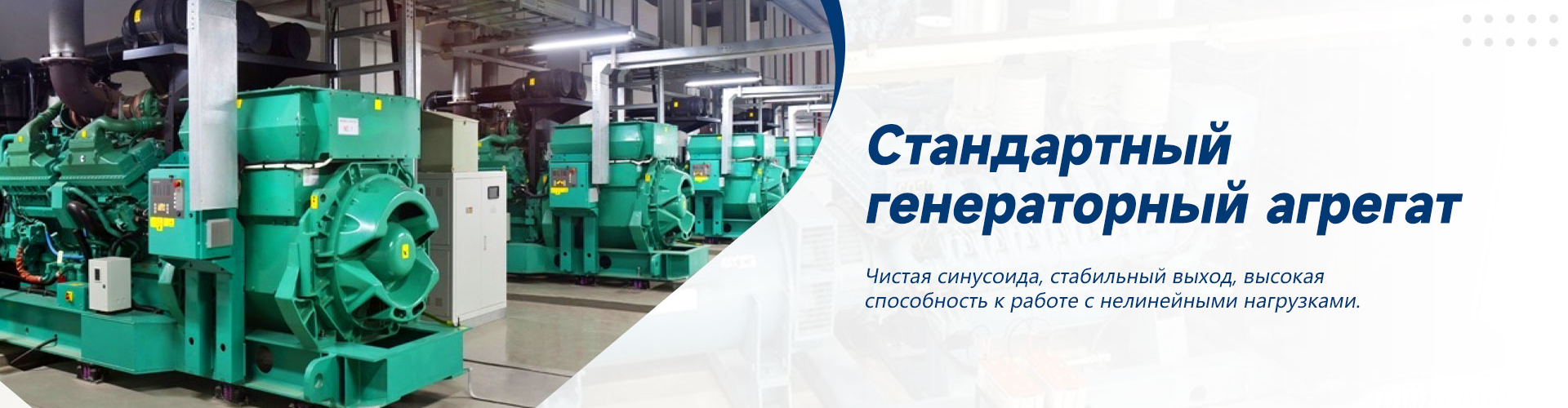
Is China the main buyer of gas piston generators?
2026-01-04
You see this headline and you immediately want to say both “yes” and “no”. At first glance, the import figures speak for themselves; the volumes are huge. But if you dig deeper, as we do in engineering and technical consulting, the picture becomes much more interesting and not so clear-cut. A common mistake is to consider China simply as a “big market”. In fact, it is rather a gigantic testing ground with very specific demand, which is formed not so much by abstract economic indicators, but by specific, sometimes harsh conditions on the ground.
From numbers to real objects: what statistics hide
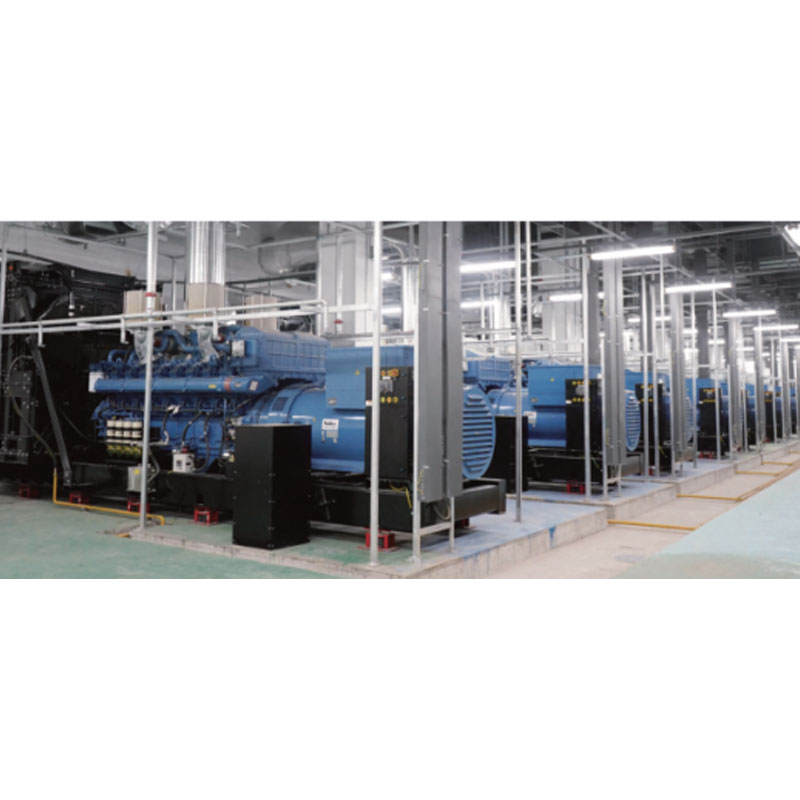
Yes, according to data for the last five years, China imports and produces under license a colossal number of gas piston units. But if previously these were mainly turnkey projects? from large Western brands for the premium segment, now the trend has shifted. The lion's share goes todistributed generationfor industrial parks and as a reserve for infrastructure facilities in regions where the networks are not going smoothly.
I remember one project in Shandong province - just for an industrial park. The customer initially just wanted to buy several powerful units of a well-known brand. But when they started to consider the operation, the main problem emerged - the quality of local gas. No, not his absence, but the unstable composition and pressure. Dear “Europeans” their sensitive electronics would start to malfunction all the time. As a result, after much discussion and testing, we settled on more tailored solutions. This is where the experience of such companies asYuke (Shandong) Electrical Technology Co.,Ltd(Yuke Electric), who grew out of the DEVER team, founded back in 2003 in Qingdao. Their approach is not just to sell hardware, but to integrate equipment for specific conditions, often offering hybrid solutions. This is a case where deep knowledge of the local context outweighs a strong brand name.
That is why, looking at their portfolio onvoyoko.ru, you see not just a catalog of generators, but an emphasis on engineering and technical consulting. This is the answer to real demand: China needs not just machines, but energy units operating in its difficult conditions.
Specificity of demand: not “how much?”, but “for what?” and ?which ones?
The second big nuance is the purpose. If in Europe the gas piston plant is often considered in the context of cogeneration and “green” transition, then in China the priorities are different. The main drivers are guaranteed energy supply for a continuous production cycle and compensation of peak loads. Reliability and continuity come first, issues of absolute fuel efficiency come second.
Hence the peculiarities in the technical requirements. There is great demand for models with high overload capacity and resistance to frequent starts/stops. I saw how at one chemical plant in Jiangsu generators were started several times a day, depending on the tariff schedule. This mode requires a special design, and not every catalog unit will fit - some modification is required.
Another point is the service. The after-sales service contract is often more important than the small difference in price of the unit itself. A 2-3 day delay in repairs can result in millions in losses for the plant. Therefore, local engineering companies that can provide a quick dispatch of an engineer and the availability of a spare parts warehouse have a huge advantage. This is their natural niche, which is difficult for large foreign players to close.
The story of one “unsuccessful” tender and what it taught
I would like to give an example from practice that well illustrates all these pitfalls. Several years ago, we participated in a tender for the supply of generators for a network of gas stations. They offered, as it seemed to us, the ideal solution - modern units with best-in-class efficiency and full automation.
And they lost. The proposal with simpler, one might even say outdated, models won. Why? After the debriefing, two key points emerged. Firstly, our unit required an engineer with very specific training to service it, and there were simply no such specialists in that region. The winner proposed a model that could be serviced by any local mechanic after two days of instruction. Secondly, our automation system was “tied up?” to a cloud service, which raised concerns among the customer about cybersecurity and dependence on the Internet connection. They needed an autonomous, “dumb” and a field repairable system.
It was a great lesson. He showed that technological superiority is worthless in a vacuum. The key is to understand the entire operational chain: who will serve, what skills they have, what infrastructure is around. Now, when consulting with clients, we always start with an in-depth audit of not only energy consumption, but also human and logistics resources on site.
The role of local manufacturers and integrators
This is where we come to the answer to the question in the title. China is not just a “major buyer” in a passive sense. He is an active market shaper who, through his specific demand, stimulates the emergence of specific products and business models. Local companies like the one mentionedYuke Electric, play the role of critical intermediary adapters here.
They often take licensed or jointly developed technologies as a basis, but then modify them to suit local standards, fuel quality, climate and, importantly, to meet price and service expectations. Their competitive advantage is not in fundamental R&D (although that exists), but in application integration and reaction speed. They combine, as stated in the company description, development, supply, construction, and service - that is, they close the full cycle, which is required in such a complex market.
Therefore, browsing the sitevoyoko.ru, you won't see just a list of products there. You will see a description of solutions for the mining industry, for agriculture, for housing and communal services - that is, the emphasis is on application, and not on technical characteristics in isolation from the context. This is the language spoken by a real Chinese customer.
Conclusion: not a buyer, but a co-developer of conditions
So is China the main buyer? If we talk about gross volume, of course. But this formulation greatly simplifies the essence. It would be more correct to say that China is the maintesting groundandcustomer specificationsfor gas piston generators in emerging markets.
The requirements that are being formed here - for reliability, adaptability, ease of maintenance and complexity of the solution - are beginning to increasingly influence the offer of global players. The experience gained while working at Chinese sites is invaluable. It teaches that an ideal machine from an engineering point of view can be a commercial failure if it does not fit into the local context.
So, back to the beginning. Yes, China buys a lot. But the main thing is that he buys in a certain way and under certain conditions set by him. And understanding this difference is the very line between a market theorist and a practitioner who selects, installs and makes these same generators work stably somewhere in an industrial zone in Hebei province. It is this practical experience that is the most sought-after product in this market today.
-


-
-


WeChat

-
WeChat