

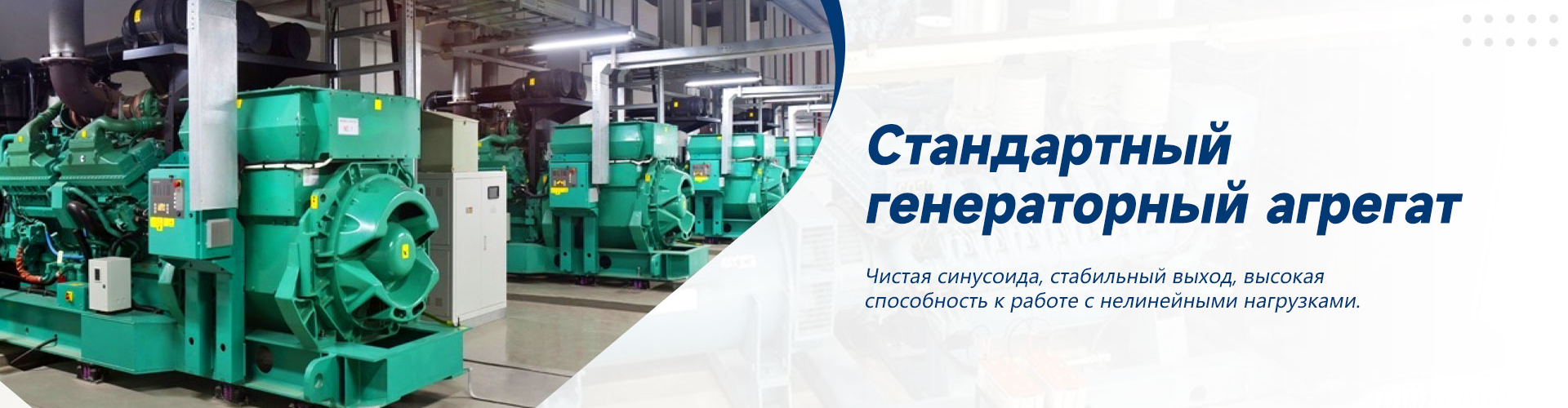
Who buys 30 kW diesel generators from China?
2026-01-13
I often hear this question, and I immediately want to say: yes, everything. But this is not an answer, but an excuse. In fact, the portrait of the buyer is very specific, and many are mistaken in thinking that these are mainly small construction projects or garage cooperatives. A power of 30 kW is already a serious tool, not a toy. This is the line where household utility ends and commercial or mission-critical power begins. I’ll try to sort it out based on what I saw myself and what our clients encountered.
Key players in the market: non-obvious niches
The first thing that comes to mind is builders. Yes, but not those that pour foundations for cottages. We are talking about average contractors who operate projects in an open field, where there is not even a hint of power lines. For example, installation of cellular base stations in remote areas or construction of small logistics terminals. There, 30 kW is often the best option for powering welding machines, concrete mixers, lighting and change houses. The key point is mobility. A generator of this power can still be transported relatively easily on a low-loader platform.
The second large group is small and medium-sized businesses, for which network outages are tantamount to stopping production. A striking example: small woodworking shops, workshops for the production of plastic products (where extruders are sensitive to surges), bakeries with electric ovens. They buy Chinese installations not as the main source, but as a backup. Their calculation is simple: the cost of downtime per hour can be several times higher than the price of the generator itself. The Chinese unit wins here in terms of price/quality ratio, especially if you buy from a trusted supplier who not only resells, but provides a normal guarantee and technical support.
The third, often overlooked category is agriculture and processing facilities. Grain dryers, refrigeration units for storing vegetables or milk on farms, water supply systems in livestock farms. The network in the villages is, to put it mildly, unreliable, and the processes are continuous. Not only power is important here, but also the ability to work for a long time at a constant load. I saw how on one of the farms in the Rostov regiondiesel generator30 kW from the Chinese brand Weichai worked for almost three days almost without stopping while the transformer was being repaired. After that, the owner ordered another one, the same, in reserve.
Why China? Analysis of myths and real risks
It all comes down to three pillars: price, readiness for customization and... lack of alternatives in this segment. European brands in this power class either went premium (which is 2-3 times more expensive), or simply discontinued such lines, focusing on more powerful industrial units. Russian assemblies? Often these are the same Chinese engines (Rugian, Changchai, Yuchai) or Perkins/Cummins of the same Chinese assembly, but with a premium for the domestic nameplate.
The buyer's main fear is that it will fall apart in a month. There is a risk, but it is manageable. The problem is not in the country of production, but in the specific manufacturer and, critically, in the supplier. I have seen stories many times when people bought an excellent inexpensive generator through some dubious fly-by-night company. The device arrives, and instead of the declared Weichai engine there is some kind of no-name, the automation is very primitive, and the radiator is leaking at the seams. And there is no one to present it to.
Hence the conclusion: the key is to choose a partner who is deep in the topic and is responsible for what he sells. For example, a companyYuke (Shandong) Electrical Technology Co.,Ltd(Yuke Electric). They are not just traders, but grew out of the DEVER engineering team, which has been in the energy sector since 2003. This is important. When the supplier itself is engaged in R&D and technical consulting, as indicated on their websitevoyoko.ru, the chance of getting a pig in a poke is sharply reduced. They usually offer a choice: if you want a budget option with a reliable Chinese engine, please, if you need an upgrade for your specific conditions (for example, arctic version or a special automatic reserve system), they can assemble it. This flexibility is the main trump card.
Pitfalls when ordering: what is not written in advertising
Power is 30 kW - it varies. There is nominal, and there is maximum. Unscrupulous sellers often push out exactly the maximum, although the generator will not last long on it. You should always look at the power rating at 1500 rpm for a diesel (unless it's a high revving variant). And be sure to take cos φ (power factor) into account. For most loads it is 0.8, that is, in fact, the useful power will be 24 kW. This misleads many people.
The second point is the configuration. Standard delivery is often a bare generator on a frame. And you also need: a muffler (sometimes the exhaust system is not included), a battery, a set of tools, oil and antifreeze for the first maintenance, sometimes even a small-capacity fuel tank. Without this, you cannot start the device. A good supplier always creates a commercial proposal with options so that the client understands the final turnkey cost. On the samevoyoko.ruproduct cards usually have a section for Standard Equipment and Additional Equipment - this is the right approach.
A story from practice: a client ordered a generator, received it, but cannot connect it - the ATS terminals are non-standard, a special contactor is needed. The supplier provided a link to some Chinese marketplace. A month of downtime. Now I always clarify this nuance. It’s better to immediately discuss full engineering if you don’t have your own specialists.
Service and spare parts: where the dog is buried
This is perhaps the main argument of opponents of Chinese technology. Like, if it breaks, you won’t find spare parts. Half true. For engines of large Chinese brands like Weichai, Yuchai or Shangchai, Russia has long had dealer networks and spare parts warehouses. The problem may be with electronic control units or specific parts of the alternator.
Here again everything depends on the supplier. If a company likeYuke Electric, conducts their own engineering construction projects and has technical support, then they, as a rule, have agreements with manufacturers for the supply of critical components or they themselves keep a minimum warehouse of the most popular items: high-pressure fuel pumps, injectors, voltage regulators. When ordering, you should ask directly: What spare parts are most often required for this model and do you have them in stock in the Russian Federation? The answer will clarify a lot.
Another life hack is to pay attention to unification. Sometimes Chinese manufacturers use standard components common throughout the world in their generators. For example, a Stamford or Mecc Alte alternator, or a Deep Sea control system. This greatly simplifies life, because spare parts and service for these brands are easy to find even in the outback.
Result: portrait of an ideal buyer
So who is he? This is a practical manager of a small or medium-sized enterprise, technical director of a construction company or farmer-entrepreneur. He clearly understands his need for backup or main power supply, and considers not only the purchase cost, but also the cost of downtime. He doesn't chase the cheapest offer on the market because he knows where the catch might be.
He is ready to spend time choosing not so much a generator brand, but a reliable partner supplier who will help with selection, packaging, delivery and, most importantly, will be in touch after the sale. His goal is not just to buy hardware, but to solve the problem of uninterrupted power supply. And for him Chinesediesel generatorat 30 kW is not a risky exotic, but a completely rational and reasonable choice in modern realities, if you approach the matter with your head and the right support.
Ultimately, the market itself will judge everyone. And it shows that the demand for such units is growing steadily. This means that for many people and businesses this question - who buys - has ceased to be a question. They simply buy when they see direct economic sense in it.
-


-
-


WeChat

-
WeChat