

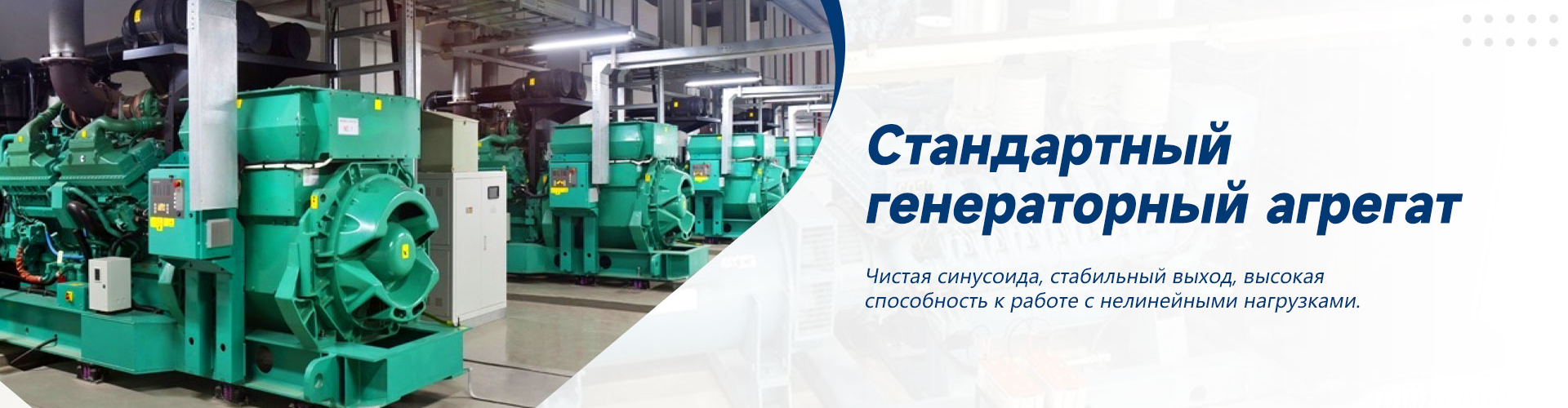
Chinese diesel generators: who is the main buyer?
2026-01-12
I often hear the question: who is the main consumer of Chinese diesel engines? Many people immediately think about Africa or the cheap segment. Reality, as usual, is more complex and interesting. I’ll try to sort it out based on what I’ve seen on the market for ten years.
Stereotype vs. Reality: not only ?price?
The main misconception is that Chinese generators are bought only because of the low price. Yes, this is a powerful argument, but not the only one. Now many manufacturers from China, especially those who work seriously for export, have reached a level where they compete not so much in cost, butvalue for moneyand, importantly, flexibility. Flexibility of configurations, terms of delivery, readiness to do “turnkey”.
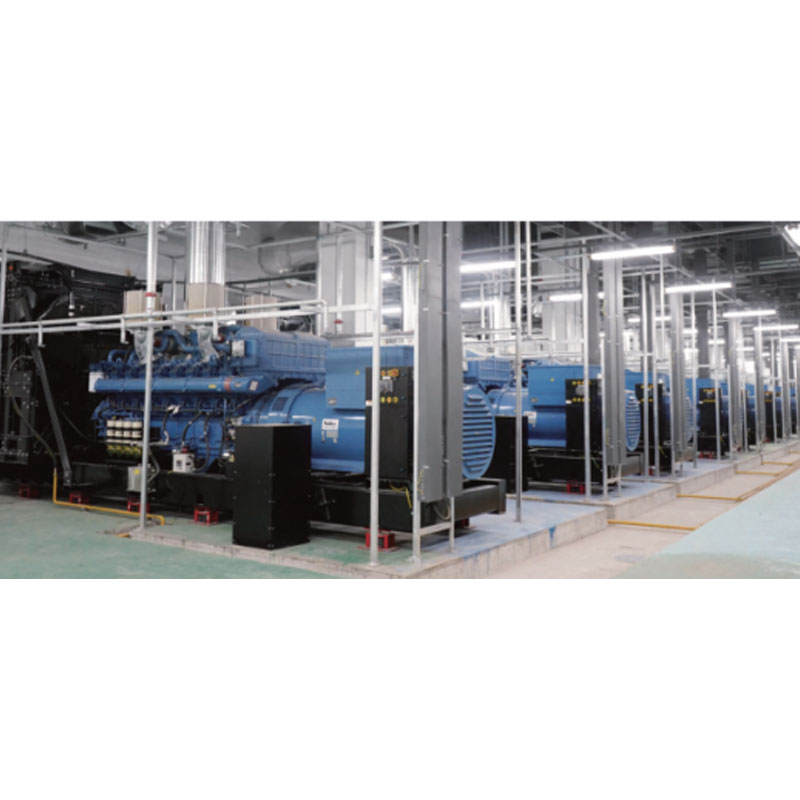
Take, for example, the companyYuke (Shandong) Electrical Technology Co.,Ltd. They don't just sell hardware. On their websitevoyoko.ruit is clear that they position themselves as an innovative enterprise with a full cycle - from R&D to construction. This is a different level of dialogue. The kind of client who comes tovoyoko.ru, is interested not just in a unit in a housing, but in a solution: backup power supply for the facility, possibly with integration into the existing network. And there are more and more such clients.
Therefore, the main buyer today is not the one who is looking for the cheapest, but the one who is looking for the optimal solution for his, often non-standard, task. And Chinese suppliers have learned to hear these tasks.
Portrait of the main customer: from small businesses to state-owned companies
To summarize, we can distinguish several large segments. The first is small and medium-sized businesses in developing countries: shops, workshops, small production facilities. For them, reliability is secondary, primary is the ability to have electricity at all. Simple, repairable models work here.
The second and growing segment is contractors and engineering companies that build turnkey projects. all over the world, from the Middle East to the CIS. They take Chinese generators as a standardized, predictable in terms of price and schedule module for their project. Often purchased in batches. What is important here is not so much the unit itself, but the clarity of the contract, the availability of certificates (such as CE), and technical support.
And the third, most interesting one is the industrial enterprises themselves and even government agencies in the CIS countries, Asia, and Latin America. They are increasingly considering Chinese brands as an alternative to European ones. Not for critical nuclear power plant facilities, of course, but for the reserve of hospitals, boiler houses, and communication systems - quite well. Here the buyer is already sophisticated and asks questions about the engine (they often ask for Weichai, Yuchai or Cummins locally assembled), about the noise level, and the control system (ComAp or Deep Sea).
Case: why did you choose ?Yuke Electric??
I will give an example from practice, without the name of the project. There was a facility - a logistics complex in Kazakhstan. A diesel generator set was needed for backup power supply to refrigerated warehouses. We considered both Turkish and Russian assemblies. In the end we settled on an offer fromYuke Electric. Why?
Firstly, they didn’t start to “push” ready-made catalog version. Their engineers requested load schedules, network parameters at the site, and even took into account the altitude. We made a calculation and proposed a custom configuration: a Weichai turbocharged engine for specific starting currents of refrigeration compressors, a Leroy Somer generator, a ComAp-based control panel with remote monitoring capabilities. The price was competitive, but not the minimum on the market.
Secondly, it was their declared competence as a technological enterprise that “combines research and development, technical consulting” that played a role. At the negotiation stage, these were not empty words - they actually advised on the scheme for introducing a reserve. As a result, the complex has been operating for three years, there are no complaints. This case shows the shift well: the main buyer now values not the price tag, buttechnical adequacy of the supplier.
Pain and pitfalls: what is not written in advertising
Of course, not everything is perfect. The main pain when working with any, even good Chinese generators, is logistics and the “last mile”. The container arrived at the port, what next? Organizing customs clearance, delivery by tractor, unloading - often these chores fall on the buyer. Large suppliers like the mentioned Yuke help with documents, but you often organize physical delivery to the site yourself.
Another nuance is the guarantee. Formally, it is given for 1-2 years. But in fact, if something breaks after startup, you have to wait weeks for a specialist from China. Therefore, it is critical to have a service partner in the region or, at a minimum, spare parts in stock at the dealer. Smart buyers now immediately include a set of spare parts in the contract and require information about service centers.
And yes, there is also a segment of outright “scrap iron?” - small workshops that collect just about anything. Their products are bought, but this is a different market, a market for one-time solutions. The real, growing sector is companies with R&D, as in the descriptionYuke (Shandong) Electrical Technology Co.,Ltd. They are fighting for another, demanding client.
The future: who will be the main buyer of tomorrow?
The trend is obvious: the buyer is becoming more and more technologically savvy. He is interested in “smart” people. systems, integration with solar panels (hybrid solutions), remote monitoring and low fuel consumption. Chinese manufacturers see this and are actively developing these areas.
Therefore, the main buyer of tomorrow will be the one who builds digital infrastructure, data centers, and modern production facilities with a high degree of automation. They need not just backup power, but part of the power grid. And here, Chinese companies that quickly adapt technologies and offer comprehensive solutions have serious chances.
Let's return to the initial question. The main buyer of Chinese diesel generators today is a pragmatist. It may be from Kazakhstan, Uzbekistan, Egypt or Chile. He no longer pursues cheapness as an end in itself. He is looking for a reliable partner who will offer a modern, technologically proven solution for a specific task, and will be responsible for it. And as practice shows, the Chinese market, represented by such players, is ready to grow into this partner.
-


-
-


WeChat

-
WeChat