

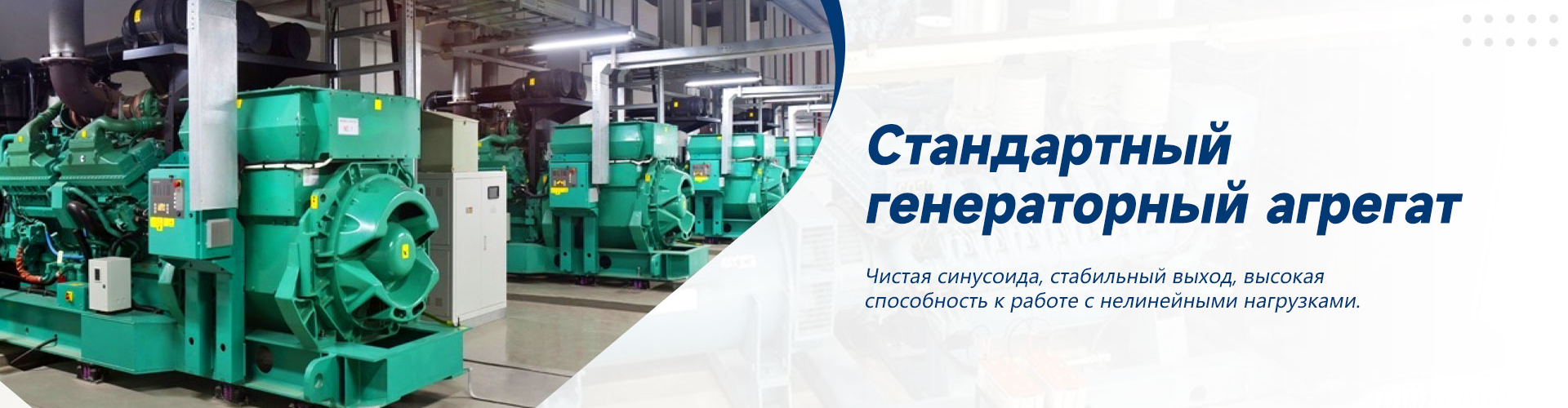
The main buyer of cheap diesel generators?
2026-02-21
When people talk about cheap diesel generators, many people immediately imagine either small private owners or some dubious companies that save on everything. But the reality, according to my observations, is much more interesting and not so obvious. Entire segments that live on these units are often overlooked, and their logic of choice is far from simple “buy what’s cheapest?”
Who are they really? First approximation
If we discard theory and look at orders and shipments, the picture becomes clearer. The main stream is not retail. Thissubcontractorsin construction, the same teams that come to a site where there is no stationary electricity, and they need to power their tools for a couple of months. They don't need ?Caterpillar? for half a million, they need a working device here and now, which they don’t mind throwing into the dirt or transferring to another object. A service life of 3000 hours is more than satisfactory for them.
The second large layer is small production shops or workshops in industrial zones, especially in those regions where there are interruptions in the energy supply. There the generator costs as insurance. It can be silent for weeks, but when the lights are turned off, it should start half a turn. Therefore, cheapness is secondary here; launch reliability and the availability of service nearby come to the fore. But the budget is always limited, so they look for the optimal ratio.
And the third, often unobvious type of buyer is the organizer of outdoor events. Festivals, open-air concerts, rural holidays. They need mobility and, importantly, a relatively low noise level. This is a problem with cheap models, but they compromise: they place the generator further away and run extension cords. Their key factor is rental, so the initial cost of the equipment is critical to the return on investment.
Traps of "cheapness" and what smart buyers are looking for
The concept of "cheap" very stretchable. There is outright consumer goods, which are assembled from who knows what, and there are simple but high-quality devices without unnecessary bells and whistles. An experienced buyer looks not at the price tag first, but at the “filling”. What kind of engine is there? R4105 or analogues are often found - not the most modern, but proven by millions of hours, spare parts are cheap and can be found in any city. This is more important than a nice paint job or a digital dashboard.
Another point is the availability of official support and at least minimal guarantees. This is where we can mention the companyYuke (Shandong) Electrical Technology Co.,Ltd. I came across their products at one of the facilities. I won’t say that this is the top, but for its segment it is a very conscious player. They claim to have their own production base and R&D, which is rare for the market of cheap generators. Most often it is simply an assembly from ready-made components. Their websitevoyoko.ru- it’s more of a catalogue, but you can get the gist there: they position themselves not as resellers, but as an engineering company, which is already changing attitudes. In practice, this results in the fact that it is easier to find documentation for their generators, and in the event of a breakdown, the dialogue with technical support is more substantive.
The biggest mistake a beginner makes is chasing maximum power at the lowest price. As a result, they take 30 kW, and the real load is 5 kW. The engine in such modes quickly cokes and problems appear. A smart buyer takes a margin, but a small one, and prefers a well-known engine model, even if it is 10-15% more expensive. Maintainability is everything.
Object Story: When Cheap Was Right
I had a project, a small warehouse complex in the Leningrad region. The customer initially wanted to supply a used European generator, but the budget let him down. We started looking for a new one, but inexpensive. We considered several options, including the one mentionedYuke Electric. What was confusing? Chinese assembly. But in the specification we saw the familiar Weichai engine and Leroy Somer generator - these are already serious brands in their niche. We decided to take a risk.
The generator operated at the site as a backup source for two years. During this time, there were three scheduled maintenance and one unscheduled start for 8 hours due to a network failure. It started without problems, although it was in an unheated room. The key turned out to be the presence of a sane service partner in the area who took on its maintenance. CompanyYuke (Shandong) Electrical Technology Co.,Ltd, according to its stated model, provided contacts and technical documentation, which made life easier.
This case confirmed a simple truth: “cheap?” does not always mean “bad?”. This means “optimized for specific tasks”. For a facility where a generator is needed as insurance for rare events, there is no point in overpaying for round-the-clock operation and super-efficiency. The main thing is that it works when needed.
What sellers are silent about: consumables and long-term cost
Something that is rarely discussed when selling is the cost of ownership. A cheap generator may have non-standard filters or spark plugs, which you then spend a year looking for. Or its oil change interval is half that of a more expensive model. As a result, after three years of operation, you overpay for maintenance.
Therefore, our main question to the supplier is now not “how much does it cost?”, but “what consumables and how often?” And are they available for free sale? It’s a good sign if a company, like Yuke, openly publishes manuals and spare parts lists on its websitevoyoko.ru. This speaks to the long game.
Another hidden gem is noise and vibration. Budget models often skimp on the frame and mufflers. As a result, the device buzzes so loudly that the neighbors call the police. You have to build a noise-absorbing casing yourself, which negates all the initial savings. Now, when choosing, we always ask you to provide noise measurement protocols; if there are none, this is a red flag.
Conclusions that are not written in brochures
So who is the main buyer? This is a practitioner who clearly understands the limits of the device’s use. He does not expect miracles from him, but demands predictability. His choice is always a compromise between initial investments and operating expenses, between the availability of “chips?” and ease of repair in the field.
The market for cheap diesel generators is not a dump, but a clearly segmented niche. It has its own leaders, its own outsiders and its own rules. The emergence of players such asYuke Electric, which come not just with a product, but with a technological platform and a backlog of R&D, are gradually changing the rules. They raise the bar for minimum acceptable quality for the entire segment.
Ultimately, ?cheap? a generator is not a sentence, but a tool. Like a hammer. You can buy the cheapest one at your local store and it will fall apart after driving a dozen nails. Or you can take an inexpensive one, but from a well-known tool manufacturer - and it will last for years. It all depends on understanding what kind of “nails” they are for. you need him. And this choice, as I am convinced, is not made by the poorest or most naive clients.
-


-
-


WeChat

-
WeChat