

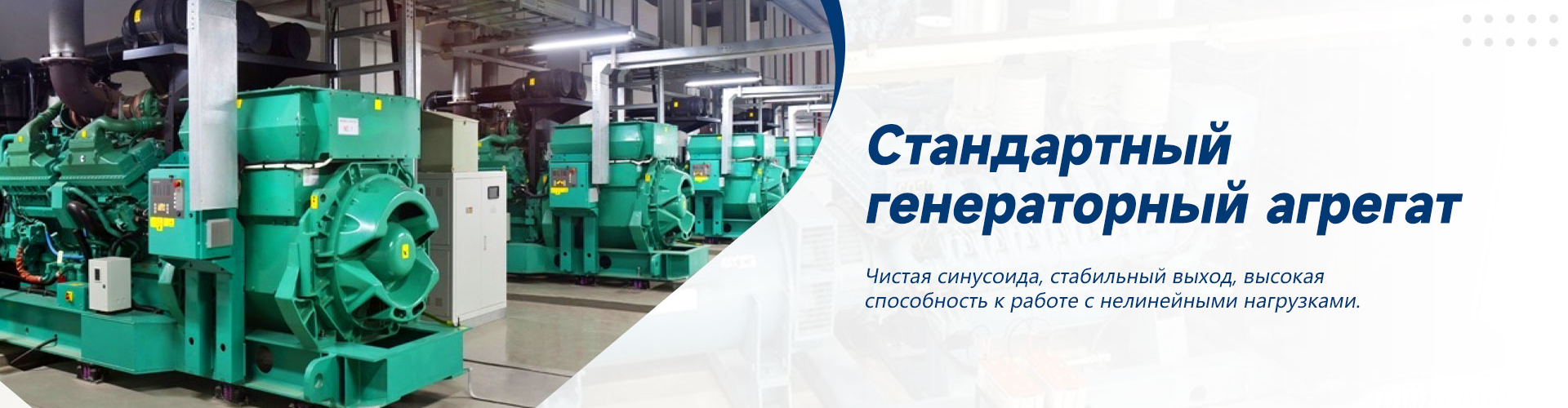
The main buyers of Chinese diesel generators?
2026-01-15
I often hear this question, and many immediately think about Africa or cheap construction projects. Reality, as usual, is more complex and interesting. Chinese diesel generators are no longer synonymous with “only for developing countries”. Yes, the volumes there are huge, but if you dig deeper, the bulk of the money and stable contracts often come from where you least expect it. I’ll try to sort it out, based on what I saw myself on the CIS market and beyond.
Who really creates demand: stereotypes vs. reality
Let's start with the most obvious - the construction sector. This is a classic, but there is a nuance here. They buy not only for temporary power supply in the “green field”. Often the key customers are contractors working on infrastructure facilities in remote regions, where connecting to networks is a separate long-term story. They need not just generators, but units that can work in tandem with an automatic transfer switch (ATS), often in harsh climatic conditions. And Chinese manufacturers, like those that supplyYuke (Shandong) Electrical Technology Co.,Ltd, they caught this a long time ago. Their websitevoyoko.ruis a good example of how the emphasis is shifting from price to comprehensive solutions: from technical consulting to engineering construction.
The second layer is industrial enterprises, especially those where power outages mean colossal losses: food processing, small workshops, plastic production. They may have basic power, but one accidental blackout and the raw materials are ruined. For them, it is not so much the price that is critical, but the reliability and speed of the service. And this is where many Chinese suppliers stumbled 10 years ago, but now the situation is changing. The emergence of local service centers, as part of a package from companies like Yuke Electric, has become a serious argument for this B2B segment.
And a third, often overlooked buyer is the telecommunications sector. Cellular towers, especially in the CIS countries, are often located where there is not and will not be a stable network. For them, a diesel generator is a source of life. The requirements are strict: autonomous operation, remote monitoring, fuel efficiency. Chinese engineers quickly adapted their models to these standards, offering “smart” ones. stations with remote control. This is no longer just hardware, but a technological product.
Geography of procurement: not only the south, but also the north, and even the west
It is generally accepted that the main flow goes to Africa and Southeast Asia. This is true in terms of the volume of pieces, but if we talk about the average cost of the contract and the technological complexity of the equipment, the picture is different. According to my observations, a very serious and demanding market is the CIS countries, especially Kazakhstan, Uzbekistan, and Russia itself.
Here the climate dictates its conditions: frosts down to -40°C. Many generators that work perfectly at +30° simply fail at this temperature. We have to modify: special winter covers, coolant and oil heaters, frost-resistant batteries. Chinese factories that want to operate here are forced to take this into account. I've seen teams like the one that startedYuke Electric(after all, their roots are from DEVER Electric, founded in 2003 in Qingdao), they actually create separate modifications for the northern markets. This is no longer a mass off-shelf product.
Another growing vector is the Middle East. Yes, they have a lot of their own money and oil, but for auxiliary facilities, desalination plants, and peripheral infrastructure, they often purchase Chinese units. But here the focus is on something else: resistance to heat, dust and sand. Cooling must be oversized, air filters must be multi-stage. Interestingly, local buyers are very meticulous about service contracts and the availability of spare parts in a warehouse in Dubai or Doha.
Selection criteria: why the buyer agrees to a Chinese generator
Price, of course, is the first thing that comes to mind. But if it were just that, Chinese manufacturers would not have captured such a significant segment of the middle and even upper middle class. There are several less obvious reasons.
Configuration flexibility. European brands often offer a catalog from which to choose. Chinese factories, especially those that position themselves as technological enterprises (as indicated in Yuke’s description - “with research and development?”), are much more willing to make modifications for a specific project. Need a custom noise reduction enclosure? Special arrangement of fuel tanks? Specific interface for integration into a monitoring system? With the Chinese, this is resolved faster and, again, cheaper.
Delivery speed. In a crisis situation, when the facility “stands up?” Due to the lack of energy, waiting 4-6 months for a European unit is an unaffordable luxury. Chinese suppliers, having well-established logistics and often ready-made “semi-finished products” in warehouses, they can ship and deliver a complex unit in 6-8 weeks. This is a huge competitive advantage.
But there are also pitfalls. The most important one is the ?lottery? with build quality and components. A Perkins or Cummins engine assembled under license in Asia is one thing. But an unnamed engine from a local factory is something else entirely. An experienced buyer always looks at the “filling”: whose engine, whose generator (alternator), what control system. Self-respecting suppliers, like the sameYuke, openly indicate the brands of key components. This immediately eliminates a lot of problems.
Buyer mistakes and our mistakes
I’ll tell you about a common mistake that we ourselves made in the beginning. The buyer, especially from the public sector, requires a unit with a capacity of, say, 500 kW. According to the specifications, everything matches. But it does not take into account the inrush currents of its motors or non-linear loads (modern electronics with switching power supplies). A generator operating at the limit of its rated capabilities quickly fails. We have learned to always reserve a margin of 20-30%, and sometimes offer parallel operation of two units of lower power for flexibility and redundancy. This is a harder sell due to the higher initial price, but saves the client a huge amount of money in the long run.
Another mistake is underestimating the importance of installation and commissioning. You can buy the best generator, but install it on an unprepared base, connect the ventilation or exhaust system incorrectly - and it will not last even half of its service life. Now we, like many who are in the know, insist on including installation supervision and personnel training services in the contract. This is exactly what Yuke Electric declares in its activities: “supply of equipment, engineering construction and services?” - these are not just words for the site, but a necessity.
We had an unsuccessful experience with the delivery of a batch of generators for one mine. We saved on the air intake system and installed standard filters. The area was very dusty. After 200 engine hours, the engines began to “eat up”. oil and lose power. We had to urgently modify it on site and install pre-cleaning cyclones. The losses were significant. But now for each object we first request a detailed report on operating conditions.
The future of the market: where are the “main buyers” heading?
Trend number one is hybridization and “green?” energy. Increasingly, requests are not for a pure diesel generator, but for hybrid systems: diesel + solar panels + battery bank. The generator in such a system works only when necessary, saving fuel and resources. Chinese companies are ahead of the rest here because they control the production chain of both solar panels and energy storage systems. The buyer is changing: it is no longer just “give me light?”, but “give me an autonomous, economical and environmentally friendly energy system?”.
The second is digitalization. The main buyer now wants to see everything: fuel level in the tank, temperature, engine hours, current parameters - in his smartphone. And not just see, but receive forecasts about the need for maintenance. Demand is shifting from the sale of apparatus to the sale of the “energy as a service” service. Companies that likeYuke Electric, rely on technological innovation, will benefit here.
And finally, reliability and service will finally win over price. The market is becoming saturated, information is becoming available. The buyer, be it the owner of a small hotel in Sochi or the director of a mine in Siberia, is increasingly willing to pay 15-20% more, but be sure of the availability of spare parts and service engineers within a radius of 500 km. Therefore, the main players, including Chinese ones, will open not just sales offices, but full-fledged logistics and service hubs in the regions. Then it will be decided who will remain in this market seriously and for a long time.
So, returning to the main question... The main buyers are those who stopped looking at the Chinese diesel generator as a cheap temporary patch, and saw in it the basis for their energy-independent business. And there are more and more of them every year.
-


-
-


WeChat

-
WeChat