

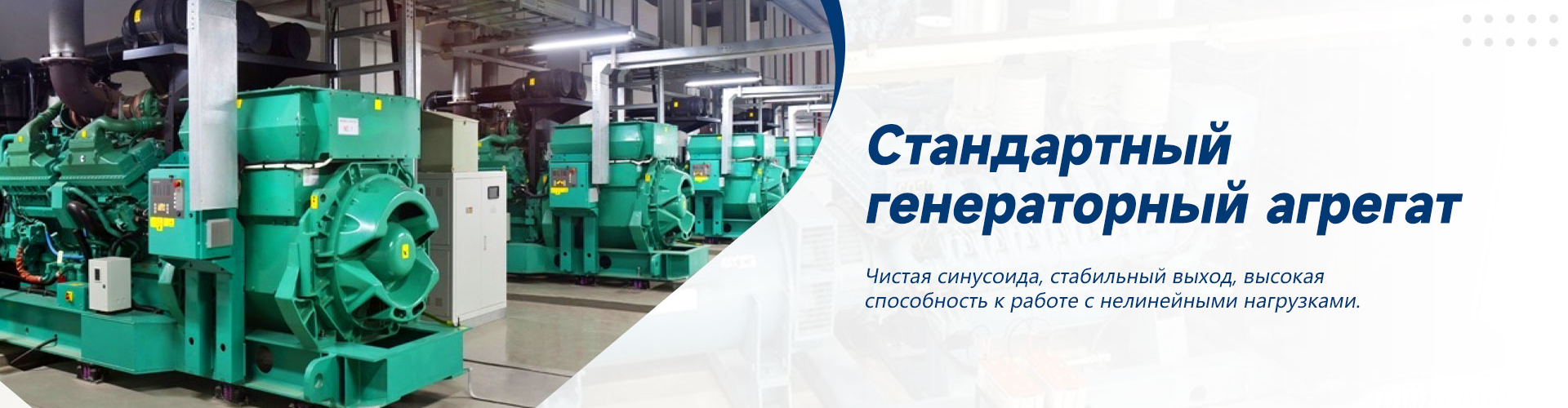
Comparison of diesel generator 100 kW and 150 kW: what to choose?
2026-07-14
- Comparison of 100 kW and 150 kW diesel generator: what to choose for your business?
- Technical differences: engine, alternator and service life
- Use cases: where 100 kW is not enough and 150 kW is excessive
- Summary table of characteristics and recommendations for selection
- Hidden risks and technical limitations
- Influence of climate and operating conditions on choice
- Service and spare parts availability
- Frequently Asked Questions
- Final summary and decision-making algorithm
Comparison of 100 kW and 150 kW diesel generator: what to choose for your business?
Choosing between 100kW and 150kW is not just a matter of “bigger is better”, but a critical economic decision that will determine the profitability of your operation over the next 10 to 15 years. In our practice, we have seen companies overpay thousands of dollars annually for excess power that they never used, and have just as often seen a 100 kW generator fail due to chronic overload of just 15%. The correct answer depends on three factors: the nature of the load (reactive or reactive), the inrush currents of your equipment and plans to expand production in the next 3 years. If you have a stable load without powerful electric motors and no expansion plans, take 100 kW. If you plan to run compressors, pumps or machines with heavy startup, or expect an increase in energy consumption, your choice is 150 kW.
This article is based on real cases of installation and operation of stationary diesel power plants (DES) in industrial areas of Russia and the CIS. We will not use marketing slogans, but will analyze the technical nuances that affect engine durability and fuel consumption. You will learn why it is sometimes more profitable to buy a more powerful unit and underload it than to operate a smaller one at its maximum capacity, and what hidden risks each option carries.
Technical differences: engine, alternator and service life
The main misconception among buyers is that the difference between 100 kW and 150 kW is only in the size of the cylinder block. In fact, a 50% power jump often entails a change in the class of equipment, cooling system, and even the type of alternator. Let's look at what physically changes when crossing this power boundary.
Engine: naturally aspirated vs turbocharged
In the segment up to 100–110 kW, most reliable manufacturers use naturally aspirated or slightly supercharged engines without an intercooler. This is a time-tested design that forgives maintenance errors and is less sensitive to fuel quality. However, when we move to the 150 kW mark, the design requires the installation of a full turbocharging system with intermediate air cooling (intercooler). This gives an advantage in specific power (less weight per 1 kW), but imposes stringent requirements on the quality of diesel fuel and oil change intervals.
In our practice, there was a case when a client insisted on purchasing a 150 kW diesel power plant with a modern high-tech engine to work in a remote village with unstable quality of diesel fuel. After 800 operating hours, the turbine failed due to coking of the channels caused by impurities in the fuel. The repair took three weeks, while spare parts were transported from the capital. For comparison, a nearby plant with a 100 kW naturally aspirated engine ran on the same fuel for 4,000 hours without major intervention. If your infrastructure does not guarantee ideal fuel, a “simple” 100 kW engine may be more reliable than a high-tech 150 kW monster.
Recommendation:Please request motor specification before purchasing. If the 150kW is offered with the latest generation of sophisticated electronic common rail injection control, make sure you have access to qualified service technicians within a 100km radius.
Alternator and peak load capacity
The generator part (alternator) in 150 kW models usually has a larger supply of copper windings and a more massive excitation system. This is critical when working with inductive loads. Asynchronous motors, compressors and welding machines, when starting, consume current that is 3–7 times higher than the rated current. A 100 kW generator can “sag” in voltage when two powerful consumers are started at the same time, which will trigger the protection or stop sensitive electronics.
150 kW models have greater rotor inertia and better harmonic damping. This means that the voltage sine wave remains pure even during sudden load surges. In one of our projects at a woodworking plant, replacing a 100 kW diesel power plant with a 150 kW one solved the problem of constant knocking out of frequency converters on CNC machines, although the average power consumption of the workshop was only 95 kW. A power reserve of 55% made it possible to comfortably suppress inrush currents without a drop in frequency.
Action:Make a list of all consumers indicating their starting currents (Istart). The total starting current should not exceed the short-term overload capacity of the alternator of the selected model.
Fuel consumption and economic efficiency
Paradoxically, over a certain load range, a 150 kW diesel generator can consume less fuel per unit of energy produced than a 100 kW model operating at the limit. Internal combustion engines have a zone of maximum efficiency, which is usually in the range of 60–80% of rated power. If you load a 100 kW generator to 95-100%, the specific fuel consumption (g/kWh) increases sharply, increasing thermal stress and wear.
Let's look at a specific example. A 100 kW generator with a load of 90 kW can consume 24 liters per hour. A 150 kW generator with the same load of 90 kW (which is 60% of its power) will operate in optimal mode and consume, say, 22 liters per hour due to more efficient combustion of the mixture in larger cylinders. The difference seems small, but over a year of continuous operation (8,000 hours) this is a saving of 16,000 liters of diesel fuel. At current prices, this is a significant amount that can recoup the difference in equipment cost in 2–3 years.
However, there is a downside: if the load on a 150 kW generator is less than 30% (less than 45 kW), a “glazing” effect will occur on the cylinders. Unburned fuel will settle on the cylinder walls, wash away the oil film and lead to increased oil consumption and loss of compression. 100 kW generators are easier to bring to operating temperature conditions at low loads.
Advice:Conduct an energy consumption audit for the last 12 months. If your peaks rarely exceed 70kW and your average demand is around 40kW, the 150kW option will not be economically viable due to the risk of idling.
Use cases: where 100 kW is not enough and 150 kW is excessive
The choice of power is dictated not only by the numbers in the table, but also by actual operating conditions. Below we provide a detailed analysis of situations based on the experience of integrating backup and main power supply systems.
Scenario A: Construction site and mobile facilities
Construction projects are characterized by high load dynamics. Today only the concrete mixer and lighting (30 kW) work; tomorrow the welding stations and lifts (120 kW) are turned on. Herediesel generator 150 kWis the uncontested leader. Power reserve is necessary to connect new equipment without replacing the station. Mobility also plays a role: modern 150 kW container solutions are often comparable in size to open 100 kW versions thanks to compact turbocharged engines.
We observed a situation where a contractor used a 100 kW diesel power plant to power a drilling rig. When the drill jammed, the load instantly increased, the engine stalled, and an emergency occurred in the well. The move to 150 kW with a fast response AVR (Automatic Voltage Regulator) system stabilized the process. In construction, the rule “it is better to have a reserve than not to have one” works 100%.
Scenario B: Constant power supply to remote production
If the generator is the main source of energy (Prime Power mode), the approach changes. Uniformity of loading is important here. For a small water bottling plant or cold storage warehouse with a set of compressors operating in cyclic mode, it is often sufficientdiesel generator 100 kW. The main condition is the presence of a cascade engine starting system. If you can program the compressors to start within 30-60 seconds of each other, the peak power is reduced and 100kW becomes sufficient.
In one of our poultry farm projects, we installed two 100 kW stations instead of one 200 kW. This made it possible to flexibly manage the load: in the summer one station operated at 70%, in the winter - both at 50%. This scheme increased fault tolerance (if one breaks, the second will pull critical loads) and optimized fuel consumption. The choice in favor of a smaller unit power here is justified by the redundancy strategy.
Scenario B: Backup power for commercial properties
For shopping centers, office buildings and residential complexes, the key factor is not only the active power (kW), but also the apparent power (kVA), as well as the power factor (cos φ). Modern buildings are full of switching power supplies (computers, LED lighting, servers) that create harmonic distortion. 150 kW generators, as a rule, are equipped with alternators with better protection against harmonics and the ability to connect additional filters.
If you are choosing between 100 and 150 kW for elevator and fire alarm redundancy, always round up. Elevator motors have huge starting currents. Lack of power when an elevator with passengers starts up can lead to it stopping between floors, which will create an emergency situation and reputational risks. In this sectorcomparison of diesel generator 100 kW and 150 kWalways leans towards 150 kW for the sake of safety.
Summary table of characteristics and recommendations for selection
To structure the information and help you make an informed decision, we have prepared a detailed comparison of key parameters. Please note that the data is averaged for mid-priced industrial models (for example, based on Perkins, Volvo Penta, Yuchai or Weichai engines).
| Comparison parameter | Diesel generator 100 kW | Diesel generator 150 kW | Expert commentary |
|---|---|---|---|
| Engine type | Most often naturally aspirated or light turbo | Must be turbocharged with intercooler | Turbo engines are more sensitive to the quality of oil and fuel. |
| Fuel consumption (at 75% load) | ~22–24 l/hour | ~30–33 l/hour | At low load (<30%) the consumption of 150 kW is unreasonably high. |
| Starting current (possibility) | Up to 250–300 A (short-term) | Up to 400–500 A (short-term) | Critical for starting pumps and compressors. |
| Dimensions and weight | Compact, can be installed in a small room | Requires more space for maintenance and ventilation | Check door opening dimensions before ordering 150kW. |
| Cost of ownership (TO) | Lower (less oil, cheaper filters) | Higher (larger oil volume, expensive consumables) | The difference in maintenance costs can reach 30–40%. |
| Noise level | Below (with the same casing) | Higher (requires a more powerful muffling system) | For residential buildings, 150 kW requires enhanced sound insulation. |
| Liquidity in the used market | High (the most popular format) | Medium (specific request) | 100 kW is easier to sell after 5 years of operation. |
Analyzing the table, we can conclude: if your budget is limited, and the load is predictable and does not contain powerful inductive consumers, 100 kW is a rational choice. If reliability, expandability and handling complex loads are a priority, paying more for 150 kW is an investment in process continuity.
Action:Use this table as a checklist when negotiating with suppliers. Ask them for fuel consumption data specifically for your expected load, and not passport values.
Hidden risks and technical limitations
No choice comes without compromise. Understanding the weaknesses of each category will protect you from unpleasant surprises during operation.
Risk of “underload” for a power of 150 kW
The most common mistake when choosing 150 kW is buying “for growth” without taking into account current consumption. Diesel engines hate running at idle or less than 30% load. In this mode, the combustion temperature drops, the fuel does not burn completely, and soot is formed, which clogs the turbine and exhaust tract. The oil is diluted by the fuel, losing its lubricating properties. Engine life is reduced significantly. If you bought 150 kW and use 40 kW, you are required to carry out the “calcination” procedure (connecting the ballast load) every 50-100 hours to burn off carbon deposits. This is an additional cost and the need for switching equipment.
We were faced with a situation where a bank purchased a 150 kW diesel power plant to reserve a branch where the actual load was 20 kW. Two years later, the engine required a major overhaul due to stuck piston rings. The fault was not poor assembly, but incorrect operating mode. In such cases, it is better to consider the 100 kW option or installing an automatic ballast load system.
Risk of overheating and degradation for 100 kW power
Operation at the limit of capacity (90–100% load) is permissible only for emergency modes lasting no more than 1 hour. Constant operation of a 100 kW diesel power plant at full power leads to overheating of the stator windings, insulation degradation and eventual short circuit. In addition, under high load the cooling system works to the limit. Any contamination of the radiator or decrease in the level of antifreeze leads to an emergency stop. The power reserve is not only the ability to connect an extra outlet, it is a safety buffer for the cooling and lubrication system.
Important:Never plan to run the generator at 100% power all the time. The maximum permissible continuous load for any diesel generator is 80–85% of the nominal value.
Influence of climate and operating conditions on choice
Russia and the CIS countries are characterized by harsh climatic conditions, which directly affect the choice of power. At low temperatures (-30°C and below), oil viscosity increases, engine cranking resistance increases, and combustion efficiency decreases. The engine is losing power.
A 100 kW generator in the far north will actually deliver only 80–85 kW of useful power. If your estimated load is 90 kW, then the “weaving” simply will not start or will stall under load. In this case, choosing 150 kW becomes a requirement rather than a desire. A powerful engine is cranked easier by the starter, reaches operating temperature faster and has a larger reserve of torque to compensate for climatic losses.
It is also worth considering the altitude above sea level. Every 100 meters of ascent reduces engine power by approximately 1%. For objects in mountainous areas (above 1000 m), a power reserve of 50 kW (switching to model 150) may be the only way to ensure the declared parameters.
Recommendation:When ordering, be sure to indicate the minimum operating temperature and altitude above sea level. The manufacturer must apply climate derating factors to the rated power.
Service and spare parts availability
Purchasing a generator is the beginning of a service relationship, not the end of the deal. 100 kW models are the most popular on the market. Filters, belts, gaskets and consumables for them are available at almost any dealer. The cost per standard hour of repair is also lower due to the simplicity of the design.
With 150 kW generators the situation is more complicated. Specific filters for turbocharged engines, common rail injectors or control units can be supplied on request, especially when it comes to European brands. Downtime in the event of a breakdown can increase from 1 day to 2 weeks. When choosing a powerful model, be sure to inquire about the availability of a spare parts warehouse at the supplier in your region. Having a service engineer certified specifically for this series of engines is more important than the brand of generator itself.
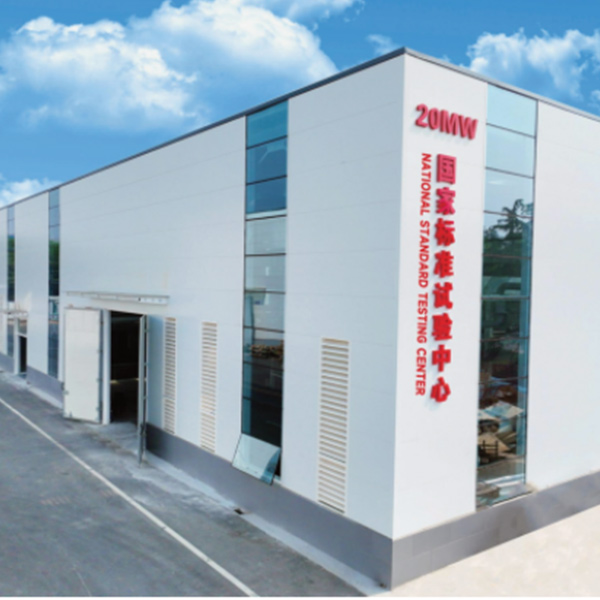
That is why it is important to choose a partner who understands the specifics of the region. For example, a companyYuke (Shandong) Electrical Technology LLC", being a professional integrator of solutions in the field of autonomous power supply, pays special attention to adapting equipment to the climatic conditions of the CIS countries. With its own production base in Shandong province and strategic partnerships with the world's leading engine manufacturers (Cummins, MTU, Perkins, Yuchai, SEM), the company offers not just standard models, but engineered systems. Particular attention is paid to strict quality control: each unit, be it the Cummins-based VCD series or the high-voltage VHMD5 models, undergoes mandatory stress testing of at least 4 hours before shipment. This approach ensures that the stated 100 or 150 kW will correspond to reality even under harsh operating conditions.
In our company, we always recommend that clients enter into a post-warranty service agreement at the purchase stage. For capacities above 100 kW, the presence of such an agreement, especially with a supplier that has a developed network of service partners (like Yuke), is insurance against multimillion-dollar losses due to production downtime.
Frequently Asked Questions
Is it possible to increase the power of a 100 kW generator to 150 kW using software?
No, this is impossible and dangerous. Power is limited by the physical parameters of the engine (cylinder volume, connecting rod strength, fuel pump performance, radiator area). An attempt to reflash the control unit to remove more power will lead to overheating, destruction of the piston group and a fire. Increasing power is only possible by replacing the engine and alternator, which is not economically feasible - it’s easier to buy a new unit.
Which generator is quieter: 100 kW or 150 kW?
With the same level of casing design, a 100 kW generator will be quieter. Higher power engines (150 kW) have higher flash pressure in the cylinders and a more efficient exhaust system, which creates more noise. However, modern all-weather casings with multi-layer sound insulation can eliminate this difference. If the noise level is critical (working in a residential area), pay attention not to the power, but to the noise insulation class of the casing (in dB at a distance of 7 meters).
Is 100 kW enough for a private house with an area of 300–400 m²?
Yes, 100 kW is more than enough for any private household. The average consumption of a large cottage with all amenities, a swimming pool and a sauna rarely exceeds 15–20 kW even at peak. Installing 100 kW in the private sector is justified only if a workshop with industrial equipment or a farm with powerful pumps is planned on the site. For purely residential needs, the 20–30 kW range is often the optimal choice, with 100 kW considered overkill.
Does the choice between 100 and 150 kW affect the manufacturer's warranty?
There is no direct influence, the warranty depends on the brand and operating conditions. However, as we mentioned above, violation of operating conditions (underload for 150 kW or overload for 100 kW) is the most common reason for refusal of warranty repairs. Service engineers take readings from the controller, see the load history and void the warranty if violations of the regulations are detected. Choose power with a margin of 20–30% to remain in the “green zone” of warranty obligations.
Final summary and decision-making algorithm
Summarizing our in-depth analysis, we can formulate a clear selection algorithm. Don't listen to sellers who are trying to sell a more expensive model. Listen to the numbers from your energy audit.
- Take measurements.Do not estimate the load “by eye”. Use a network analyzer for a week to record peaks and inrush currents.
- Determine the type of load.If you have a lot of electric motors, welding or frequencies, lean towards150 kW. If the load is active (lighting, heating, electronics) - consider100 kW.
- Assess the prospects.Are there plans to expand in the next 3 years? If yes, and your budget allows, take 150 kW right away to avoid double costs for delivery and installation in the future.
- Check operating conditions.For northern, high altitude or low consumption (<30% of rated) operation, selecting 150 kW requires special care and preparation.
- Calculate TCO (total cost of ownership).Include in the calculation the price of fuel, maintenance costs and the risk of downtime. Sometimes the cheapest generator becomes the most expensive to operate.
The right choice betweendiesel generator 100 kW and 150 kWis a balance between technical necessity and economic feasibility. Remember: the best generator is one that operates within its optimal load range, providing stable voltage and requiring minimal human intervention.
If you have doubts about the calculations or want to get a professional audit of your facility with a recommendation for a specific model for your tasks, our engineers are ready to help. We don't just sell equipment, we design power systems that last for decades, drawing on the experience of trusted partners like Yuke (Shandong) Electrical Technology Co.,Ltd., whose solutions combine global technology with local customization.
Contact us todayto receive a detailed technical and commercial proposal. We will help you choose the optimal solution that will save your money and ensure the smooth operation of your business.
Read also our detailed review:Prices and characteristics of industrial diesel generators 2026.

-


-
-


WeChat

-
WeChat