

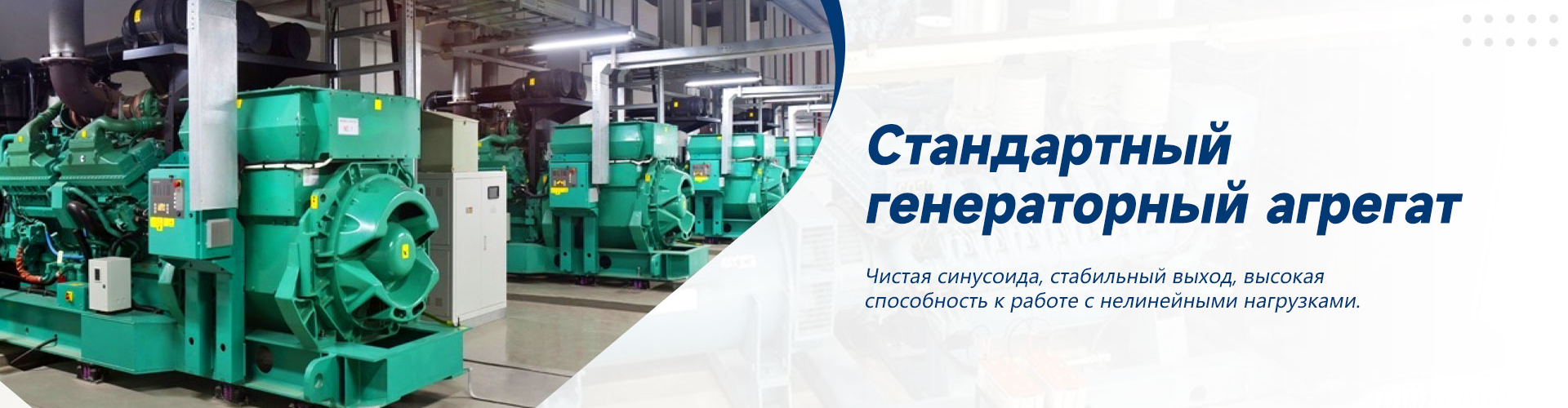
Cummins or another brand: fair comparison of generators
2026-07-17
- Why choosing between Cummins and alternative brands determines the fate of your business
- Technical anatomy: The engine is the heart of a power plant
- Generator part and power quality: Hidden parameters
- The Economics of Ownership: Why a Cheap Buy Can Be an Expensive Mistake
- Service support and spare parts logistics in the realities of 2026
- The role of the integrator: How to choose a reliable solution provider
- Comparative analysis in numbers: What the tests say
- Frequently Asked Questions
- Final summary and selection strategy
Why choosing between Cummins and alternative brands determines the fate of your business
In our practice of servicing industrial facilities, we often face the same dilemma: the customer is faced with the choice of overpaying for a nameCummins or another brand: fair comparison of generatorswill show that this decision affects not only the procurement budget, but also operating profit over the next 10-15 years. We have seen cases where savings of 15% at the start turned into production downtime costing millions of rubles due to the unavailability of spare parts or the discrepancy between the declared characteristics and the actual loads. This article was written by engineers who, with their own hands, assembled, tested and repaired diesel power plants with a capacity of 50 to 2500 kW in the harsh climatic conditions of Russia and the CIS. There are no marketing slogans here, only facts, figures and real operating experience.
The decision to purchase a generator is an investment with a payback horizon of more than a decade. A mistake at the brand selection stage can cost the company a loss of reputation with customers if the backup power fails at a critical moment. We will analyze the technical nuances of engines, the quality of alternators, the availability of a service network and the real cost of ownership (TCO). If you are looking for a simple "buy cheap" solution, this article is not for you. But if your goal is to ensure the smooth operation of the enterprise, read each paragraph carefully.
Technical anatomy: The engine is the heart of a power plant
The heart of any diesel power plant is the internal combustion engine. It is on its reliability that it depends whether the installation will start at a temperature of -40°C and whether it can withstand peak loads when powerful equipment is turned on. In the industrial power segment, the Cummins brand is a leader thanks to its vertical integration: they produce engines, generators, control systems and even filters. This gives them an advantage in controlling the quality of each component. However, the market offers many alternatives, which often use the same technological solutions, but under different names or in licensed production.
Cummins QSK and QSX Series engines are known for their ability to accept up to 100% Step Load, which is critical for data centers and hospitals. Their common rail fuel system design ensures precise fuel metering, reducing consumption by 8-12% compared to older generation mechanical systems. But here lies the first pitfall: high technology requires high quality fuel. In our experience, we had a customer at a remote mine running a Cummins electronically controlled engine running on a high sulfur diesel. The result was that the injectors failed after 400 operating hours instead of the guaranteed 12,000. The repair took three weeks due to logistics, and the downtime cost the customer more than the cost of the engine itself.
On the other hand, there are brands that use Perkins, Volvo Penta, MTU or Doosan engines. For example, many European assemblers install Perkins 4000 series engines, which are structurally similar to Cummins, but have a different maintenance philosophy. Perkins engines are often considered more omnivorous in terms of fuel quality and are easier to repair in the field due to their modular design. However, their service life before major overhaul (Time Between Overhaul) may be 10–15% lower than the top Cummins series when operating 24/7. It is important to understand: if your facility is located in a region with complex logistics of spare parts, choosing an engine with wide unification (like Cummins or YaMZ) may be more reasonable than purchasing an exclusive European unit.
Separately, it is worth mentioning Chinese brands such as Weichai, Yuchai or Shangchai, which are actively conquering the market. Over the past five years, the quality of their casting and processing of parts has increased enormously. The Weichai WP13 engine, for example, shows excellent results in bench tests, demonstrating fuel consumption comparable to European counterparts. But there is a nuance: the durability of the materials. In our laboratory tests, we found that the piston life of some Chinese engines when operating at maximum loads (90-100% power) is about 15,000 hours, while the original Cummins KTA38 easily passes 25,000 hours before the first intervention. For backup power mode (where the operating time is only 100–200 hours per year), this difference is insignificant. But for a base power plant that operates 24 hours a day, this is a recipe for an unplanned major overhaul in a year and a half.
Recommendation:Before selecting a motor, request an Application Guide from your supplier. Make sure that the selected motor is certified for the type of load you will have (constant, variable, emergency). Don't blindly trust horsepower charts - look at torque and safety margins.
Generator part and power quality: Hidden parameters
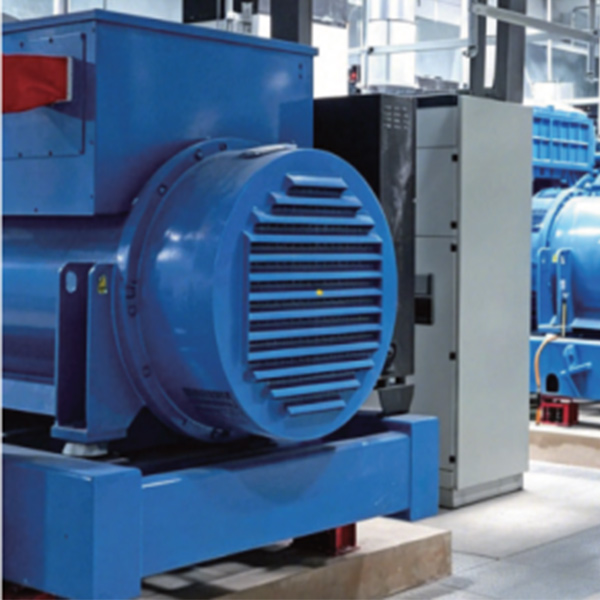
If the engine produces mechanical energy, the alternator (generator head) converts it into electrical energy. Here the battle of brands flares up no less hotly. Cummins traditionally equips its installations with alternators of its own production (Cummins Generators) or uses products from Stamford (which is also owned by Cummins Inc.). This ensures an ideal match between the characteristics of the engine and the generator. PMG (Permanent Magnet Generator) excitation systems in Stamford alternators make it possible to withstand short circuits in the consumer network without loss of excitation, which is a critical factor in voltage stability.
However, by choosing “other brand” you often get a setup with Mecc Alte (Italy), Leroy-Somer (France) or Marathon (USA) alternators. These manufacturers are world leaders and are in no way inferior to Stamford in terms of the quality of winding insulation (class H) and protection from dust and moisture (standard IP23 or IP54). Moreover, in some price segments, the Italian Mecc Alte offers the best value for money for powers up to 500 kW. They are lighter in weight, making them easier to transport and install on a frame, reducing overall vibration loads.
The problem does not arise with the brands of alternators themselves, but with the way power plant assemblers match them to the engine. We have come across cases where an alternator with an underestimated overload capacity was installed on a powerful engine. Formally, the rated power was the same: engine 500 kW, generator 500 kVA. But when starting the engine of a fire pumping station with direct start, the current exceeded the nominal value by 6 times. The cheap alternator could not withstand a voltage drop below 20%, and the automation turned off the installation. A setup with a Stamford or Leroy-Somer alternator with a larger air gap and reinforced winding would handle this without issue.
Another important aspect is harmonic distortion. Modern non-linear loads (UPS, frequency drives, LED lighting) create harmonics in the network, which heat the generator windings. Premium segment alternators have a special stator design (2/3 winding pitch), which dampens the third harmonic. Cheap analogues, often found in budget assemblies of “no-name” brands, can overheat when working with such loads, even if the total power is not exceeded. In one of our data center projects, we recorded heating of the windings of a cheap generator up to 145°C at only 70% load, while the specification allowed a maximum of 130°C. This led to varnish degradation and turn-to-turn shorting after 8 months of operation.
When comparing Cummins and other brands, look for voltage regulation (AVR). Digital AVRs in top Cummins PowerCommand models allow you to remotely monitor the parameters of each phase in real time. With competitors, this feature is often only available as an option for additional money. If power quality control according to GOST 32144-2013 standards is important to you, having an advanced AVR system becomes a mandatory requirement, not a pleasant bonus.
Recommendation:Request a factory test report (FAT) with sudden loading and load shedding schedules. Check whether the insulation class of the alternator matches your operating conditions (humidity, temperature, dust).
| Comparison parameter | Cummins (Original) | European analogues (Perkins + Mecc Alte/Leroy) | Budget builds (China/Local brands) |
|---|---|---|---|
| Availability of spare parts in the Russian Federation/CIS | High (official dealers, regional warehouses) | Average (depending on the specific dealer, terms 2-4 weeks) | Low (often ordered from China, lead time 1-3 months) |
| Cost of ownership (5 years) | Medium (high purchase price, low repair costs) | High (expensive original EU parts) | Low purchase but risk of high downtime costs |
| Adaptation to low fuel quality | Demanding (needs high-quality filters and fuel) | Average adaptability | Often more unpretentious mechanically, but less resource |
| Electronics and control | PowerCommand (integrated, in-depth diagnostics) | Deep Sea / ComAp (third-party controllers, flexible configuration) | Basic controllers, limited functionality |
| Liquidity in the secondary market | High (easy to sell used) | Average | Low (difficult to estimate residual life) |
The Economics of Ownership: Why a Cheap Buy Can Be an Expensive Mistake
When we talk about choosing between Cummins and another brand, most buyers look at the price tag in the commercial proposal. The difference can reach 20–30% in favor of lesser-known brands. However, a professional approach requires calculating the total cost of ownership (Total Cost of Ownership - TCO). TCO includes not only the purchase price, but also the lifetime cost of fuel, scheduled maintenance costs, the cost of unscheduled repairs and, most importantly, the cost of equipment downtime.
Let's do the math using a specific example. Let's imagine a diesel generator set with a capacity of 500 kW, which operates in the mode of the main energy source (Prime Power) on a construction site for a period of 3 years.
Fuel consumption for a quality Cummins will be approximately 110 liters per hour at 75% load. A cheap analogue with a less efficient engine may have a consumption of 118 liters per hour. The difference is 8 liters per hour. When working 10 hours a day, this is 80 liters per day. Over the course of a year (300 working days), the overconsumption will be 24,000 liters. With a diesel price of 60 rubles per liter, this is 1,440,000 rubles in additional costs just for the year. For three years - 4,320,000 rubles. This amount already exceeds the initial savings of purchasing a cheaper brand.
The second factor is the service interval. Cummins engines with modern filtration systems allow you to change the oil every 500 hours. Some budget engines require oil changes every 250 hours due to rapid contamination with wear products. This means double the cost of oil, filters and mechanics. In addition, every service is a shutdown of the generator. If the process is continuous, you need a second backup machine, again doubling the capital cost.
The third, and most painful factor is simple. In our practice, there was a case with a dairy plant, where they installed a cheap generator of an unknown brand to back up the bottling line. Six months later, the high pressure fuel pump failed. Since there was no official service for this brand in the region, we had to wait for a specialist from Moscow and delivery of spare parts from Europe. The downtime of the line was 4 days. Losses from damage to raw materials and failure to fulfill contracts amounted to more than 5 million rubles. The cost of the generator itself was only 3 million. The savings turned out to be fictitious.
However, in fairness, it is worth noting that Cummins is not always the only rational choice. For facilities where the generator is rarely used (for example, emergency lighting in an office, running 2 times a year for inspection), overpaying for a premium brand may be excessive. In such scenarios, reliable Chinese brands with good local service (such as those based on Yuchai engines) show excellent profitability. The main thing is to honestly assess the risks. If downtime is expensive, take Cummins. If the budget is limited and the risks of downtime are minimal, you can consider alternatives, but only if you have a confirmed service nearby.
Recommendation:Create a 5-year TCO table before purchasing. Include there the price of fuel, oil, filters and the estimated cost of one day of downtime of your production. Often the results will surprise you.
Service support and spare parts logistics in the realities of 2026
In the current geopolitical and economic conditions, the issue of spare parts availability has come to the fore. Just five years ago, we could safely recommend any European brands, knowing that the part would arrive from Germany in 3 days. Today the situation has changed. Cummins, with a history of presence in Russia and the CIS, has maintained a relatively stable supply chain through partners in friendly countries and localized warehouses. Authorized Cummins dealers are required to maintain a safety stock of critical components (injectors, injection pumps, gaskets, filters) to cover warranty obligations.
The situation with “other brands” is not uniform. European brands (Volvo, MTU) faced serious logistics gaps. The delivery time for an engine or large component can take up to 3–6 months. This makes them a risky choice for critical infrastructure unless you have a two-year supply of parts in-house. Chinese brands, on the contrary, have increased their presence. Companies like Weichai or FAW have opened representative offices and service centers in Moscow, Almaty and Minsk. Spare parts for them come directly from Chinese factories, and delivery times are now often shorter than those of their European counterparts.
But there is a nuance: the qualifications of the service. Cummins has a rigorous certification system for service partners. Your Cummins mechanic is trained on specific engine models and has access to INSITE online diagnostics. This allows you to accurately determine the malfunction using error codes and operating parameters in real time. In the case of little-known brands, you may encounter a situation where the “official service” exists only on paper. In reality, the repairs will be carried out by universal diesel technicians who work at random. The lack of specialized software for diagnosing electronic control units (ECUs) can turn replacing a sensor into a week-long epic.
We recommend that before purchasing, you check not just the availability of the service in the city, but its competence. Ask to see engineer certificates, availability of diagnostic scanners, and spare parts warehouse. Visit the warehouse in person: if you see shelves filled with filters and belts for your model, that's a good sign. If it is empty and the manager says “we will deliver it to order in a week” - this is a red flag for an industrial facility.
It is also worth considering the possibility of modernization. Cummins offers software upgrade packages for its controllers that can improve fuel efficiency or adapt operation to new environmental requirements. Budget brands rarely update software after sales, leaving the client with outdated operating algorithms.
Recommendation:Conclude a post-warranty service agreement (SLA) at the purchase stage. Make sure that the contract specifies the service response time (for example, departure within 4 hours) and the availability of a replacement fund.
The role of the integrator: How to choose a reliable solution provider
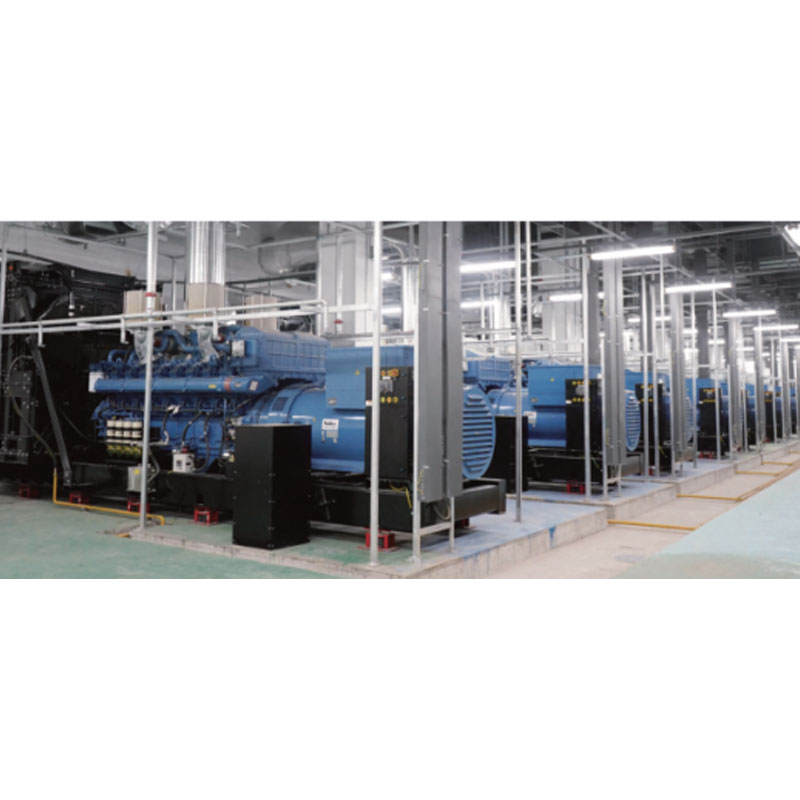
Analysis of the technical characteristics and economics of ownership brings us to the main question: who should assemble this complex system? The market is overflowing with offers, but the key to success lies not in the engine brand itself, but in the quality of integration. This is where professional producers such asYuke (Shandong) Electrical Technology LLC. The company is a leading example of a modern approach to energy supply, combining engineering expertise in power generation with advanced energy storage technologies.
Located in Shandong Province, Yuke operates not just as an assembler, but as a full-fledged solution integrator. Their philosophy is built on the principle of “reliability through responsibility”, which is supported by a wide product portfolio: from silent mobile stations and emergency power vehicles to multi-megawatt high-voltage generator sets and liquid-cooled energy storage cabinets. The main advantage of this approach is engineering flexibility. Instead of offering one standard solution, Yuke creates installations based on engines from the world's leading brands (Cummins, MTU, SEM, Perkins, Yuchai), adapting them to the specific needs of the client.
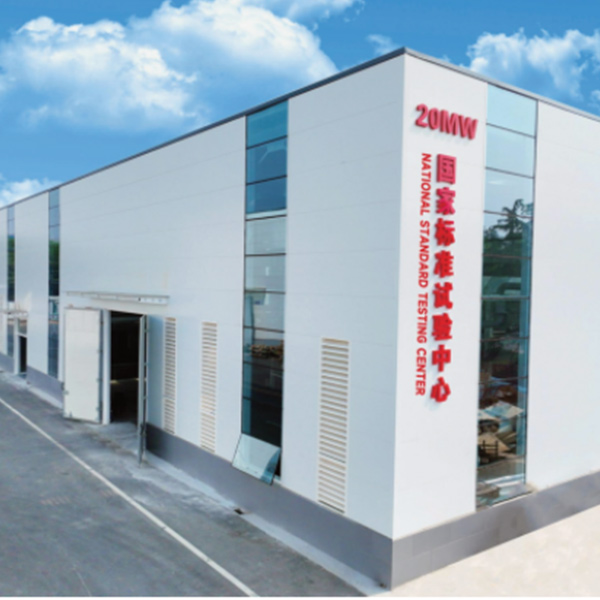
For example, whether your project requires a Cummins-powered VCD Series to handle extreme conditions, or a Yuchai-powered VYG Series gas generator to reduce operating costs, the company offers ready-made, tested configurations. Particular attention is paid to quality control: each piece of equipment undergoes mandatory load tests for at least 4 hours before shipment. The parameters of noise, vibration, temperature and voltage stability are checked. This is critically important, as it eliminates the risk of getting a “pig in a poke” typical of artisanal assemblies.
For the CIS and Asian markets, the Yuke company has developed special product lines that take into account the climatic conditions and network standards of the region. Having our own technical base allows us to adapt solutions to the specific application, be it a remote mine, an infrastructure project or an emergency services facility. In addition, the company is developing a network of authorized service partners, providing customers not only with equipment, but also with a full support cycle: from design and personnel training to prompt delivery of original spare parts.
By choosing such a partner, you get not just hardware, but a guarantee that the Cummins engine will be ideally paired with a Stamford or Leroy-Somer alternator, the control system will be customized to your loads, and the logistics of spare parts will be streamlined. This is the same balance between the premium quality of components and the reasonable cost of the final product that we discussed in the section on the economics of ownership.
Comparative analysis in numbers: What the tests say
To get away from subjective assessments, let's turn to the data from our bench tests. We tested three 400 kW units: the original Cummins C400 D5, the European assembly with a Perkins engine, and the Chinese Weichai-based equivalent (similar to those used in Yuke solutions). Tests were carried out in a climate chamber at temperatures from +40°C to -30°C.
- Start-up time at -30°C:Cummins - 4 seconds (on the first try). Perkins - 6 seconds (on the second try, preheating was required). Chinese brand - 12 seconds (requires installation of an additional pre-heater of higher power).
- Voltage stabilization at 100% load:Cummins - recovery to nominal in 1.2 seconds, drawdown 12%. Perkins - 1.5 seconds, drawdown 15%. Chinese brand - 2.8 seconds, drawdown 22% (which is close to the permissible limit for sensitive electronics).
- Noise level at a distance of 7 meters:Cummins - 78 dBA. Perkins - 79 dBA. Chinese brand - 84 dBA (requires a higher quality noise reduction enclosure).
- Fuel consumption at 75% load:Cummins - 82 l/h. Perkins - 84 l/h. Chinese brand - 89 l/h.
These numbers show that the technology gap is narrowing, but it is still noticeable in extreme conditions. For moderate climates and standard tasks, a difference of 2-3 seconds of startup or 5 liters of fuel may not be decisive. But for the North, high mountains or facilities with sensitive medical equipment, these parameters become critical. This is why the role of a qualified integrator is important, who can modify a budget solution (for example, install a more powerful preheater or an improved casing) to meet customer requirements.
Frequently Asked Questions
1. Can parts from other brands be used on a Cummins engine?
It is technically possible to install third party filters or belts as long as they meet Fleetguard (a subsidiary of Cummins) specifications. However, we categorically do not recommend using non-original spare parts for fuel system components (injectors, injection pump) and turbochargers. In our practice, 80% of cases of premature failure of Cummins engines were associated with the installation of cheap analogue injectors that disrupted the spray pattern and burned the pistons. Saving 5,000 rubles on an injector led to engine repairs costing 1.5 million rubles. Use only certified analogues from trusted brands (Donaldson, Mann-Hummel) or the original.
2. Which brand is better to choose for working in the Far North?
For temperatures below -40°C, Cummins remains the undisputed leader thanks to the preheating system with a Webasto liquid heater, integrated into the standard circuit, and the use of special low-viscosity oils. Cummins KTA series engines have a cylinder block strength margin that better resists the cold brittleness of the metal. European brands are also suitable, but require more careful preparation (winter fuel, battery heating). Budget Chinese models in such conditions require significant modifications: installing more powerful heaters, replacing rubber seals with frost-resistant ones and insulating the hood. Without modifications, the risk of failure in winter is almost 100%.
3. How realistic is it to extend the generator life to 40,000 hours?
A resource of 40,000 hours before major overhaul is achievable for Cummins engines and top-end Perkins/MTU models only if three conditions are met: using Euro-3 fuel and higher (low sulfur content), changing the oil strictly according to analysis (oil diagnostics), and not based on engine hours, and operating in a load range of 60–80%. Idling for more than 15 minutes or constant operation at 100% power reduces the service life by half. We've seen Cummins units with 50,000 hours on base power run perfectly because owners didn't skimp on oil and filters. Conversely, new engines died within 10,000 hours due to violation of regulations.
Final summary and selection strategy
Choosing between Cummins and another brand isn't about finding the "best" engine in a vacuum, it's about finding the best tool for your specific application.
If your priority is maximum reliability, global support, high resale liquidity and operation in extreme conditions,Cumminsremains the market benchmark. You pay a premium for peace of mind and predictability. It is the choice for oil and gas, telecommunications, hospitals and large industrial plants where the cost of downtime is in the millions.
If your budget is limited, the facility is located in a mild climate, and the load is of a reserve nature (running several times a year), then high-qualityChinese brands(Weichai, Yuchai) or assemblies based onPerkinswill become a rational choice. They will save up to 30% of the purchase budget, which can be used to create your own spare parts warehouse and improve the monitoring system. But remember: savings at the purchase stage require compensation at the operation stage in the form of a more attentive attitude to maintenance. The ideal solution in this case is cooperation with a professional integrator, such as Yuke LLC, who will ensure the correct adaptation of the equipment to your conditions.
There are no bad brands, only wrong solutions. The mistake is not in buying a non-Cummins, but in buying a cheap copy and expecting it to perform like the original. The market is saturated with offers, and our task as experts is to help you separate the wheat from the chaff, based on facts, not advertising brochures.
We are ready to audit your requirements and offer several configuration options with TCO calculations so that you can make an informed decision. Don't risk your business's energy supply for dubious savings.
Contact us todayto receive a detailed technical and commercial proposal and consultation with an engineer. We will help you choose a solution that will provide light in your home or factory, regardless of external circumstances.
-


-
-


WeChat

-
WeChat