

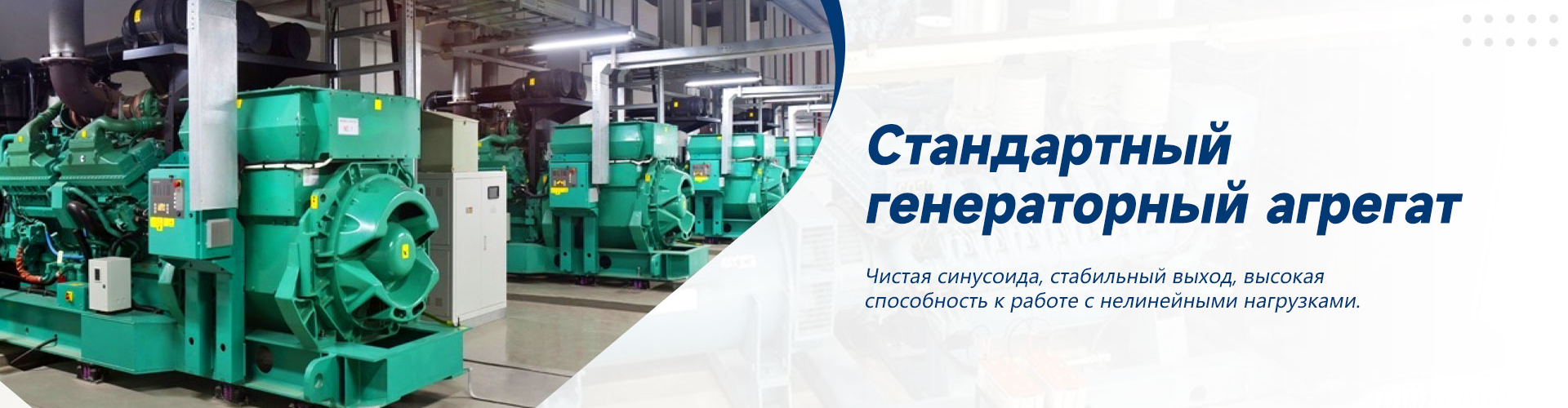
Gas generator 500 kW: connection and startup
2026-07-17
- 500 kW gas generator: connection and start-up - critical stages of commissioning
- Site Preparation and Foundation: The Hidden Risks of Unstable Geometry
- Integration into the gas main: GOST requirements and safety
- Electrical part: synchronization and network protection
- Cooling and exhaust systems: thermodynamics and acoustics
- Step-by-step procedure for first start-up and break-in
- Frequently Asked Questions
- Selecting reliable equipment: the role of the manufacturer
- Expert opinion and recommendations
500 kW gas generator: connection and start-up - critical stages of commissioning
Directconnecting and starting a gas generator 500 kWdetermine not only the immediate operability of the station, but also its resource for the next 10–15 years. An error at the stage of laying a fuel line or adjusting the ignition timing can damage the cylinder block in the first 500 operating hours, turning capital investments into losses. In our practice, we have recorded cases where ignoring gas quality requirements led to detonation and destruction of the piston group after just two weeks of operation. This article is a technical guide based on real-life experience in installing more than 40 industrial power units, and contains a step-by-step algorithm for engineers and technical directors.
We will not retell the theory of operation of the internal combustion engine. Our goal is to provide clear instructions on how to integrate a powerful gas piston unit into your existing plant infrastructure. You will learn about the specifics of preparing the foundation, the nuances of coordination with gas services, the correct piping of the cooling system and the procedure for the initial start-up under load. Each section contains specific numbers, tolerances and warnings, which are often missed in factory manuals, but are critical for Russian reality.
Site Preparation and Foundation: The Hidden Risks of Unstable Geometry
Installation of a 500 kW unit begins long before the equipment arrives at the site. The weight of such a station, complete with radiators and mufflers, often exceeds 3.5–4 tons, and vibration loads when operating at rated power create dynamic forces that can destroy an incorrectly designed base. We encountered a situation where the client saved on geodesy and reinforcement, which led to the generator frame being distorted after just three months of work. The result was a rupture of fuel rail welds and a leak of high concentrations of gas.
The foundation must be made of concrete of a grade not lower than M300 (class B22.5) with mandatory double reinforcement. The depth of installation depends on the type of soil, but for heavy diesel and gas installations we recommend a monolithic slab with a thickness of at least 400–500 mm. It is critical to ensure that the surface is horizontal with a tolerance of no more than 2 mm per linear meter. Misalignment of even 5 mm can cause uneven wear on the crankshaft main bearings and misalignment between the engine and alternator.
When designing, it is necessary to provide technological clearances for maintenance. The minimum distance from the wall to the radiator of the cooling system should be 1.5 meters to ensure free air flow. If the station is located indoors, the volume of the room must allow three air changes per hour to compensate for the heat generated by the engine. Ignoring this rule leads to overheating of the coolant above 95°C and an emergency stop by the temperature sensor.
Pay special attention to vibration isolation. For 500 kW stations, the use of simple rubber pads is often insufficient. We recommend using spring vibration isolators with a calculated natural frequency below the engine speed. This will prevent the transmission of structural noise to the building's building structures. In one of our projects, the lack of proper vibration decoupling led to the appearance of cracks in the load-bearing columns of the workshop after six months of operation.
Before installation, check the availability of mounting parts for fastening the frame. Anchor bolts must be installed strictly vertically using a template. Tighten the nuts only after the concrete has fully cured (usually 28 days), using a torque wrench with torque control according to the manufacturer's specifications. An attempt to install a generator on a “raw” foundation guarantees its subsidence and violation of the geometry.
Pre-installation checklist:
- Checking the bearing capacity of the soil and compliance of the foundation design with SNiP 2.02.01-83*.
- Measuring the horizontality of the slab with a level (tolerance ≤ 2 mm/m).
- The presence of a sump to collect possible oil and fuel leaks (if required by environmental standards).
- Providing access roads for a crane with a lifting capacity of at least 5–7 tons.
- Checking the grounding point of the building ground loop (current flow resistance ≤ 4 ohms).
Integration into the gas main: GOST requirements and safety
Connecting to the gas network is the most regulated stage, where any amateur activity is unacceptable. For a 500 kW generator, the fuel consumption is approximately 140–160 Nm³/h, depending on the type of gas (natural or biogas) and load. Such consumption requires a pipeline with a diameter of at least DN80–DN100 to maintain stable pressure at the inlet to the reducer. Narrowing the pipe diameter even by one size leads to a pressure drop below the minimum permissible (usually 50–80 mbar), which causes a lean mixture and an increase in the temperature of the exhaust gases.
According to requirementsSource: SP 62.13330.2011 “Gas distribution systems”, in front of each gas-using equipment, a shut-off valve with a safety solenoid valve must be installed, which turns off the gas supply when the voltage fails or gas sensors are triggered. We strongly recommend installing a dirt filter with a mesh of at least 80 microns directly in front of the gas reducer. In Russian practice, the quality of gas often does not correspond to the passport data, and the ingress of scale or sand into the membrane of the gearbox causes it to fail instantly.
The most important element is the excess pressure relief system (EPS) and the safety shut-off valve (SC). If the pressure in the line increases above 1.25 from the working PC, it should operate faster than the PSK opens. The adjustment of these devices is carried out only by qualified personnel with access to hazardous gas work. In our practice, there was a case when incorrect adjustment of the PSC led to the release of a large volume of gas into the atmosphere during startup, which almost resulted in an explosion in the confined space of the container.
The pipe material must correspond to the operating conditions. For external laying, seamless steel pipes are used in accordance with GOST 8732 or GOST 10704. Welded joints are subject to 100% inspection by ultrasonic flaw detection or x-ray. Flange connections are sealed with paronite gaskets that are resistant to hydrocarbons. The use of rubber hoses for permanent gas supply is strictly prohibited - they are used only as flexible inserts no more than 1 meter long to compensate for vibrations, and must have a metal braid.
Don't forget about the odorization system if you use purified biogas or odorless associated petroleum gas. The addition of an odorant (mercaptan) is mandatory for timely detection of leaks by humans. Methane sensors should be installed at the top point of the room, since methane is lighter than air, and at the bottom point, if there is a risk of accumulation of heavy fractions or propane. The alarm threshold is set to 10% of the lower flammable concentration limit (LECL).
Typical mistakes in gas supply:
- No bypass line:When repairing a filter or gearbox, the entire power plant has to be shut down. The bypass allows for maintenance without stopping generation.
- Wrong choice of gearbox:The use of household or small-scale industrial gearboxes at a flow of 150 m³/h leads to their freezing due to the Joule-Thomson effect and loss of membrane tightness.
- Ignoring purge:Before the first start-up, the pipeline must be purged with an inert gas or the gas itself into the atmosphere (in a safe place) to remove air. Air entering the combustion chamber during startup causes a popping noise.
Electrical part: synchronization and network protection
The electrical connection of a 500 kW generator requires a professional approach to the selection of cable products and settings of circuit breakers. The cable cross-section is calculated not only by current, but also by voltage drop. For a 400V output at a current of about 720A (cos φ = 0.8), the minimum cross-section of a copper cable is 2×(3×185+1×95) mm² or a similar aluminum cross-section, taking into account correction factors for temperature and installation method. Neglecting this calculation leads to heating of the insulation and a fire hazard.
The central element of the electrical circuit is the input circuit breaker and the automation cabinet. To operate in parallel with the network or other generators, a synchronization controller is required that monitors voltage, frequency and phase angle. The contact closure process is possible only if the following conditions are met: voltage difference ≤ 5%, frequency difference ≤ 0.2 Hz, mismatch angle ≤ 10°. An attempt to connect the generator to the network without synchronization (“on opposite phases”) is equivalent to a short circuit and is guaranteed to damage the switching equipment and stator windings.
Grounding the generator neutral is a controversial issue. In networks with isolated neutral (IT), a single-phase earth fault does not lead to a trip, which is important for process continuity. However, for 500 kW generators, a scheme with a solidly grounded neutral (TN-S) is more often used through a special transformer or directly, depending on the consumer’s requirements. Improper grounding can lead to false trips of the RCD or, conversely, to electric shock to personnel due to insulation breakdown.
The protection system should include not only standard functions (overload, short circuit, reverse power), but also specific protection for gas engines. This includes protection for exhaust gas temperature (individually for each cylinder), oil pressure, coolant level and rotation speed. Modern controllers allow you to configure shutdown curves so that short-term inrush currents do not cause an emergency stop, but long-term overloads are detected instantly.
When connecting sensitive electronics (servers, CNC machines), it is mandatory to use voltage stabilizers or uninterruptible power supplies on the load side, even if the generator is equipped with an AVR (automatic voltage regulator). Gas engines have an inertial speed control system, and with a sudden increase in load (more than 60% of the nominal value in one second), frequency and voltage drops are possible, which can reboot the server equipment. We recommend increasing the load in 25% increments at 10-15 second intervals.
Cooling and exhaust systems: thermodynamics and acoustics
The operating efficiency of a 500 kW gas generator directly depends on the quality of heat removal. The engine converts only about 40-42% of the fuel's energy into electricity, the rest is lost to heat (via the radiator, exhaust and radiation). The cooling system must maintain the antifreeze temperature in the range of 80–90°C. Operation at temperatures below 70°C leads to condensation of water vapor in the crankcase and the formation of acid, which corrodes the liners. Operation above 95°C causes detonation and warping of the cylinder head.
For stations of this power, remote radiators with forced airflow, installed outside the room or in a separate channel, are preferable. This reduces the heat load on the room and the noise level. The cooling system pipelines are made of steel with anti-corrosion coating. The use of plastic pipes is only permitted in low temperature and pressure areas, but we advise avoiding them on the pump discharge line due to the risk of water hammer during start-up.
The exhaust system solves two problems: removing hot gases (temperatures up to 550–600°C) and reducing noise. An industrial silencer must provide a reduction in sound pressure level of at least 25–30 dB(A). It is important to ensure minimal back pressure in the exhaust tract. Exceeding back pressure over 10–15 kPa (depending on the engine model) sharply reduces power and increases gas consumption. All exhaust system connections must be tight; the use of high-temperature sealant is mandatory, but does not replace high-quality welding and the use of expansion joints.
Expansion joints (flexible parts) in the exhaust system are critical. During operation, the engine vibrates and changes geometric dimensions due to heating. Rigidly attaching the exhaust pipe to the engine manifold will result in the manifold cracking due to metal fatigue after 100 hours of operation. We use multi-layer stainless steel bellows expansion joints that can withstand temperatures up to 700°C and compensate for axial and radial movements.
Heat recovery is an opportunity to increase the overall efficiency of the energy center by up to 80%. By removing heat from the water circuit and exhaust gases (through a heat exchanger), it is possible to obtain hot water for heating workshops or technological needs. However, installing a heat exchanger creates additional resistance in the exhaust tract, which must be taken into account when calculating. In one of the projects, an incorrect calculation of the heat exchanger resistance led to constant overheating of the turbine (if the engine was turbocharged) and a 15% loss of power.
Step-by-step procedure for first start-up and break-in
The moment of truth comes when all systems are connected and tested. The first start-up of a 500 kW gas generator is a strictly regulated procedure, violation of which will void the warranty. Below is the algorithm that we use at all of our facilities. It eliminates the human factor and minimizes risks.
- Pre-Start Check:Visually inspect all connections for leaks (use a soap solution or a leak detector). Check the oil level in the crankcase (should be between the MIN and MAX marks on a warm engine, but check a cold one before starting). Check the antifreeze level in the expansion tank. Make sure all safety valves are open and service valves are closed.Attention:Never start the engine if the oil pressure on the pressure gauge does not begin to rise within the first 3-5 seconds after starting.
- Purging and filling with gas:Open the main gas valve. Blow the section of piping from the main valve to the generator inlet valve (through the drain) to remove air. Monitor the pressure on the pressure gauge after the gearbox - it should correspond to the engine settings (usually 1-5 bar depending on the model). Check that there is no gas odor in the room.
- Idle Run:Start the engine in idle mode (if the design provides for speed control) or immediately at rated speed, but without load. Let it work for 5-10 minutes. At this time, listen to the engine: extraneous knocks, whistling belts or uneven exhaust are unacceptable. Check the oil pressure (should be 3-5 bar) and antifreeze temperature. Make sure the generator is producing the correct voltage and frequency (400V/50Hz).
- Load Step Test:Do not connect the full load at once! Connect 25% of rated power (approx. 125 kW). Operate for 15 minutes, monitoring the temperature of the exhaust gases in the cylinders (range no more than 30–40°C). Then add another 25%. Bring the load to 50%, then 75% and finally 100%. At each stage, pause to stabilize temperature conditions.Critical error:Suddenly applying 100% load to a cold engine will cause black smoke, detonation and possible stalling.
- Checking protection systems:When working under load, simulate emergency situations (only if it is safe and provided for in the instructions): turn off the gas supply (check stop), create an overload of 10% (check current shutdown). Make sure the circuit breaker operates correctly.
- Run-in Period:The first 50–100 engine hours are considered a break-in period. During this time, it is not recommended to operate the generator at 100% power continuously. The optimal mode is 70–80% load. After the first 50 hours, be sure to change the engine oil and oil filter, regardless of the sensor readings. The oil will contain the products of running-in of rubbing pairs.
Frequently Asked Questions
What is the gas consumption of a 500 kW generator?
Consumption depends on the type of gas and load. For natural gas (methane) the specific consumption is approximately 0.3–0.35 nm³/kWh. Thus, at full load (500 kW) the consumption will be 150–175 Nm³/h. When operating at 75% load, the consumption will be proportionally lower, but the specific indicator may increase slightly due to a decrease in efficiency. The exact data is always indicated in the passport of the specific engine model.
Is it possible to use bottled gas (propane-butane)?
Yes, most modern 500 kW gas generators can run on liquefied petroleum gas (LPG), but recalibration of the fuel system and replacement of jets/injectors is required. The calorific value of propane-butane is higher, so the volumetric flow rate will be lower, but an evaporator of sufficient capacity (at least 200 kg/hour) will be required, since the extraction of gas in such a volume causes strong cooling of the cylinder or reservoir, stopping evaporation.
How often should maintenance be carried out?
The maintenance interval depends on the quality of the gas and oil. When using main natural gas and synthetic oils, the oil change interval is 400–500 operating hours. Check fluid levels and visually inspect for leaks daily. Once a year, a complete maintenance is carried out, including checking valve clearances, the condition of spark plugs and belts. Ignoring oil changes leads to coking of the piston rings and increased oil consumption due to waste.
What to do if the generator does not reach full capacity?
Most often, the reason lies in insufficient gas pressure at the engine inlet at full load or a clogged air filter. It is also possible that the air/fuel ratio is incorrect (the mixture is too rich or lean), which requires adjustment of the electronic control unit (ECU). Check the back pressure in the exhaust system - a clogged muffler or exhaust system will also choke the engine.
Selecting reliable equipment: the role of the manufacturer
The successful implementation of all the stages described above directly depends on the quality of the generating set itself. Even an ideally designed foundation and flawless gas pipeline installation will not save the situation if the heart of the station - the engine and generator - has not been properly tested or is not adapted to real operating conditions. This is where choosing a supplier that combines engineering expertise with tight production control plays a key role.
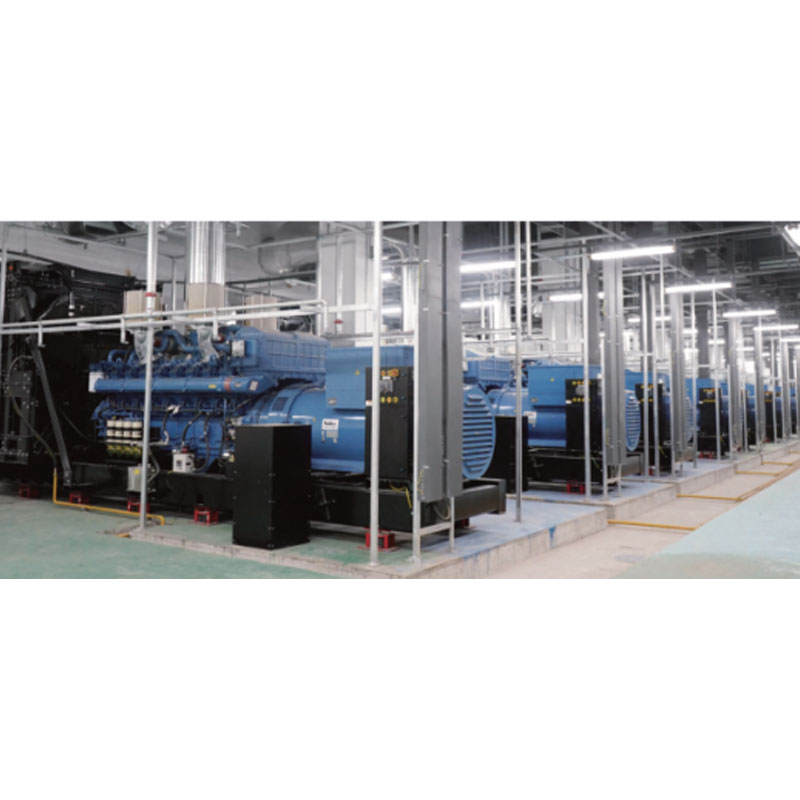
A striking example of this approach is the companyYuke (Shandong) Electrical Technology LLC" Located in Shandong province, this organization has established itself as a professional integrator of solutions in the field of autonomous and backup power supply. Specializing in the design and delivery of integrated power systems, the company combines advanced generation technologies with reliability requirements for industrial facilities and infrastructure.
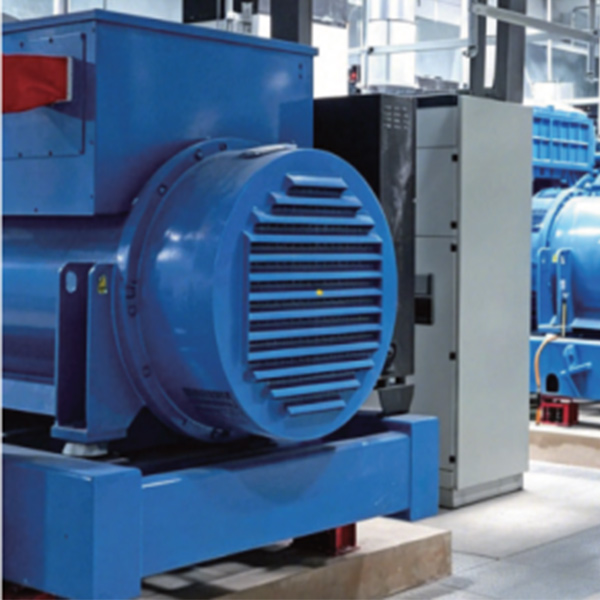
In the Yuke portfolio, a special place is occupied by gas generator units of the VYG series based on Yuchai engines, which are ideal for the tasks described in this article. But the company's product portfolio is much broader and includes eight key categories: from silent mobile stations and emergency power vehicles to high-voltage installations (VHMD5, VHSD5, VHYD5, VHCD5 series based on MTU, SEM, Yuchai and Cummins) and advanced liquid-cooled energy storage cabinets. Such a wide range allows you to choose a solution for any task - be it a remote village, a large plant or an emergency service.
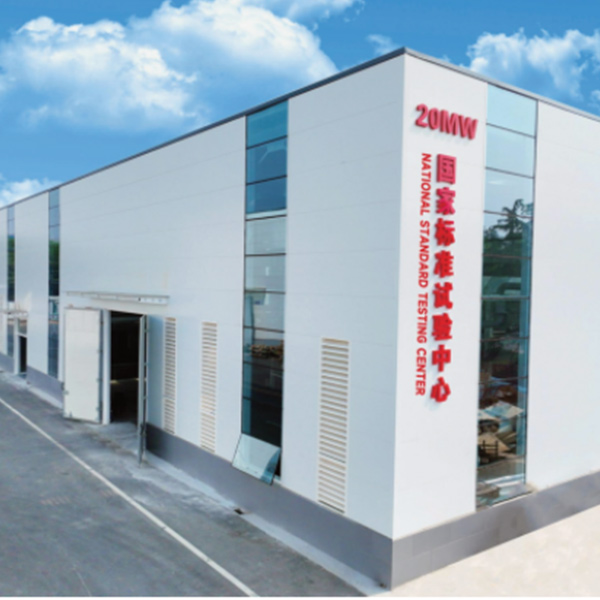
The main advantage of Yuke products is their strict quality control system. Each piece of equipment leaving the production base undergoes mandatory load tests lasting at least 4 hours under rated and partial load. This stage is critical: it allows you to identify potential assembly defects, check the stability of the output voltage, the level of vibration and noise before shipment to the client. The company uses components from the world's leading brands (Cummins, Perkins, MTU, SEM, Yuchai), adapting its solutions to the climatic conditions and network standards of the CIS countries, Asia and the Middle East.
The principle of “reliability through responsibility”, which underlies the company’s philosophy, means that the client receives not just hardware, but a ready-made solution with full support: from consultations at the design stage and personnel training to warranty service and prompt delivery of original spare parts. By choosing equipment from Yuke (Shandong), you minimize the risks associated with commissioning and further operation, receiving a product that is ready to work in the most severe conditions.
Expert opinion and recommendations
Competentconnecting and starting a gas generator 500 kWis a complex of engineering problems where little details do not exist. The reliability of the power supply to your enterprise depends on the quality of the weld on the gas pipeline to the tightening of the terminals on the power circuit breaker. We have seen how skimping on foundation design or skipping professional commissioning has resulted in downtime that costs many times more than the cost of the services saved.
Remember that a gas engine is a high-tech device that requires high-quality fuel, clean air and the correct temperature. Compliance with GOST regulations and manufacturer's recommendations is not bureaucracy, it is insurance against catastrophic failures. Regular monitoring of operating parameters through modern telemetry systems makes it possible to predict malfunctions before they occur.
If you are planning to install a station of such power or encounter problems when operating existing equipment, do not risk the resource of the equipment. A professional system audit and qualified commissioning pays for itself in the first month of uninterrupted operation.Contact us todayto obtain advice from an engineer or order installation supervision services. We will help you avoid common mistakes and provide your facility with a reliable source of energy.
For more information on generator models, including proven solutions from partners like Yuke (Shandong) Electrical Technology Co.,Ltd., and delivery terms, please visit our sectioncatalog of gas power plants, where technical specifications and certificates of conformity are presented.
-


-
-


WeChat

-
WeChat