

Budget diesel power plants: is it worth saving?
2026-07-18
- Why the low price of a diesel generator often means hidden losses
- Technical anatomy of cost reduction: where exactly corners are cut
- Comparative Analysis: Budget Segment vs. Industry Standard
- Hidden costs: why “cheap” becomes expensive
- When is the purchase of a budget diesel power plant really justified?
- Selection criteria: checklist for the buyer
- Import risks and quality assurance: the role of a responsible integrator
- Conclusion: investment or lottery?
Why the low price of a diesel generator often means hidden losses
The answer to the question whether it is worth saving on budget diesel power plants is clear: if you plan to use the equipment for more than 500 operating hours per year or rely on it as the main source of energy, saving on the purchase turns into multiple overpayments for repairs and downtime. In our practice, we have repeatedly encountered a situation where an industrial enterprise purchased a batch of generators at a price 30% below the market price, only to be faced with critical wear of the crankshafts six months later and the need to completely replace the power units. The real cost of ownership (TCO) does not consist of the price tag in the price list, but of the sum of the costs of fuel, scheduled maintenance, unscheduled repairs and, most critically for the B2B sector, the cost of an hour of production downtime.
The market is filled with proposals where manufacturers reduce costs through the use of remanufactured cylinder blocks, simplified alternator excitation systems and the absence of a full-fledged automatic control system. For a backup power supply to a country house once a month, this approach may be justified, but for a construction site, mining farm or remote drilling site, this is a direct path to financial losses. Below we will analyze in detail the technical compromises that manufacturers in the “budget” segment make, and show in which specific scenarios buying cheap equipment is a fatal mistake, and in which it is an acceptable risk.
Technical anatomy of cost reduction: where exactly corners are cut
To understand the difference between a reliable industrial station and a budget analogue, you need to look not at the power in kW stated in the advertisement, but at the internal structure of the components hidden under the casing. Manufacturers of cheap models use three main methods to reduce costs, each of which directly affects service life and fault tolerance.
Engine: cast blocks vs cast iron liners
The heart of any diesel power plant is the engine. In the segment of budget solutions (often labeled as “Economy” or “Home Use”), engines with an aluminum cylinder block and without cast iron liners are widely used. Aluminum is lighter and cheaper to cast, but its thermal conductivity and wear resistance are fundamentally different from cast iron. During prolonged operation at a load above 70%, the aluminum block is subject to thermal expansion, which leads to disruption of the cylinder geometry and increased oil consumption.
In contrast, professional engines (such as Perkins, Volvo Penta, Doosan or high-quality Chinese brands such as Weichai/Yuchai in the industrial line) use heavy cast iron blocks with pressed wet or dry liners. The liner creates an ideal friction surface and allows for major repairs by boring or replacing the liner, restoring engine life to factory condition. A budget motor without liners can only be completely replaced when its service life expires, which is not economically feasible.
Critical parameter:Pay attention to the presence of a turbocharger and intercooler. In cheap models with a power of 20–50 kW, naturally aspirated engines or turbines without charge air cooling are often installed. This leads to the fact that at ambient temperatures above +35°C the engine loses up to 15–20% of power due to overheating of the incoming air, which can cause an emergency stop at the peak moment of consumption.
If your task is to provide power to a facility in the Siberian winter or Central Asian summer, the lack of an intercooler and preheater in the basic configuration of a budget model will become a problem, the solution of which will require additional investments comparable to the cost of the generator itself.
Alternator: copper versus aluminum and excitation system
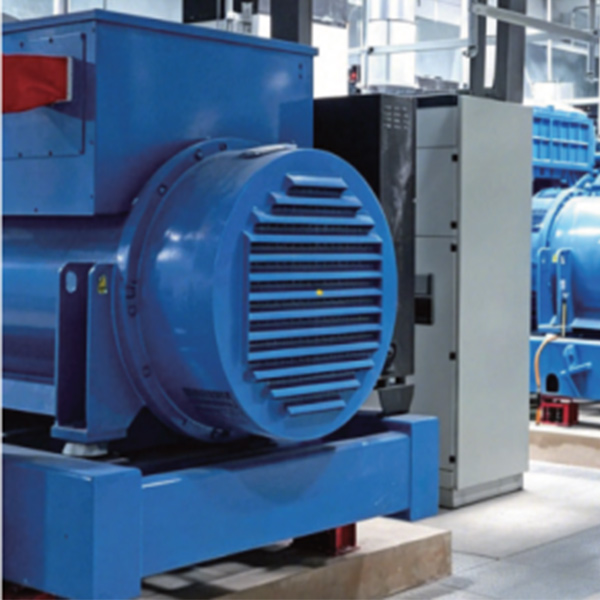
The generator part (alternator) is responsible for the quality of the supplied electricity. Here the savings are manifested in the winding material and the voltage regulation system. The cheapest models use an aluminum stator winding. Aluminum has greater electrical resistance than copper, resulting in increased heating for the same load. Under cyclic loads (turning on a powerful pump or welding machine), aluminum degrades faster, the winding varnish cracks, and an interturn short circuit occurs.
In addition, an outdated excitation system with brushes is often found in the budget segment. Brushes require regular replacement (every 300–500 hours), create carbon dust that clogs internal components, and can cause sparks that are dangerous in hazardous areas. Modern industrial standards require the use of brushless alternators with a self-excitation system (AVR - Automatic Voltage Regulator), which ensure voltage stability within ±1% even with a sudden increase in 100% load.
We conducted tests on two 30 kW stations: one with copper winding and a new generation AVR, the other with aluminum winding and thyristor regulation. When connecting a load with a high inrush current (refrigeration compartment compressor), the budget model dropped the voltage to 190V for 2 seconds, which caused the sensitive electronics to turn off. The expensive model kept the voltage in the corridor at 225–230V. For server or medical equipment, this difference is critical.
Frame and Housing: Vibration is a Hardware Killer
Many buyers ignore the frame design, considering it just a piece of hardware. However, it is the rigidity of the frame that determines the durability of the entire installation. Budget generators are often assembled on lightweight stamped frames made of thin metal, which do not have sufficient mass to dampen diesel vibrations. Constant high-frequency vibration is transmitted to the foundation, weakening bolted connections, leading to cracks in fuel tank welds and destruction of rubber dampers.
Professional stations are mounted on heavy steel channels or I-beams, often with additional reinforcement. The casing also plays a role: in cheap versions it is simply a thin sheet of metal with poor sound insulation, which quickly corrodes and heats up in the sun, creating the effect of a thermos around the engine. The high-quality casing is made of galvanized steel with powder painting, has a well-thought-out air duct system for cooling the radiator and sound-absorbing mats made of non-flammable mineral wool.
One of our clients in Novosibirsk was faced with the fact that after a year of operating a budget station in an all-weather design (which was not one), moisture entered the control panel through leaky casing joints, causing a short circuit and a fire. Savings on the quality of metal and seals led to the loss of the entire asset.
Comparative Analysis: Budget Segment vs. Industry Standard
To make an informed decision, you need to clearly see the differences in characteristics. Below is a table comparing a typical budget diesel power plant (Light/Home class) and an industrial installation (Prime/Continuous class) available on the Russian and CIS markets.
| Comparison parameter | Budget diesel power plant (Economy class) | Industrial diesel power plant (EAC/ISO standard) | Impact on business |
|---|---|---|---|
| Engine life before overhaul | 1,500 – 3,000 operating hours | 10,000 – 30,000+ operating hours | Equipment replacement frequency and downtime |
| Alternator winding material | Aluminum (often without high-grade varnish) | 100% Copper, insulation class H | Overheating, fire risk, voltage stability |
| Operating mode | Standby: max. 1 hour out of 8, no more than 500 hours/year | Primary or Continuous | Ability to work 24/7 at 100% load |
| Cooling system | Air or simplified liquid (without reserve) | Liquid with tropical radiator | Operability at +45°C and above |
| Certification | Often missing or “for yourself” declaration of conformity | Full package: EAC (TR TS 010/004), GOST, ISO 9001 | Legality of operation, insurance, guarantee |
| Voltage stabilization accuracy | ±5% (may sag under load) | ±1% (digital AVR, harmonic protection) | Safety of connected sensitive equipment |
| Warranty | 6 months or 500 hours (often only for spare parts) | 2 years or 2000+ operating hours, service team visit | Financial risks in case of breakdown |
As can be seen from the table, the difference in the initial price can be 30–40%, but the difference in operational capabilities is a multiple. The budget station is not designed to operate in Prime Power mode. An attempt to operate it around the clock will lead to failure during the first quarter. If your facility requires autonomy for more than 8 hours a day, choosing a cheap option is technically incorrect.
Hidden costs: why “cheap” becomes expensive
When calculating a project budget, many companies make the mistake of looking only at CAPEX (capital purchase cost). However, in the power generation industry, OPEX (operating expenses) plays a critical role. Let's calculate the real economy using the example of an object with a consumption of 500 kWh per month.
Fuel consumption:Budget engines often have less optimized combustion chambers and old-style mechanical injection pumps. Their specific fuel consumption can be 260–280 g/kWh, while modern Common Rail systems show 210–220 g/kWh. With a diesel fuel price of 60 rubles per liter and operating time of 1000 hours per year, the difference will be tens of thousands of rubles annually, which over 3 years of operation will cover the initial savings on purchase.
Downtime cost:This is the worst point for business. Imagine a production line that stops due to a generator failure. If an hour of downtime costs a company 50,000 rubles (underproduction, worker downtime, damage to raw materials), then the reliability of the generator is assessed not in rubles per kilogram of metal, but in the probability of failure-free operation. Cheap control controllers (often without protection against dry running, overheating and overspeed) are not able to prevent a disaster; they only record the fact of an accident after the fact.
In our practice, there was a case with an agricultural holding in the Krasnodar region. They purchased 5 budget generators for watering fields. At the height of the season, two units failed due to overheating (weak radiator). While they were being repaired (the spare parts took 2 weeks to arrive, since the manufacturer did not keep a warehouse in the Russian Federation), part of the crop died from drought. The loss amounted to millions of rubles, although the “savings” on the purchase were only 300 thousand. This case clearly demonstrates: the reliability of energy supply in agribusiness and industry does not tolerate compromise.
Liquidity:Industrial brands (even first-tier Chinese ones) retain residual value. After 5 years, you can sell a used station for 40–50% of the price of a new one. Budget “no-name” after 2 years turns into scrap, which is difficult to sell even at the price of scrap metal due to the cost of dismantling and disposal of oils.
When is the purchase of a budget diesel power plant really justified?
It would be wrong to say that cheap generators are completely useless. There are scenarios where their use is economically feasible and technically feasible. The main thing is an honest assessment of the tasks.
- Emergency reserve for non-critical objects.If you have a summer house, a small office or a warehouse, where turning off the lights for 2-3 hours does not have fatal consequences, and you turn on the generator rarely (less than 20 times a year), there is no point in overpaying for an industrial resource. You simply won’t use up the resource built into an expensive car before it becomes obsolete.
- Temporary projects with a short life cycle.For construction work lasting 3–6 months, where the generator operates in soft mode (powering a concrete mixer, lighting), renting or purchasing a budget model is rational. Once the project is completed, the equipment can be sold.
- Power supply of active load without inrush currents.If you plan to connect only incandescent lamps, heaters or simple tools without powerful electric motors, the requirements for current quality and power reserve are lower. Budget models will cope with this task.
However, even in these cases, we recommend paying attention to the availability of service support. Buying a generator of an unknown brand, for which there are no spare parts in your region, is a lottery with a high chance of losing. Make sure the supplier can provide filters, belts and brushes within 2-3 days.
Selection criteria: checklist for the buyer
Before signing a contract for the supply of low-cost diesel power plants, go through the following checklist. This will help weed out frankly dangerous options.
- Engine check:Request an engine passport. Look for the words “Cast Iron Block” and “Wet Liners”. If the passport only indicates the volume and power without indicating the design of the unit, this is a red flag.
- Alternator:Ask for a certificate for the generator part. A brand like Stamford, Leroy Somer, Mecc Alte or their licensed Chinese analogues (Stamford Shanghai) is preferable to nameless options. Check the insulation class (must be H) and degree of protection (minimum IP23, preferably IP54).
- Controller:A modern controller (Deep Sea Electronics, ComAp, SmartGen) is the brain of the station. It must have a display showing basic parameters and the ability to connect to a GSM modem for remote monitoring. The lack of a proper control interface complicates diagnostics.
- Standard Compliance:To operate legally in Russia and the EAEU countries, equipment must have a TR CU (EAC) certificate. The absence of this document means that customs may not allow the cargo to pass through, and the insurance company will refuse to pay in the event of a fire. Also check compliance with the climatic version (U1, HL1, etc. according to GOST 15150) if the work is planned outdoors.
- Service network:Call the supplier's service center. Ask: “Do you have parts for this model in stock?” If the answer is evasive or “to order from China in 45 days,” look for another partner.
Import risks and quality assurance: the role of a responsible integrator
A significant part of budget diesel power plants is supplied from China. This is not a bad thing in itself: China makes excellent equipment. The problem is that the same plant can receive orders from different importers with different specifications. One customer asks to do it “cheaply and cheerfully” (saving on metal, simplifying assembly), another - “top quality”. As a result, seemingly identical generators can have different fillings.
Therefore, the importer's brand is often more important than the manufacturer's brand. This is where companies likeYuke (Shandong) Electrical Technology LLC. Based in Shandong Province, this professional company acts not just as a seller, but as a full-fledged engineering integrator, specializing in the development and delivery of complete solutions for off-grid energy supply.
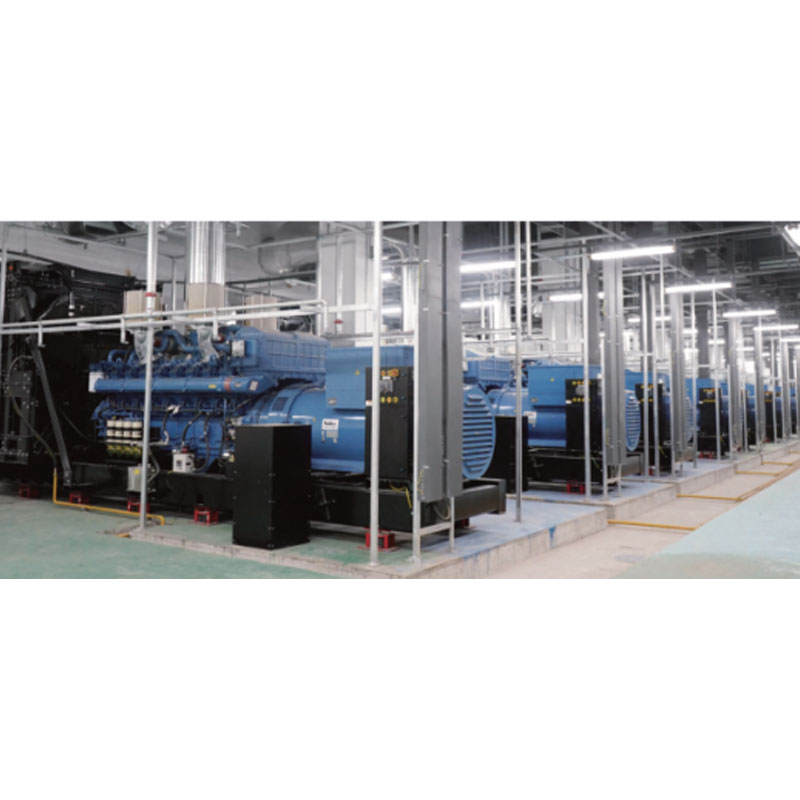
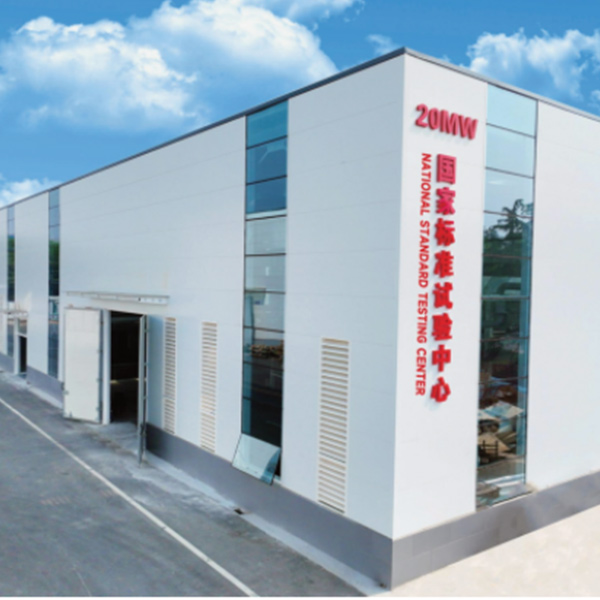
Unlike intermediaries offering a “pig in a poke,” Yuke implements a strict multi-level quality control system. Each piece of equipment - be it a silent generator set, a mobile trailer or a high-voltage station of the VHMD5 series based on MTU engines - undergoes mandatory load tests of at least 4 hours before shipment. The company uses engines and generators from the world's leading brands (Cummins, Perkins, SEM, Yuchai), adapting them to the specific requirements of the markets of the CIS, Asia and the Middle East. This approach ensures that the customer receives not just a set of parts, but a proven system that meets international electromagnetic compatibility and safety standards.
The Yuke philosophy is based on the principle of “reliability through responsibility.” This means not only the sale of equipment, but also full support: from needs audit and design to personnel training and prompt delivery of original spare parts through a network of authorized service partners. By choosing such a partner, you eliminate the risk of receiving products assembled from substandard components and receive a guarantee that your power system will operate stably even in extreme conditions.
Conclusion: investment or lottery?
The question “is it worth saving?” comes down to risk management. Low-cost diesel power plants are a tool with a limited resource and a narrow scope of application. Using them where 24/7 reliability is required is playing Russian roulette with your business. Savings of 20–30% at the start can result in an increase in the total cost of ownership by 2–3 times due to repairs, excessive fuel consumption and downtime.
If your priority is long-term trouble-free operation, choose industrial grade equipment with cast iron motors, copper alternators and full EAC certification. If the task is to cover a temporary need with a minimum budget and you are ready for possible risks, the budget segment has the right to life, but only subject to a thorough check of a specific instance and the availability of an available service.
Don't let price become your only selection criterion. Energy is the lifeblood of your business and must be clean and stable.
Do you need help selecting a reliable power plant for your needs?Our engineers will conduct a free audit of your needs, calculate the actual load and offer the optimal solution that will not fail at a critical moment. We work only with trusted manufacturers and provide full service support.
View the catalog of industrial diesel generators | Terms of service
Contact us today for a personalized quote and technical advice.
-


-
-


WeChat

-
WeChat