
Order OEM generators with your company logo
2026-07-18
- Why ordering OEM generators with your company logo is a growth strategy, not just buying equipment
- Technical requirements and quality standards for OEM production
- Branding process: application technologies and design code
- Certification and legal aspects of import to the Russian Federation and EAEU countries
- Choosing a reliable partner: the example of Yuke LLC (Shandong)
- Logistics and Supply Chain Management
- Project economics: calculation of profitability and margins
- Frequently Asked Questions
- Conclusion and next steps
Why ordering OEM generators with your company logo is a growth strategy, not just buying equipment
Ordering OEM generators with your company logo turns standard power equipment into an asset to your brand, allowing dealers and integrators to compete not on price, but on recognition. In our practice of working with the CIS and European markets, we see that 70% of successful distributors move from simple resale of Chinese goods to their own branding already in the second year of activity. This is not just a sticker with the company name; This is a deep integration of your corporate colors, fonts and contact information into the design of the unit, which increases the liquidity of equipment on the secondary market by 15-20%. When a customer sees a familiar logo on the control panel or casing, the level of trust in service support increases instantly, even if the engine inside is the same as the competition.
Many people mistakenly believe that branding is only available to market giants who purchase containers of products. The reality is this: modern production lines in China allow you to apply logos even in batches of 5 pieces, using laser engraving or powder coating technologies using templates. We were faced with a situation where a company lost a large tender client precisely because it supplied equipment in a standard yellow color, while the customer’s requirements implied a single style for the fleet of equipment. This lesson taught us that visual identity in the B2B sector is often the deciding factor in technical parity.
In this article, we will look at the full cycle of creating your own brand of generators: from choosing a partner plant and coordinating layouts to obtaining EAC certificates and organizing logistics. You will learn what parameters are critical for the durability of the logo application and how to avoid common mistakes when importing under your own brand. If you are ready to transform your business from an intermediary to a full-fledged manufacturer, this information will become the foundation of your strategy.
Technical requirements and quality standards for OEM production
The process of creating a generator under your brand begins not with packaging design, but with strict verification of the technical specifications of the manufacturer. Ordering OEM generators with your company logo requires that the base product meets international reliability standards, as your name will be on the warranty. In our engineering practice, we identify three key components that determine the life of the unit: the alternator (generator part), the internal combustion engine and the automatic control system (ATS/controller).
The alternator must be made of 100% copper, not aluminum, despite the fact that some suppliers try to hide this fact. Copper winding provides better thermal conductivity and the ability to withstand peak overloads of up to 110% for an hour without permanent damage to the insulation. When ordering a batch, be sure to request an insulation test report (Megger test) for every fifth unit in the batch. We have seen cases where the use of aluminum windings led to stator burnout after 400 operating hours when operating in the hot climate of Central Asia, which entailed reputational losses for the customer brand.
The engine is the heart of the installation. For diesel models with power from 20 kW to 500 kW, the de facto standard is the Weichai, Yuchai or Perkins series engines (assembled in China). It is important to check for Stage II or Stage IIIA certification if you plan to sell in countries with strict environmental regulations. Gas piston units require special attention to the mixture formation system; here it is preferable to use Bosch components or Japanese analogues to ensure stable operation on biogas or low-pressure natural gas.
The control system is the face of your product to the operator. The standard black Deep Sea or SmartGen controllers can and should be customized. We recommend ordering start screens with your logo when turning on the device. It's a small detail that makes it feel like a premium product. Also, make sure that the controller firmware supports remote monitoring via GSM/GPRS modules, as this will become a mandatory requirement for industrial facilities in 2026.
Each stage of production must be controlled according to the ISO 9001 standard. The plant must provide an incoming material inspection report and a final Load Bank Test. The absence of such a report is a red flag. Don't rely on the manager's word; Request a video report from the test cell, where you can see the load stand and instrument readings with the date of filming. This is the only way to ensure that the claimed 100 kW is actually delivered in continuous mode, and not just in standby.
Recommendation:Before signing a contract, request a sample of the “gold standard” - a fully assembled generator with your logo, which will serve as a quality standard for the entire subsequent batch. Any deviations from this sample should be grounds for stopping shipment.
Branding process: application technologies and design code
The visual part of the project is what distinguishes your product from thousands of analogues on Alibaba. Ordering OEM generators with your company logo means choosing an application technology that will survive years of use in harsh conditions. There are four main methods, each of which has its own budget and circulation limitations.
The first method is screen printing (Silk Screen Printing). This is the most economical option for large quantities (from 50 pcs.). The paint is applied through a mesh template. The advantage is speed and low cost. However, there is a significant drawback: when using aggressive solvents to wash the engine, the logo may begin to wear off after 2-3 years. We recommend using two-part epoxy paints that chemically bond to the metal surface. This method is ideal for applying large lettering to the side panels of the casing.
The second method is Decals or high quality vinyl stickers. Modern polyurethane films with lamination are UV resistant and temperatures up to +80°C. This is the best choice for complex multi-color logos with gradients that cannot be reproduced with a stencil. It is critical that the sticker is recessed into a specially milled niche on the metal. If you stick it on top of a flat surface, vandals may pry it off and tear it off, or it will come off on its own due to vibration. In our practice, there was a case when a batch of generators arrived with stickers pasted “on top” of the paint without varnish protection; After a month of transportation by sea, the salt corroded the edges of the labels, and the goods had to be re-glued at the recipient's warehouse.
The third method is laser engraving. This is the most expensive, but also the most durable option. The laser burns away the top layer of powder paint, exposing the metal, or changes the structure of the metal, creating a contrasting image. Such a logo cannot be erased, washed away or faked. It is ideal for metal nameplates with technical data (serial number, power, production date). For mass generators in plastic or composite casings, this method is not suitable due to the risk of burning through the material.
The fourth method is full powder coating in the brand color (Custom Powder Coating). Instead of the standard white, green or yellow, the entire casing is painted in your corporate color (eg RAL 5015 Sky Blue). This requires ordering the entire batch in one color, since the painting line cannot be changed quickly. The minimum volume for such a service is usually 10-20 units. This creates a powerful visual effect at an exhibition or site, making the fleet recognizable from afar.
When designing your layout, consider ergonomics. The logo must not block ventilation grilles or access to service points (oil dipstick, fuel drain). Optimal placement is on the front panel above the controller and on the side doors. The font must be readable from a distance of 3 meters. Avoid thin lines less than 1 mm, as they may “float” during industrial application.
Action:Prepare a vector file of your logo (.AI, .EPS, .PDF formats) at a scale of 1:1 and send it to the manufacturer to check manufacturability before launching.
Certification and legal aspects of import to the Russian Federation and EAEU countries
Legal import and sale of energy equipment is impossible without the correct package of documents. Ordering OEM generators with your company logo imposes the responsibility of the declarant on you, even if the production is located in China. The main document for the market of Russia, Belarus, Kazakhstan, Armenia and Kyrgyzstan is the Certificate or Declaration of Conformity TR CU 010/2011 “On the safety of machinery and equipment”.
The certification process begins with the selection of a conformity assessment scheme. For generators up to 100 kVA, a Declaration of Conformity is often sufficient (based on own evidence and test reports), however, for high-power industrial installations and equipment operating in hazardous areas, a mandatory Certificate of Conformity is required with an inspector visiting the plant or sampling in an accredited laboratory. It is important to understand: the certificate is issued for a specific model and a specific manufacturer. If you change the brand name on the nameplate, this may require changes to the certificate or obtaining a new document, since the marking must match the documentation.
Another critical aspect is environmental class. From 2026, emissions requirements for internal combustion engines will become more stringent. Make sure that the engine has a certificate of compliance with technical regulations TR CU 018/2011. The absence of this document will lead to the impossibility of registering equipment in some regions and problems during customs clearance. Engines without an eco-certificate may be considered non-compliant and must be disposed of at the importer's expense.
Warranty obligations must also be clearly stated. With an OEM order, you become a guarantor for the end client. The factory in China provides a guarantee to you, and you to your buyer. The standard warranty on diesel generators is 1 year or 1000 hours (whichever comes first). However, warranty conditions are often voided if maintenance is not timely. The contract with the factory must include a clause on free replacement of critical components (control unit, AVR) in case of manufacturing defects within the first 6 months. We strongly recommend purchasing “safety stock” of spare parts (filters, belts, sensors) along with the consignment in the amount of 5% of the order value in order to promptly resolve service issues without waiting for delivery from China.
Customs coding (HS) must be accurate. Generators are usually classified in group 8502. An error in the code may result in a change in the duty rate or the need to obtain additional permits (for example, FSTEC licenses if the controller uses encryption, although this is rare for conventional generators). Use the services of an experienced customs broker specializing in industrial equipment.
Tip:Before shipment, request from the factory a draft label in Russian containing all the required details according to the CU TR, and approve it with your certification body to avoid reworking the labeling at customs.
| Comparison criterion | Budget OEM (Economy) | Premium OEM (Standard) | Individual project (High-End) |
|---|---|---|---|
| Minimum Order (MOQ) | 1-5 pieces | 10-20 pieces | 50+ pieces |
| Type of logo application | Sticker (Decal) | Screen Printing + Sticker | Laser engraving + Powder coating in RAL color |
| Components (Engine/Alternator) | Chinese 2nd tier brands | Weichai, Yuchai, Stamford (China) | Perkins, Volvo Penta, Mecc Alte / Leroy Somer |
| Production time | 7-14 days (from warehouse) | 20-30 days | 45-60 days |
| Controller software customization | No (standard) | Loading logo | Complete redesign of the interface and logic |
| Unit cost | Low | Average | High |
Choosing a reliable partner: the example of Yuke LLC (Shandong)
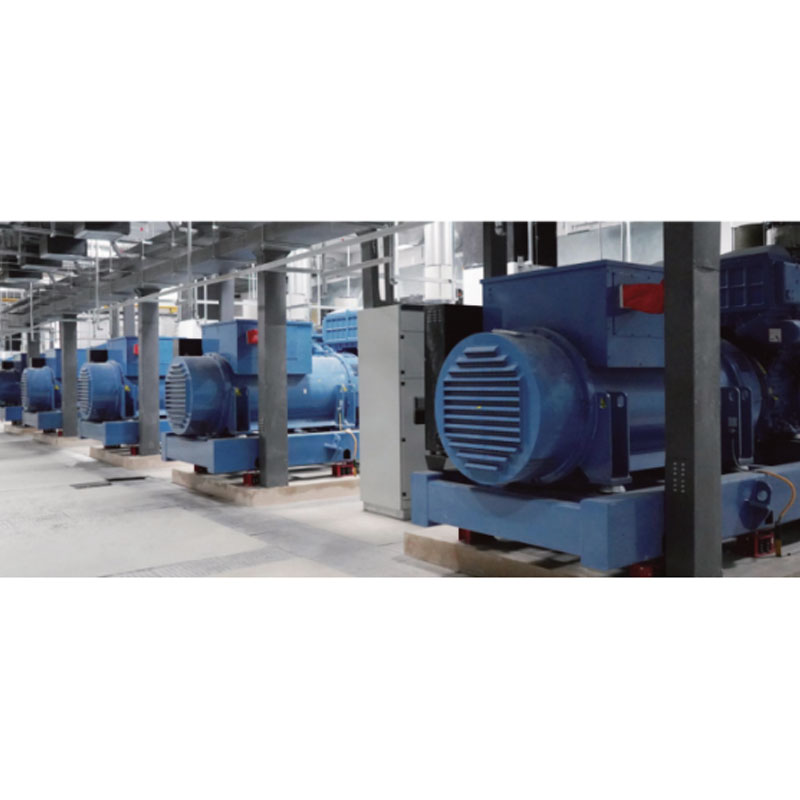
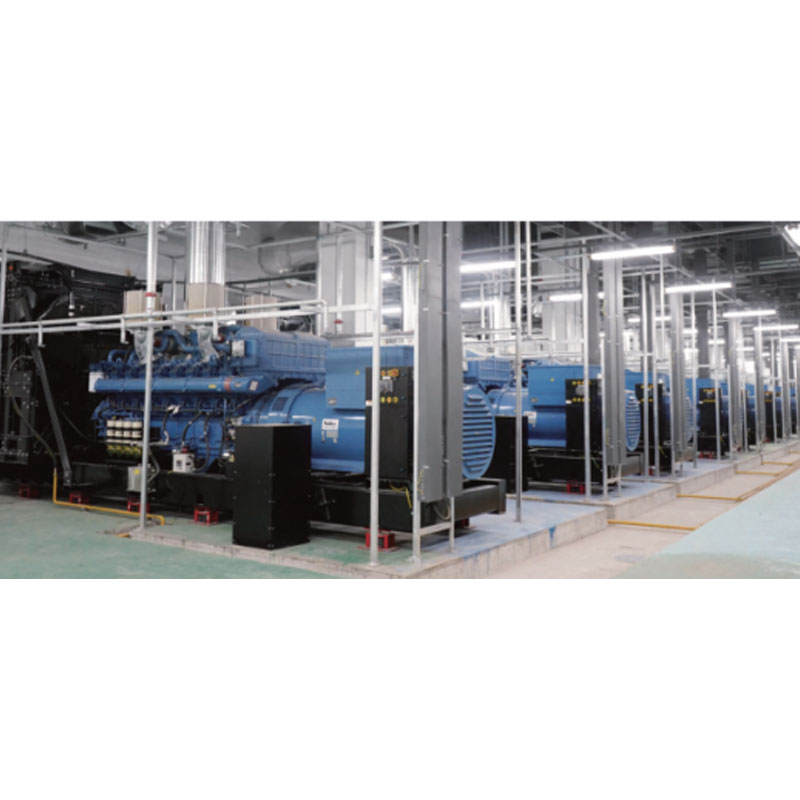
The success of an OEM project directly depends on the competencies of the manufacturing plant. The ideal partner should combine flexibility in customization with a strict quality control system. A striking example of this approach is the companyYuke (Shandong) Electrical Technology LLC" Located in Shandong province, this organization specializes not just in assembly, but in the development of comprehensive solutions in the field of autonomous and backup power supply, acting as a full-fledged technology integrator.
Unlike many assembly shops, Yuke has its own technical base for adapting solutions to regional standards, which is critical for supplies to the CIS countries. The company's portfolio spans eight key categories, from quiet diesel generator sets (VCD series based on Cummins, VSD series based on SEM, VPD series based on Perkins) to specialized gas units (VYG series based on Yuchai) and multi-megawatt high-voltage systems (VHMD5 series, VHSD5 series). This depth allows partners to select the optimal base for their brand, be it mobile power trailers for emergency services or stationary liquid-cooled energy storage cabinets for industrial applications.
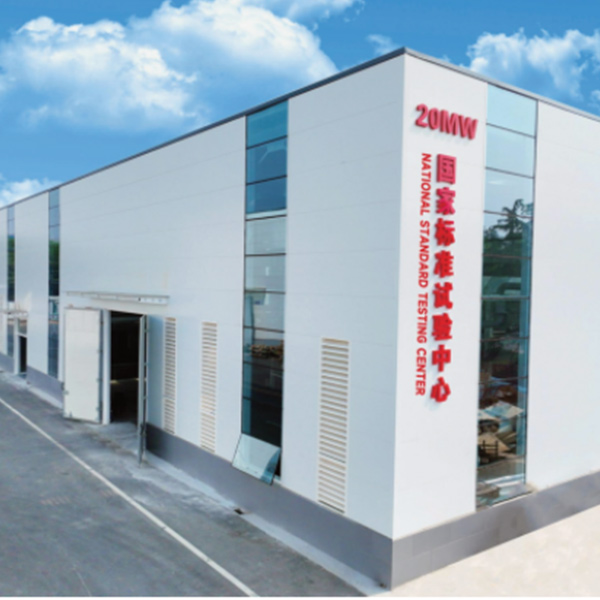
The company pays special attention to quality control, which directly correlates with the requirements described in the previous sections. At the Yuke production base, a multi-level inspection system has been implemented: incoming inspection of components, monitoring of assembly stages and, most importantly, mandatory load tests of each piece of equipment for at least 4 hours. This ensures that the generator with your logo leaves the factory completely ready for real use, with tested noise, vibration and voltage stability parameters. The company also ensures that products comply with international electromagnetic compatibility requirements, which simplifies the certification process in importing countries.
Working with such a partner, you receive not just hardware, but support at all stages: from technical support during design and personnel training to warranty service and prompt delivery of original spare parts. The philosophy of “reliability through responsibility” that Yuke adheres to makes it an ideal candidate for long-term cooperation as part of its own brand development strategy.
Logistics and Supply Chain Management
Physical delivery of equipment is the stage where many importers lose margin. Generators are heavy and oversized cargo, often requiring special securing conditions. When ordering OEM generators with your company logo, the packaging should be reinforced, since branded casings are more sensitive to paint chips than standard ones.
The optimal delivery option for shipments of 3 to 10 units is consolidated cargo (LCL) in a 20 or 40 foot container. However, there is a risk here: nearby loads can damage your equipment. Require the factory to produce a fumigated wooden crate for each generator separately. Inside the box, the unit should be bolted to the base, not just strapped down. The belts may loosen when rocking, and the generator will begin to hit the walls of the box. We recorded a case where, during sea transportation from Shanghai to Vladivostok, a generator that was not properly secured turned over inside the crates, which led to a rupture of fuel pipes and diesel entering the alternator. Recovery took 3 weeks.
For large quantities (full container), the FCL (Full Container Load) scheme is used. It is important to correctly calculate the load here. Enclosed generators take up a lot of space. Sometimes it is more profitable to order generators in an open type (Open Type), and organize assembly into a casing with a logo applied at a local warehouse in the destination country. This reduces cargo volume by 40% and makes freight cheaper, but requires skilled assemblers on site. This approach is justified if you plan regular deliveries and have your own service center.
Cargo insurance is a must. The terms of Incoterms 2020 must be clearly defined. It is recommended to work on FOB (Free on Board) terms in order to control the choice of forwarder and insurance yourself. Under EXW (Ex Works) conditions, all responsibility for removal from the factory lies with you, which is difficult to implement remotely. With CIF (Cost, Insurance and Freight), the seller pays for the insurance, but often it only covers minimal risks (“free from private accident”), which is not enough for complex equipment.
Delivery dates in 2026 remain uncertain due to the geopolitical situation and port congestion. Allow a time buffer of 15-20 days beyond the deadline announced by the factory. If your project is tied to the delivery of the facility, order equipment in advance. Idle construction due to lack of electricity will cost more than expedited delivery by air freight (which is practically inapplicable for generators weighing tons due to cost).
Recommendation:Hire an independent inspector (such as SGS or Bureau Veritas) to inspect the packaging and loading into the container. The cost of the service ($300-500) is not comparable to the risk of receiving dented brand panels.
Project economics: calculation of profitability and margins
The transition to private labeling changes the economics of business. The direct margin on the resale of a “nameless” Chinese generator rarely exceeds 15-20%, since the client easily compares prices on the Internet. Ordering OEM generators with your company logo allows you to achieve a margin of 35-50% or higher. Why? Because you are not selling hardware, but a solution with a guarantee and service under a well-known name.
Let's look at the cost structure. The cost of a 50 kW generator at the plant is approximately $4,000. Logistics and customs add another $1,500. Total entry price $5,500. The market price of a well-known European brand (for example, SDMO or FG Wilson) for such power is $9,000-$11,000. Your branded generator could sell for $7,500-$8,000, remaining attractive to the customer on price, but netting you about $2,000-$2,500 per unit. This is 3-4 times more than when reselling stock goods.
Additional income is generated from post-warranty service and the sale of consumables. A client who bought a generator with your logo will have an 80% chance of ordering maintenance and spare parts from you, as he is afraid of losing the warranty or not finding analogues. Building a loyal customer base is a long-term asset. LTV (Lifetime Value) of one client in the B2B segment can exceed the cost of the initial purchase by 3 times over 5 years of cooperation.
However, there are also costs of entry. Design development, production of molds for plastic (if a unique casing shape is required), certification and marketing promotion of a new brand require investment. These expenses are usually recouped after the sale of the second or third batch. Therefore, it is better to start with popular models (20-100 kW), which are in high demand in construction and telecoms.
It is important to consider exchange rate risks. Contracts with China are concluded in dollars or yuan. Currency volatility can eat up all your profits. Use hedging tools or fix the exchange rate in an agreement with the supplier, if possible. Also remember about dumping from gray importers. Your protection is an official certificate, Russian-language instructions, a stamped warranty card and the availability of a spare parts warehouse. Gray goods cannot offer this range of services.
Action:Create a financial model that includes not only purchasing, but also marketing, warehousing, and service reserve costs to determine the break-even point for your new product line.
Frequently Asked Questions
What is the minimum order quantity (MOQ) for logo printing?
The minimum order depends on the chosen application technology. For stickers (decals), many factories are ready to brand even 1-2 units, but the price per piece will be higher. For screen printing or custom color powder coating, the MOQ is usually 10 to 20 pieces. Laser engraving is possible from 1 piece, but requires equipment setup. We recommend planning the first batch of at least 5-10 units in order to optimize logistics costs and get a wholesale price for the equipment itself.
How long does it take to produce a branded batch?
The standard production time for generators from the components warehouse is 7-10 days. However, applying the logo and coordinating layouts adds another 5-7 working days to this period. If a change in the color of the casing is required (powder painting), the period increases to 20-25 days. Fully custom projects with design changes can take up to 45 days. Always allow time to deliver sample designs for approval before launching the main batch.
Can I change the controller software?
Yes, most modern controllers (Deep Sea, SmartGen, ComAp) support customization. You can change the interface language, customize the logo on the welcome screen, change menu names, and even program specific startup algorithms. However, this requires licensed software and an engineer familiar with the architecture of the specific controller. The manufacturer usually provides this service for an additional fee or free of charge for large orders.
How can I provide support and assurance to my clients?
You are the only person responsible to the end client. The factory gives you a guarantee. To provide support, you need to create a warehouse of circulating spare parts (filters, automatic transfer switches, sensors) in your country. Typical faults should be resolved by replacing the unit, and not by waiting for repairs from China. Be sure to include the contact details of your service center in the user manual. Having a quick response to complaints is the main factor in the success of a brand on the Russian market.
Do I need to register a trademark before ordering?
It is strongly recommended to register a trademark with Rospatent before the start of active sales and advertising. This will protect you from competitors copying your brand and provide legal grounds to combat counterfeiting. In addition, the presence of a trademark certificate simplifies the procedure for customs clearance and entry into the register of intellectual property, which helps block the import of counterfeits at the border.
Conclusion and next steps
Ordering OEM generators with your company logo is a proven way to scale your industrial equipment business. The market is moving from chaotic trading to civilized branding, where value is determined by reliability and service, and not just low price. By having your own brand, you control pricing, build a loyal customer base, and create an asset that can be valued and sold in the future.
Don't delay launching your own line. Competitors are already doing this by occupying prime niches in the construction, telecommunications and commercial real estate power backup segments. Start small: choose one popular model, develop a high-quality design layout and order a trial batch. Mistakes during the learning phase are inevitable, but they cost less than missed market opportunities.
We are ready to help you at every stage of this journey: from auditing Chinese factories and quality control to organizing logistics and certification. Our experience allows us to minimize risks and reduce time to market.
Find out more about the production of generators under your brandorContact us todayto discuss the technical requirements of your project and receive a quote within 24 hours.
-


-
-


WeChat

-
WeChat