

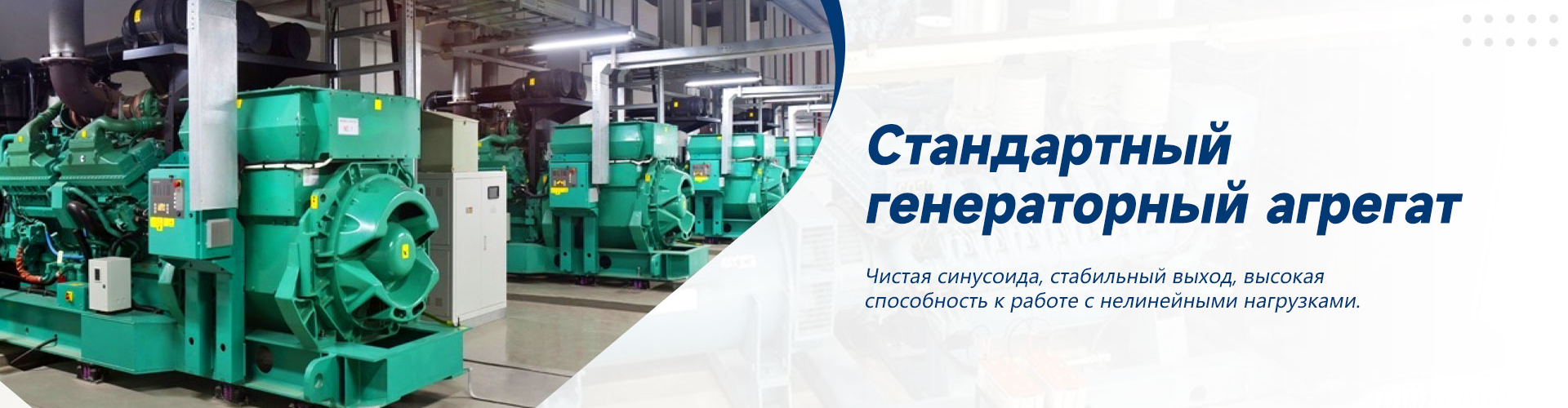
Diesel generator 500 kW: technical data and dimensions
2026-07-17
- 500 kW diesel generator: technical data and dimensions - critical parameters for industrial selection
- Technical characteristics of the engine and alternator: what is hidden behind the power numbers
- Dimensions, weight and logistics restrictions when installing a 500 kW diesel generator set
- Comparative analysis of designs: Open frame versus Casing and Container
- The role of the manufacturer: how to ensure reliability at the assembly stage
- Control systems, automation and integration into the enterprise network
- Cost-effectiveness and hidden costs of operation
- Frequently Asked Questions
- Conclusion and recommendations for choosing a supplier
500 kW diesel generator: technical data and dimensions - critical parameters for industrial selection
Choosing a source of autonomous power supply with a capacity of half a megawatt is not just a purchase of equipment, but a strategic decision that determines the continuity of production processes for years to come.Diesel generator 500 kW: technical data and dimensionsare the primary filters when selecting suppliers, but most purchases fail precisely because of ignoring the nuances of installation and real operating conditions, and not because of the declared power. In our practice of working with heavy industrial facilities, we have repeatedly encountered a situation where a unit, ideally selected according to the specification, refused to start in winter or overheated after 4 hours of operation due to improper organization of supply and exhaust ventilation. This article was written by engineers who have seen the consequences of such errors: from downtime on conveyor lines to the failure of sensitive electronics due to harmonic voltage distortion. We will analyze not only dry numbers from catalogs, but also how these numbers are transformed into real requirements for the foundation, fuel system and service.
The market offers dozens of brands promising “European quality” or “unsurpassed reliability”, but behind these marketing shells there are often identical chassis with different stickers. Our goal is to give you a tool for independent assessment, based on the physics of processes and international standards GOST and ISO. If you are planning to purchase a 500 kW diesel generator, you need to understand the difference between standby and prime power, the effect of altitude on engine derating and why casing dimensions can be a deciding factor when delivering to a remote region. Below we analyze in detail the design features, economic aspects of ownership and hidden risks that sales managers do not always voice.
Technical characteristics of the engine and alternator: what is hidden behind the power numbers
A rated power of 500 kW (or 625 kVA at cosine phi 0.8) is a starting point, but it is far from the only parameter that determines the viability of an installation. The heart of any such station is a diesel engine, and here the choice comes down to three main categories: high-speed engines (1500 rpm), medium-speed (1000-1200 rpm) and low-speed (up to 750 rpm). For most industrial applications in Russia and the CIS countries, units with a frequency of 1500 rpm remain the optimal choice, as they provide the best balance between compactness, weight and service life before major overhaul. However, if your application requires 24/7 non-stop operation (Prime Power mode), considering lower speed engines can increase service intervals by 30-40%, although the initial cost of such a solution will be 25% higher.
A critical parameter that is often overlooked when analyzing technical data is engine torque reserve. A high-quality 500 kW diesel generator must have a torque reserve of at least 10-15% of the nominal value in order to cope with peak loads when starting powerful electric motors or welding equipment without the rotation speed dropping below permissible limits. In our practice, there was a case when a client purchased a generator set with formally suitable power, but with an engine operating at the limit of its capabilities. The result was overheating of the piston group after 200 operating hours and the need for early replacement of the liners. Always ask your supplier for an engine load diagram and clarify what percentage of power is available for continuous use and what percentage is reserved for emergency situations.
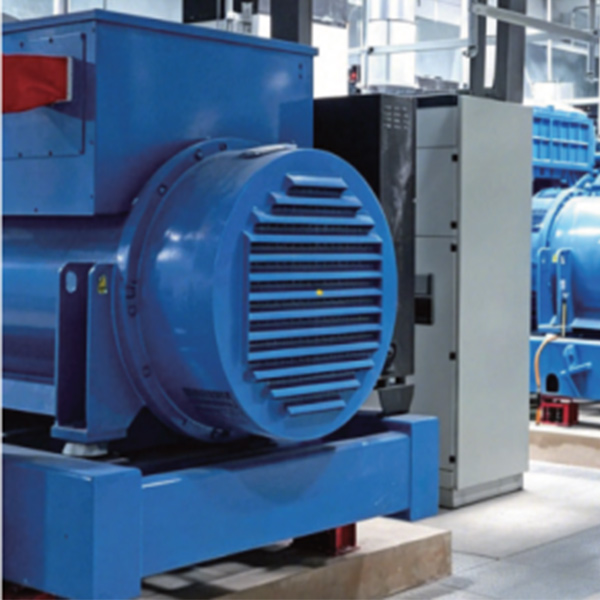
The alternator (alternating current generator) in conjunction with the engine must comply with insulation class H and a degree of protection not lower than IP23 for open versions or IP54 for closed containers. The stator winding must be made of 100% copper - the use of aluminum in this power class is unacceptable due to the risk of thermal expansion and loss of contact under cyclic loads. The excitation system plays a key role in power quality: the brushless system with PMG (Permanent Magnet Generator) class automatic voltage regulator (AVR) ensures stable output voltage even when connecting non-linear loads such as frequency converters or UPSs. The voltage standard deviation should not exceed ±1% when the load changes from 0 to 100%, and the recovery time after full load reset is less than 0.5 seconds. If the supplier cannot provide an alternator test report according to the IEEE 115 standard or GOST R 53103-2008, this is a serious signal to double-check the origin of the components.
Fuel consumption is another parameter where marketing often diverges from reality. Datasheets usually indicate specific consumption at 75% or 100% load, which is about 200-215 g/kWh for modern Tier II / Stage IIIA engines. However, the actual consumption in the mixed work cycle, which is typical for many enterprises, will differ. It is important to remember that operating a 500 kW diesel generator at a load of less than 30% of the nominal load is extremely harmful to the engine: coking of the injectors occurs, dilution of the oil with fuel and the formation of acid condensate in the exhaust system. We strongly recommend incorporating a load bypass system into the design or planning the work schedule so that the minimum load is at least 40%. This will extend the engine life by 1.5 times compared to operation at idle or light loads.
Dimensions, weight and logistics restrictions when installing a 500 kW diesel generator set
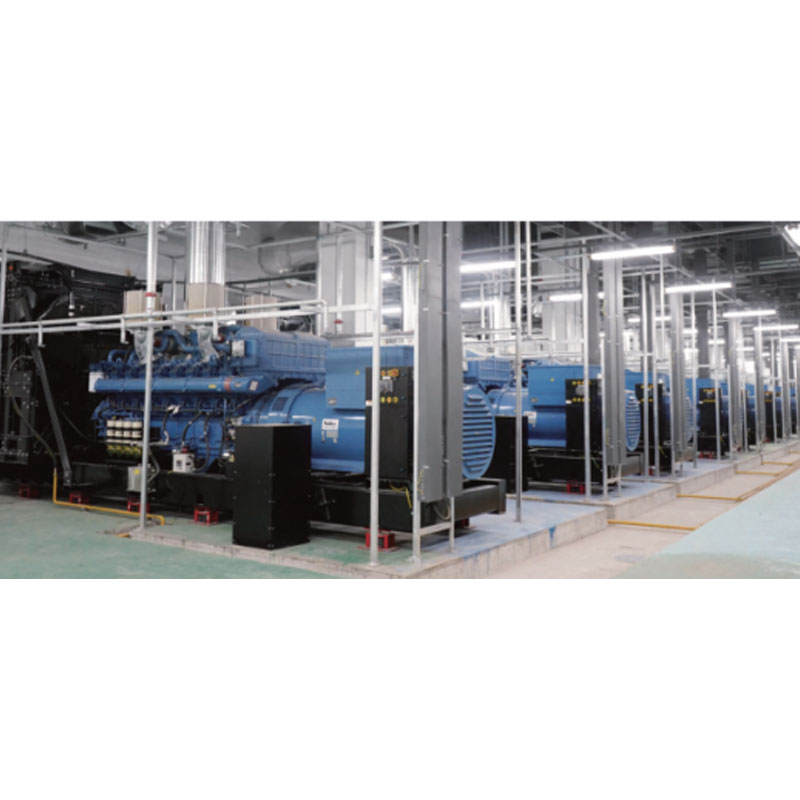
The physical dimensions of a 500 kW diesel generator vary depending on the type of design: open frame, canopy or container. For an open frame, typical dimensions are approximately 3800 x 1400 x 2100 mm with a dry weight of approximately 3500-4000 kg. Installation in a noise-protective casing increases the length to 4500-4800 mm, height to 2400-2600 mm and weight to 5000-5500 kg due to the cladding metal and an additional muffler. If we are talking about the northern version in a block container with insulation and heating systems, the length can reach 6000-7000 mm (taking into account the service vestibule), and the total weight with filled liquids will exceed 8000 kg. These figures have a direct impact on logistics: to transport a container, you will need a trawl with a lifting capacity of at least 10 tons, and for installation, a crane of the appropriate lifting capacity with a boom reach that takes into account the dimensions of the cargo.
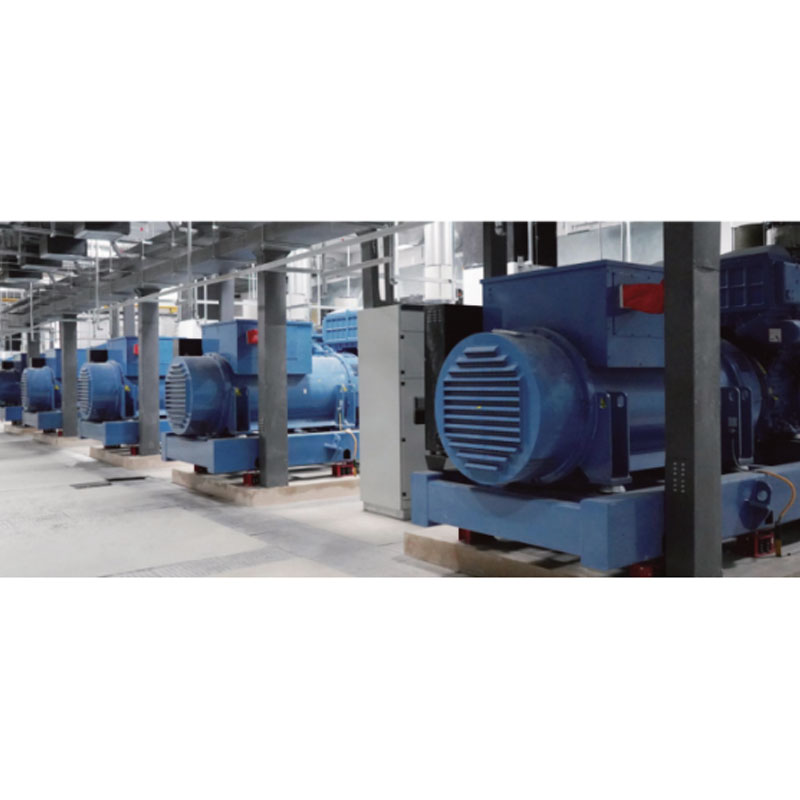
Particular attention should be paid to foundation requirements. A 500 kW diesel generator creates significant vibration loads, which, without proper shock absorption, can destroy the floor screed or transmit vibration to the supporting structures of the building. According to SP 26.13330.2012 “Foundations and foundations of machines with dynamic loads”, the mass of the foundation must exceed the mass of the unit by at least 1.5-2 times for effective damping of vibrations. Usually this is a reinforced concrete slab with a thickness of at least 400-500 mm, reinforced in two layers. An error in foundation calculations is one of the most common causes of premature failure of alternator bearings and destruction of frame welds. In one of our projects, an incorrect assessment of the bearing capacity of the soil led to a frame misalignment of 4 mm in just six months of operation, which caused misalignment of the engine and generator shafts and subsequent expensive repairs.
Ventilation of the room or the interior of the container is a critical factor that directly depends on the dimensions and thermal power of the unit. A 500 kW engine generates a huge amount of heat: approximately 50-60% of the fuel energy is converted into heat that must be removed. For effective cooling, organized air exchange with a volume of at least 15,000-18,000 m³/hour is required. The cross-section of the supply and exhaust ducts should be calculated based on an air speed of no more than 4-5 m/s in order to avoid excessive aerodynamic drag. A common mistake designers make is using blinds with a small clear cross-sectional area or installing radiators too close to the wall. This leads to recirculation of hot air and an emergency stop of the generator based on the coolant temperature. Always check the fans' required static pressure ratings and compare them to the actual resistance of your duct system.
Access for maintenance also dictates the requirements for room dimensions. Maintenance areas should allow for dismantling filter elements, removing valve covers and troubleshooting the turbocharger without dismantling the generator itself. The minimum passage around the unit should be 1.2-1.5 meters, and the ceiling height should be no less than the height of the unit plus 0.5-0.7 meters for the use of lifting mechanisms. Ignoring these standards turns scheduled maintenance into a nightmare, increasing equipment downtime from 4 hours to 2 days. When ordering a generator in a container, make sure that the doors open to an angle of at least 270 degrees and have secure latches, and there are lifting brackets inside for lifting heavy components.
Comparative analysis of designs: Open frame versus Casing and Container
The choice between an open frame, a noise-insulating casing and a block container depends not only on the budget, but also on the specific operating conditions. To help you make an informed decision, we have prepared a comparison table of key parameters for a 500 kW diesel generator in various versions.
| Comparison parameter | Open Skid | Soundproof housing (Canopy) | Container block |
|---|---|---|---|
| Noise level | High (95-105 dBA at a distance of 1 m). Requires a separate soundproof room. | Medium (70-80 dBA at a distance of 7 m). Suitable for outdoor installation in residential areas. | Low (60-70 dBA at 7 m). Maximum protection from external influences and noise. |
| Weather protection | Absent. Use only in heated, climate-controlled areas. | Basic protection against rain and snow (IP23-IP44). Not intended for extreme frosts without additional. heating | Full protection (IP54 and higher). Possibility of equipping with northern systems up to -60°C. |
| Cost | Low. Base price of equipment. | Average. 15-25% extra charge for casing and muffler. | High. 40-60% markup for metal structures, insulation and life support systems. |
| Mobility | Low. Requires a stationary foundation and complex installation of communications. | Average. Installation on a trailer is possible, but requires careful transportation. | High. Fully ready for use (“Plug & Play”), easily transported with a manipulator. |
| Commissioning period | Long-term (2-4 weeks). Requires the construction of a room, installation of ventilation and exhaust. | Medium (1-2 weeks). Site preparation and cable connections are required. | Minimum (1-3 days). All that is required is depreservation and connection to the consumer network. |
| Recommended Application | Large energy centers, basements, workshops with a constant temperature. | Construction sites, shopping centers, backup power supply for office buildings. | Rotational camps, remote fields, zones with extreme climates. |
When choosing an open frame, you save at the initial stage, but must be prepared for significant capital costs to prepare the room. This solution is justified only if you already have a ready-made engine room with a supply and exhaust ventilation system and gas exhaust discharged above the roof ridge. Otherwise, the total cost of ownership (TCO) may exceed the cost of the container option.
A noise-proof enclosure is the golden mean for most urban facilities. It allows you to install a generator directly near the building without violating sanitary noise standards. However, it is important to remember that standard casings are not designed to operate in severe frosts without installing additional oil and coolant heaters, as well as without organizing the intake of warm air from the diesel generator room or installing special winter kits.
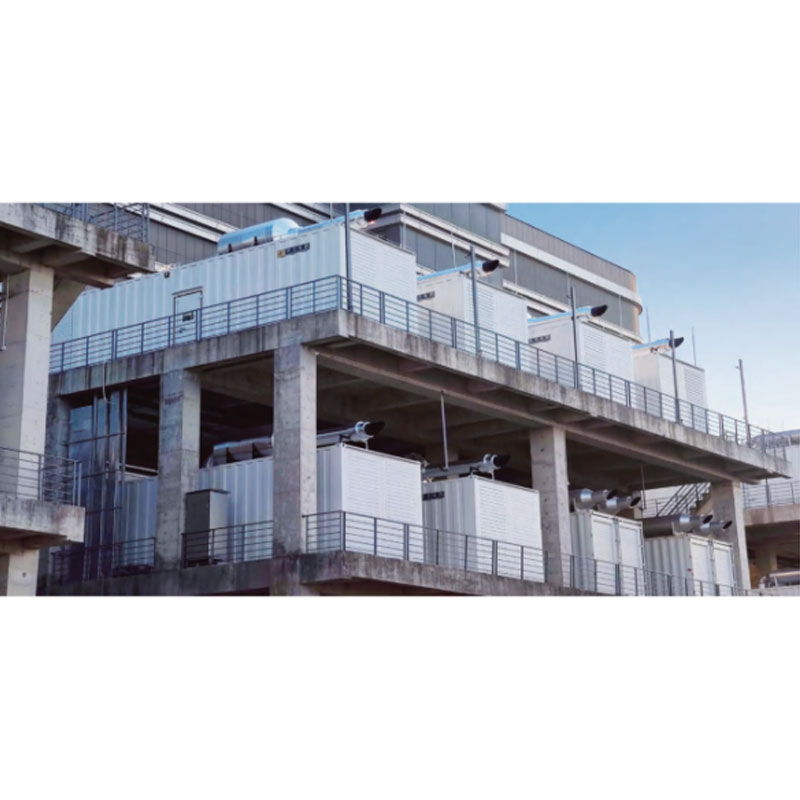
A container block is a self-contained fortress. A fuel tank, control panel, fire extinguishing and heating systems are already placed inside it. For remote sites, such as drilling or logging enterprises, this is the only right solution. The only drawback is its large dimensions, which can complicate delivery in cramped conditions of existing buildings. If space is limited, sometimes it makes more sense to consider a separate installation: the engine is in a container, and the fuel tank and panel room are separate.
The role of the manufacturer: how to ensure reliability at the assembly stage
Theoretical calculations and configuration selection are only half the success. The real reliability of a 500 kW diesel generator is built on the production line. This is where the manufacturer's engineering competencies determine whether the equipment becomes an asset or a problem. A striking example of an approach that combines global technologies with adaptation to regional requirements is the companyYuke (Shandong) Electrical Technology LLC. Located in Shandong province, this organization specializes in the development and production of complete solutions for autonomous energy supply, acting not just as an assembler, but as a full-fledged integrator.
The company's portfolio includes eight key categories of equipment, including the VCD (based on Cummins engines), VSD (SEM), VPD (Perkins) series of diesel generators, as well as high-voltage installations and mobile power systems. The key advantage of such a manufacturer is flexibility: using engines and generators from the world's leading brands, Yuke engineers create their own designs, adapted to specific tasks - from silent mobile stations to powerful installations for operating in extreme conditions of the Arctic or desert. Particular attention is paid to the requirements of the CIS market: the equipment is adapted to climatic conditions, network standards and the specifics of operation in remote regions.
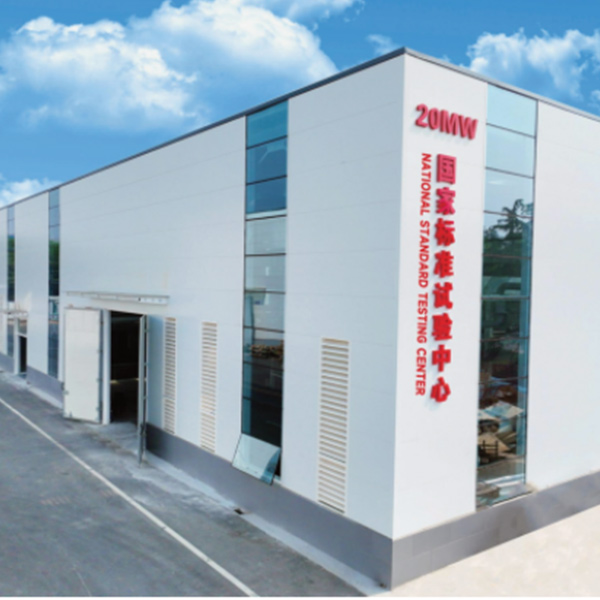
The company's production base is equipped with modern equipment for multi-level quality control. Unlike many competitors who limit themselves to short-term testing, it implements a mandatory procedure for comprehensive load testing of each piece of equipment for at least 4 hours under rated and partial load. The final check includes monitoring parameters of noise, vibration, temperature and output voltage stability. This approach ensures that the buyer receives a device that fully complies with the declared technical data and international safety standards. In addition, the company is developing a network of authorized service partners, providing customers with technical support at all stages: from foundation design to post-warranty service and supply of original spare parts.
Control systems, automation and integration into the enterprise network
A modern 500 kW diesel generator is a high-tech complex controlled by a microprocessor controller. The speed of power restoration and equipment safety depend on the quality and functionality of the automatic transfer system (ATS). Basic controllers provide only monitoring of basic parameters (voltage, frequency, temperature, oil pressure) and manual control. For responsible consumers, a controller with a deep battery testing function, an event history (accident log) and the ability to remotely monitor via GSM/GPRS or Ethernet is required.
Integration with an external network requires special attention to synchronization. If your facility involves the operation of several generators on one bus or parallel operation with a city network (for example, to cover peak loads), the control system must support synchronization functions for voltage, frequency and phase. An error in setting the frequency delta or mismatch angle can lead to huge equalizing currents that can instantly damage power switches and generator windings. We recommend using controllers from leading global manufacturers (Deep Sea Electronics, ComAp, Woodward), which have built-in soft synchronization algorithms and reverse current protection.
Communication protocols are becoming the de facto standard for industrial automation. Make sure that the 500 kW diesel generator you choose supports communication via Modbus RTU/TCP or SNMP protocols. This will allow you to integrate data on the operation of the diesel generator set into the overall plant dispatch system (SCADA), monitor fuel consumption in real time and receive predictive notifications about the need for maintenance. The absence of these interfaces in 2026 looks archaic and significantly complicates the operation of a large fleet of equipment.
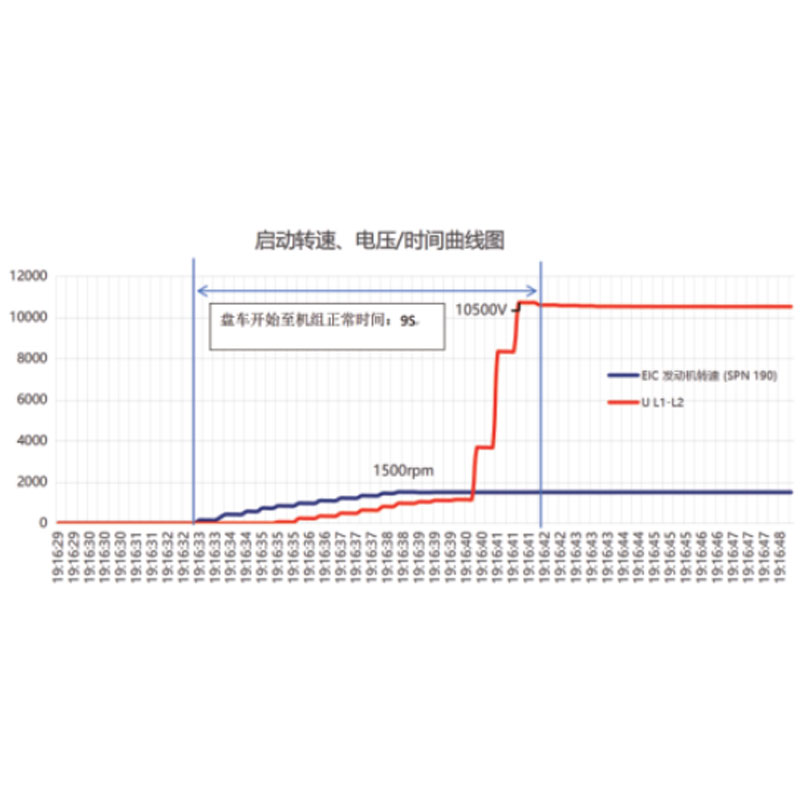
The ATS operation algorithm also requires careful configuration. Switching time should be the minimum necessary for safety: switching on to an unsynchronized network too quickly is dangerous, and switching on too slowly is critical for technological processes. The standard start-up and ramp-up time for a 500 kW diesel generator set is 10-15 seconds. If your processes require uninterrupted power supply (less than 0.2 sec), it is necessary to provide a buffer in the form of a UPS or flywheel energy storage devices, since no diesel generator is capable of providing such a speed purely mechanically.
Cost-effectiveness and hidden costs of operation
The purchase price of a 500 kW diesel generator is only 30-40% of the total cost of ownership during the first 5 years of operation. The main costs are fuel, maintenance and replacement of consumables. Cost-benefit calculations should be based on the actual load profile. Operating a generator underload (less than 40%) leads to excessive fuel consumption per unit of energy produced and accelerated engine wear, as we mentioned earlier. The optimal operating mode is 70-80% of the rated power.
Service includes replacing engine oil (usually every 250-500 hours depending on the quality of the fuel and oil), oil, fuel and air filters. For a 500 kW engine, the oil volume in the system can reach 60-80 liters, and the number of filters can reach several pieces. The use of original consumables or high-quality analogues is mandatory. Saving on filters can lead to the entry of abrasive particles into friction pairs, which will cause scuffing of the cylinders and the need for major repairs, the cost of which is comparable to the purchase of a new generator.
The engine life before the first major overhaul for modern models is 20,000 - 30,000 hours, subject to maintenance regulations. However, this resource is achieved only when using certified fuel (Euro 3 and higher) and oils that meet manufacturer specifications (often API CI-4/CJ-4 or ACEA E7/E9). The use of low-grade fuel with a high sulfur content sharply reduces the life of catalytic converters (if installed) and increases corrosion of exhaust system parts.
It is also worth considering the cost of recycling used oils and filters, which is regulated by environmental legislation. Fines for improper waste storage can be significant. Having an agreement with a specialized organization for the removal and disposal of technical fluids should be a mandatory item in the operating budget.
Frequently Asked Questions
What is the real fuel consumption of a 500 kW diesel generator?
At 75% load (about 375 kW), a modern engine consumes approximately 90-95 liters of diesel fuel per hour. At full load (500 kW), consumption increases to 120-130 liters per hour. These figures are valid for Euro II/Stage IIIA engines. More modern models with electronic injection control can be 5-7% more economical, but they are more demanding on fuel quality.
Is it possible to connect a 500 kW diesel generator to a single-phase network?
Technically, this is possible through special stator rewinding circuits or the use of transformers, but it is strictly not recommended for powers above 100-150 kW. An asymmetric phase load of more than 20-25% causes severe overheating of the rotor and stator, which quickly leads to insulation breakdown. To power single-phase consumers with a power of 500 kW, the correct solution is to install three separate generators of lower power or use a three-phase generator with an even distribution of the load across the phases.
What oil should be poured into the engine of a 500 kW diesel generator set in winter?
The choice of oil viscosity depends on the ambient temperature. For winter operation at temperatures down to -25°C, an oil with a viscosity of 10W-40 is recommended, and at lower temperatures (-30°C and below) - 5W-40 or 0W-40. Be sure to use oils with engine manufacturer approvals (for example, Cummins CES 20081, Volvo VDS-4.5). Mixing oils of different brands and types is unacceptable.
How long does it take to start up and get into operation?
The standard start-up time for a working 500 kW diesel generator is 5-8 seconds until the nominal speed is reached. Reaching full mode with voltage applied to the load takes another 2-5 seconds (depending on the AVR settings and stabilization time). Thus, complete restoration of power occurs within 10-15 seconds after the main network is lost.
Is it necessary to warm up the generator before connecting the load?
Yes, warming up is required, especially in the cold season. The engine should run at idle or low speed for 3-5 minutes until the coolant temperature reaches at least 40-50°C. Applying full load to a cold engine leads to thermal shock of the CPG parts and increased wear. Modern controllers automatically implement a warm-up algorithm before closing the power switch.
Conclusion and recommendations for choosing a supplier
To summarize, we can say thatdiesel generator 500 kW: technical data and dimensionswhich we have examined in detail, is a complex engineering structure that requires a professional approach at all stages: from foundation design to daily operation. There is no “one size fits all” solution. The choice between open frame and container, between 1500 and 1000 rpm, between a budget and a premium brand should be based on a clear understanding of your objectives, budget and environmental conditions.
We recommend avoiding the temptation to buy the cheapest offer on the market. In the 500 kW segment, a price difference of 10-15% often means the use of remanufactured components, lack of conformity certificates or a simplified protection system, which in the long run will result in millions in downtime losses. Trust only those suppliers who provide a full package of technical documentation, conduct pre-sale preparation (run-in under load) and have their own service department with a stock of original spare parts in stock. The principles of reliability and responsibility, such as those professed by the Yuke company, should be your guideline when choosing a partner.
If you are faced with choosing a specific model or need an audit of an existing energy supply project, our specialists are ready to carry out a detailed calculation and offer the optimal solution adapted to your realities. A properly selected generator is a guarantee that your production will operate smoothly, regardless of the vagaries of the external network.
View the full catalog of 500 kW diesel generatorsand you can receive an individual commercial offer by contacting our sales department. We will help you choose a configuration that will provide maximum reliability and cost efficiency for your business.
Contact us today for consultation and delivery time estimates.
-


-
-


WeChat

-
WeChat