

Gas generator sets 1000 kW: implementation cases
2026-07-15
- Real cases of implementation of 1000 kW gas generating units: from project to first profit
- Case No. 1: Timber processing plant - replacing diesel with its own waste
- Case No. 2: Agro-industrial complex - energy from straw and husks
- Technical challenges: why 90% of projects fail without proper gas treatment
- The role of the modern integrator: from production to climate adaptation
- Economics and payback periods: real figures for 2026
- Safety standards and regulations in the Russian Federation
- Frequently Asked Questions
- Conclusion and recommendations for starting the project
Real cases of implementation of 1000 kW gas generating units: from project to first profit
In our practice, launchgas generator sets 1000 kWRarely does it follow the textbook. Most often we are faced with a situation where the theoretical calculation of efficiency is broken by the actual quality of the raw materials or errors in the design of the gas purification system. One of our clients in Siberia lost three months of downtime and about 4 million rubles only because they ignored the dew point requirement for their region. This article is not a marketing booklet, but an analysis of specific engineering solutions and economic indicators that we obtained at real sites in 2025–2026. We will show the numbers where others write “high efficiency”, and explain why the standard scheme often requires modification for a specific task.
1 megawatt (1000 kW) capacity is the critical entry point for industrial energy. Below this level, the profitability of gas generation is often questionable due to the high capital costs of the gas treatment system. Above that, completely different technologies and logistics of raw materials are required. It is in the 1000 kW segment that we see the most balanced implementation cases, where the payback period ranges from 18 to 30 months with a competent approach. Let's look at exactly how these installations work in different industries and what pitfalls await investors.
Case No. 1: Timber processing plant - replacing diesel with its own waste
The task was classic for woodworking: to recycle tons of sawdust and slabs, while simultaneously reducing dependence on expensive imported diesel fuel. The facility was located in a remote area, where electricity tariffs reached 12 rubles per kWh, and the delivery of diesel fuel in winter was associated with the risk of supply disruptions. The client initially wanted to simply burn waste in a boiler, but we proposed a cogeneration scheme: generating electricity for the workshops and using the heat of the exhaust gases to dry the wood.
We have implemented a 1000 kW electrical power plant with a continuous pyrolysis reactor. The raw material was a mixture of birch sawdust with a moisture content of up to 45% and fine wood chips. The key problem was fuel preparation. The customer's original design did not provide for adequate drying, which in our latitudes is a fatal mistake. Wet fuel leads to a sharp drop in temperature in the reactor, an increase in the tar content in the synthesis gas and, as a result, coking of the engines.
As a result, we redesigned the feed unit by adding a screw drying complex that uses waste heat from the plant itself. This made it possible to stabilize the humidity of incoming raw materials at the level of 15–20%. After starting up in normal mode, the installation reached its rated power of 1000 kW in 4 hours. Diesel fuel consumption has been reduced by 92% (only left for ignition and emergency modes). Monthly savings amounted to more than 3.5 million rubles. The payback period for the project, taking into account the modernization of the dryer, was 22 months.
An important technical nuance that we discovered during operation: the composition of wood gas depends greatly on the type of wood. Coniferous species produce more resins, deciduous species produce cleaner gas, but lower calorific value per unit volume. Our solution included a two-stage gas cleaning system with electrostatic precipitators, which reduced particulate matter to 50 mg/m³, which meets the requirements of gas engine manufacturers. Without this stage, the life of the engine oil is reduced by 3–4 times.
For production managers, the conclusion is obvious: if you have a free or cheap source of biomass with a volume of 3 tons per hour, a 1000 kW installation becomes the center of the enterprise's energy security. Do not try to save on the cleaning system - this is a direct road to major engine repairs after 500 operating hours.
Case No. 2: Agro-industrial complex - energy from straw and husks
Agriculture has its own specifics: seasonality of loading and huge volumes of low-density raw materials. This case dealt with a large elevator in the Krasnodar region, where up to 15 thousand tons of sunflower husks and straw were generated annually. The problem was not only disposal (burning in fields is prohibited by fines), but also high energy costs to operate grain dryers and fans during peak harvesting periods.
Here we used a 1000 kW gas generator unit with a downdraft reactor, adapted for working with bulk materials of low bulk density. The main difficulty of this project is organizing an uninterrupted fuel supply. Sunflower husks are very light and dusty and tend to form arches in bunkers. Standard augers did not work here - they simply turned in emptiness.
The engineering solution required the installation of special mixer-rippers in the receiving hopper and the use of pneumatic transport to supply fuel to the gasification zone. This increased the installation's own energy consumption by 40 kW, but ensured process stability. As a result, we received 950–980 kW of clean electricity into the enterprise network. The thermal power removed from the engine cooling jacket and exhaust gases (about 1.2 MW) was sent directly to the grain drying complex.
The economic effect turned out to be even higher than in the forestry sector, due to the zero cost of raw materials (in fact, the enterprise paid for its removal, and now receives energy). The estimated savings amounted to 4.2 million rubles per month during the harvesting campaign. However, there is an important point: agricultural waste has a high ash content. Sunflower ash melts at relatively low temperatures, forming slag crusts on the reactor grates.
We have implemented an automated ash removal system with a water seal, which operates in pulse mode every 15 minutes. This prevents the ash from caking inside the reactor. Without such a system, cleaning stops would be required every 6–8 hours, making the project unprofitable. It is also worth noting the environmental aspect: the ash obtained during the gasification process is a valuable potash fertilizer, which the company now packages and sells to neighboring farms, creating an additional revenue stream.
This case proves that 1000 kW gas generator units are effective in the agricultural sector, but only if the fuel supply unit is deeply adapted to the physics of a particular type of biomass. There are no universal solutions “for any straw” - each type of waste requires its own reactor geometry and feeding method.
Technical challenges: why 90% of projects fail without proper gas treatment
The most common mistake when implementing generators of this power is underestimating the synthesis gas purification system. Many customers look at the price of the gas generator itself, forgetting that the “heart” of the system is the engine, and its “lungs” are the filters. Synthesis gas, obtained even from high-quality wood chips, contains resins, acids, sulfur compounds and fine dust. If the tar concentration exceeds 50–100 mg/m³, a modern gas engine (whether imported or Russian equivalent) will begin to degrade almost immediately.
In our practice, there was a case when a client tried to save money by connecting the installation to an old diesel generator through a simple converter without multi-stage cleaning. The result is predictable: after 200 hours of operation, the engine valves were overgrown with coke, the rings were stuck, and the oil turned into tar. The repair cost more than the cost of the entire treatment system, which they initially rejected. We strongly recommend that the project budget include at least 30–40% of the cost of the gas generator itself for the gas conditioning system.
Modern standards require the use of cascade cleaning: a cyclone for coarse dust → a scrubber (wet cleaning) for cooling and removing heavy resins → an electrostatic precipitator or fine fabric filters for removing aerosols and light resins → a buffer tank (gas holder) for pressure stabilization. Only such a chain guarantees the content of impurities at a level that is safe for internal combustion engines. The issue of condensate is especially critical: when the gas is cooled, a large amount of aggressive liquid containing phenols and acids precipitates. It cannot simply be poured into the sewer; a neutralization or disposal system is required, which often comes as a surprise to environmentalists of the enterprise.
Another technical barrier is load management. The gas generator is an inertial system. Unlike a diesel engine, it cannot instantly respond to surges in electricity consumption. With a sudden increase in load (turning on a powerful machine), the gas pressure in the manifold drops, the mixture becomes leaner, and the engine stalls. For a power of 1000 kW, a mandatory element is a buffer tank with a volume of at least 10–15 m³ or a system of parallel operation with the network/batteries, which smooths out the peaks. Ignoring this requirement leads to constant emergency stops.
We are also seeing a problem with gas composition monitoring sensors. Cheap sensors are quickly “poisoned” by impurities and begin to produce incorrect data, which leads to incorrect regulation of air/fuel ratios. In reliable systems, we use redundancy of critical sensors and regular calibration with reference gases. The reliability of the system is determined by the reliability of the weakest link, and in gas generation this link most often turns out to be automation.
The role of the modern integrator: from production to climate adaptation
Successful implementation of such complex projects is impossible without a reliable partner with not only a production base, but also deep engineering expertise. This is where new generation integrator companies such asYuke (Shandong) Electrical Technology LLC. Based in Shandong province, the company specializes in developing and delivering complete off-grid energy solutions by combining advanced generation technologies with energy storage systems.
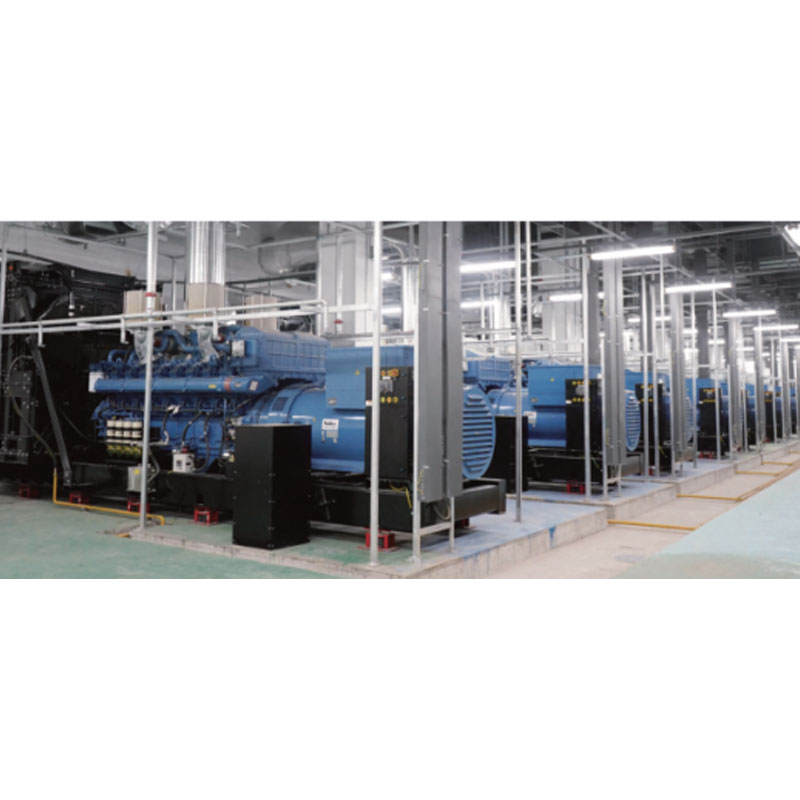
In the context of gas generation, Uke’s approach is especially important: the company does not simply supply equipment, but acts as a solution architect. Their portfolio includes specializedVYG series gas generator units(based on Yuchai engines), which are designed to meet stringent requirements for reliability and compatibility with various types of biomass. But the key advantage lies in production control: each piece of equipment, be it a gas or diesel unit (VCD, VSD, VPD series on Cummins, SEM, Perkins engines), undergoes mandatory load tests lasting at least 4 hours before shipment. This minimizes the risks described in the technical challenges section above, ensuring that the installation comes online without failure.
For the CIS and Russian markets, where climatic conditions dictate their own rules, Uke offers customized turnkey solutions. The company's engineers take into account the specifics of operation in remote regions and low temperatures, integrating preheating systems and enhanced thermal insulation. Strategic partnerships with the world's leading engine manufacturers (MTU, Cummins, Yuchai) allow the creation of hybrid configurations that combine traditional generation with modern liquid-cooled energy storage cabinets. Such an integrated approach ensures the very “energy security” discussed in the cases, turning theoretical calculations into stable profits.
Economics and payback periods: real figures for 2026
Let's look at the dry numbers, abstracting from marketing promises. Capital costs (CAPEX) for a complete turnkey gas generator station with a capacity of 1000 kW in current market conditions vary from 18 to 25 million rubles. The price range is determined by the degree of automation, engine brand (imported versus localized) and the complexity of the cleaning system. Here you also need to add the costs of building a foundation, connecting to enterprise networks and commissioning work, which is another +15–20% of the estimate.
Operating expenses (OPEX) consist of the cost of raw materials, maintenance and staff salaries. When using your own waste, the cost of fuel is conditionally zero (we only take into account logistics within the workshop). Biomass consumption for 1000 kW output is approximately 1.2–1.5 tons per hour, depending on humidity. Maintenance includes changing oils (every 250–400 hours), filters and repairing friction units. The annual wage fund for a shift of two operators and one engineer is about 2.5–3 million rubles in the regions.
The payback period (ROI) directly depends on the energy source being replaced. If we replace network electricity at a tariff of 6–7 rubles/kWh, the payback period stretches to 4–5 years, which makes the project unattractive. If diesel fuel is replaced (price ~60–70 rubles/liter) or energy in isolated areas (tariffs 15+ rubles/kWh), the payback period is reduced to 1.5–2 years. In waste management cases where the problem of fines for environmental violations is being addressed, the additional benefit can reduce this period by another 20%.
It is important to consider equipment depreciation. High-quality gas generators are designed for a service life of 40,000 - 60,000 operating hours before major overhaul of the reactor and 20,000 hours for the engine. This means a life cycle of 7–10 years when operating 24/7. The investment looks justified if the business planning horizon exceeds 3 years. Short-term projects (< 2 years) do not have time to recoup investments, taking into account commissioning and ramp-up.
Below is a comparative table of economics for different scenarios for using a 1000 kW installation:
| Parameter | Scenario A: Diesel replacement (Remote site) | Scenario B: Replacement of network energy (Industrial zone) | Scenario B: Waste Management + Energy |
|---|---|---|---|
| Fuel cost (RUB/kWh) | ~12–14 (diesel) | ~6–8 (network) | ~0.5–1 (waste logistics) |
| Cost of generation (RUB/kWh) | ~2.5 (maintenance + depreciation) | ~2.5 | ~1.8 |
| Monthly savings (at 720 hours of operation) | ~6.5 million rub. | ~2.5 million rub. | ~5.0 million rub. + savings on disposal |
| Payback period (months) | 16–18 | 42–48 | 20–24 |
| Risks | Diesel price fluctuations | Changes in network tariffs, restrictions on generation | Instability of raw material quality |
An analysis of the table shows that the maximum economic effect is achieved in hybrid models, where a dual task is solved: obtaining cheap energy and eliminating waste disposal costs. Clean generation for the purpose of selling energy to the grid in the current regulatory conditions of the Russian Federation is less attractive due to bureaucratic barriers and low purchasing tariffs for small-scale generation.
Safety standards and regulations in the Russian Federation
Work with gas generating units with a capacity of 1000 kW is subject to strict regulation by Rostechnadzor. Synthesis gas is an explosive environment, and the gasification process involves high temperatures and pressure. The design of such an installation must undergo an industrial safety examination. We work in strict accordance with Federal Rules and Regulations (FNR) in the field of industrial safety.
The key document is GOST R 54973-2012 (and current updates), which regulates the requirements for solid fuel gasification plants. Particular attention is paid to automatic safety systems (SAS). The installation must automatically stop when the gas pressure is exceeded, the water level in the scrubbers drops, the blower fans stop, or the temperature in the reactor rises above normal. In our projects, we implement triple redundancy of critical sensors to eliminate false alarms and, at the same time, guarantee safety.
Environmental requirements are also becoming more stringent. Emissions from gas generators must comply with MPC (maximum permissible concentration) standards. Although gas generation is much cleaner than direct combustion, emissions of nitrogen oxides (NOx) and carbon monoxide (CO) are still present. Category I and II facilities (large industries) require the installation of continuous emission monitoring systems. We integrate such systems into a common control cabinet, transferring data to the cloud for reporting to regulatory authorities.
Equipment certification is another important aspect. All main components must have certificates of compliance with the Technical Regulations of the Customs Union (TR CU). For example, TR TS 010/2011 “On the safety of machinery and equipment” and TR TS 012/2011 “On the safety of equipment for working in explosive environments.” The absence of these documents makes legal operation impossible and creates risks in case of insured events. We provide a full package of permits along with the equipment, taking care of interaction with certification centers.
Don't forget about fire safety. The area around the gas generator must be cleared of flammable materials, and the room itself must be equipped with an automatic fire extinguishing system (often powder or gas, since water can aggravate the situation if electrical equipment or oil systems catch fire). On one of our early projects, the absence of an automatic gas shut-off valve during a fire resulted in a serious incident that could have ended in tragedy. Since then, we have installed high-speed shutoffs as a mandatory element, even if this is not explicitly stated in the local facility standards.
Frequently Asked Questions
What is the actual auxiliary power consumption of a 1000 kW installation?
You need to balance about 8–12% of the rated power. For a 1000 kW installation, this means that 880–920 kW will go into the network. The main consumers are blower fans (the most powerful unit), fuel supply augers, water circulation pumps in scrubbers and the control system. If the raw material is wet and requires additional drying inside the line, consumption can increase up to 15%. We always recommend taking a motor-generator with a power reserve (for example, a 1100 kW unit) in order to reach a net 1000 kW of load.
Can a gas generator be used to heat a private home or small business?
No, for small volumes this is not economically feasible. The entry threshold for gas generation starts with approximately 50–100 kW of thermal or 30–50 kW of electrical power, but even there the payback period will be very long due to the high cost of automation and cleaning. A 1000 kW installation is a purely industrial solution. For small businesses, it is better to consider ready-made boilers using pellets or wood chips, which are easier to operate and cheaper to purchase.
What to do with the ash and resins remaining after the process?
Ash, if you use clean wood or straw without chemical treatment, is an excellent fertilizer (potash). It can be sold or used in your fields. Resinous effluents from scrubbers are hazardous waste of hazard class IV. They should not be poured into the soil. In modern closed cycles, we use water recycling systems with settling tanks, where the resins are separated and burned back in the furnace (if the design allows) or disposed of by specialized companies. Ignoring this issue will lead to huge fines from Rosprirodnadzor.
How does fuel moisture affect energy production?
Critically influences. Exceeding humidity above 45–50% makes the gasification process unstable or completely impossible without external heating. Energy is wasted on water evaporation instead of gas generation, the temperature in the reactor drops, and the resin yield increases exponentially. Every 10% of excess moisture reduces the efficiency of the installation by approximately 5–7%. Therefore, the presence of a drying complex is not an option, but a necessity for most types of biomass in the Russian climate.
Is an operator required to be present at all times?
Yes, at least one qualified operator per shift is required. Despite the high degree of automation, the process requires visual monitoring of the fuel supply, water level and filter condition. Automation can signal an accident, but often only a person can prevent a screw from clogging or a plug in the reactor. In addition, routine lubrication and inspection of components is carried out manually. Fully autonomous operation (“set it and forget it”) at such capacities is still unattainable without a significant increase in the cost of the system.
Conclusion and recommendations for starting the project
Implementationgas generator sets 1000 kWis a complex engineering challenge that only pays off with careful planning and consideration of all the nuances of local raw materials. As our experience has shown, success depends not so much on the brand of the generator itself, but on the quality of development of peripheral systems: fuel preparation, gas purification and waste disposal. Errors at the design stage are too expensive to correct during operation.
If you're considering a transition to off-grid energy or waste management, start with a detailed audit of your raw materials. Bring samples to the laboratory, determine the exact moisture content, ash content and fractional composition. Only on the basis of this data can the correct configuration of the reactor and purification system be selected. Don't trust universal solutions - they don't exist in nature.
Choosing the right technology partner can significantly reduce risks at the start. Companies like Yuke (Shandong) Electrical Technology LLC demonstrate the importance of combining a strong manufacturing base with the flexibility of engineering solutions tailored to specific customer needs. From preliminary feasibility study to post-warranty service, each stage must be calculated.
We are ready to conduct a preliminary audit for your enterprise, based on real data, and not on theoretical calculations. Contact us today to discuss the details of your project and get advice from engineers with practical experience in launching similar stations. The right start will save you millions of rubles and years of nerves.
For more information about our bioenergy solutions and collaborations with leading equipment manufacturers, visitindustrial gas generators and recovery systemson our website.
-


-
-


WeChat

-
WeChat