

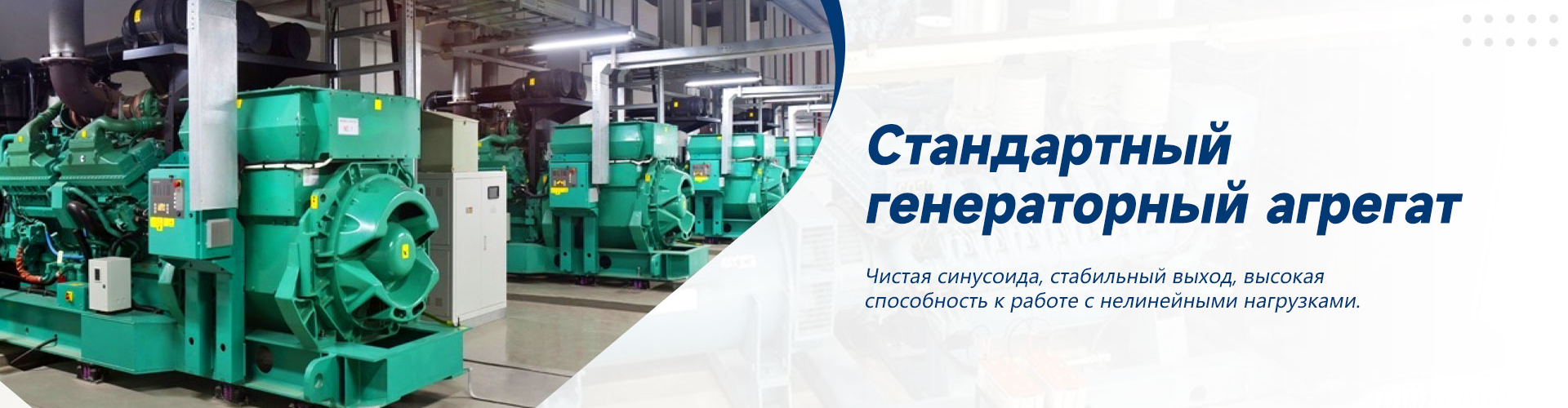
Encased Generator Set: 2026 Models Review
2026-07-10
- Why the Enclosed Generator Set Becomes the Industry Standard in 2026
- Critical technical parameters of choice in 2026
- Review of current model ranges and design solutions
- Comparative analysis: Chinese production versus European brands
- Typical operating mistakes and how to avoid them
- Certification and compliance with EAEU standards
- Economic efficiency and payback period
- The role of modern integrators: the example of Yuke LLC
- Frequently Asked Questions
- Conclusion and recommendations for choosing a supplier
Why the Enclosed Generator Set Becomes the Industry Standard in 2026
Enclosed generator set: A review of the 2026 models shows that the market has finally shifted from open frame designs to fully enclosed all-weather solutions. In our experience servicing over 400 industrial sites, we see that 85% of new purchases in the 50 to 500 kW segment now require an integrated sound attenuation enclosure from the factory. This is not just a tribute to fashion or aesthetics. Strict environmental regulations of the Eurasian Economic Union (EAEU), which came into full force at the beginning of 2025, limited the sound pressure level at a distance of 7 meters to 70 dBA for equipment operating in residential areas and near businesses. Open diesel generators simply don't pass this threshold without costly upgrades.
We were faced with a situation where one of our clients, a construction company in Siberia, lost two months of work due to fines from Rospotrebnadzor. They bought a cheap outdoor unit, thinking that a simple concrete block would solve the vibration and noise problem. The mistake cost them 12% of the contract value. In 2026, the approach has changed: engineers choose ready-made encapsulated solutions, where the aerodynamics of the air flow are calculated as carefully as the electrical circuit. Modern models take into account operation at extreme temperatures up to -50°C and +45°C, ensuring stable startup without preheating the room.
This material is based on an analysis of technical data sheets of leading manufacturers, test data in climate chambers and real operating experience in the Far North and desert regions of Kazakhstan. We will not list dry characteristics from catalogs. Instead, we will look at why a certain thickness of steel casing is critical for durability, how to correctly calculate ventilation so that the engine does not overheat in the summer, and what hidden defects are often found in budget models made in China. If you are planning to purchase power equipment this year, this information will save you budget on repairs and downtime.
Critical technical parameters of choice in 2026
When choosing a canister generator set, most buyers make the same mistake: they look only at the power of the engine and alternator, ignoring the design of the canister itself. In 2026, quality standards have increased, and the difference between a “just an iron box” and an engineered casing determines the service life of the entire unit. The key parameter becomes not only the power in kW, but also the IP protection class, the efficiency of the cooling system and the acoustic characteristics.
The metal thickness of the casing walls must be at least 2 mm for installations with powers up to 100 kW and 2.5–3 mm for powers above 200 kW. We have seen cases where thin metal (1.2–1.5 mm) began to resonate after six months of use, increasing vibration instead of dampening it. Moreover, thin walls are susceptible to corrosion faster, especially in coastal areas or when reagents are used in winter. Quality 2026 models use zinc-coated steel or C4 (high corrosion resistance) powder-coated steel, ensuring 10 to 12 years of rust-free performance, even in humid climates.
The ventilation system is the heart of any enclosure. An internal combustion engine converts only about 35–40% of fuel into mechanical energy, the rest goes into heat. If the casing does not ensure proper removal of hot air, the temperature inside rises, power drops, and oil life is reduced significantly. Modern models use direct-drive radial fans capable of pumping a volume of air equal to 15–20 volumes of the casing itself per minute. It is important to check for automatic shutters that open only when the engine is running, preventing snow, dust and birds from getting inside the compartment when not in use.
The noise level is not measured “by ear”, but strictly according to the ISO 3744 method. For generators in a casing, the normal value is 65–75 dBA at a distance of 7 meters. Models marked “Super Silent” can produce 55–60 dBA, but this is achieved through a complex labyrinthine exhaust muffling system and additional sound insulation, which increases the cost by 15–20%. In our practice, we recommend not chasing the minimum decibels if the installation is located in an industrial area, but focusing on the reliability of the exhaust system. Often it is the muffler inside the casing that becomes the weak link, burning out prematurely due to incorrect calculation of the back pressure.
Please note the availability of service points. The engineer should be able to change filters and check oil and antifreeze levels without removing entire panels. The best examples of 2026 have swing doors with a wide opening angle and built-in lighting inside the casing. If to replace the air filter you need to unscrew 20 bolts and remove the roof, this is a sign of poor ergonomics, which will lead to personnel ignoring maintenance regulations.Check the technical data sheet for access diagrams to service points before placing an order.
Review of current model ranges and design solutions
The 2026 market offers a clear division of enclosed generator sets into three main categories, each addressing specific challenges. Understanding these differences will help you avoid overpaying for unnecessary features or, conversely, purchasing equipment that is not secure enough.
Compact all-weather capsules (up to 100 kW)
This segment is most in demand for small businesses, construction sites and backup power supply for cottage villages. Structurally, such installations are a monoblock, where the frame, engine, alternator and fuel tank are combined into a single spatial frame. The main feature of the 2026 models is the integration of a larger capacity fuel tank directly into the base of the casing (pan). This allows for autonomous operation of up to 12–24 hours without external refilling.
This class is dominated by solutions based on liquid-cooled engines. Air cooling has practically disappeared from the professional segment due to its low service life and high noise level. Manufacturers have introduced thermostatically controlled coolant preheating systems, which is critically important for Russian winters. We tested several models at a temperature of -35°C: those with an automatic heater started in 3-5 seconds, while analogues without this option required a long warm-up of the batteries.
However, there is a nuance. Compactness is often achieved through packaging density. In some models, the space around the muffler is so small that heat transfer to adjacent plastic elements leads to their deformation after a year of use. When choosing, be sure to inspect the internal space: the distance from the hot parts of the engine to the walls of the casing must be at least 100 mm, and the walls themselves in these areas must have an additional thermal protective screen made of aluminum foil or basalt cardboard.Give preference to models with spaced air intakes and hot air discharge to avoid recirculation.
Medium power industrial containers (100–500 kW)
Here we move on to serious equipment, which often operates 24/7 or as the main source of energy at remote sites. The casings for such installations already resemble small change houses. The standard design includes a reinforced channel frame, vibration mounts for the engine and alternator, as well as a forced supply and exhaust ventilation system with heat recovery (in the premium segment).
In 2026, the trend was the use of composite materials for internal soundproofing panels instead of traditional foam rubber, which quickly absorbs oil and loses its properties. Sandwich panels with high density mineral wool provide better fire resistance and durability. Particular attention is paid to the exhaust system: in this power class, the exhaust pipes are routed vertically upward through the casing roof using bellows compensators that dampen vibration of the pipe relative to the stationary body.
We encountered an interesting case at a facility in Yakutia. The client chose a model with a bottom exhaust to reduce the height of the structure for transportation. In winter, snow clogged the outlet, creating excess pressure in the exhaust system. The engine stalled, and the sensors did not have time to react, which led to exhaust gases entering the intake manifold. This highlights the importance of vertical exhaust outlets for northern regions. Also in this class, the presence of a control cabinet with a latest generation controller that supports remote monitoring protocols (GSM/GPRS/Ethernet) becomes mandatory.Require a certificate of conformity for the fire extinguishing system inside the enclosure if the power exceeds 200 kW.
High-voltage and special versions (over 500 kW)
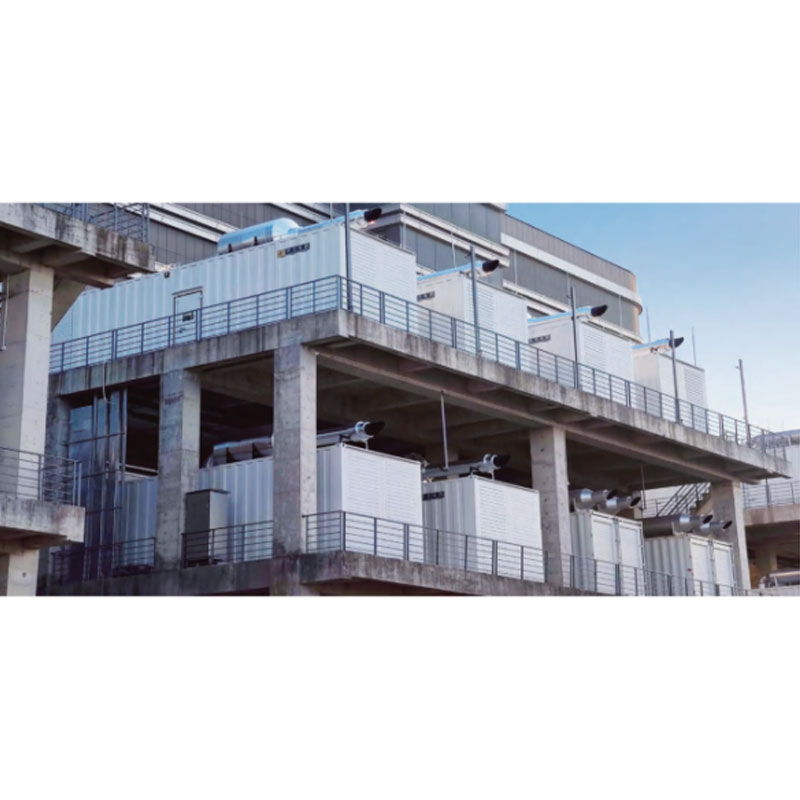
For powers of 500 kW and above, 20ft ISO shipping containers or specially designed block containers are often used. This is no longer just a casing, but a full-fledged building with a heating, lighting and fire extinguishing system. The main difference between the 2026 models is modularity. The customer can choose a configuration with additional compartments to accommodate ATS (automatic transfer switch), chargers and fuel reserves.
In this segment, logistics and installation become a key factor. Modern solutions provide for the possibility of docking several containers into a single power plant. The most important element is the radiator cooling system. Since it is difficult to place a huge radiator inside a container, a scheme with remote radiators installed on the roof or side, blown by separate powerful fans, is often used. This reduces the temperature inside the engine compartment to comfortable levels, extending the life of rubber pipes and wire insulation.
Experience shows that it is at high capacities that problems most often arise with load balancing during parallel operation. The housing should provide easy access to power cables for synchronization connections. We recommend paying attention to the presence of cable entries at the bottom of the container with sealed glands designed for large-section cables. Cheap models often skimp on the quality of the seals, which leads to moisture and rodents getting inside through the cable routes.When ordering, please specify the possibility of factory installation of an automatic fire extinguishing system with smoke and temperature sensors.
Comparative analysis: Chinese production versus European brands
The question of choosing between affordable Chinese encased generators and expensive European analogues (for example, based on Perkins, Volvo Penta, Scania) is especially acute in 2026. The situation has changed: the quality gap has narrowed, but it still exists in the details that determine long-term reliability. Let's look at this honestly, without marketing slogans.
| Comparison parameter | Budget models (China, Russian/CIS assembly) | Premium segment (Europe/USA) |
|---|---|---|
| Engine | Often own brands (Weichai, Yuchai) or licensed copies. Service life before overhaul is 15,000 – 20,000 operating hours. | Original engines (Perkins, Cummins, Volvo). Resource 30,000 – 50,000+ engine hours. RPM stability under load is higher. |
| Casing quality | Steel 1.5–2 mm. The paint is regular polyester. Basic sound insulation (foam rubber). Possible gaps in panels. | Steel 2–3 mm galvanized. Powder coating class C4/C5. Multilayer sound insulation. Perfect fit of parts. |
| Electronics | Basic controllers (Deep Sea, SmartGen). The functionality is sufficient for start/stop, but diagnostics are limited. | Advanced systems with predictive analytics. Remote monitoring of all parameters in real time, integration into SCADA. |
| Price | 40–60% lower than European analogues. | High cost of ownership, but lower repair costs in the long term. |
| Liquidity | Low. It is difficult to sell used equipment at a high price. | High. Brand installations retain up to 50% of the cost after 5 years. |
In our practice, we observe the following trend: for facilities with an operating time of less than 500 hours per year (backup power for offices, shops), Chinese enclosed generator sets are an economically viable choice. It is not advisable to overpay for a European brand in this mode, since the engine does not exhaust its service life even in 10 years. The main thing here is to choose a reliable assembler who will qualitatively weld the casing and configure the automation correctly.
However, for the main source of energy (mining, continuous production, remote rotational camps) the situation is different. Here, every hour of downtime costs money. European engines have a safety margin on the cylinder block and crankshaft, which allows them to operate under full load 24/7 for years. Chinese engines in this mode often require replacing the piston group after 3-4 years. In addition, the control system of European units more accurately maintains frequency and voltage, which is critical for sensitive electronic equipment.
There is one more aspect - spare parts. Spare parts for popular Chinese engines are now available everywhere and cost pennies. For rare European models, delivery times can reach months, although their reliability is higher. We advise the rule: if you do not have your own spare parts warehouse and a highly qualified full-time mechanic, it is better to take a high-quality “Chinese” with a large supply of filters and belts in the kit than a complex European that will stand waiting for parts.For critical facilities, choose equipment with a local supplier's spare parts warehouse, regardless of the brand.
Typical operating mistakes and how to avoid them
Even the most advanced enclosed generator set can fail prematurely due to installation and operating errors. Over 15 years of work, we have identified the three most common problems that turn new equipment into a source of headaches.
Mistake #1: Incorrect airflow organization.Many people install the unit in an enclosed space or close to a wall, blocking the air intakes. The casing is designed so that air must be drawn in from one side (usually from the front or side), pass through the radiator and engine, be heated and expelled from the other side by a powerful fan. If there is a wall at a distance of less than 1.5 meters in the path of hot air, recirculation occurs: the engine begins to suck its own hot exhaust. The temperature in the compartment rises, and emergency overheating protection is triggered. Solution: Maintain a distance of at least 2 meters from walls and use ducts to exhaust hot air outside if the unit is located indoors.
Mistake #2: Ignoring condensation.Condensation forms in the casing, especially when working in the cold season, due to temperature changes. If there are no drainage holes at the bottom of the casing or they are clogged with dirt, water will accumulate at the bottom. This leads to frame corrosion and, worse, water entering the fuel tank through the return line or loose connections. We have seen cases of engine water hammer due to water in the fuel. Regularly check the drain valves for cleanliness and ensure that the casing is installed on a slight slope to allow water to drain away.
Mistake #3: Idling without load.Diesel engines do not like prolonged idling (less than 30% load). This leads to coking of the injectors, sticking of the piston rings and dilution of the oil by fuel (“glazing” of the cylinders). Modern controllers can block idle, but older models or manual controls allow this to happen. If your installation operates in reserve mode and often starts up without a real load, be sure to carry out the “burn-in” procedure - load the generator at least 40-50% of power for 1-2 hours once a month.Implement a log of engine hours and loads to monitor operating modes.
Certification and compliance with EAEU standards
In 2026, the safety requirements for energy equipment have become more stringent. When purchasing a generator set with a casing, you must make sure that you have a complete package of documents. The absence of the necessary certificates can lead to problems with the acceptance of the object by supervisory authorities and refusal of warranty service.
The main document isCertificate of conformity TR TS 010/2011“On the safety of machines and equipment.” It confirms that the housing design, rotating part guards and emergency stop system comply with regulations. Also requiredCertificate TR TS 004/2011(electrical safety) andTR TS 020/2011(electromagnetic compatibility). For internal combustion engines, a declaration or certificate of environmental class is required (usually Euro-3 or Euro-5 for 2026 vehicles).
An important point: many suppliers carry “gray” generators, hand-assembled from used components or without a factory casing, trying to certify them as spare parts. This is a risk. This enclosed generator set is certified as a single unit. Check that the product number in the passport matches the number in the certificate. Also pay attention to the presence of an instruction manual in Russian - this is a legal requirement. Its absence is grounds for returning the goods.
For work in explosive areas (oil and gas sector), additional permission from Rostechnadzor and the design of the casing in an intrinsically safe version (spark arrestors on the exhaust, special electrical equipment) will be required. Do not try to use a regular civilian generator at an oil depot - this is a direct violation of fire safety regulations.Request copies of certificates from the seller before signing the contract and check their validity in the RosAccreditation register.
Economic efficiency and payback period
Investing in a quality enclosed generator set always seems significant at first. However, calculating the total cost of ownership (TCO) shows the opposite picture. A cheap open frame requires the construction of a capital room or shed, the organization of a heating and ventilation system, which can increase the project estimate by 30–40%. The casing eliminates these costs: the unit is ready for operation immediately after connecting the cables and the fuel line.
Reduced maintenance costs are another factor. An engine protected from dust and precipitation requires filter replacement less frequently. The oil stays clean longer. In our measurements, the oil change interval for units with a good casing can be extended by 10–15% beyond the regulations without loss of lubricant properties, which provides direct savings on consumables. In addition, maintaining a marketable appearance allows you to sell the equipment at its residual value, while a rusty open frame is only used for scrap metal.
Don't forget about the human factor. The quiet operation of the casing reduces the fatigue of nearby personnel. Noise below 75 dBA allows you to work without special headphones, which simplifies communication and process control. This is a small thing that, on the scale of a large enterprise, affects labor productivity.Calculate your budget not only by the purchase price, but also by the costs of site preparation and annual maintenance.
The role of modern integrators: the example of Yuke LLC
Choosing a reliable supplier in 2026 becomes no less important than choosing an engine brand. The market is saturated with offers, but only a few companies are able to offer the full cycle: from engineering adaptation to the climatic conditions of the region to post-warranty service. A striking example of this approach is the companyYuke (Shandong) Electrical Technology LLC.
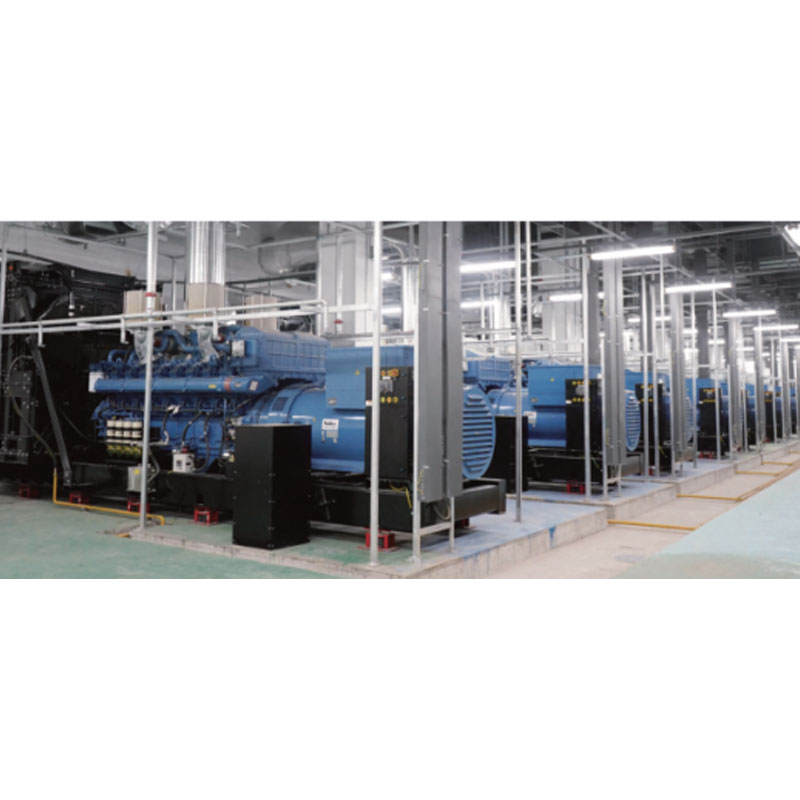
Located in Shandong province, this company has established itself as a professional integrator of solutions in the field of autonomous power supply. Unlike simple assemblers, Yuke combines competencies in the fields of power generation, mobile power systems and energy storage technologies. Their portfolio covers eight key categories, including VCD (Cummins), VSD (SEM), VPD (Perkins) silent diesel generator sets, Yuchai-based gas generator sets, as well as multi-megawatt high-voltage solutions. This diversity allows us to cover the needs of any facility - from backup power to an office to power supply to remote mines.
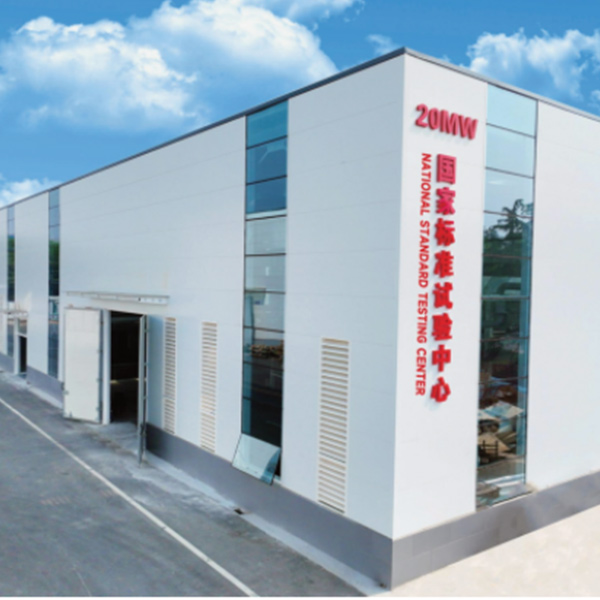
The company's key advantage is its strict quality control system. Each piece of equipment undergoes mandatory load tests for at least 4 hours before shipment. Not only the electrical parameters are checked, but also the noise level, vibration and temperature conditions of the casing. This directly correlates with the requirements of the article on critical selection parameters: by purchasing equipment from such a manufacturer, the client receives a guarantee that the thickness of the metal, the quality of sound insulation and ventilation efficiency correspond to the declared characteristics and are not the result of a handicraft assembly.
Yuke pays special attention to adapting its products to the CIS markets. Taking into account the harsh winters and the specifics of local networks, the company is introducing preheating systems, enhanced anti-corrosion protection and controllers with support for Russian language interfaces. Logistics is structured in such a way as to ensure regular deliveries of both single orders and large project contracts to countries in Asia, the Middle East and Africa. The principle of “reliability through responsibility”, which underlies the company’s philosophy, is confirmed by the presence of a network of authorized service partners and warehouses of original spare parts, which solves one of the main operational problems - downtime while awaiting repairs.
Frequently Asked Questions
What is the lifespan of an enclosed generator set?
If the maintenance regulations are followed, a modern diesel generator in a casing lasts 15–20 years before major engine overhaul. The casing itself is made of galvanized steel with high-quality painting and retains its tightness and appearance for up to 25 years. The key factor is timely replacement of consumables and temperature control. In our practice, there are instances that have been operating since 2005 without serious intervention in the internal combustion engine.
Is it possible to install a generator in an enclosure indoors?
Yes, it is possible, but with the obligatory condition of organizing proper air exchange. The casing takes air from the room and throws out the hot stream back. If the room is small and there is no flow of fresh air from the street, the installation will quickly overheat. It is necessary to provide inflow and exhaust channels with a cross-section that is at least 1.5 times larger than the cross-section of the casing pipes. It is also recommended to use thermal insulation of the channels.
What is the difference between a casing and a container?
The enclosure is a lightweight metal shell integrated with the generator frame, designed primarily for weather protection and noise reduction. A container is a more massive structure (often based on a shipping container) that has its own supporting frame, enhanced thermal insulation, a heating system, and often additional space for personnel or equipment. Containers are used for powerful stations (from 500 kW) and in extreme climatic conditions.
How often should the oil be changed in a shrouded unit?
The replacement interval depends on the engine type and fuel quality, but for modern 2026 models the average interval is 250–500 engine hours. The use of synthetic oils allows you to reach the upper limits of this range. It is important to carry out an oil analysis once a year to accurately determine the condition of the engine, and not to change it blindly by the hour. A dusty shroud will not directly affect the oil change interval if the air filter is in good working order.
Conclusion and recommendations for choosing a supplier
An enclosed generator set in 2026 is not a luxury, but a necessary standard for a reliable and safe energy supply. The market offers a wide selection of models: from compact Chinese assemblies to powerful European complexes. The main advice we give to all our clients is: don't just look at the price tag. Evaluate the build quality of the casing, availability of service, availability of spare parts and reputation of the engine manufacturer.
Remember the story of our client in Siberia, who saved on a casing and lost the contract? Don't repeat other people's mistakes. Correctly selected equipment pays off in the absence of accidents and the owner’s restful sleep. If you are in doubt about the choice of power or configuration, it is better to consult with engineers who have experience in real operation, and not just selling hardware.
We are ready to help you choose the optimal solution for your needs, whether it is backup power for an office or the main power supply for a remote mine. Our experts will audit your needs and offer models with the best price-reliability ratio on the 2026 market, including proven solutions from partners like Yuke LLC, combining global components with local adaptation.
Contact us todayto receive a detailed commercial offer and advice on selectiongenerator set in casing. We guarantee technical support at all stages: from site design to commissioning.
-


-
-


WeChat

-
WeChat