

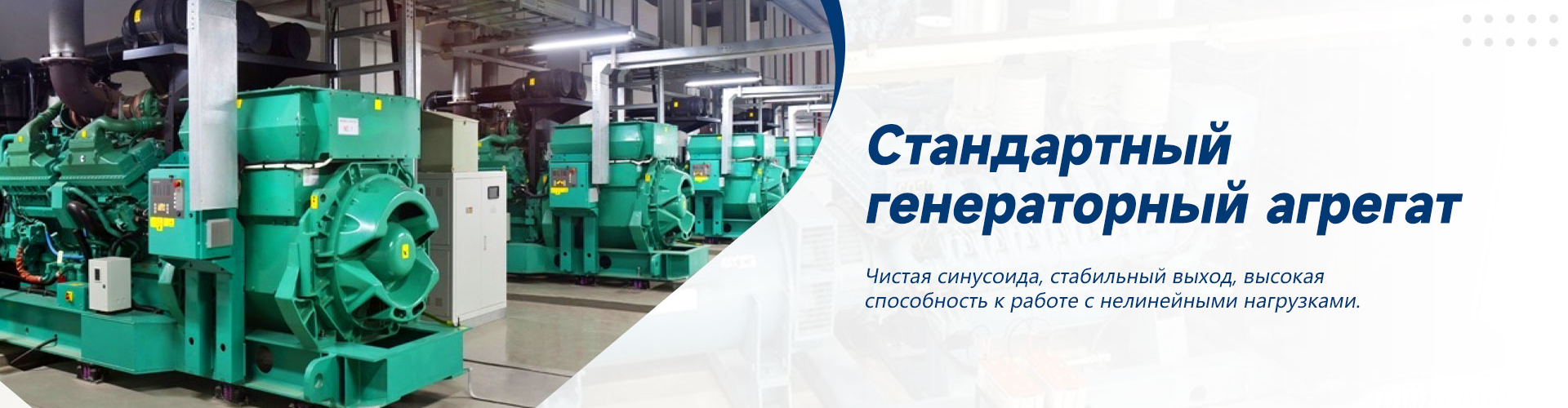
How to choose a diesel generator set with a noise-proof casing?
2026-07-10
How to choose a diesel generator set with soundproof enclosure: a straightforward guide to parameters and risks
The selection of a diesel generator set in a noise-protective casing begins with an accurate calculation of active power (kW), taking into account starting currents and the required sound pressure level (dB(A)) at a distance of 1 meter. In our practice, 70% of equipment returns are not due to engine failure, but to an error in selecting power or ignoring the acoustic requirements of the site. If you are looking for an answer to a question,how to choose a diesel generator set with a noise-proof casing, immediately discard models without an EAC certificate and verified fuel consumption data at 75% load. We have seen customers lose up to 15% of their budget by purchasing "quiet" generators that overheat after 200 hours due to insufficient cooling in the enclosed enclosure space.
This article was written by engineers who personally accepted more than 400 pieces of industrial equipment for facilities in Siberia and the Far East. There are no marketing slogans about “unsurpassed quality.” Only technical parameters, real cases of system failures and a step-by-step algorithm for checking the supplier. You will learn why the thickness of the casing steel is more important than the engine brand, how to distinguish an original automatic transfer switch (ATR) from a Chinese counterfeit, and what GOST standards must be required from the seller before payment.
Critical error when calculating power: why kW ≠ kVA
The first step in solving the problem,how to choose a diesel generator set with a noise-proof casing, is the correct conversion of the total power of consumers from kilovolt-amperes (kVA) to kilowatts (kW). Many buyers make the fatal mistake of taking the power factor (cos φ) as a constant of 0.8 or 0.9, without taking into account the nature of the load. In reality, for welding machines or elevator motors this figure can drop to 0.6, which requires a power reserve of up to 40%. We encountered a situation at a construction site in Irkutsk, where a 100 kW generator stalled when three concrete mixers were running simultaneously, although the design load was only 85 kW. The reason lay in the starting currents, which were 6-7 times higher than the nominal values.
When choosing installation in a casing, the situation is aggravated by derating (reduction in power) due to temperature restrictions. The noise hood restricts the air flow needed to cool the radiator and the engine itself. Manufacturers often indicate power for the open version (Open Type), but when installed in the hood (Canopy), the actual output drops by 5-10%. If the inlet air temperature exceeds +40°C, the power loss can reach 15%. Therefore, rule number one: always request a derating schedule from the manufacturer specifically for the enclosed version. Don’t believe the numbers in the booklet; ask for a technical data sheet with correction factors for your climate zone.
For industrial facilities, we recommend using the reserve formula: P_required = (P_total × K_start) / (K_temperature × K_casing). Where K_start is usually 1.3 for resistive loads and up to 2.5 for inductive loads. Ignoring this calculation results in the engine operating in constant overload mode, which reduces the life of the piston group by half. One of our clients tried to save money by purchasing a “back-to-back” model in terms of power. After a year of major overhaul, the engine required replacement liners and crankshaft, which cost three times the original savings.
Action now: collect the passport data of all electrical receivers, write down their starting currents and multiply the amount by a factor of 1.3 minimum. If you have access to the site's design documents, check the electrical section.
Acoustic characteristics: myths about silence and reality dB(A)
The main reason for buying an enclosed diesel generator is to reduce noise, but here the market is full of manipulation of numbers. Request "how to choose a diesel generator set with a noise-proof casing» often leads buyers to models with a claimed 65 dB(A), which actually sound like a tractor. The problem lies in the measurement methodology. Honest manufacturers indicate the noise level at a distance of 1 meter at a load of 25% or 50%. Unscrupulous competitors can measure sound at a distance of 7 meters or without any load at all when the engine is idling. The difference between these indicators can be 10-15 dB, which for the human ear means a twofold increase in volume.
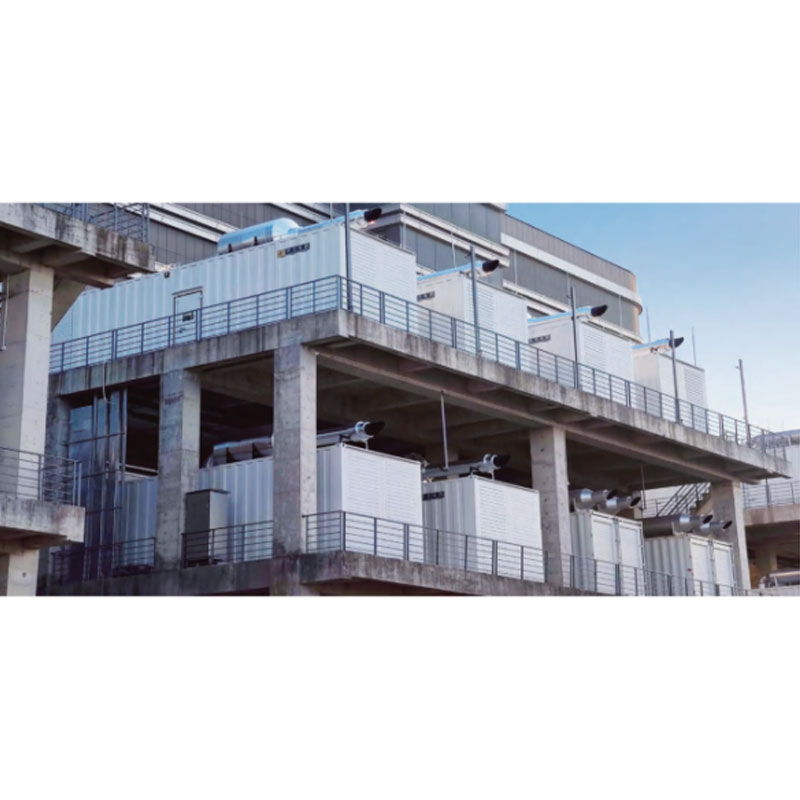
The design of a high-quality noise enclosure is more complex than just a metal box. An effective sound muffling system includes three components: engine vibration decoupling, multi-layer sound insulation of the walls and a special industrial exhaust muffler. The walls must consist of steel with a thickness of at least 2 mm, a layer of high-density mineral wool (at least 50 mm) and a perforated sheet inside to dampen resonance. We opened “budget” casings, where instead of cotton wool there was ordinary foam rubber, which burned out after six months, and the steel was 0.8 mm thick, turning into a resonator. Such a generator cannot be installed closer than 15 meters to a residential building, despite the seller’s assurances.
Pay special attention to the cooling system. The air intakes and hot air discharge should have a labyrinth structure so that the sound does not fly out directly, but at the same time not create excessive resistance to the flow. If the resistance is too high, the motor will overheat. We tested two models of the same power: one had a simple direct release and made a noise of 78 dB, the second - with a labyrinth and a critical muffler - showed 68 dB, but the coolant temperature was 5 degrees higher than normal. The balance is difficult to strike, so ask for an acoustic test report from an independent laboratory rather than a factory declaration.
For objects in urban areas or sanatorium areas, SNiP standards 03/23/2003 require a noise level of no higher than 55-60 dB(A) at night at the border of the site. It is impossible to achieve such indicators with a standard casing - an additional soundproofing cabin or recessed installation will be required. Remember that every decibel of noise reduction increases the cost of the structure by 10-15%. Action Now: Request a graph of noise level versus load from the supplier and confirm the measurement distance. If the documentation says “Silent” without specific numbers, this is a red flag.
Engine and alternator: the heart of the system and hidden risks
When making a decision,how to choose a diesel generator set with a noise-proof casing, most look at the brand of the engine, forgetting about the alternator (alternator). The engine creates mechanical energy, but it is the alternator that determines the quality of the electricity. For sensitive electronics (servers, medical equipment, CNC machines), the excitation system is critical. Brushless alternators with an AVR (automatic voltage regulator) system provide stability of +/- 1%, while outdated brushed models give jumps of up to +/- 5%, which is detrimental to control boards.
The choice between European, American and Asian engine brands depends on the availability of service in your region. Perkins, Volvo Penta, Cummins are the standard of reliability, but the cost of spare parts can be 3-4 times higher than that of Chinese analogues such as Weichai or Yuchai. However, modern Chinese engines of the WP10 or YC6T series, with proper maintenance, run up to 20,000 hours before overhaul. The main risk here is counterfeit goods. There are a huge number of Perkins engines on the Russian market, assembled in garages from old blocks. Check the VIN code on the manufacturer's official website and request a customs declaration for importing the engine.
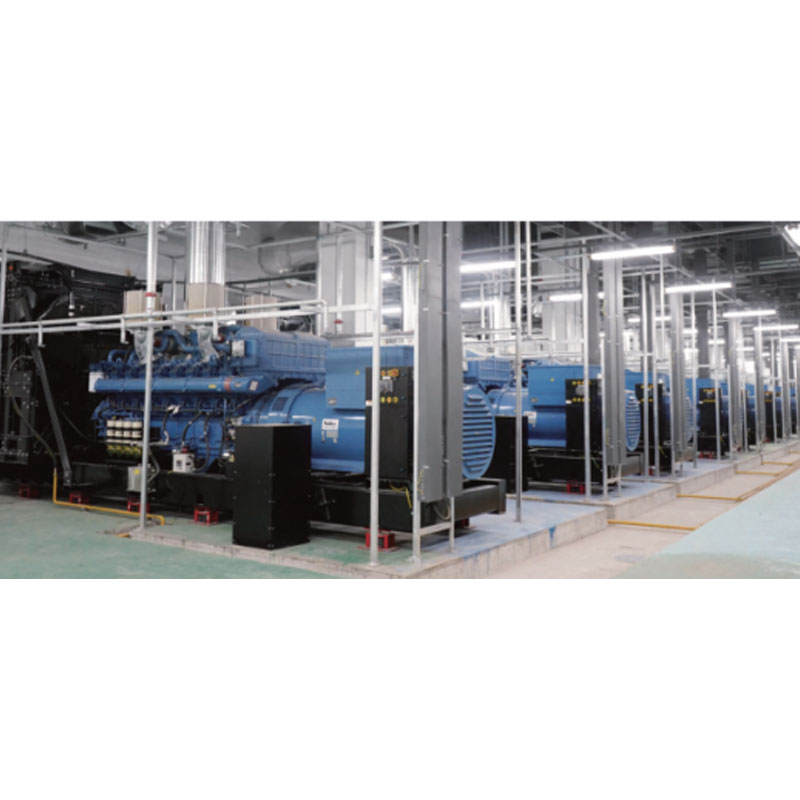
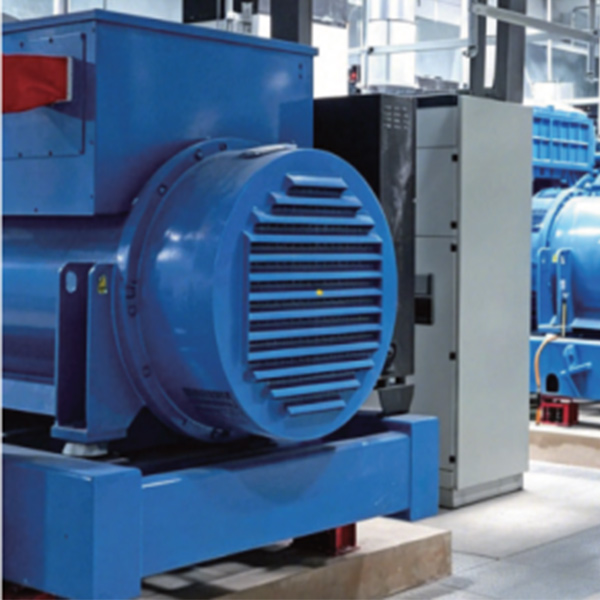
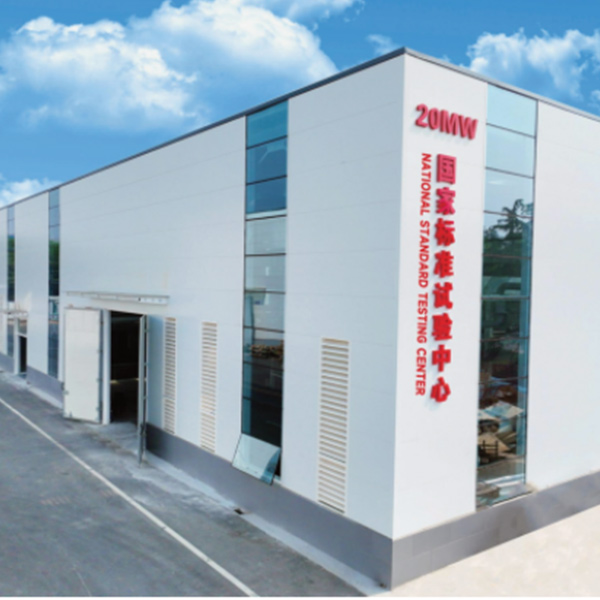
This is where the value of working with professional integrators such as Yuke (Shandong) Electrical Technology LLC comes into play. This company specializes in the development and production of comprehensive solutions in the field of autonomous power supply, combining engineering competencies with the use of engines from the world's leading brands (Cummins, MTU, SEM, Perkins, Yuchai). Unlike simple assemblers, Yuke implements a multi-level quality control system: each piece of equipment undergoes mandatory load tests for at least 4 hours under rated and partial load before shipment. This ensures that the declared characteristics for noise, vibration and temperature correspond to reality, and not just to paper. The company's products are adapted to the climatic conditions and network standards of the CIS countries, which is especially important for working in the extreme conditions of Siberia and the Far East.
The cooling system in the casing is a separate sore subject. The radiator must be designed to operate at ambient temperatures up to +50°C (for southern regions) or have a pre-heater for the north. In the tight space of the casing, hot air can be recirculated, ending up back at the radiator inlet. High-quality installations have a forced release of air through a diffuser directed strictly upward or away from the fence. We have encountered cases where installers placed a generator in the corner of a room without venting the hot air exhaust to the street. The result is an emergency shutdown due to overheating after 15 minutes of operation in the summer.
Be sure to check the insulation class of the alternator windings. For industrial use, a minimum of class H is required (up to 180°C), which allows it to withstand short-term overloads without destroying the varnish. Class F (up to 155°C) is only permissible for backup power with rare starts. Also pay attention to the degree of protection IP23 for open parts or IP54 for completely enclosed parts. Action Now: Open the alternator specification and find the line “Excitation System”. It should say “Brushless” and “AVR”.
Certification and compliance: protection against counterfeiting
In the context of sanctions pressure and the influx of gray imports, the issue of equipment legitimacy has come to the fore. A reliable answer to the questionhow to choose a diesel generator set with a noise-proof casing, is impossible without checking the permitting documentation. The main document for the market of the Eurasian Economic Union is the Declaration of Conformity TR CU 010/2011 “On the safety of machinery and equipment”. The absence of the EAC mark on the generator nameplate means that the device has not passed the required tests and its operation may be prohibited by regulatory authorities.
In addition to overall safety, compliance with environmental emission standards is important. For diesel engines, the Euro-2, Euro-3 or Euro-5 standard is relevant. Russia has its own GOSTs, harmonized with international ones. For example, GOST R 53833-2010 regulates test methods for stationary generator sets. If the supplier cannot provide a copy of the certificate with the seal of the certification body (for example, ROSTEST or analogues), this is a reason to immediately stop negotiations. We know of cases where customs confiscated a batch of generators worth $200,000 precisely because of non-compliance with HS codes and lack of correct certificates.
It is also worth paying attention to the warranty. Official dealers provide a warranty of 1 year or 1000 operating hours (whichever comes first). The terms of the warranty must clearly state the maintenance schedule: oil change every 250 hours, filters every 500 hours, etc. Violation of the regulations will result in cancellation of the warranty. Chinese “no-name” brands often offer a 2-year warranty, but they do not have service centers, and in the event of a breakdown, you will be left with hardware that no one will undertake to repair. Check the availability of an authorized service station within a 200 km radius of your property. Integrator companies with a developed network of partners, such as Uke, provide comprehensive support, including personnel training and prompt delivery of original spare parts, which minimizes the risks of downtime.
Request a quality certificate from the manufacturer, which shows the results of bench tests for each specific unit. The serial numbers of the engine and alternator in the passport must match those stamped on the metal. A discrepancy of even one figure indicates that this is a “constructor” assembled from different parts. Source:Eurasian Economic Commissionprovides a register of issued certificates where you can verify the authenticity of a document by number.
Comparative analysis of execution types and operating conditions
To finally understandhow to choose a diesel generator set with a noise-proof casingto suit your needs, you need to compare different configurations. There is no one-size-fits-all solution: what is ideal for a construction site may not be ideal for a hospital. Below is a table based on our experience in operating more than 50 different models in different climate zones.
| Selection criterion | Open Frame (Open Type) | Standard Canopy | All-weather container (Containerized) |
|---|---|---|---|
| Noise level | High (85-95 dB(A)). A separate room is required. | Average (65-75 dB(A) at 1m). Suitable for outdoor use. | Low (60-65 dB(A) at 1m). Can be placed close to the building. |
| Weather protection | Absent. Only the premises. | IP23-IP44. Protection from rain and snow, but not from frost below -20°C without heating. | IP54-IP65. Full protection, operation from -50°C to +50°C. |
| Mobility | High. Easy to load by crane. | Average. Requires careful slinging behind the frame. | Low. Installation stationary or on a trailer chassis. |
| Cost | Base price (100%). | +15-20% to the price of the open version. | +40-60% to the price of the open version. |
| Application | Generating rooms, basements, workshops. | Construction sites, cottages, backup power supply for offices. | Shift camps, remote fields, hospitals. |
The table shows that overpaying for a casing or container is an investment in durability and the absence of problems with neighbors. The open version is cheaper, but the cost of building a soundproof room often exceeds the difference in the price of the equipment. In addition, container solutions are already equipped with oil and coolant heating systems, which is critical for Russian winter start-ups. A regular casing is rarely equipped with this option; it must be ordered separately.
We recommend choosing a standard enclosure for most commercial applications as long as winter temperatures do not drop below -30°C. For the extreme conditions of the North, the only option is a block container with 100 mm insulation and an autonomous heater. Do not try to insulate a standard casing yourself with felt - this will disrupt the ventilation and lead to a fire. Action Now: Estimate the minimum temperature in your area and select a performance type based on the third row of the table.
Automation and monitoring systems: ATS and remote control
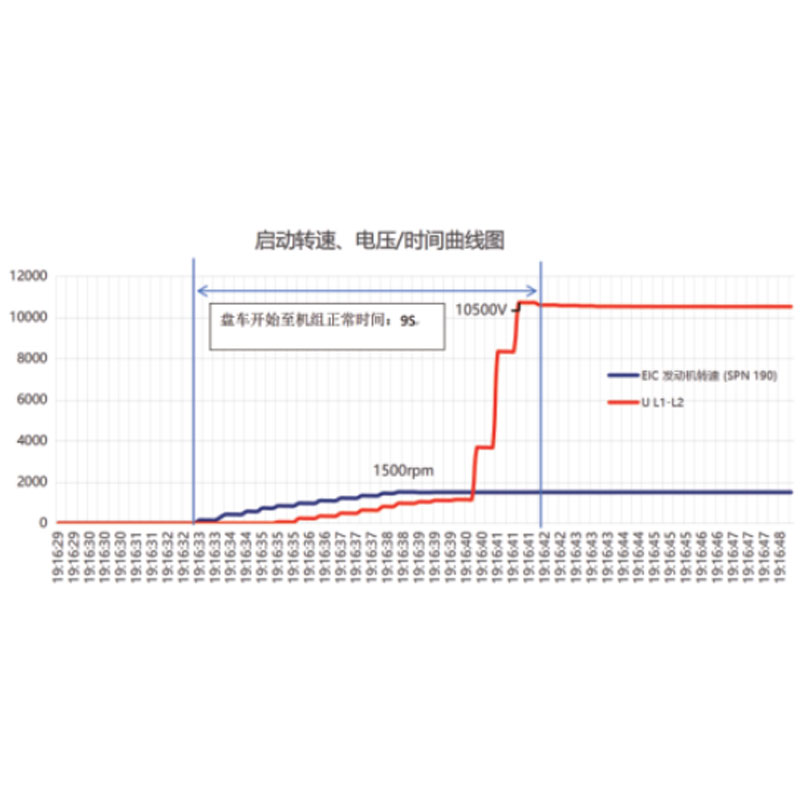
A modern diesel generator set is not just an engine and a generator, it is a complex software and hardware complex. When solving a problem,how to choose a diesel generator set with a noise-proof casing, the automation cabinet cannot be ignored. The presence of an ATS unit (Automatic Input of Reserve) is mandatory for objects of the first reliability category. A quality ATS should transfer the load in less than 12 seconds (standard for hospitals and data centers) or even faster if static switches are used.
The control controller is the brain of the installation. Market leaders are Deep Sea Electronics (DSE), ComAp, SmartGen. Avoid no-name Chinese touchscreen controllers that freeze during power surges. A reliable controller should display not only voltage and frequency, but also oil pressure, coolant temperature, fuel level, battery charge and accident history. The remote monitoring function via GSM/GPRS or Ethernet allows the dispatcher to see the status of the generator from a smartphone. We implemented such a system at a network of gas stations, which allowed us to reduce the response time to an accident from 2 hours to 15 minutes.
An important nuance is the AVR operation algorithm. Cheap cabinets simply throw the switch when the network goes out. Advanced systems first check the stability of the main network (so as not to turn on for a split second during a short-term drawdown), then warm up the engine, switch the load, and after the main network appears, let the engine idle for 3-5 minutes to cool the turbine before stopping. Ignoring the cooling cycle leads to coking of the oil in the turbocharger bearings - a common cause of failure of expensive engines.
Check your package for a battery charger. It should be automatic, supporting buffer mode. Regular car chargers will kill batteries in one season. Also make sure that the cabinet has short circuit and overload protection at the generator output (circuit breaker). Action now: request a single-line electrical diagram of the ATS cabinet and check for the presence of a motor cooling timer in the operating algorithm.
Logistics, installation and hidden costs
The final stage of decidinghow to choose a diesel generator set with a noise-proof casing, concerns logistics and commissioning. The dimensions and weight of the installation in the casing are significantly larger than the open version. A standard 100 kW diesel generator set in a casing weighs about 1200-1400 kg and has a height of up to 2 meters. Make sure your doorways, elevators, or driveways allow equipment to enter. It often happens that a generator is purchased, and then you have to break down a wall or order a crane, which adds another 10-20% to the budget.
Installation requires compliance with fire safety regulations. The exhaust pipe must be led outdoors, equipped with a spark arrestor (especially if there are flammable materials nearby) and thermally insulated. The surface temperature of the exhaust pipe can reach 400-500°C. We have seen fires caused by hot pipe coming into contact with wood shed structures. The distance from the exhaust to the walls of the building must be at least 1.5 meters so that hot gases are not sucked back into the cooling system.
Don't forget the foundation. Mouth The new machine must stand on a flat, vibration-proof platform. The use of rubber vibration mounts is mandatory, otherwise the vibration will be transmitted to the building and create a low-frequency hum that penetrates any walls. For powerful installations (from 200 kW), it is recommended to make a separate concrete foundation, not connected to the foundation of the building. Also provide a container for draining used oil and easy access for replacing filters. If the filter is in a hard-to-reach place, the staff will be lazy to change it on time, which will kill the engine.
Hidden costs include fuel delivery, fuel storage, regular maintenance and replacement of consumables. Calculate the cost of ownership (TCO) for 5 years. A cheap generator with high fuel consumption (for example, 30 l/h instead of 22 l/h with the same power) will eat up all the savings when purchasing it in the first year of operation. Action now: measure the installation site, check the load-bearing capacity of the floor and include in the estimate the cost of vibration supports and extension of the exhaust route.
Frequently Asked Questions
What power reserve is required when choosing a diesel generator set in a casing?
The recommended power reserve is 20-30% of the sum of consumer capacities. This is necessary to compensate for starting currents, prevent engine operation at extreme conditions, and take into account derating due to temperature and altitude. Operation at 100% load is allowed only in emergency mode and for no more than 1 hour.
Is it possible to install a diesel generator set in a casing indoors?
Yes, it is possible, but it requires the organization of supply and exhaust ventilation with a volume of air that exceeds the engine demand by 1.5-2 times. The air ducts must have a cross-section no smaller than the radiator outlet pipes. Without strong ventilation, indoor installation will quickly overheat and stall, regardless of whether the enclosure is present.
How often should the oil be changed in a new installation?
The first oil change is carried out after break-in - after 50 operating hours. Then the interval is 250-400 engine hours, depending on the quality of the fuel and the recommendations of the engine manufacturer. The use of API CI-4 or CJ-4 engine oil is mandatory. Ignoring the first replacement reduces engine life by 30%.
Which is better: liquid or air cooling?
For powers above 20 kW, liquid cooling is definitely better. It provides more stable temperature conditions, less noise and longer engine life. Air-cooled diesel generator sets are only suitable for low-power mobile tasks (up to 10 kW) and short-term operation.
Does the cover provide protection against theft?
A standard noise enclosure is not a safe. The locks on it are usually simple and can be easily opened with a crowbar. To protect against theft, it is necessary to additionally install an alarm, wheel locks (if on the chassis) or place the installation in a protected perimeter. Some manufacturers offer reinforced anti-vandal casings with deadbolt locks.
Final recommendations and next step
Choosing a diesel generator set is a balance between technical need, budget and operating conditions. The correct answer to the question ishow to choose a diesel generator set with a noise-proof casing, lies in the plane of a detailed audit of your needs, and not blindly following advertising. Remember: reliable energy costs money, but the cost of business downtime or an accident at a facility is always higher than the cost of high-quality equipment. We recommend giving preference to proven engine brands, requiring a full package of EAC certificates and not skimping on the automation and cooling system.
If you want to avoid the mistakes that 9 out of 10 beginners make and get an individual map for selecting equipment for your facility, contact our engineers. We will conduct a free audit of your technical specifications, calculate the actual power taking into account all coefficients and offer 3 configuration options: economy, standard and premium. Don’t take risks with your investments - entrust the choice to professionals with 15 years of experience.
Go to the catalog of diesel generators in a noise-proof casingorContact us todayto receive a commercial offer including delivery and installation supervision.
-


-
-


WeChat

-
WeChat