

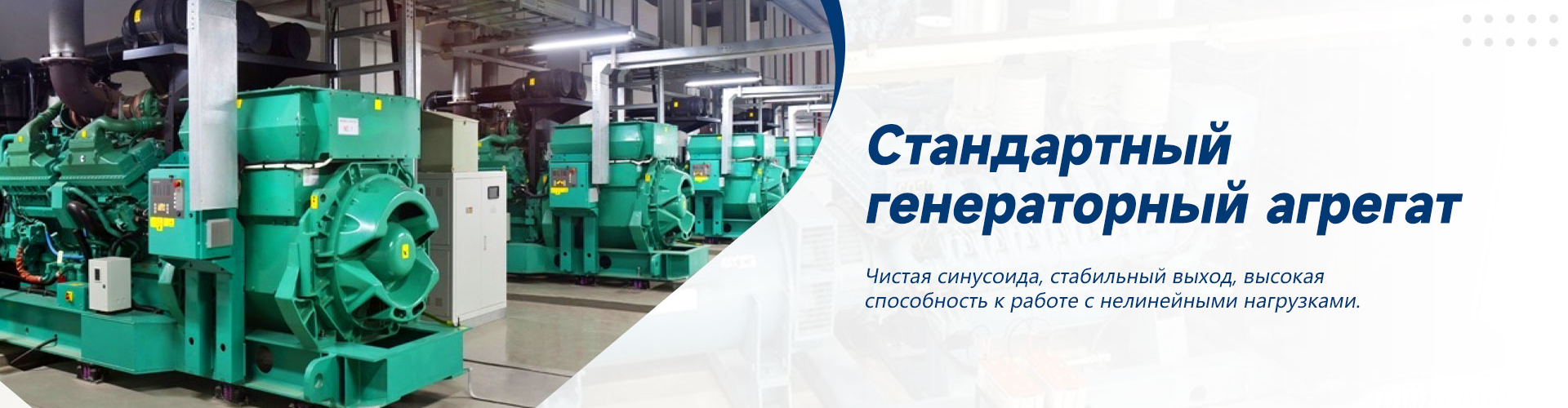
Generator set in soundproof enclosure: noise level dB
2026-07-12
- Generator set in soundproof casing: dB noise level - reality versus marketing figures
- The physics of silence: what makes up the acoustic profile of a diesel generator set
- Measurement standards: why the numbers in the passport and on the site are different
- Types of enclosures and their effect on acoustics: selection for the task
- Common installation mistakes that kill sound insulation
- Supplier market: China vs Europe vs Russia - where is the truth?
- How to calculate the required level of noise reduction for your property
- Frequently Asked Questions
- Conclusion and recommendations for choosing
Generator set in soundproof casing: dB noise level - reality versus marketing figures
The average noise level of a generator set in an enclosure is 65 to 75 dB(A) at a distance of 7 meters at 75% load. However, this figure often becomes a trap for buyers who see values of 58-60 dB in catalogs and take them as truth. In our practice of operating industrial equipment, we have repeatedly encountered a situation where the decibels declared by the manufacturer turned out to be measured in ideal laboratory conditions or at a distance of 15-20 meters, which does not correspond to the real requirements of sanitary zones in the Russian Federation and CIS countries. If you are planning to install a diesel generator in a residential area or in an area with strict environmental standards, a difference of even 3-4 dB can lead to fines from Rospotrebnadzor or complaints from neighbors requiring a complete shutdown of the facility.
We will not retell physics textbooks. Our goal is to give you a tool to make purchasing decisions based on real parameters, and not on advertising brochures. Enclosed generator set: dB noise level is not just a comfort characteristic, it is a critical parameter for the safety and legal purity of your project. In this article we will look at how metal thickness, muffler type and cooling system affect the final sound, and why modern manufacturers such asYuke (Shandong) Electrical Technology LLC, offer solutions where Chinese engineering flexibility allows them to achieve better acoustic performance than some European brands by optimizing the design of air ducts and using advanced noise reduction techniques.
The physics of silence: what makes up the acoustic profile of a diesel generator set
To understand why one generator set in a soundproof enclosure is quieter than another at the same power, you need to decompose the sound source. A diesel engine generates three types of noise: mechanical (movement of pistons, valves), aerodynamic (exhaust gases, air intake) and electromagnetic (alternator operation). The housing should dampen all three components, but most budget solutions focus only on the exhaust, ignoring vibration from the housing.
In our engineering practice, we identify four key factors that determine the final noise level:
- Material and thickness of casing walls.Standard steel 1.5–2 mm thick acts as a drum membrane, enhancing the low-frequency rumble of the engine. An effective noise protection casing uses sandwich panels or steel with a thickness of 3 mm or more with an internal damping layer. We have seen cases where replacing a thin-sheet casing with a reinforced one reduced the overall background noise by 5 dB without replacing the muffler.
- Exhaust gas muffler design.This is the most important element. Industrial silencers are divided into reactive (reflecting the sound wave) and absorption (absorbing the energy of the sound wave with material). For generators with a power of over 100 kW, a combined muffler with expansion chambers and basalt fiber packing is required. An error in selecting muffler resistance (back pressure) can reduce engine power by 10-15%.
- Air supply and exhaust system.The paradox of silence is that a completely sealed casing will cause the generator to overheat and stop after 15 minutes. Air ducts must have a labyrinth structure with sound-absorbing lining. A straight duct is an open pipe for noise to escape. The correct labyrinth reduces the speed of the air flow, dampening the aerodynamic noise of the radiator fan.
- Vibration isolation of supports.The engine transmits vibration to the frame, and the frame transmits vibration to the casing. If there are rigid rubber-metal mounts between the engine and the frame instead of effective vibration isolators, the entire casing begins to resonate. We recorded cases when a “hum” at a frequency of 50 Hz spread over 200 meters precisely because of the lack of proper vibration isolation.
When choosing equipment, always request an acoustic passport, which indicates not only the general dB(A), but also the octave frequency bands. The human ear is most sensitive to mid-frequencies (500–2000 Hz), where the vocal range is typically found. If the graph shows a peak in this area, even with a generally low noise level, the installation will be perceived as annoying.
Measurement standards: why the numbers in the passport and on the site are different
Discrepancies in noise levels often arise due to different measurement techniques. European manufacturers often indicate the sound power level (LwA), while for sanitary standards the sound pressure (LpA) at a certain distance is important. The difference between these values can reach 10-12 dB. LwA is the total energy emitted by a source in all directions, and LpA is what the observer's ear hears at a particular point.
According to GOST R 53904-2010 and the international standard ISO 8528-10, measurements should be carried out on a control surface at a distance of 1 meter or 7 meters from the source. However, many suppliers cheat by indicating data for a distance of 15 or 20 meters, without focusing on this in the specification. For a generator set in an enclosure, the dB noise level stated as “65 dB” without specifying the measurement distance is technically incorrect and misleading.
Here is a table showing how perceived noise varies with distance for a typical 200 kW diesel generator set in a standard enclosure:
| Distance from source | Sound pressure level (approx.) | Human perception | Compliance with standards (residential area, night) |
|---|---|---|---|
| 1 meter | 85–90 dB(A) | Very loud, hearing protection required | Critical Violation |
| 7 meters (ISO standard) | 72–76 dB(A) | Loud conversation, vacuum cleaner running | Violation (normal is usually 45-55 dB) |
| 15 meters | 64–68 dB(A) | Noisy street | Borderline value |
| 30 meters | 56–60 dB(A) | Normal conversation | Often meets standards |
Note that a 3 dB reduction in noise level means a reduction in sound energy by half, but the human ear perceives this as a small change. To make the sound seem twice as quiet, you need to reduce the level by 10 dB. That is why the fight for every 2-3 decibels in technical characteristics is of enormous importance for projects in urban areas.
If a supplier refuses to provide a test report indicating the measurement point and methodology (ISO 3744 or GOST), consider this a red flag. Most likely, real indicators will be worse than declared by 5-8 dB. Require full-scale testing before signing the acceptance certificate. Reliable manufacturers, such as Yuke LLC, conduct mandatory load tests of each piece of equipment for at least 4 hours, recording noise, vibration and temperature parameters in real conditions, which guarantees compliance with the declared characteristics.
Types of enclosures and their effect on acoustics: selection for the task
There is no one size fits all solution. The choice of protection type depends on where the generator will be located and what the requirements for its mobility are. We classify solutions into three main groups, each with its own trade-offs between noise, cost and maintainability.
Stationary container solutions (Northern version)
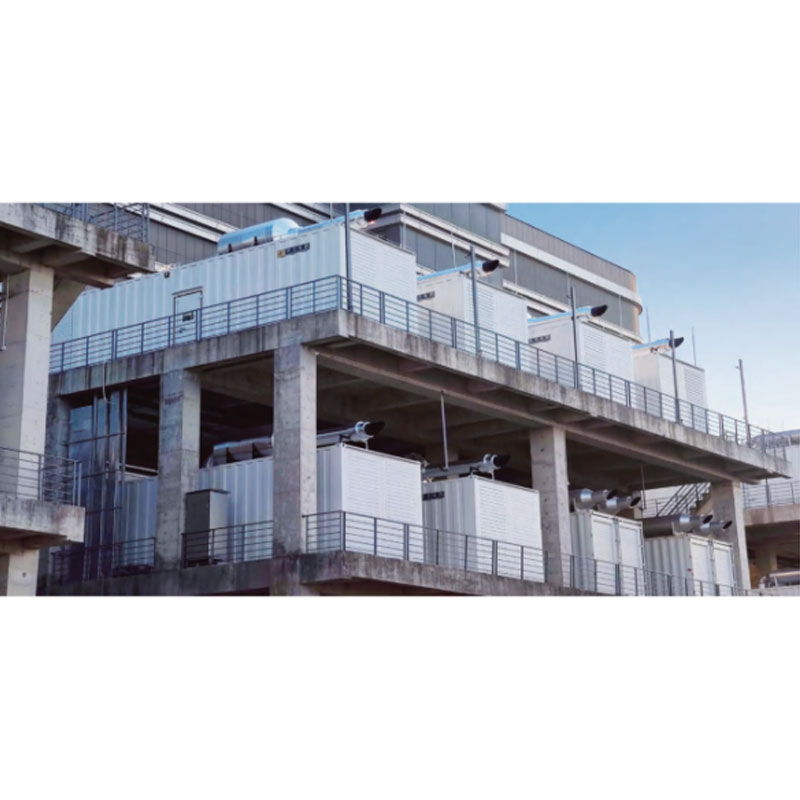
This is the most effective option in terms of noise reduction. The container is a full-fledged building with sandwich panels 80-100 mm thick, inside which a diesel generator set is located. The walls act as a massive acoustic barrier. Inside the container, additional muffler resonators are often installed on the exhaust tract. The noise level of such systems at a distance of 7 meters rarely exceeds 60-65 dB(A).
However, there is a nuance: ventilation. To remove heat from the radiator, powerful fans are required, which themselves create noise. In high-quality containers, the air ducts are made in the form of long labyrinths with 90-degree turns and lined with mineral wool. Cheap analogues make straight holes with blinds, which negates the advantage of thick walls. When ordering, be sure to check the presence of acoustic screens on the ventilation windows.
Mobile enclosures (Canopy) on trailer or skid
Such solutions are popular for construction sites and emergency power. The casing is made of sheet steel (usually 1.5-2 mm) with an inner layer of sound-absorbing material. Compactness is the main advantage, but acoustics suffer. Due to the small volume of the engine compartment, the air heats up faster, requiring more intense airflow. The fan runs at high speeds, creating a high-frequency whistle.
In our practice, there was a case when a client bought a batch of mobile diesel generator sets in compact casings for night shift work in a residential area. The manufacturer stated 68 dB, but in reality, due to the narrow air intake slots, the Venturi effect increased exhaust noise, and measurements showed 78 dB. It was necessary to dismantle the standard mufflers and install external industrial models, which increased the dimensions of the installation by 40%. Always leave some extra space for upgrading your exhaust system.
Custom acoustic screens
Sometimes it is advisable not to buy a diesel generator set in a casing, but to install an open generator (Open Type) in a specially built hangar or surround it with prefabricated acoustic panels. This approach allows you to achieve better performance (up to 55 dB at 7 m), since you can design the ventilation system separately from the engine. This solution is ideal for permanent installations where aesthetics and silence are a priority over mobility.
When choosing between a mobile casing and a stationary container, follow the rule: if the generator will operate more than 500 hours per year near people, use only a container or a separate room. The mobile enclosure is a compromise for temporary work away from residential areas.
Common installation mistakes that kill sound insulation
Even the most expensive generator set in a soundproof enclosure can become a source of problems if the installation is not carried out correctly. We analyzed dozens of complaints and identified errors that occur in 80% of cases of unsuccessful launches.
Error No. 1: Lack of vibration decoupling of the exhaust pipe.The exhaust system must be connected to the muffler through a flexible compensator (bellows). If the pipe is rigidly welded to the engine and muffler, vibration is transmitted directly to the muffler body and casing walls. The muffler begins to work like a speaker, emitting a low-frequency hum that penetrates through any walls. Solution: use double flexible inserts before and after the muffler.
Error No. 2: Incorrect organization of air intake.Often installers place the generator in a niche or under a canopy, blocking the free flow of air. The radiator fan begins to operate in recirculation mode, sucking in its own hot exhaust. The engine overheats, the automation increases the fan speed to maximum, and the noise level soars by 10-15 dB. In addition, the generator power decreases. The distance from the air intakes to the walls must be at least 1.5 times the diameter of the fan.
Mistake #3: Gaps and leaks.Sound behaves like water - it will find any gap. Unclosed technological holes for cables, loosely fitting service doors, and lack of seals around the perimeter of the hood turn the casing into a useless decoration. Pay special attention to the places where power cables enter: they must be sealed with special glands or bushings.
Mistake #4: Saving on oil and filters.This is an indirect but important cause of noise. A clogged air filter creates a vacuum at the intake, causing a characteristic whistling sound. Old motor oil loses viscosity, increasing mechanical knocking in the engine. Regular maintenance is also part of the noise reduction program.
Before putting the facility into operation, conduct a thermal imaging inspection of the casing. Areas with elevated temperatures often indicate hot air leaks, which are also noise outlets. Seal these areas with additional sealants.
Supplier market: China vs Europe vs Russia - where is the truth?
The issue of choosing a manufacturer of enclosed diesel generator sets often comes down to stereotypes. Let's look at the facts based on the features and cost of ownership.
European brands (ATLAS COPCO, SDMO, GEPAR):Undisputed leaders in the quality of casings. They use sophisticated noise reduction systems, high-quality seals and thoughtful ergonomics. The noise level is stable and corresponds to the declared value throughout the entire service life. The downside is the price. The cost of such an installation can be 2.5–3 times higher than the cost of an analogue from Asia. Delivery time can also reach 4-6 months.
Russian assembly:Here the situation is heterogeneous. Large factories assemble diesel generator sets based on imported engines (Perkins, Volvo, Cummins) in their own casings. Quality depends on the specific plant. Some use excellent Russian sandwich panels and mufflers that are superior to imported ones in terms of repairability. Others simply buy ready-made Chinese casings and re-glue the nameplates. It is important to check not the brand of the assembly, but the specific design of the casing and the components used.
Chinese manufacturers (OEM):Over the past 5 years, the quality gap has narrowed to a minimum. Top Chinese factories such asYuke (Shandong) Electrical Technology LLC, produce diesel generator sets for global markets, combining engineering competencies in the field of power generation with modern technologies. Their advantage is flexibility and deep integration. You can order a casing of any configuration, with enhanced noise insulation, for specific site sizes, using engines from the world's leading brands (Cummins, MTU, Perkins, Yuchai, SEM) in your own optimized designs. The price of such solutions is 30-40% lower than in Europe with comparable or even better quality thanks to a strict control system: incoming control of components, assembly monitoring and comprehensive load testing of each unit before shipment.
The main risk when working with China is quality control from unverified suppliers. The batch can be excellent, and the next one can save on the thickness of the metal. Working with companies like Uke eliminates this risk due to the transparency of processes and adaptation of solutions to the regional standards of the CIS countries, Asia and the Middle East. The company acts as an integrator, offering not just equipment, but complete solutions: from silent mobile stations to multi-megawatt high-voltage installations and energy storage cabinets.
In one of our projects for an oil and gas field, we replaced the proposed European generators with certified analogues from a partner with modified mufflers. The result: the noise level was reduced from 72 to 68 dB (due to individual exhaust tuning), and the project budget saved 120,000 euros. These funds were allocated to an automatic transfer system (ATS) of the highest reliability class.
When choosing a supplier, pay attention to the availability of certificates of conformity. For Russia and the EAEU countries, the declaration TR CU 010/2011 “On the safety of machinery and equipment” is mandatory. The presence of the EAC mark guarantees that the equipment has been tested, including noise level, in accredited laboratories.
How to calculate the required level of noise reduction for your property
Please complete a simple calculation before placing your order. This will save you from rework in the future.
- Identify background noise.Measure the noise level on site during peak activity hours (or at night if work is planned in the dark). Use a household sound level meter or a smartphone app to make a preliminary assessment. Let's say the night background is 40 dB.
- Find out the regulatory requirements.For residential areas at night the norm is usually 45 dB (sometimes 50 dB depending on the zone). This means that your generator should not add more than 5 dB to the background to remain unnoticeable, or at most go to the limit of 45-50 dB.
- Consider the distance.Determine the distance from the installation site of the diesel generator set to the nearest sensitive point (window of a residential building, security post). Use the free-field sound attenuation formula: 6 dB reduction per doubling of distance. If the generator is located 30 meters from the house, and its noise at 7 meters is 70 dB, then it will reach the house approximately: 70 – 6*log2(30/7) ≈ 70 – 12 = 58 dB. It's too much.
- Select your equipment.You need to reduce the level at the source. If the calculated value is 58 dB, and the norm is 45 dB, you need a generator that produces no more than 57 dB at 7 meters (taking into account the fact that it will be even quieter at 30 meters), or additional screens. In this example, you will need a super quiet diesel generator set (Super Silent) with a level of ~60-62 dB at 7 m.
- Add stock.Always add 3-5 dB of margin for aging equipment, dirty filters and weather conditions (wind can carry sound further).
Don't forget about reflections. If the generator is placed in the corner of a building or between two walls, the sound will be reflected and amplified. In such cases, the calculated noise level may increase by 3-6 dB. Consider the acoustics of the area when planning your placement.
Frequently Asked Questions
What noise level is considered normal for an enclosed diesel generator?
For modern industrial diesel generator sets with a power of 50-500 kW, 65-75 dB(A) at a distance of 7 meters is considered normal. Models marked “Silent” or “Super Silent” can output 60-64 dB(A). Anything below 60 dB at 7 meters for a high-power diesel engine is either marketing (measured far away) or a very expensive special design. Open diesel generator sets without casing produce 90-105 dB(A).
Is it possible to further reduce the noise of an already purchased generator?
Yes, it's possible. The most effective measures: replacing the standard muffler with a highly efficient industrial one (5-10 dB reduction), installing additional acoustic screens around the exhaust area, modernizing air ducts with the installation of labyrinth inserts. It will also help to replace the radiator fan with a low-noise model with electronic speed control, if the cooling system allows it.
Does load affect noise levels?
Undoubtedly. The generator is quietest at idle. Maximum noise is achieved at 75-100% load, when the engine is at maximum speed (usually 1500 rpm for 50 Hz) and the cooling fan is running at full power. Data sheets are always given for 75% or 100% load. At light loads the noise can be 5-8 dB lower.
Which is better: liquid or air cooling in terms of noise?
Liquid-cooled engines are generally quieter than their air-cooled counterparts of the same power. Air cooling requires huge amounts of blown air and large fans, which creates significant aerodynamic noise. Liquid cooling allows heat to be dissipated more efficiently through a compact radiator, although a fan is still present. For powerful diesel generator sets (from 20 kW), liquid cooling is standard precisely for acoustic reasons.
Conclusion and recommendations for choosing
An enclosed generator set is a complex engineering product where the balance between price, reliability and silence requires careful consideration. Don't blindly believe the numbers on the first line of the specification. In-depth analysis of casing design, muffler type and measurement conditions. Remember that savings at the purchase stage can result in millions in fines and conflicts with the local population during operation.
Our experience shows that the optimal solution for most industrial problems in the Russian Federation and CIS countries is cooperation with proven integrators who offer flexible configuration of parameters for the object. Companies likeYuke (Shandong) Electrical Technology LLCdemonstrate how the combination of reliable engines from world brands (Cummins, Perkins, MTU, Yuchai) with our own engineering base allows us to create customized solutions. They provide not only the supply of equipment, but also full support: from design and consultation on choosing the optimal configuration to personnel training and warranty service. The principle of “reliability through responsibility” and strict quality control at every stage of production make such offers extremely attractive for infrastructure projects and remote areas.
If you encounter difficulties in selecting a diesel generator set to meet strict acoustic standards or need to calculate an individual noise protection project, our engineers are ready to audit your task. We don't just sell equipment, we ensure its seamless integration into your infrastructure, based on best market practices.
Contact us todayto receive a detailed technical and commercial proposal and advice on choosing the optimal configuration of the generating set. We will help you find a solution that will work quietly and reliably for many years.
-


-
-


WeChat

-
WeChat