

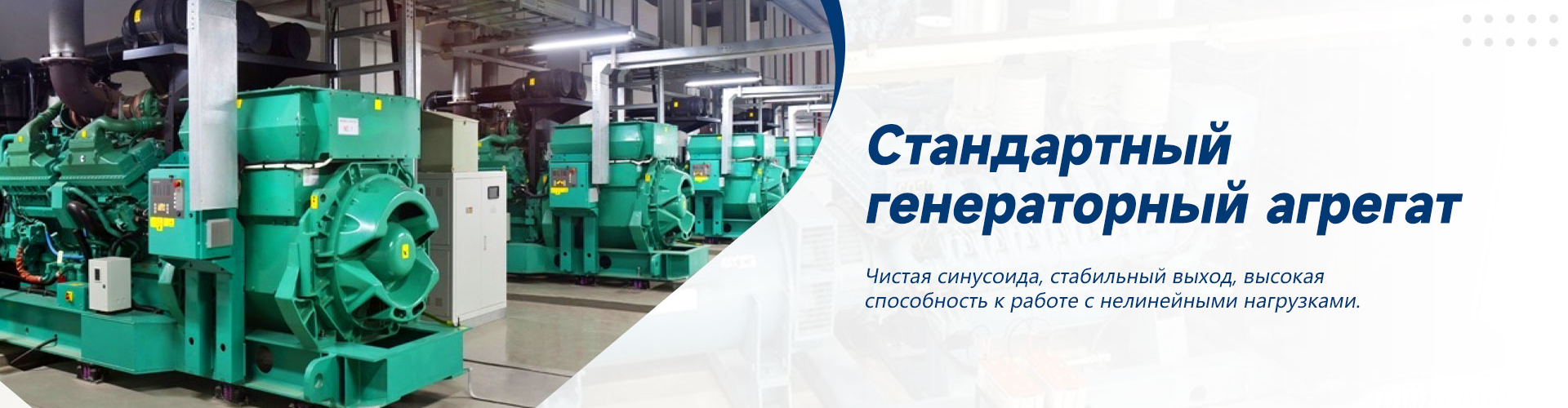
Generator generator set: what is the difference between the terms?
2026-07-12
- Generator vs. Generator Set: Instant Answer on the Difference
- Technical Anatomy: Why Installation is More Than the Sum of its Parts
- Comparative Analysis: Generator vs Generator Set
- Classification of generator sets by fuel type and purpose
- Operating modes and power selection: avoiding common mistakes
- Quality standards and requirements for suppliers in the Russian Federation and the EAEU
- Practical advice for installation and maintenance
- Frequently Asked Questions
- Conclusion and next step
Generator vs. Generator Set: Instant Answer on the Difference
The difference between the concepts of “generator” and “generating unit” (often referred to as GGU or DGU) is fundamental, although in everyday life these words are used as synonyms.Generatoris an electromechanical device that converts the mechanical energy of shaft rotation into electrical energy. This is only one node of the system.Generator setis a complete complex that includes the generator itself, an internal combustion engine (diesel, gasoline or gas), an automatic control system (ATS/AVR), a frame, a fuel tank, a cooling system and a noise-proof casing. If you buy just a "generator", you are purchasing a component that cannot be started without an external drive. If you need autonomous energy for a factory, warehouse or hospital, you need a generator set.
In our practice of working with industrial facilities in Russia and the CIS, we have repeatedly encountered a situation where customers tried to save money by purchasing individual components (engine from one supplier, alternator from another), hoping to assemble the installation themselves. The result was always predictable: loss of warranty, problems matching speed and voltage, and in one case, failure of sensitive electronics due to the lack of proper torsional vibration damping system. We do not recommend this approach for mission-critical sites. This article examines the technical nuances in detail so that you can choose equipment wisely and avoid hidden risks when purchasing.
Technical Anatomy: Why Installation is More Than the Sum of its Parts
Understanding the differences starts with analyzing the components. A generator set is a complex engineering system, where each element affects the reliability of the entire structure. Let's look at the key components that turn a set of metal into a reliable source of energy.
Internal combustion engine: the heart of the system
In the context of industrial solutions, engines are divided into high speed (1500 rpm for 50 Hz diesels) and low speed (often used in the marine sector or specific gas solutions). For stationary installations from 20 kW to 2 MW, 1500 rpm is the standard. This provides a balance between resource and compactness. The engine must comply with the climatic design. In Russian winter conditions, the presence of pre-heating of coolant and oil is critically important. We have seen cases where imported engines, without adaptation to GOST 15150, refused to start at a temperature of -25°C, leaving objects without light. The choice of engine determines the service interval: industrial series (for example, Perkins, Volvo Penta, Yuchai) are designed for 400-500 engine hours before changing the oil, while household analogues require maintenance every 50-100 hours.
Synchronous generator (Alternator): current quality
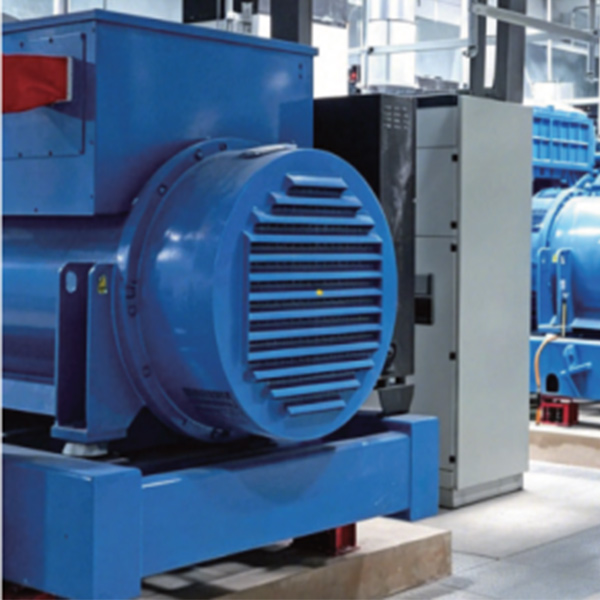
It is this node that is often called simply a “generator”. Its task is to produce a stable voltage and frequency. The key parameter here is the insulation class of the windings (usually H) and the degree of protection IP (for industrial installations not lower than IP23). The most important element is the excitation system. Brushless excitation system with AVR (Automatic Voltage Regulator) is standard on modern equipment. It allows you to maintain voltage deviation within ±1% even with a sudden load increase of up to 70%. In our practice, we have encountered situations where cheap installations with a brush system caused flickering of lighting and malfunctions of server equipment due to poor filtering of harmonics. When choosing, pay attention to the harmonic distortion (THD): it must be less than 5% for safe operation of sensitive electronics.
Control system and automatic transfer system: the brain of the installation
A generator set is not possible without a controller. Modern control panels (Deep Sea Electronics, ComAp, Datakom) perform monitoring, protection and automation functions. They monitor oil pressure, antifreeze temperature, battery charge level and rotation speed. But the main function in the industrial segment is working in tandem with the Automatic Transfer Switchboard (ATS). The system must detect the loss of the main network, pause (to eliminate false alarms during short-term failures), start the installation, warm up the engine and switch the load. The reserve entry time for medical institutions is regulated and should not exceed 15 seconds. Typical commercial facilities allow 30-60 seconds. Attempting to use a simple generator without integrated control logic will result in personnel being forced to start the equipment manually, which is unacceptable in emergency situations.
Frame, housing and fuel system
All components are mounted on a steel frame, which dampens vibrations through rubber-metal supports. Incorrect calculation of frame rigidity leads to destruction of welds and breakage of shafts. The casing performs two functions: protection from precipitation and noise reduction. For urban conditions, the sound pressure level should not exceed 75 dBA at a distance of 7 meters. The fuel system includes a day tank (integrated into the frame) and the ability to connect to an external tank. The volume of the built-in tank is usually designed for 8-10 hours of operation at 75% load. Increasing this time requires external capacity, which must be taken into account in the placement design.
If you are evaluating a supplier's proposal, request a general layout drawing. The lack of detail on the engine-to-frame mounting points is the first sign of a handicraft assembly.
Comparative Analysis: Generator vs Generator Set
To finally dot the i's, let's give a direct comparison of the characteristics. This will help you understand why the cost of installation is significantly higher than the cost of a separate alternator, and why the difference is justified.
| Comparison criterion | Generator (Alternator) | Generator Set (DGU/GGU) |
|---|---|---|
| Functional readiness | Requires an external source of rotation (engine, turbine, windmill). Cannot work autonomously. | Complete turnkey solution. Starts by turning the key or automatically. |
| Stability of parameters | Depends on the speed stability of the drive motor. Without a speed controller, the voltage will “float”. | Provided by the “Engine + Speed Control + AVR” combination. Frequency 50Hz ±0.5%, voltage stable. |
| Protection and safety | Minimum protection (winding thermal sensors). There is no overcurrent or low oil pressure protection. | Multi-level protection: emergency stop in case of overheating, low oil pressure, overload, short circuit. |
| Operating conditions | Requires a specially equipped room with ventilation and a foundation. | Can be used outdoors (in an all-weather casing) or indoors. Adapted to vibrations. |
| Certification | Certified as an electric machine (part of the product). | It undergoes full certification as a product (TR TS 010/2011 “On the safety of machines and mechanisms”, TR TS 004/2011). |
| Cost of ownership | Low initial price, but high integration costs and downtime risks. | High initial price, but predictable maintenance costs and minimizing the risks of business downtime. |
The table shows that purchasing only a generator makes sense solely for upgrading an existing installation or for specific projects where the drive is not an internal combustion engine (for example, hydroelectric power plants). In all other cases, the term “buy a generator” in a commercial proposal should imply the supply of a complete installation.
Classification of generator sets by fuel type and purpose
The choice of a specific model depends on the operating mode and fuel availability. An error in choosing the type of fuel can increase operating costs by 3-4 times.
Diesel generator sets (DGS)
This is the most common type for industrial and power backup applications. Diesel engines have high torque and are capable of accepting step loads up to 60-70% of the nominal without a significant drop in frequency. The service life of diesel engines before major overhaul is 20,000 - 40,000 hours (for premium brands). They are economical: fuel consumption is approximately 0.25 l/kWh at 75% load. However, they require high-quality diesel fuel (Euro 3/Euro 5) and regular filter replacement. In the conditions of the far north, it is necessary to use arctic diesel or heating systems, since summer fuel waxes already at -5°C.
Gas generator sets (GGU)
Gas installations operate on natural (main) or liquefied gas. Their main advantage is the cost per kilowatt-hour of energy, which is 40-60% lower than that of diesel analogues. In addition, the service life of gas engines is often longer due to cleaner combustion and the absence of aggressive sulfur combustion products. However, there are limitations: gas engines are less able to withstand sudden load surges (no more than 50% in one step is recommended) and require gas infrastructure. For remote sites where there is no main gas, the use of cylinders or gas holders complicates logistics. We recommend gas installations for base load (main energy source) applications running 24/7, such as greenhouses or 24/7 manufacturing.
Gasoline generators
This class is limited to 10-15 kW. Gasoline engines are cheaper to produce, easier to start in cold weather, but have a short service life (2000-4000 hours) and high fuel consumption. They are only suitable for mobile reservation of small offices, retail outlets or private homes. The use of gasoline units as a constant source of energy for business is not economically feasible due to frequent downtime for repairs and the high cost of gasoline.
Operating modes and power selection: avoiding common mistakes
One of the most common causes of premature equipment failure is the incorrect choice of operating mode. Manufacturers indicate several power categories, and confusion here is unacceptable.
COP (Continuous Power):Power for continuous operation 24/7 without time limit. Typically used to operate as the main source of energy where there is no central grid. The load must be constant.
PRP (Prime Power):Basic power. An unlimited number of operating hours per year is permitted, but the 24-hour average load must not exceed 70% of the PRP rating. An overload of 10% is allowed for 1 hour every 12 hours. This is the standard mode for backup installations that operate frequently but not continuously.
LTP (Limited Time Running Power):Power for limited operating time. Maximum 500 hours per year. Overloads are prohibited. This mode is typical for an emergency reserve, which is turned on rarely and for a short time.
In our practice, there was a case when a plant purchased a unit labeled LTP, mistakenly believing that this was the rated power. When trying to use it in PRP mode (long-term operation during rolling blackouts), the engine overheated and got scuffed in the cylinders after only 300 hours. Always check with the supplier which mode the declared kW power applies to. The power reserve should be 15-20% of the sum of the consumer powers in order to avoid operating at the limit of capacity.
When calculating power, take into account the starting currents of electric motors. When starting directly, an asynchronous motor consumes a current that is 5-7 times higher than the rated current. If you have many pumps or fans, the total power of the installation must be increased, or it is necessary to use soft starters (soft starters) and frequency converters.
Quality standards and requirements for suppliers in the Russian Federation and the EAEU
The market is saturated with offers, but not all of them meet safety requirements. When importing or purchasing equipment within the country, you must require a package of documents.
TR CU Certificate of Conformity
For legal operation in Russia, Belarus, Kazakhstan and other EAEU countries, the generator set must have a Certificate of Compliance with the Technical Regulations of the Customs Union. Basic regulations:
- TR TS 010/2011“On the safety of machines and mechanisms.”
- TR TS 004/2011"On the safety of low-voltage equipment."
- TR TS 020/2011"Electromagnetic compatibility of technical means."
The absence of these documents means that the equipment has not passed an independent laboratory test for fire and electrical safety. The operation of such installations can lead to problems during inspections by Rostekhnadzor and refusal of insurance companies to pay in case of fire.
GOST and climatic version
For Russian conditions, compliance with GOST 15150 is critical. Version “U” (moderate climate) requires operation from -40°C to +40°C. Version "HL" (cold climate) - up to -60°C. European standard installations are often only rated to -15°C or -20°C. Without modifications (winter package), they will not be launched in the Siberian winter. Request confirmation from the supplier of the availability of a winter package: coolant heating, oil sump heating, high-capacity batteries, thermostats.
Warranty
An honest manufacturer provides a guarantee of at least 1 year or 1000 operating hours (whichever comes first) for the entire installation. Please note the terms of the warranty: it is only valid if maintenance is carried out at authorized service centers using original spare parts. Purchasing “gray” imports often deprives the buyer of real warranty support.
Practical advice for installation and maintenance
Even the most expensive installation will fail quickly if it is not installed or maintained correctly. Here are the key rules based on our operating experience.
Foundation and vibration isolation
The unit must be placed on a level concrete foundation capable of supporting the weight of the equipment plus 20%. The fastening to the floor must be anchored, but through vibration isolators. Rigid mounting will transmit vibration to the building structure, which will lead to cracks in the walls and destruction of building elements over time. The exhaust system must have a flexible compensation insert (metal hose) between the engine and the muffler so that vibration does not tear the exhaust manifold.
Ventilation and cooling
When placed indoors, the volume of supply air must exceed the volume of exhaust gases and radiator cooling air. The air temperature at the radiator inlet should not exceed +40°C. A common mistake is placing the unit in a closed container without an organized air duct. In this case, the installation takes in its own hot exhaust, overheats and goes into a coolant temperature failure after 15 minutes of operation.
Maintenance schedule (TO)
Compliance with the maintenance schedule is the key to a long life. Basic list of works:
- Daily maintenance:Checking the oil, coolant and fuel levels. Visual inspection for leaks.
- TO-1 (every 250-500 hours):Changing the oil and oil filter. Replacing the coarse fuel filter. Checking belt tension.
- TO-2 (every 1000-1500 operating hours):Replacement of all filters (oil, fuel, air). Replacement of antifreeze (every 2 years). Checking valve clearances (critical for gas and some diesel engines).
The use of counterfeit filters is the scourge of the market. A filter that does not hold pressure allows abrasive dust to enter the engine, causing irreversible wear of the cylinder-piston group. Buy consumables only from authorized dealers.
Frequently Asked Questions
Is it possible to connect a generator set to a home network without an ATS?
Absolutely not. Connecting without an ATS panel (or at least a changeover switch with a zero position) creates a risk of supplying voltage to the general network when central electricity is restored. This is deadly for electrical line crews, who may be electrocuted by thinking the line is dead. In addition, the counter voltage is guaranteed to burn out the electronics of your installation. Use only certified transfer switchboards with mechanical or electrical interlocking.
How much power reserve is really needed?
The minimum recommended reserve is 20-25% of the estimated amount of consumer capacity. This is necessary not only for starting currents, but also to prevent the engine from operating in the “glazing” mode (during prolonged operation at a low load of less than 30%, carbon deposits form in the cylinders, the engine loses power and begins to smoke). If your load is very small compared to the unit's capacity, consider using several smaller units in parallel or a cascade control system.
Why are Chinese generators cheaper than European ones and is it worth buying them?
The difference in price is due to the cost of materials, level of production automation and brand. Modern Chinese factories (such as Weichai, Yuchai, Cummins China) produce products comparable in quality to European counterparts in the mid-segment, especially in the range up to 500 kW. The main difference is the service life before overhaul (it is higher for top Europeans) and the availability of spare parts in remote regions. For most commercial tasks in the Russian Federation, high-quality Chinese assemblies based on well-known engines are the optimal choice in terms of price/quality ratio. However, avoid “no-name” brands, where aluminum is used in the windings instead of copper, and the passport data is inflated.
How to store a generator set if it is not used for a long time?
Prolonged downtime is more harmful than active work. The fuel oxidizes, the oil drains, and the battery discharges. Once a month it is necessary to run the installation for 15-20 minutes under a load of at least 30%. This will warm up the engine, burn off condensation in the exhaust system and charge the battery. If starting is not possible, disconnect the negative terminal of the battery, drain the fuel from the float chamber (for gasoline) or use fuel stabilizers for diesel. The unit should be stored in a dry, heated room or under a high-quality awning.
Conclusion and next step
The difference between a generator and a generator set is the difference between a design part and a finished machine. To ensure uninterrupted power supply to your business, production or infrastructure facility, you need a full-fledged generator set, designed taking into account specific operating conditions, climate and load profile. Saving at the stage of selecting or purchasing defective equipment inevitably leads to many times greater losses during operation.
In this context, professional integrators play a special role, capable of offering not just assembly, but a comprehensive engineering solution. A striking example of this approach is the companyYuke (Shandong) Electrical Technology LLC. Located in Shandong province, this organization specializes in the development and supply of off-grid power systems, combining advanced engineering competencies with a deep understanding of the CIS and Asian market requirements.
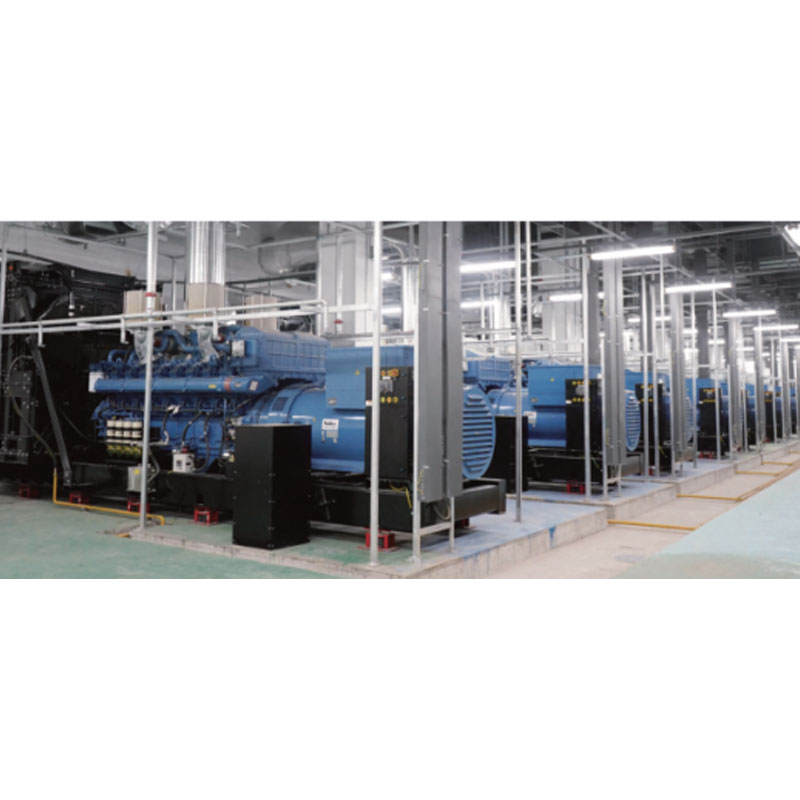
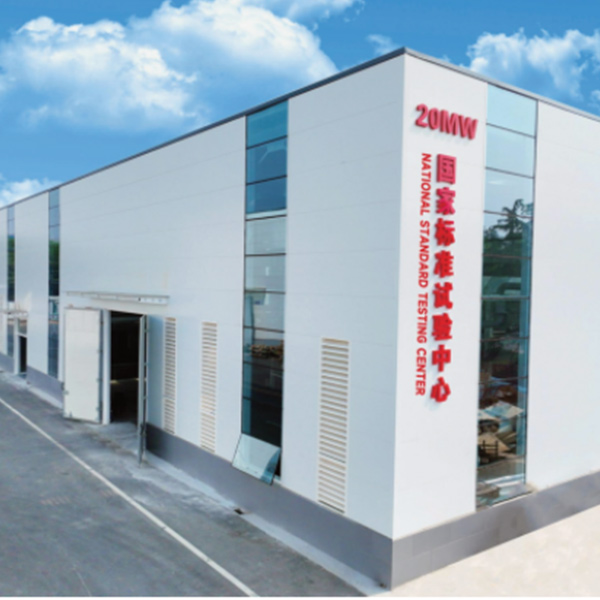
The company acts not just as a manufacturer, but as a strategic partner, using engines and generators of the world's leading brands (Cummins, MTU, SEM, Perkins, Yuchai) in its own designs. The product portfolio of Yuke LLC covers the entire range of tasks: from silent mobile stations and emergency power supply vehicles to high-voltage installations with a capacity of several megawatts and modern liquid-cooled energy storage cabinets. Particular attention is paid to adapting solutions to harsh climatic conditions: all installations undergo mandatory load tests for at least 4 hours before shipment, which guarantees their readiness to operate in extreme conditions.
The company’s philosophy of “reliability through responsibility” is implemented at every stage: from incoming inspection of components to post-warranty service and supply of original spare parts. Thanks to its own technical base and well-established logistics, Yuke LLC provides customers not only with equipment, but also with full support: energy consumption audit, system design and personnel training. This makes the company a reliable choice for those who are looking for a balance between European quality of components, flexibility of Chinese production and understanding of local operating standards.
Do not risk the energy independence of your facility. Contact us today for a free consultation and quote. Our specialists are ready to answer any technical questions and help with choosing the optimal configuration, based on the experience of the best global practices.
Go to the catalog of diesel generator sets | Find out about service
-


-
-


WeChat

-
WeChat