

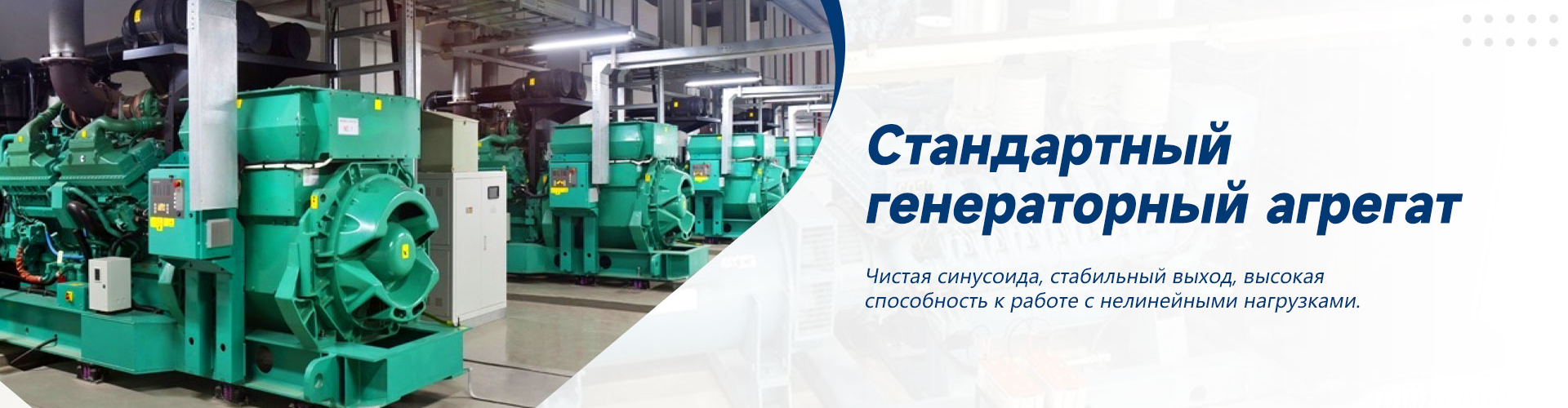
500 kW natural gas generating set
2026-07-12
- Technical characteristics and economic efficiency of a 500 kW natural gas generator set
- Design features and operating principle of a gas engine
- Calculation of economic efficiency and fuel consumption
- Gas quality requirements and fuel preparation
- Comparative analysis: Gas vs Diesel vs Network
- Installation and commissioning procedure
- Maintenance schedule and typical faults
- Frequently Asked Questions
- Conclusion and recommendations for choosing a supplier
Technical characteristics and economic efficiency of a 500 kW natural gas generator set
The 500 kW natural gas generator set is a critical asset for maintaining continuous power supply to industrial plants where downtime is not an option. Unlike diesel counterparts, gas units in this category provide a reduction in operating costs by 30–40% due to the difference in fuel costs, while maintaining a high level of reliability during long-term operation in basic mode. Our experience shows that the key success factor is not just the purchase of equipment, but the correct selection of the model for a specific load profile and the quality of available gas.
We have encountered situations where customers purchased standard modifications without taking into account pressure fluctuations in the main network, which led to unstable engine operation and premature wear of the spark plugs. One of our clients, a construction materials plant in Novosibirsk, lost two weeks of production due to the wrong choice of pressure reducer, which could not cope with peak loads in winter. This highlights the need for an in-depth technical audit before purchasing, rather than simply focusing on price or brand.
In this manual, we will analyze in detail the design features of 500 kW installations, analyze real fuel consumption indicators and describe integration procedures into existing power systems. You will get a clear understanding of which parameters really affect the longevity of the equipment, and which are just marketing ploys. Our goal is to provide you with information that will allow you to make informed decisions and avoid costly operational mistakes.
Design features and operating principle of a gas engine
The heart of any 500 kW natural gas generating set is an internal combustion engine adapted to run on gaseous fuel. In our production we use spark ignition engines, which differ from diesel units in the absence of a high pressure injection system and the presence of a mixture formation system. Natural gas is mixed with air in the intake manifold or directly in the cylinder (in more modern models), and then ignited by an electric spark. This process ensures cleaner combustion and reduces the thermal load on the parts of the cylinder-piston group.
A critical element is the turbocharging and intercooling system (intercooler). For a power of 500 kW, the boost efficiency directly determines the engine efficiency. We have seen cases where intercooler contamination reduced power output by 15%, causing the generator to overload when starting high-power electric motors. That's why our units are equipped with differential pressure sensors on the intercooler, which signal the need for maintenance before a critical situation arises.
The engine control system (ECU) in modern models performs the function of an intelligent controller. It constantly monitors the composition of the fuel-air mixture, adjusting the ignition timing in real time. This is especially important when working on gas with variable composition (different methane content). If the percentage of methane falls below 85%, the automation must lean the mixture or reduce power to prevent detonation. Ignoring this parameter can lead to destruction of the pistons in a matter of hours of operation.
Engine cooling in installations of this power requires careful calculation. Typically a liquid cooling system with a remote-type radiator or built-in fan is used. The coolant temperature must be maintained within a strict range of 80–90°C. Operation at lower temperatures leads to moisture condensation in the crankcase and the formation of acids that corrode the bearings, and overheating above 95°C causes deformation of the cylinder heads. Our engineers recommend installing additional thermostats with redundant sensors to eliminate the human factor during monitoring.
The choice of pistons and valve materials also plays a decisive role. Natural gas burns at higher temperatures than diesel fuel, so exhaust valves are often made of high-temperature sodium-filled alloys for better heat dissipation. In our practice, there was a case of valve failure on third-party equipment after 2000 operating hours precisely because of the use of standard materials instead of specialized ones. When selecting a 500kW natural gas generator set, be sure to request the material specification for hot zone parts.
Calculation of economic efficiency and fuel consumption
The main advantage of switching to gas is a significant reduction in the cost of a kilowatt-hour of electricity. For a 500 kW natural gas generating set, the average specific fuel consumption is about 0.35–0.40 m³/kWh at 75–100% load. This means that at full load the installation consumes approximately 175–200 cubic meters of gas per hour. For comparison, a similar diesel generator consumes about 110–120 liters of diesel fuel per hour. At current market prices in the Russian Federation and CIS countries, the cost of energy from gas is 2.5–3 times cheaper.
However, payback calculations should not be based only on the price of fuel. The cost of maintenance must be taken into account. Gas engines require replacing spark plugs every 1,000 to 1,500 hours and checking valve clearances every 2,000 hours. The oil filter and oil are changed more often than in diesel engines due to the lower content of detergent additives in gas oils and higher thermal load. In our service center, we note that the cost of maintaining a gas unit is 15% lower than a diesel unit, not counting the replacement of spark plugs, but the overall maintenance budget still remains competitive due to cheap fuel.
Let's look at a specific example of calculation for an enterprise operating in two shifts (16 hours a day).
- Gas consumption:180 m³/hour × 16 hours = 2880 m³/day.
- Gas cost (conditionally 5 rubles/m³):14,400 rubles/day.
- Energy output:500 kW × 16 hours = 8000 kWh/day.
- Cost kWh (fuel only):1.8 rub/kWh.
For a diesel generator of similar power, the cost per kWh for fuel alone will be about 4.5–5.0 rubles/kWh. A difference of 2.7 rubles per kilowatt-hour when generating 8,000 kWh per day results in savings of 21,600 rubles daily or more than 6 million rubles per year.
It is important to note that these figures are only valid when using mains gas of stable quality. If an enterprise uses liquefied gas (LPG) in gas tanks, the economics change. LPG consumption is measured in kilograms and is approximately 0.3 kg/kWh. The cost of LPG is higher, but is still often more profitable than diesel. However, delivery logistics and gas evaporation in winter may offset the benefits. We recommend conducting a detailed audit of tariffs in your region before making a decision to switch to autonomous gas supply.
Another hidden saving factor is the engine life before major overhaul. Modern gas installations, subject to maintenance regulations, operate for 40,000 - 60,000 operating hours before the first overhaul. This is comparable to the best diesel models, but is achieved with lower mechanical loads on the crank mechanism due to the absence of injection shock loads and softer combustion. A long overhaul interval reduces depreciation charges and increases the liquidity of equipment in the secondary market.
Gas quality requirements and fuel preparation
The quality of the supplied gas is a determining factor in the reliability of a 500 kW natural gas generator set. The GOST 5542-2014 standard regulates the basic parameters of natural gas supplied to the population and industry, but for sensitive electronics and precision engines these requirements may not be enough. The main enemies of a gas engine are mechanical impurities, moisture and heavy hydrocarbons.
Mechanical particles such as dust, scale or sand from the pipeline act as an abrasive. Getting into the cylinders, they cause accelerated wear of the piston rings and cylinder mirrors. Even microscopic scratches lead to the breakthrough of gases into the crankcase (carbon gas) and loss of compression. Therefore, the installation of high-quality fine filters (filtration degree of at least 5–10 microns) in front of the pressure reducer is mandatory. In our practice, we have seen engines that fail after 500 hours of operation due to the lack of a simple filter element at the inlet.
Moisture in gas is the second most common problem. When gas is throttled in the reducer, it cools sharply (Joule-Thomson effect). If there is water vapor in the gas, it condenses and can freeze, forming ice plugs in the reducer or mixer valves. This leads to sudden engine stops or running on a lean mixture. To prevent this, it is necessary to use coalescent separator filters that remove droplet moisture, and, if necessary, install gas heaters in front of the reducer.
The content of heavy hydrocarbons (propane, butane, pentane) also requires control. The high content of heavy fractions changes the octane number of the mixture and the flash point. An engine configured for pure methane may begin to detonate if a rich mixture enters. Detonation is the explosive combustion of a mixture that destroys pistons and connecting rods in minutes. Modern control systems can compensate for small composition deviations, but if the methane variation exceeds ±5%, manual reconfiguration of the ignition map is required.
The gas pressure at the inlet to the installation must correspond to the engine nameplate data. Typically, a power of 500 kW requires a pressure in the range of 30 to 100 mbar (after the gearbox) or from 0.3 to 0.6 MPa (at the inlet to the gearbox). Instability of pressure in the main line is a common problem in remote areas. Installing a buffer tank (gas receiver) with a volume of 1–2 m³ in front of the generator allows you to smooth out pressure pulsations and ensure stable operation during short-term drawdowns in the network. This simple solution has saved many projects from emergency stops.
Comparative analysis: Gas vs Diesel vs Network
When choosing an energy source for a 500 kW facility, the customer usually faces a choice between connecting to the central network, installing a diesel generator or a gas installation. Each option has its own advantages and limitations, which must be assessed in their entirety. Below is a detailed comparison table of key parameters based on our many years of experience in operating various types of stations.
| Comparison parameter | Gas installation (500 kW) | Diesel generator (500 kW) | Central network |
|---|---|---|---|
| Fuel cost (RUB/kWh) | Low (1.5 – 2.5) | High (4.5 – 6.0) | Average (depending on the tariff, often 3.0 – 5.0) |
| Capital Expenditure (CAPEX) | Medium (20-30% higher than diesel) | Low (cheapest purchase option) | Very high (design, specifications, laying lines) |
| Payback period | 1.5 – 2.5 years (when working from 4000 hours/year) | Does not pay for itself (used only as a reserve) | Depends on benefits and region (often 3-5 years) |
| Environmental friendliness (Euro Standard) | Euro 4 / Euro 5 (low NOx and SOx emissions) | Euro 2 / Euro 3 (AdBlue particulate filter required) | Depends on the generation source (CHP/GRES) |
| Noise and vibration | Low level (requires housing) | High level (noise-proof container required) | Not available on site |
| Long-term reliability | High (designed for base load) | Medium (designed for reserve, rapid wear at base) | Depends on the state of the networks (risks of outages) |
| Maintenance Requirements | Regular replacement of spark plugs and oil | Replacement of filters, belts, injectors | Minimum (payment of bills) |
The table shows that a gas installation occupies a niche between expensive network infrastructure and diesel, which is expensive to operate. If your facility is located far from power lines, the cost of connecting to the network may exceed the cost of the gas station itself several times. In such cases, gas becomes the only option for the main source of energy. Diesel remains relevant only as an emergency reserve for a short time (up to 500 hours per year), since its operation in basic mode is not economically feasible.
Particular attention should be paid to environmental standards. Many industrial areas have strict emission restrictions. Gas engines are inherently cleaner than diesel engines, since natural gas contains virtually no sulfur. This means no sulfur compounds in the exhaust, which cause acid rain and corrosion. In addition, gas installations more easily comply with Euro 4 and Euro 5 standards without complex exhaust gas aftertreatment systems such as SCR (Selective Catalytic Reduction), which require a constant consumption of AdBlue.
However, gas also has a weak point - dependence on infrastructure. If the main gas is turned off, you will be left without energy if there is no backup supply of LPG. In this regard, diesel is more autonomous: as long as there is fuel in the warehouse, the generator works. Therefore, the ideal scheme for critical facilities is a hybrid system: a gas installation as the main source and a compact diesel generator of the same power (or less if the load allows) as insurance in case of gas supply interruptions.
Installation and commissioning procedure
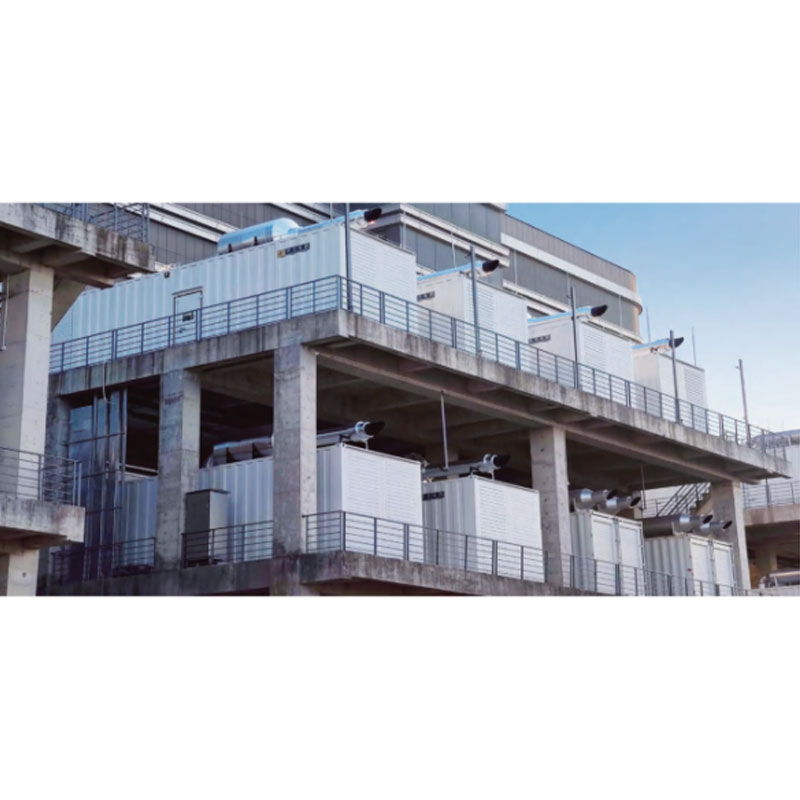
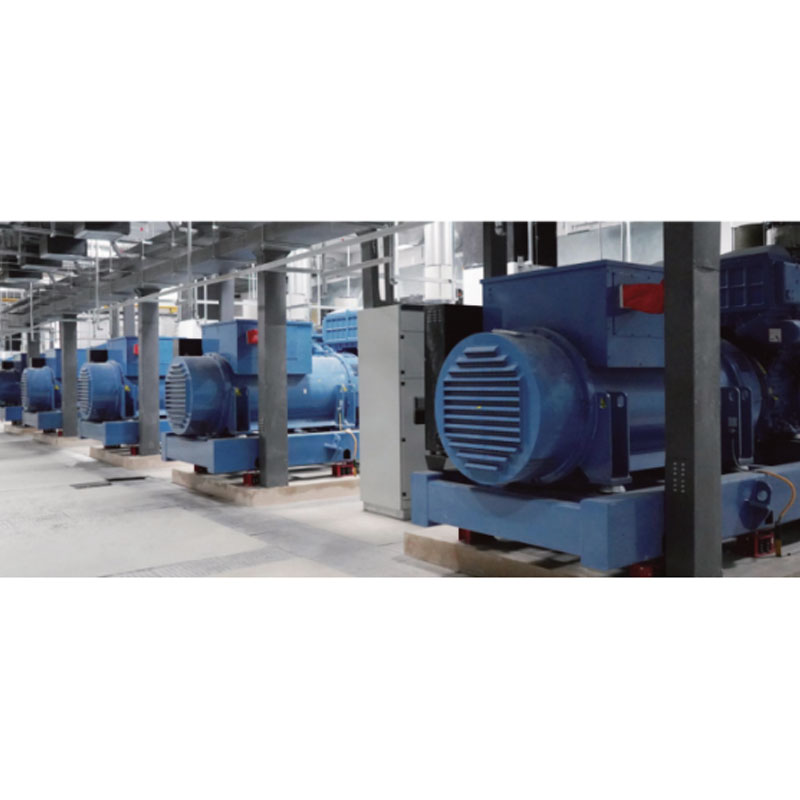
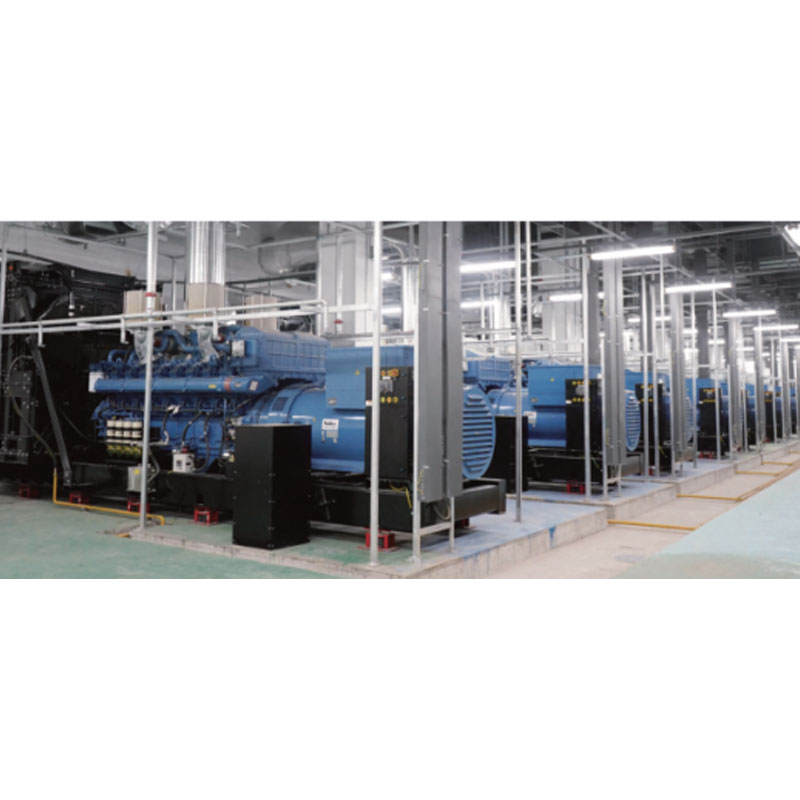
Installing a 500 kW natural gas generator set is a complex engineering process that requires strict safety standards. Errors at the installation stage can lead not only to equipment breakdown, but also to emergencies with gas leaks. The process begins with preparing the foundation. The weight of a containerized unit can reach 6–8 tons, so a monolithic reinforced concrete slab is required that can withstand dynamic loads and vibration. We recommend the provision of vibration isolation supports between the generator frame and the foundation to reduce the transmission of vibration to building structures.
The connection of the gas main must be carried out exclusively by certified specialists with permission to perform gas-hazardous work. The diameter of the supplied pipe is calculated based on the maximum fuel consumption and the length of the section so that the pressure drop does not exceed the permissible values. It is mandatory to have shut-off valves with a solenoid valve, which automatically shuts off the gas supply when gas sensors are triggered or the engine stops. This requirement is dictated by fire safety rules and is mandatory to obtain an operating permit.
The electrical part includes connecting the power cable from the generator to the distribution board (MSB). For a power of 500 kW, the current is about 900 Amperes at a voltage of 400V, which requires the use of copper bars or large cross-section cables (usually several parallel conductors). Particular attention should be paid to the grounding system. The ground loop resistance should not exceed 4 ohms. Poor grounding can lead to the accumulation of static electricity, damage to the insulation of the stator windings and malfunction of the electronic control system.
The ventilation and exhaust system is critical for indoor work. The 500 kW engine generates a huge amount of heat. The volume of air required for cooling is about 15,000 – 20,000 m³/hour. Lack of fresh air will lead to overheating and loss of power. The exhaust pipe must be equipped with a flexible compensator (bellows) to dampen vibration and be thermally insulated to avoid personnel burns and fire. The length of the exhaust tract should be kept to a minimum, and the muffler resistance should be taken into account when tuning the engine.
The first launch and running-in are carried out under the supervision of the manufacturer’s engineers. At this stage, all parameters are checked: oil pressure, antifreeze temperature, exhaust gas composition, voltage and frequency stability. A load dump and load ramp test (usually 25%, 50%, 75%, 100%) is performed to ensure adequate response of the control system. Only after signing the commissioning certificate and conducting personnel training is the facility considered ready for operation. Attempting to start it yourself without qualification may void the warranty.
Maintenance schedule and typical faults
The longevity of a 500 kW natural gas generator set directly depends on the maintenance discipline. Unlike cars, industrial generators operate in harsh conditions 24/7, so maintenance intervals must be strictly observed. Basic Maintenance (BA) is performed daily and includes visual inspection for leaks, checking fluid levels, and monitoring control panel readings. Any deviations from the norm must be recorded in a log.
The first scheduled maintenance is usually carried out after 250–500 operating hours (depending on the model). At this stage, the engine oil and oil filter are replaced. The use of special oil for gas engines is mandatory. Conventional diesel oil does not contain the necessary additives to protect against high-temperature deposits and acids formed during gas combustion. Saving on oil leads to coking of the piston rings and their settling in the grooves, which entails a major overhaul.
After 1000–1500 engine hours, the spark plugs and air filters are replaced. Spark plugs in gas engines operate in a more aggressive environment and burn out faster. Increased gap on the spark plugs leads to misfires, increased exhaust temperatures and potential burnout of the exhaust valves. Air filters are checked using a contamination indicator; In dusty conditions they may need to be replaced more frequently. We strongly do not recommend blowing filters with compressed air, as this destroys the structure of the filter material.
Once a year or every 2000–3000 operating hours, the thermal clearances of the valves are adjusted. Thermal expansion of engine parts changes clearances over time. Too small a gap leads to loose closure of the valve and its burnout, too large - to knocking and destruction of the valve seat. This operation requires high qualifications and special tools. The tension of the fan and pump drive belts is also checked, and the cooling system pipes are inspected for cracks.
A typical problem we encounter is the failure of ignition coils. Symptoms: engine tripping, loss of power, high exhaust temperature of individual cylinders. Diagnostics is carried out by turning off the cylinders one by one or analyzing the ignition waveform with an oscilloscope. The coils should be replaced as a set, even if only one is faulty, since they have the same service life. Another common malfunction is air leaks in the intake tract after the throttle valve, which leans the mixture and causes unstable speed.
Frequently Asked Questions
What is the lifespan of a 500 kW natural gas generator set?
If you follow the maintenance regulations and use high-quality fuel, the engine life before the first major overhaul is from 40,000 to 60,000 hours. The total service life of the installation can reach 15–20 years. The key factor is timely oil changes and operating temperature control. Ignoring maintenance reduces the resource by half.
Is it possible to convert a diesel generator to gas?
It is theoretically possible to use gas-diesel mode, where gas is supplied to the intake manifold and diesel fuel is used for ignition (ignition). However, full conversion of a diesel engine into a pure gas engine (with spark ignition) requires replacing the cylinder head, pistons, installing an ignition system and a new controller. Economically, such a conversion is often unprofitable compared to purchasing a new specialized gas installation.
What gas pressure is required to operate?
Most 500 kW industrial generators require a gas pressure at the reducer inlet in the range of 0.3–0.6 MPa (3–6 bar). After the reducer, the pressure is reduced to the operating value of the engine (usually 30–100 mbar). The exact requirements are specified in the technical data sheet of the specific model. If the pressure in the line is insufficient, the installation of a gas compressor station (GCS) will be required.
How noisy is this installation?
The sound pressure level of an open installation is 100–110 dBA at a distance of 1 meter. In a noise-proof casing or container, this figure drops to 65–75 dBA at a distance of 7 meters, which corresponds to sanitary standards for residential buildings at night. For placement near residential buildings, it is recommended to use special acoustic containers with a supply and exhaust ventilation system.
Do I need to coordinate the installation with gas services?
Yes, connecting a stationary gas generator installation requires a design and approval from local gas services and Rostechnadzor authorities (in the Russian Federation). Unauthorized tapping into a gas main is prohibited by law and entails huge fines, as well as the risk of an accident. All work must be performed by licensed organizations.
Conclusion and recommendations for choosing a supplier
Investing in a 500 kW natural gas generator set is a strategic decision that will determine the energy security and profitability of your business for years to come. As we found out, the economic effect of using gas is obvious, but it is realized only with proper selection of equipment, qualified installation and strict adherence to maintenance regulations. An attempt to save money at the initial stages or choose an untested supplier can turn a profitable project into a source of constant problems and losses.
When choosing a supplier, it is critical to pay attention not only to price, but also to engineering competencies, production base and availability of in-house service. A striking example of a company combining these qualities isYuke (Shandong) Electrical Technology LLC. This professional Chinese company specializes in the development and supply of comprehensive solutions in the field of autonomous and backup power supply. With a strong manufacturing base in Shandong Province, Yuke is not just a manufacturer, but a solutions integrator through strategic partnerships with the world's leading engine brands such as Cummins, MTU, Perkins, SEM and Yuchai.
The company's portfolio includes a wide range of equipment, including specialized gas generator units of the VYG series based on Yuchai engines, which are ideal for the 500 kW tasks we considered. A feature of the Yuke approach is the deep adaptation of solutions to the requirements of the CIS market and difficult climatic conditions. Each piece of equipment undergoes strict multi-level quality control: from incoming component inspection to mandatory load tests lasting at least 4 hours under rated and partial load. This ensures that the installation will operate reliably in both hot and cold weather, meeting international standards for electromagnetic compatibility and safety.
The company's philosophy is based on the principle of “reliability through responsibility.” Customers receive not just a “box with an engine”, but full support: from technical audit and design to commissioning, personnel training and prompt delivery of original spare parts. Having our own technical base allows us to adapt configurations to the specific application, be it an industrial facility, a remote area or an infrastructure project. Thanks to well-functioning logistics and a network of authorized service partners, Uke provides regular supplies and support in the CIS countries, Asia and the Middle East.
We are ready to help you select the optimal configuration of the generator set, calculate the economic model and organize turnkey delivery and installation, using reliable solutions from trusted partners such as Yuke LLC. Contact us today for a personalized quote and advice from leading engineers. Don’t let energy issues slow down the development of your production - entrust them to professionals.
For more information about our products and services, visitcatalog of industrial generatorson our website.
-


-
-


WeChat

-
WeChat