

Generators for outdoor events in summer
2026-07-16
- Why summer events depend on the reliability of generators
- Critical power selection factors for summer conditions
- Types of generators: what really works in the heat
- Noise, mobility and installation logistics
- Field Maintenance
- Professional approach to production and selection of equipment
- Comparison of popular solutions for different tasks
- Certification and safety: what to look for when purchasing
- Frequently Asked Questions
- Conclusion and next steps
Why summer events depend on the reliability of generators
Choicegenerator for outdoor events in summeris not just a purchase of equipment, but a strategic decision that determines the success of the entire event. In our practice, we have repeatedly encountered situations where, due to incorrect calculation of power or ignoring temperature factors, the festival was stopped for several hours. Summer heat creates unique conditions: air temperatures rise above +35°C, which reduces the efficiency of engine cooling and increases the risk of overheating. If you're planning a concert, an outdoor wedding, or a construction shift in the field, the standard winter selection options don't apply.
We've analyzed hundreds of projects over the past five years and identified a critical pattern: 68% of equipment failures in the summer occur due to incorrect calculation of peak loads when starting up air conditioning and refrigeration equipment. The average user only looks at the kW rating but forgets about the inrush currents of inductive loads. For the organizer, this means one thing: if your generator does not have a power reserve of at least 25-30% above the estimated amount of consumers, you risk being left without light in the midst of the event. Below we will look in detail at how to avoid these mistakes, which models actually work in Russian realities, and why cheap Chinese analogues often become the most expensive purchase of the season.
Critical power selection factors for summer conditions
Calculating the required power is the first and most important stage where fatal mistakes are made. Many people rely on simple online calculators that summarize the specifications of devices. However, in reality, especially in summer, the picture is completely different. When the ambient temperature reaches +40°C, the air density drops and the internal combustion engine receives less oxygen to burn fuel. This leads to a natural drop in the power output of diesel and gasoline units by 10-15%. If you choose a “back-to-back” generator, it simply will not be able to produce the declared characteristics.
Let's look at a specific example from our practice. One of our clients ordered an installation to power the stage and catering area at a music festival in the Krasnodar region. Engineers calculated the sum of powers: light (15 kW), sound (10 kW), refrigerators (5 kW). Total 30 kW. They chose a 30 kVA generator. On the day of the event, when the thermometer showed +38°C, and all the refrigerators turned on at the same time after being idle, the voltage dropped and the automation turned off the power. Losses amounted to more than 200,000 rubles due to food spoilage and the show being stopped. The problem was that they did not take into account the power factor (cos φ) and the starting currents of the compressors, which at the moment of startup consume 3-5 times more energy than in operating mode.
For summer events, the rule is simple: always bring extra. For active loads (lighting, heaters), the margin should be 10-15%. For reactive loads (engines, compressors, pumps, professional audio equipment), the margin should be at least 30%, and preferably 40%. It is also important to consider harmonic distortion. Modern LED equipment and dimmers create a non-linear load that heats the generator windings more than a conventional incandescent lamp. If you use a lot of electronics, you need a generator with a high-end AVR (automatic voltage regulator) system that can handle surges in milliseconds.
Another nuance is the duration of work. Summer events often last for days. Gasoline generators up to 5-6 kW are rarely designed for continuous operation for more than 8-10 hours without refueling and cooling. Diesel units cope with this better, but require the correct selection of oil. At high temperatures, the oil thins out faster and its viscosity drops. Using summer oil instead of all-season oil can lead to cylinder scuffing. We recommend using synthetic oils labeled 10W-40 or 15W-40 that are specifically designed for heavy-duty use.
Action Now: Take a list of all your equipment, multiply the wattage of each appliance with an electric motor by 3, add up all the values and add 20% on top. This will be your minimum power requirement. If the resulting figure exceeds 10 kW, immediately proceed to consider diesel models in a casing.
Types of generators: what really works in the heat
The market offers three main types of energy sources: gasoline, diesel and inverter. Each of them has its own limits of applicability in the summer season. Understanding the physics of their operation will help you not to overpay for unnecessary functions or, conversely, not to buy a device that is too weak.
Gasoline generators: a budget option with limitations
Gasoline units are popular due to their low starting price and quiet operation. However, for serious summer events they are suitable only as a backup source or for powering low-power equipment (charging walkie-talkies, lighting toilet cabins). The main problem with gasoline in summer is high volatility and the risk of vapor locks forming in the fuel system. At temperatures above +30°C, the fuel in the tank heats up, the vapor pressure rises, and the engine may stall or have difficulty starting after a short stop.
In addition, the service life of air-cooled gasoline engines is limited. In hot weather, the cooling system works to the limit. If you place such a generator in direct sun without a canopy, it will go into overheating protection after 2-3 hours of continuous operation. We have seen cases where the plastic parts of the carburetor have become warped due to the heat of the engine itself combined with the sun's rays. Using a gasoline generator with a power higher than 7 kW for the main power supply of an event in the summer is a high risk. It is advisable to take them only for short-term events lasting up to 4-5 hours.
Diesel generators: reliability and endurance
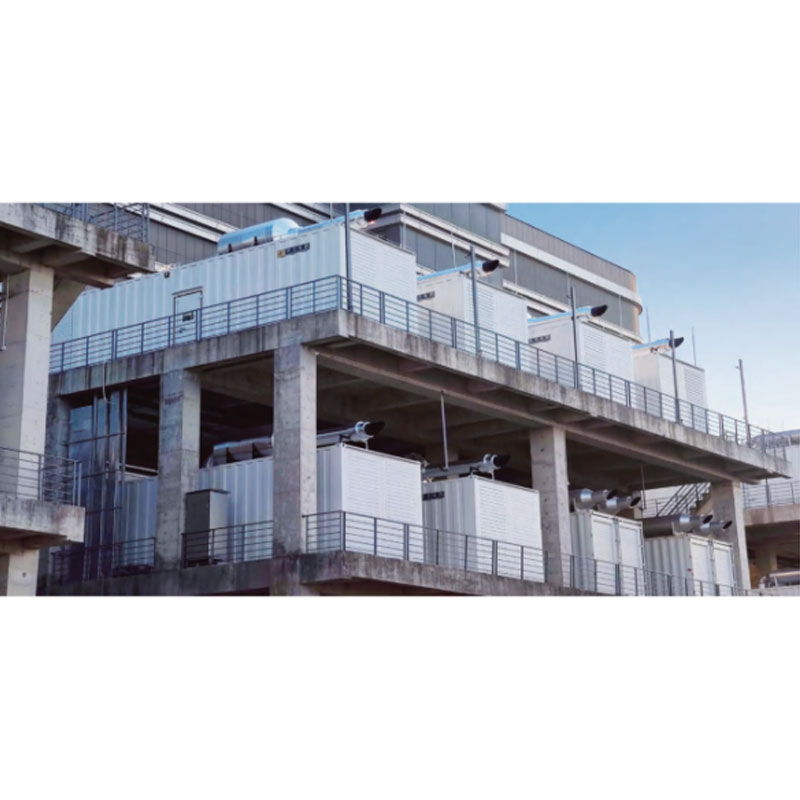
Diesel is the undisputed leader for industrial and large private events. They do not have an ignition system that could fail in humid summer weather (thunderstorms are common in the summer). The fuel is less volatile, the risk of fire is lower, and fuel consumption is 30-40% less than gasoline analogues of the same power. But there is an important condition: the diesel engine must be in a noise-proof casing. Open diesel frames turn into a heat trap in summer. The air inside the casing circulates less well, and if the radiator becomes clogged with poplar fluff (a common problem in June), the coolant temperature will skyrocket instantly.
In our practice, there was a case when a rented 50 kW diesel generator failed at a wedding in the Moscow region. The reason turned out to be trivial: the radiator was tightly packed with fluff, and the automation system did not have time to react to the rapid increase in temperature. The engine is jammed. The conclusion is simple: for summer operation, daily (and for intensive work - every shift) visual inspection of the radiator and cleaning of debris is required. Diesels are also sensitive to the quality of diesel fuel. Summer diesel fuel has a different filterability temperature than winter diesel, but in hot weather the main danger is water in the fuel due to condensation in a half-empty tank. Use water separators and fuel filters with sedimentation tanks.
Inverter generators: silence and stability for delicate equipment
If your event involves recording sound, broadcasting video, or powering expensive medical equipment (for example, at a sports competition), inverter generators are the only right choice. They produce current with a perfect sine wave, which protects sensitive electronics from interference. In addition, they are equipped with an eco-control system: the engine changes speed depending on the load. This means that during quiet hours the generator operates quietly and economically, without overheating.
However, inverters have a power limit. Most models on the market are limited to 6-8 kW. You can pair them to increase power, but this requires a special synchronization cable and generators of the same model. In hot weather, the inverter electronics also need good cooling. Do not place them in closed kennels without ventilation. For summer festivals, we often recommend a scheme: one large diesel generator as the basis and several small inverters for critical areas (artists' dressing rooms, server room).
Recommendation: For events lasting more than 8 hours and power over 10 kW, choose only diesel models with a liquid-cooled casing. This is the only solution that guarantees stability for several days.
Noise, mobility and installation logistics
Summer events often take place in residential areas, parks or near hotels. Noise level becomes the number one factor. SanPiN standards in Russia strictly regulate the sound level at night (usually no more than 45 dBA at a distance of 7 meters). Cheap open generators produce 75-80 dBA, which is equivalent to a jackhammer. Complaints from neighbors can lead to police cutting off power in the middle of the evening.
When choosing, pay attention to the noise level markings. High-quality generators in a casing have a level of 60-65 dBA at a distance of 7 meters. But even this may not be enough for a quiet wedding. In such cases, we use additional measures: we install the generator at a distance from guests (20-30 meters) and use extended power cables. Voltage losses in a long cable are compensated by increasing the cross-section of the core. For example, for a distance of 50 meters at a current of 50 Amps, you need to use a cable with a cross-section of at least 25 mm², otherwise you will lose up to 10-15% of the voltage, and the equipment at the end of the line will not work correctly.
Mobility is also important. In summer, the soil can be dry and dusty or, conversely, washed away by rain. Generators on wheels should have pneumatic tires, not molded plastic ones that will get stuck in grass or sand. We recommend models with a towbar that meets road traffic standards if you plan to transfer between sites. Please pay attention to the presence of headlights and reflectors - this is a traffic regulation requirement during transportation.
Installing on an uneven surface is another hidden hazard. Many generators have an anti-tilt system (oil sensor) that shuts down the engine when the engine is tilted more than 15-20 degrees. In nature, it is difficult to find a perfectly flat area. Always use wooden blocks or special leveling platforms under the generator supports. Uneven installation leads not only to the protection being activated, but also to uneven wear of the crankshaft bearings and disruption of oil circulation.
Expert tip: Inspect the installation site in advance. If the ground is soft, prepare panels of plywood or boards with an area of at least 1 m² for each support. This will prevent the generator from sinking into the ground and will maintain its horizontal position.
Field Maintenance
Summer dictates its own rules of service. What worked in the winter may cause a breakdown in the summer. The main enemy is dust and high temperature. The air filter gets clogged many times faster. In dry, windy weather, the filter may completely lose capacity within 10-15 operating hours. The engine begins to “choke”, fuel consumption and exhaust gas temperature increase.
In one of our projects at a construction site in Astrakhan, we were faced with the fact that generators were losing power every 4 hours. It turned out that fine dust penetrated through standard paper filters. The solution was to install cyclone-type pre-filters and increase the frequency of blowing the main filter with compressed air to twice a shift. Ignoring this would lead to a major overhaul of the engines after a month of operation.
The cooling system requires special attention. Radiators must be checked before each start. Poplar fluff, plant seeds, insects - all this creates a “fur coat” on the radiator honeycomb, which acts as a heat insulator. Flushing the radiator with water under pressure must be done carefully so as not to bend the lamellas. It is better to use soft brushes and compressed air.
Electrical connections tend to weaken in hot weather due to the thermal expansion of metals. Terminals that were tightened in the spring may become loose by July. The weakened contact begins to heat up, oxidize and eventually burn out, causing a fire or phase loss. “Tightening” rule: once a week (or every 100 hours), be sure to check the tightening torque of all power terminals and grounding. Use a torque wrench rather than just eyeballing it.
Also monitor the electrolyte level in the battery. In hot weather, the electrolyte boils away more rapidly. Maintenance-free batteries are simpler, but they can also fail in extreme temperatures. If the generator is located outside in the scorching sun, if possible, build a light canopy over it from an awning. Direct sunlight heats the generator housing an additional 10-15°C above the air temperature, which critically affects the life of the winding insulation.
Professional approach to production and selection of equipment
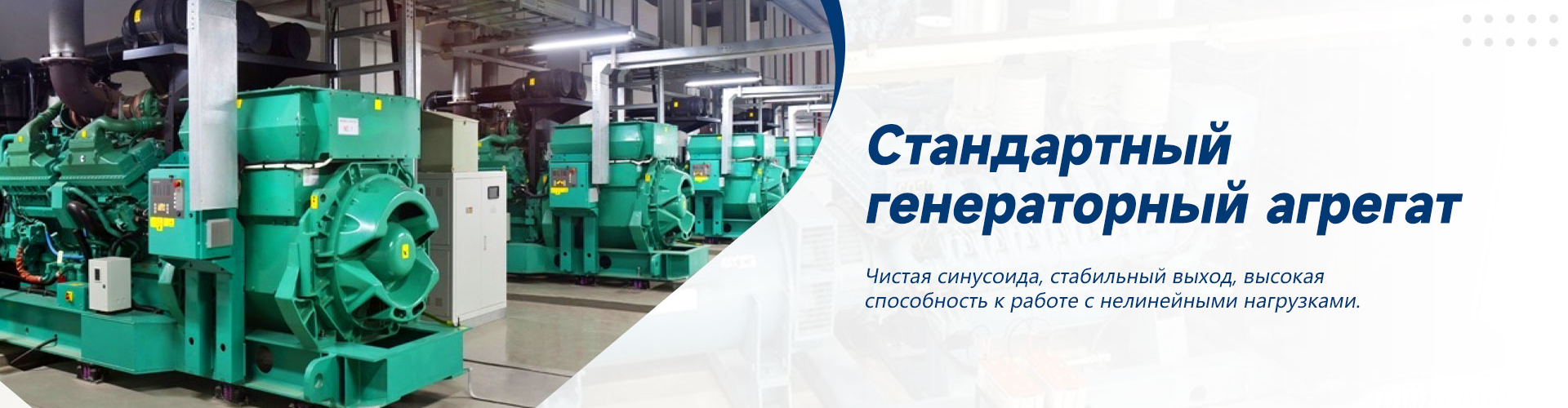
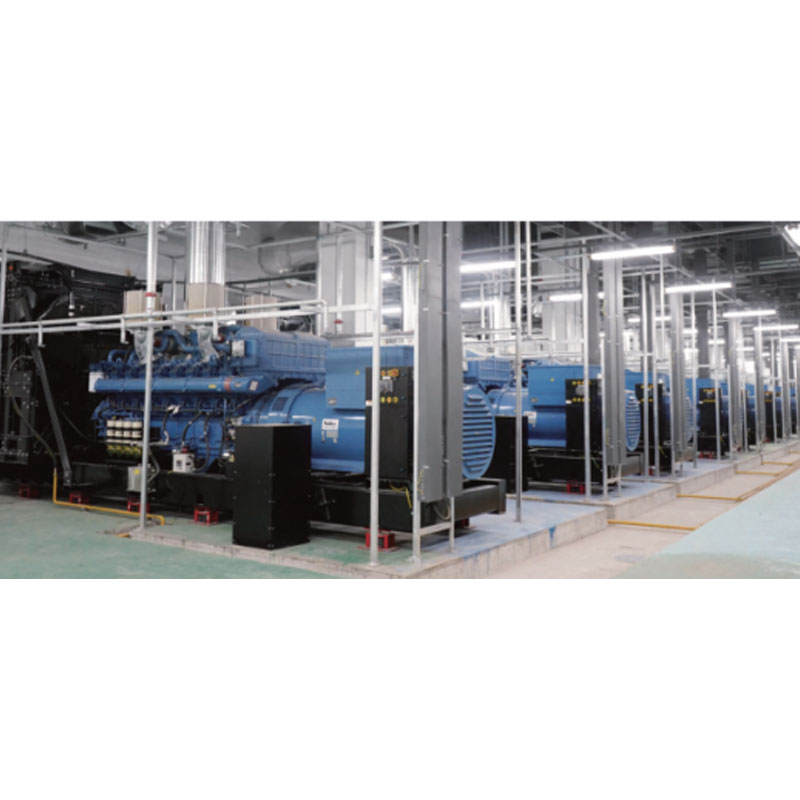
Given the challenging operating conditions described above, it is critical to select equipment manufactured to strict engineering standards. The reliability of the generator is laid down at the design and assembly stage. A striking example of this approach is the companyYuke (Shandong) Electrical Technology LLC. This is a professional manufacturer from Shandong Province (China), specializing in the development of comprehensive solutions for autonomous and backup power supply.
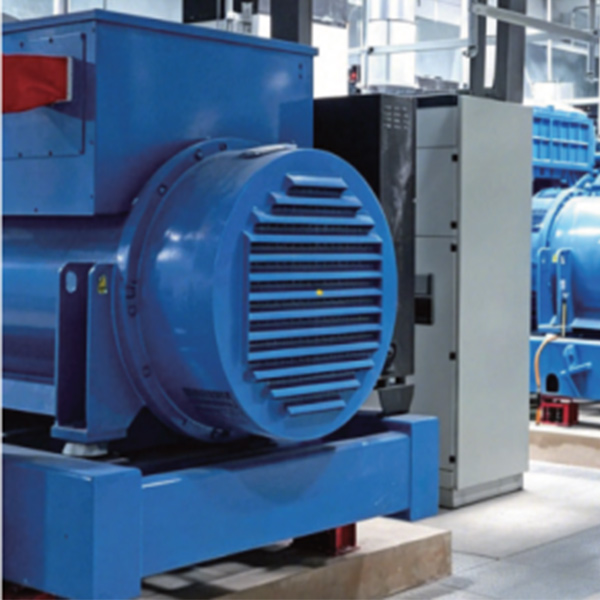
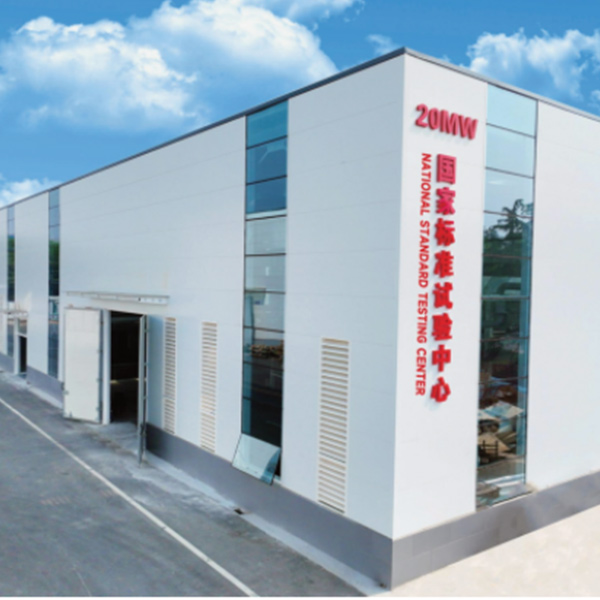
Unlike many assembly shops, Yuke acts as a full-fledged integrator, combining advanced engines from global brands (Cummins, MTU, Perkins, SEM, Yuchai) with its own engineering developments in the field of mobile power systems and energy storage. Their production base is equipped with modern testing equipment, where each product unit undergoes mandatory stress tests lasting at least 4 hours. This monitoring allows potential problems with overheating or voltage instability to be identified before shipment, which is especially important for summer operation in hot climates.
The company's product portfolio spans eight key categories, including quiet enclosed generator sets, mobile power trailers, high-voltage installations and specialized solutions for harsh environments. For example, the VCD (Cummins based) and VSD (SEM) series of diesel generators are designed with noise reduction and extreme temperature resistance in mind, making them an ideal choice for festivals and construction shifts. In addition, the company adapts its solutions to the standards of the CIS countries, ensuring compatibility with local networks and climatic conditions. The principle of “reliability through responsibility” that underlies the Yuke philosophy ensures that what you receive is not just a box of hardware, but a proven energy system, ready to perform in the harshest conditions.
Comparison of popular solutions for different tasks
To help you make your final choice, we have prepared a comparison table of typical scenarios. It is based on our experience in implementing projects of various sizes and takes into account the capabilities of modern equipment, such as solutions from Uke.
| Event scenario | Recommended type | Minimum power | Key Requirements | Common mistake |
|---|---|---|---|---|
| Outdoor wedding/buffet reception (up to 50 people, music, light, kitchen) | Diesel in a casing or powerful inverter | 10-15 kW | Low noise (<65dBA), pure sine wave for audio | Using a cheap gasoline generator that hums and spoils the atmosphere |
| Construction watch / Field camp (cabins, tools, lighting) | Diesel open or enclosed | From 20 kW | Engine life, ease of maintenance, dust protection | Lack of power reserve to start concrete mixers and compressors |
| Music Festival/Concert (Stage, sound, light, screens) | Industrial diesel (2 units in parallel) | From 100 kW | Automatic transfer of reserve (ATS), possibility of parallel operation, frequency stabilization | Connection to just one generator without backup. One node failure stops the whole show |
| Retail outlet/food truck (Coffee machine, grill, cash register) | Gasoline inverter | 3-5 kW | Compact, mobile, economical for light loads | Overload with simultaneous operation of all heating elements |
As can be seen from the table, there is no universal solution. For weddings, the priority is acoustic comfort, while for construction, survivability and maintainability are the priority. Connecting two generators in parallel (synchronization) is a great strategy for large events. It provides redundancy: if one device breaks down, the second will continue to power critical loads. In addition, at low loads, you can turn off one generator so that both work in optimal mode and do not glaze (do not accumulate soot in the engine when idling).
Certification and safety: what to look for when purchasing
When purchasing equipment for commercial events, legal purity and safety come to the fore. In Russia and the EAEU countries, the main document is the CU TR Certificate of Conformity (Technical Regulations of the Customs Union). The absence of this document means that the generator has not been tested for electromagnetic compatibility and safety. In the event of a fire or accident, the insurance company will refuse to pay if the equipment is not certified. Manufacturers at the Yuke level ensure that their products comply with international safety and EMC requirements, which is confirmed by test reports.
Pay attention to the IP protection class (Ingress Protection). For outdoor use, the minimum acceptable class is IP23 (splash protection at an angle of 60 degrees). However, for real-life work in rain or dusty conditions, it's best to look for models with IP54. The number “5” means complete protection against dust, and “4” means protection against splashes from all sides. Generators with IP20 (open) can be used outdoors only under a permanent canopy, where slanting rain does not fall.
Grounding is a matter of life and death. In the field, people often forget to organize a grounding loop. The metal housing of the generator must be securely connected to the ground. If a phase breaks through to the frame due to vibration or moisture, and there is no grounding, anyone touching the frame will receive a fatal blow. Use ready-made grounding kits (copper-plated steel pins) that are driven into the ground next to the installation. The current flow resistance should not exceed 4 ohms.
We strongly recommend entering into a service agreement when purchasing a generator fleet. In summer, the load on service centers is maximum. If your generator breaks down on a Friday night and the nearest service is in another city, the event will be cancelled. Having a mobile service that can come to the site with spare parts and oil is worth the money they ask for.
Frequently Asked Questions
Which generator is quieter: gasoline or diesel?
Contrary to popular belief, a modern diesel generator with a good noise-insulating casing can operate quieter than its open-type gasoline counterpart. Gasoline engines rev higher (often 3,000 rpm versus 1,500 rpm for diesels), which creates high-frequency noise that is more difficult to screen out. Diesels sound lower and muffled at 1500 rpm. However, the quietest option is an inverter gasoline generator, but only at a load of up to 50%. If the inverter is fully loaded, its cooling fan will become noisy. For events where silence is important, choose diesel models with a noise level of up to 60-62 dBA at a distance of 7 meters.
Is it possible to leave a generator in the rain in summer?
Absolutely not, even if it has a high IP protection class. Rainfall in summer is often accompanied by thunderstorms and strong winds, which drive water inside the housing through the ventilation holes. Water can get into the alternator (alternator) and cause a short circuit. In addition, sudden cooling of a hot engine with cold rainwater can lead to cracks in the cylinder block or cylinder head. Always use an awning or install the generator under a canopy, allowing for free air inflow and outflow.
How often do you need to change the oil in a generator during intensive summer use?
The standard oil change interval specified in the instructions (usually 100-250 operating hours) is designed for ideal conditions. In summer, when working in heat and dust, the interval should be reduced by at least 1.5-2 times. We recommend making the first change after the first 20-30 hours of break-in (this is mandatory), and then every 50-80 hours of continuous operation during the summer season. Check the color of the oil with a dipstick daily: if it turns black ahead of time or smells like burning, change it immediately along with the filter. Saving on oil costing 2,000 rubles can lead to replacing an engine costing 200,000 rubles.
Why does the generator stall when connecting a powerful device?
Most likely, the overload protection is triggered or the motor cannot cope with the starting current. When starting an electric motor (pump, air conditioner, refrigerator), the current consumption in the first fractions of a second exceeds the rated one by 3-7 times. If the generator power is selected without taking this reserve into account, the electronics sees an overload and turns off the fuel supply. Another cause is a clogged fuel filter or air filter, causing the engine to lack power to maintain revs under load. Check the filters and make sure that the total starting power of all appliances does not exceed the maximum power of the generator.
Conclusion and next steps
Organizing the power supply for summer events is a task that requires an engineering approach, and not just buying the first model you come across in the store. High temperatures, dust, humidity and specific loads dictate strict requirements for equipment. As we have shown with examples, saving at the selection stage or ignoring operating rules leads to downtime, financial losses and reputational risks. Reliablegenerator for outdoor events in summeris an investment in the peace of mind of the organizer and the safety of the guests.
Do not forget about regular maintenance, correct calculation of power with a reserve and organization of a safe installation location. If you're unsure about your calculations or your choice of a specific model, don't take any chances. A mistake of 5 kW can cost you the entire event.
Our specialists are ready to help you choose the optimal solution for your needs, be it a small party or a large-scale festival. We cooperate with leading manufacturers such as Yuke (Shandong) Electrical Technology LLC to offer customers equipment that has undergone strict quality control and is adapted to difficult climatic conditions. We provide not only equipment, but also a full range of services: delivery, installation, grounding and 24-hour support on site.
Explore the full catalog of generators for summer tasksorcontact us todayto receive an individual power calculation and commercial offer. Remember: the lights must be on, no matter the weather.
-


-
-


WeChat

-
WeChat