

Power of a diesel generator set: how to calculate correctly?
2026-07-12
- Power of a diesel generator set: how to calculate correctly?
- Step-by-step algorithm: how to calculate the power of a diesel generator set
- Specifics of calculation for different types of load
- Influence of external factors and technical standards
- Typical errors when ordering and using
- Choosing a reliable partner: why the manufacturer is important
- Frequently Asked Questions
- Conclusion and recommendations for choosing a supplier
Power of a diesel generator set: how to calculate correctly?
The answer to the question “how to calculate the power of a diesel generator set” sounds simple: add up the rated power of all consumers, multiply the sum by a safety factor of 1.3–1.5 and add peak loads from engines with heavy starting. However, in real-life operation, this formula often leads to the purchase of redundant equipment or, worse, to an emergency shutdown under load. In our practice, we encountered a situation where a plant in Novosibirsk purchased diesel generator sets with a reserve of 40%, guided only by the sum of the machines’ passport data. Result: the generator stalls every 20 minutes due to the fact that the engineers did not take into account the reactive power of the welding machines and the starting currents of the compressors. Correct calculation is not arithmetic, but an analysis of the physics of your network.
This guide is based on fifteen years of experience in designing power supplies for industrial facilities in Russia and the CIS countries. We will analyze not only the mathematics, but also hidden factors: the influence of altitude, air temperature, harmonic distortion and the type of start of electric motors. If you are planning to purchase an uninterruptible power supply for a production facility, construction site or commercial center, ignoring these nuances can cost you millions of rubles in downtime losses.
Why is a simple kilowatt amount not enough?
Most errors start with confusion between active power (kW) and apparent power (kVA). Diesel generators are limited in both respects. Active power is the energy that does useful work: heats heating elements, rotates shafts, illuminates the room. Apparent power also includes the reactive component necessary to create electromagnetic fields in transformers and motors. The power factor (cos φ) relates these quantities. For modern diesel generator sets, the standard cos φ value is 0.8. This means that a 100 kVA generator can only supply 80 kW of active load.
If your load consists exclusively of incandescent lamps or heaters (resistive load), cos φ is equal to 1. But in industry, inductive consumers predominate: asynchronous motors, transformers, fluorescent lamps with chokes. Their cos φ varies from 0.6 to 0.85. An attempt to power a low cosine phi load from a generator rated only for kW will result in overcurrent, even if the active power is normal. The alternator stator winding will overheat and the thermal protection will trip.
The second critical factor is inrush currents. At the moment of starting, the electric motor consumes a current that is 5–7 times higher than the rated current. Although this surge lasts a fraction of a second, it causes a voltage sag. If the generator's reserve power is insufficient, the voltage will drop below a critical level (usually 80% of rated), the contactors will fail, and the equipment will stop. Moreover, a sudden change in load destabilizes the diesel engine speed. Modern electronic speed controllers cope with this better than mechanical ones, but no one has canceled the physical limit of flywheel inertia.
We recommend that you always request starting charts from your equipment manufacturers. Don't blindly trust nameplates. The actual starting current depends on the mechanism that turns the motor. An easy-start fan requires less energy than a pressure-started piston compressor. In one of our projects at an oil refinery, we replaced the direct starting circuit with a star-delta circuit, which allowed us to use a diesel generator set of lower power and save the customer 15% of the budget without loss of reliability.
Step-by-step algorithm: how to calculate the power of a diesel generator set
To avoid mistakes and choose a unit that will last for decades, follow a strict algorithm. This method is used by our engineers when auditing objects of any complexity. It takes into account both current needs and development prospects.
- Compilation of a complete register of consumers.Write down absolutely all devices that will be connected to the diesel generator set. Divide them into three groups: resistive loads (lighting, heating, electronics), easy-start inductive loads (pumps, fans) and hard-start inductive loads (compressors, crushers, concrete mixers). For each unit, record the rated power in kW and the power factor (cos φ). If cos φ is unknown, assume 0.8 for motors and 1.0 for heaters. It is critically important not to forget about life support systems: fresh air ventilation, fire extinguishing pumps and lighting of escape routes. Often they become the “bottleneck” in an accident.
- Calculation of total active and reactive power.Add up the active powers of all devices. Separately sum the reactive powers (kvar) using the formula Q = P × tan(φ), where tg(φ) is calculated from cos φ. Or simpler: for engines, multiply their power by 0.75 (the approximate value of the reactive component). The resulting amounts will give you the base load in the steady state. Many people stop at this stage, but this is a grave mistake. Now you need to take into account the simultaneity coefficient (Code). It is unlikely that all machines and lights will work at the same time. For offices the Code is 0.7–0.8, for production with a continuous cycle - 0.9–1.0. Multiply the amount by this factor.
- Analysis of starting modes and choice of starting method.Identify the most powerful engine on your list. Calculate its starting power. With direct starting, it is equal to the rated power multiplied by 6 (for old motors) or 4.5 (for new ones with energy efficiency class IE3/IE4). Compare this figure with the remaining free power of the generator after connecting the base load. If the starting power exceeds the capabilities of the diesel generator set, you will have to either increase the power of the station or change the starting scheme. The use of frequency converters (VFDs) or soft starters (soft starters) reduces the starting current to 2–2.5 nominal values, which often makes it possible to get by with a smaller generator.
- Introduction of environmental correction coefficients.The power of the diesel generator set is indicated by the manufacturer for standard conditions: altitude 0 meters above sea level, air temperature +25°C, relative humidity 30%. If your site is located in the mountains or hot climates, the power will drop. The rule is: reduce power by 1% for every 100 meters of altitude above 1000 m and by 1% for every degree of temperature above 25°C. For example, in Irkutsk in winter there are no problems, but in summer in Yakutia at +35°C the generator will lose about 10% of its rated capacity. Ignoring this factor is a common cause of equipment failures in the summer.
- Final calculation with a margin and model selection.To the resulting maximum load (taking into account starts and the environment), add an operating margin of 10–20%. This reserve is necessary to prevent the engine from operating at the limit, which leads to coking of the injectors and increased oil consumption. A diesel engine should operate at 70–80% load for optimal service life. Operating below 30% load is also detrimental (a "glazing" effect on the cylinders), so if your load varies greatly, consider installing two parallel smaller units instead of one larger one.
After completing the fifth step, you will get the required power in kVA. Round up to the nearest standard model in the manufacturer's line. Never choose a generator “end-to-end”. A power reserve is not an overpayment, but insurance against unforeseen expansion of production or degradation of engine characteristics over time.
Table comparing engine starting methods and their influence on the choice of diesel generator set
The choice of electric motor starting strategy directly affects the final cost of the project. Below is a comparison of the different approaches in terms of generator set power requirements.
| Launch method | Starting current (relative to In) | Required power reserve of diesel generator set | Equipment cost | Recommended Application |
|---|---|---|---|---|
| Direct start (DOL) | 6.0 – 7.5 | High (the generator must be 3 times more powerful than the engine) | Low (simple contactor) | Low power motors (up to 4 kW), light impeller pumps |
| Star-Triangle | 2.5 – 3.5 | Medium (generator is 1.5–2 times more powerful than engine) | Medium (3 contactors and time relay needed) | Medium power motors (15–50 kW), fans, conveyors |
| Soft Starter | 2.0 – 3.0 | Medium-low | Medium-high | Pumps, mixers, where it is important to avoid water hammer |
| Frequency Drive (VFD) | 1.1 – 1.5 | Minimum (generator ≈ engine power) | High | Difficult starting conditions, need to adjust speed, compressors |
As can be seen from the table, an investment in a frequency converter can pay off by reducing the power of the purchased diesel generator. However, there is a pitfall here: cheap VFDs create high-frequency harmonics that overheat the generator windings. To operate VFD, a diesel generator set with a PMG (Permanent Magnet Generator) excitation system and a shielded cable are required. In our practice, there was a case when a client saved on the type of alternator, and six months later the AVR unit burned out due to harmonics from frequency drivers. Always check hardware compatibility.
Specifics of calculation for different types of load
There is no universal formula, since the energy consumption profile on a construction site and in a data center is radically different. Let's look at key scenarios where calculation errors are most common.
Construction and heavy industry
Asynchronous motors with difficult starting conditions dominate here. Concrete mixers, cranes, crushers require huge starting currents. A feature of such objects is the cyclical load. The faucet runs for 2 minutes, then stops for 5. Calculating the maximum instantaneous power will lead to the purchase of a giant diesel generator set, which will idle 90% of the time, wasting fuel and accumulating soot. Solution: use of automatic transfer systems (ATS) with a load management function (Load Management). The system monitors consumption and, when approaching the limit, temporarily turns off non-essential consumers (for example, sockets in cabins or secondary lighting) to provide energy to start the tap. This allows you to use a generator with 30–40% less power.
Commercial real estate and offices
The main load here is lighting, air conditioning (HVAC) and IT equipment. Air conditioners have compressors that generate starting currents, but modern inverter split systems do not have this drawback. The main problem of offices is the nonlinear load from computers and servers. Switching power supplies draw current in short bursts, creating third-order harmonics. These harmonics are summed up in the neutral wire, causing it to overheat and create a fire hazard. For such applications, a generator with low harmonic distortion (THD < 3%) and a four-pole circuit breaker protecting the zero is critical. The power reserve here is usually 20–25% for future expansion of the equipment fleet.
Medical institutions and data centers
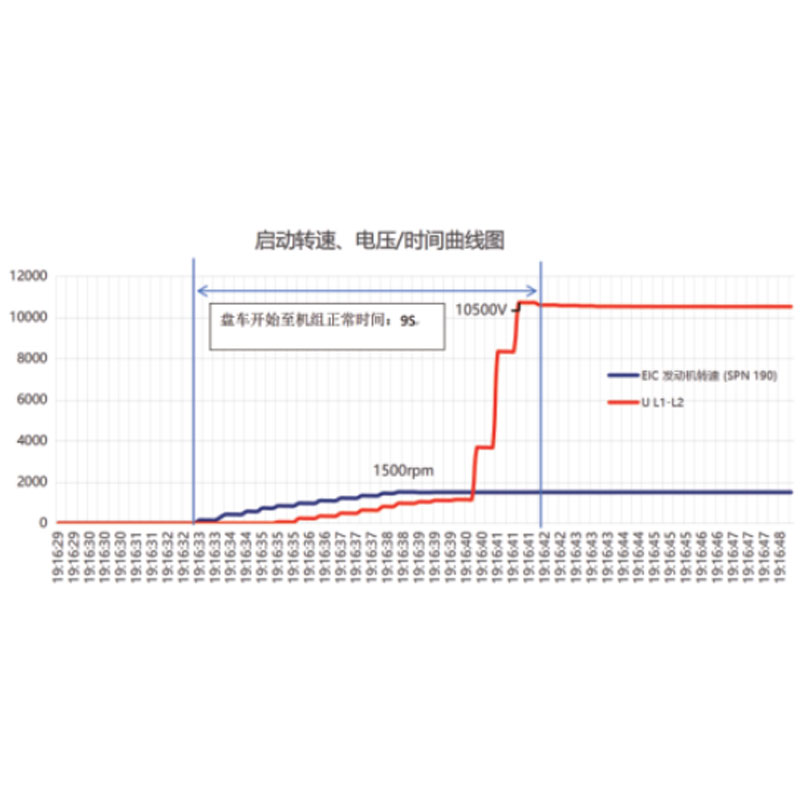
These are objects of the first reliability category. Not only power is important here, but also power quality and switching time. Servers and medical equipment (MRI, CT) are extremely sensitive to voltage dips. Even a short shutdown of 0.5 seconds can lead to data loss or hardware malfunction. Calculating power for a data center has its own specifics: it is necessary to take into account not only the IT load, but also powerful cooling systems, which can account for up to 50% of total consumption. In addition, it is recommended to calculate the diesel generator set at 100% load plus a reserve, since diesel engine operation under low load is unacceptable. The “DGS + UPS” scheme is often used, where batteries dampen transient processes, and the generator reaches operating mode in 10–15 seconds.
Influence of external factors and technical standards
When choosing equipment, you cannot rely only on numbers from the catalog. Real operating conditions in Russia and the EAEU countries dictate their own requirements, enshrined in regulatory documents.
Climatic version.According to GOST 15150, the equipment must correspond to the climatic zone of operation. For most of Russia, this is version U1 (temperate climate) or HL1 (cold climate). DGUs in the HL1 version are equipped with pre-heaters for coolant and oil, high-capacity batteries and an insulated casing. Trying to use a conventional installation at -30°C will result in the diesel simply not starting, or the hydraulic oil thickening and destroying the turbine. When calculating power for a cold region, keep in mind that part of the generator’s energy will be spent on its own needs (heating), which reduces the useful output to the network.
Altitude.Atmospheric pressure drops with altitude, which reduces the amount of oxygen entering the cylinders. The engine is losing power. Turbocharged engines compensate for this better than naturally aspirated ones, but everyone has a limit. The ISO 8528-1 standard defines correction factors. If your facility is located in a city with an altitude of more than 1000 m (for example, Chelyabinsk, Krasnoyarsk, Altai cities), be sure to ask the supplier for a derating schedule (power reduction). Typically the loss is 1% for every 100 m after the 1000 m mark. Ignoring this rule is a guarantee that in the summer, when the air is even thinner due to the heat, the generator will not pull the design load.
Certification and safety.When importing or purchasing diesel generator sets, make sure you have an EAC certificate (Eurasian Conformity). This confirms that the equipment has been tested for safety and electromagnetic compatibility in accredited laboratories. The absence of EAC marking can lead to problems when handing over the facility to a Rostechnadzor inspector. Also pay attention to the noise level. Strict SanPiN standards apply for residential areas and hospitals. If the rated noise level of the diesel generator set exceeds 75 dBA at a distance of 7 meters, you will need an additional soundproof casing or container, which will increase the size and cost.
Typical errors when ordering and using
Over the years, we have identified several recurring scenarios that lead to financial losses for clients. Avoid them to ensure your project is successful.
Mistake #1: Focusing on maximum (Standby) power.Manufacturers often specify two powers: primary (Prime) and reserve (Standby/Emergency). The reserve power is 10% higher, but you can work in this mode for no more than 1 hour per year and no more than 500 hours in total. Some unscrupulous sellers offer a generator selected for Standby power, claiming that “there is a reserve.” In reality, constant operation at maximum power will lead to overheating, emission of black smoke and major engine overhaul after a year. Always calculate the load relative to Prime power.
Mistake #2: Ignoring harmonics from frequency drivers.As mentioned earlier, modern equipment is full of electronics. Cheap Chinese generators with the SHUNT (self-excitation) excitation system do not tolerate nonlinear loads well. The voltage “floats”, the shape of the sinusoid is distorted. The result is burnt-out control units of boilers, pumps and servers. Require generators with PMG excitation system (independent magnet excitation). They provide stable voltage even in the presence of sudden current surges and harmonics.
Mistake #3: Lack of design for future expansions.Business is growing. In two years you will want to install another machine or expand your warehouse. If the diesel generator set is already operating at 95% of the load, it will be impossible to add anything without replacing the entire installation. Build in the ability to scale right away. It’s better to buy a generator with a 20% reserve now than to buy a second one in a couple of years and struggle with synchronizing two machines.
Mistake #4: Incorrect cable selection.Even a perfectly designed generator will not produce the required power if the cable from the switchboard to the consumers is too thin or long. The voltage drop on the cable consumes useful power and heats the insulation. Use cable cross-section tables taking into account the length of the route and the material of the cores (copper is preferable to aluminum for critical components). Line losses should not exceed 3–5%.
Choosing a reliable partner: why the manufacturer is important
After all the calculations have been made, the stage of selecting specific equipment and supplier begins. It is here that theoretical calculations collide with the reality of production. Build quality, component control and local adaptation play a critical role in the longevity of the power system.
Yuke (Shandong) Electrical Technologies LLC is an example of a modern integrator of solutions in the field of autonomous and backup power supply. Located in Shandong Province, the company combines deep engineering expertise with advanced manufacturing technology to provide reliable power to industrial facilities, infrastructure projects and remote areas. The company's activities are based on the principle of “reliability through responsibility”: from the design stage to post-warranty service.
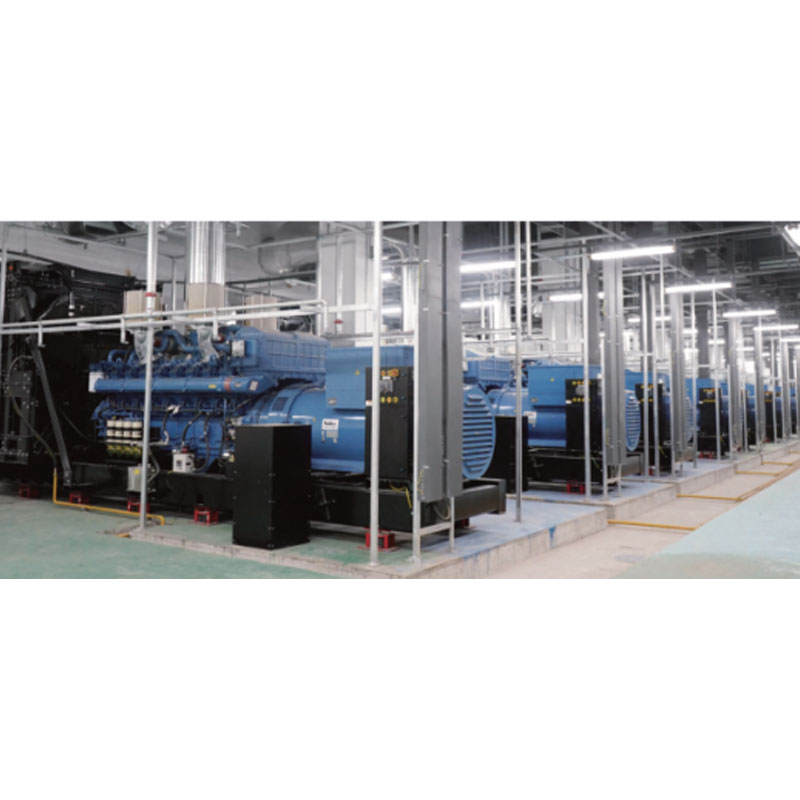
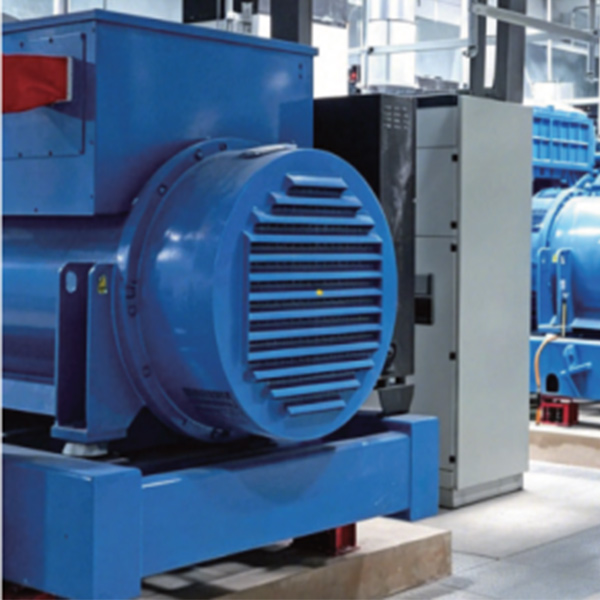
The product portfolio of Yuke LLC covers eight key categories that can cover almost any task: from silent mobile stations and emergency power supply vehicles to high-voltage installations with a capacity of several megawatts and liquid-cooled energy storage cabinets. The equipment is based on engines and generators of the world's leading brands, such as Cummins (VCD, VHCD5 series), Perkins (VPD), MTU (VHMD5), SEM (VSD, VHSD5) and Yuchai (VYG, VHYD5). This flexibility allows solutions to be tailored to the specific requirements of the customer, be it strict noise standards for urban development or the need to work in extreme climatic conditions.
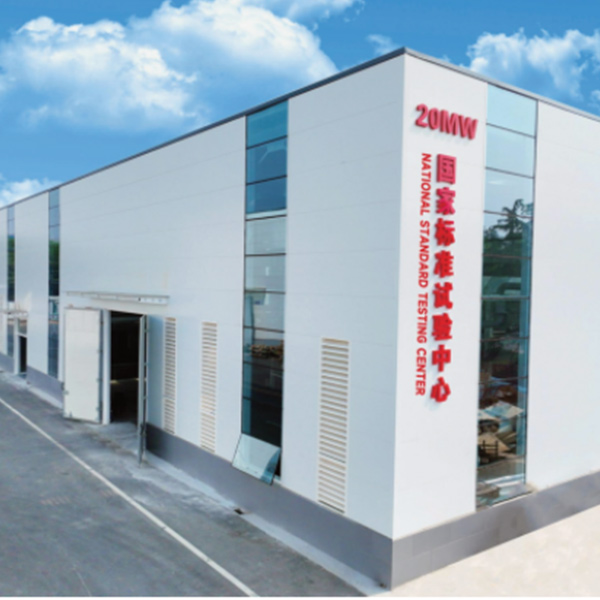
A key advantage of Uke LLC's approach is its strict quality control system. Each piece of equipment undergoes multi-level testing: incoming inspection of components, monitoring of assembly stages and mandatory comprehensive load tests lasting at least 4 hours. This ensures that the stated characteristics correspond to reality, and the generator is ready for use immediately after delivery. The company's products are successfully exported to the CIS countries, Asia, the Middle East and Africa, where they have proven their resistance to various operating loads.
For customers in the CIS region, the company offers not just the sale of hardware, but comprehensive support: technical support at the design stage (assistance in verifying your calculations), consultations on choosing the optimal configuration, personnel training and prompt delivery of original spare parts through a network of authorized service partners. If you are looking for a solution that combines proven global components with an individual engineering approach and adaptation to Russian standards, the products of Yuke (Shandong) Electrical Technologies LLC will become a reliable foundation for your energy security.
Frequently Asked Questions
How to convert kW to kVA to select a generator?
To convert active power (kW) to apparent power (kVA), divide the kW value by the power factor (cos φ). For most diesel generators, cos φ is 0.8. Formula: S (kVA) = P (kW) / 0.8. For example, if your load is 80 kW, you need a 100 kVA generator. Don't confuse these values: kVA is the power of the generator itself, and kW is the useful work it can do.
Is it possible to load a diesel generator at less than 30%?
No, prolonged operation at a load below 30% of the rated load is strictly not recommended for diesel engines. This leads to the phenomenon of “glazing”: unburned fuel settles on the cylinder walls, washes away the oil film and clogs the piston rings with soot. As a result, the engine begins to consume oil, loses compression and requires expensive repairs. If you have a small load, use the load banking feature or consider installing two smaller generators running in rotation.
How much power reserve is needed for reliable operation?
The optimal power reserve is 10–20% above the calculated maximum load. This reserve is needed to compensate for engine aging, deteriorating environmental conditions (heat, altitude) and possible short-term overloads when starting powerful consumers. Working “back to back” reduces the resource of the diesel generator set by several times. However, a reserve of more than 30% is also harmful, as it leads to operation in inefficient modes and increased fuel consumption per unit of energy generated.
Does the length of the cable from the generator to the switchboard affect the power?
Yes, it has a significant effect. Long cables with small cross-sections create resistance across which the voltage drops. The generator sees the voltage drop and tries to compensate for it by increasing the current, which can cause the thermal protection to trip, although the actual power at the end of the line will be low. When the route length is more than 50 meters, it is necessary to increase the cable cross-section or increase the network voltage (for example, use 400V instead of 230V for single-phase consumers) to reduce losses.
Conclusion and recommendations for choosing a supplier
Correct calculation of the power of a diesel generator set is the foundation of the energy security of your enterprise. A mistake at the planning stage is more expensive than the cost of the equipment itself. Remember: the generator must operate in the range of 70-80% of the load, have a reserve for starting currents and climatic conditions, and also match the nature of your load (resistive or inductive).
Don't try to save money at the audit stage. Engage qualified engineers who will carry out current clamp measurements on an existing facility or draw up a detailed load map for new construction. Request from suppliers not just a commercial proposal, but a feasibility study with load diagrams and fuel efficiency calculations. Choosing a partner such as Yuke (Shandong) Electrical Technologies LLC allows you to receive not only certified equipment with guaranteed characteristics, but also expert support at all stages of the life cycle of a power plant.
When choosing a specific model, pay attention to the availability of service and spare parts in your region. A diesel generator set is a complex mechanical device that requires regular maintenance. Buying an exotic brand that doesn't have filters or belts within a 500km radius will turn your backup system into a headache.
We are ready to help you carry out a professional calculation and choose the optimal solution that will last for decades. Our specialists have experience in implementing projects from mobile installations for rotational camps to stationary energy centers with a capacity of several megawatts.
View the catalog of diesel generators with technical characteristics
Contact us today for a free consultation and preliminary calculation of the cost of equipment for your needs.
-


-
-


WeChat

-
WeChat