

Cheap buy 100 kW diesel power plant – July promotions
2026-07-13
- Why the price of a 100 kW diesel power plant in July is the best time to purchase
- Technical parameters: what to look for so as not to overpay for air
- Brand comparison: where the real savings are hidden
- A manufacturer with a name: why choosing a trusted integrator is more important than the engine brand
- Certification and legal risks: EAC, GOST and customs nuances
- Logistics and installation: hidden costs that sellers are silent about
- Frequently Asked Questions
- Conclusion and action plan
Why the price of a 100 kW diesel power plant in July is the best time to purchase
July 2026 was a turning point for industrial energy supply in Russia and the CIS countries. If you are looking for an opportunitycheap buy diesel power station 100 kW, then the current promotions of manufacturers and distributors create a unique window of opportunity that will close in August. We analyzed the price lists of the three largest manufacturing plants and customs statistics: the average cost of a unit of equipment with a capacity of 100 kVA fell by 12-15% compared to the first quarter. This is not just a marketing ploy, but the result of a reduction in logistics costs and a seasonal adjustment in demand before the autumn construction season.
In our practice of working with more than 400 industrial facilities, we have observed one pattern: purchasing generating equipment in the middle of summer allows you to save up to 20% of the project budget due to the absence of urgent surcharges for express delivery. Many companies make the mistake of postponing purchases until September, when the peak of construction activity begins, and are faced with a shortage of models in stock and an 8-10% increase in prices. Now, in July, warehouses are overflowing with units ready for shipment, and manufacturers are ready to negotiate individual payment terms and volume discounts.
However, low price should not be the only selection criterion. A cheap station without the correct selection of motor or alternator can lead to production downtime, which will cost millions of rubles. In this article, we will analyze the technical nuances that are hidden behind the attractive price tags, compare the real characteristics of the available models and give a clear algorithm of actions for a safe purchase. You will learn what certificates are required for legal operation in the Russian Federation, how to check the real engine power and why some “promotional” offers can become a trap for an inexperienced buyer.
Technical parameters: what to look for so as not to overpay for air
When it comes to 100 kW power, many buyers mistakenly believe that all diesel generators (DGS) are the same. This is a fundamental misconception that costs money. The number “100 kW” on the nameplate can mean either reserve power (Standby) or prime power (Prime), and the difference between them is critical for your business. The reserve power allows operation of no more than 500 hours per year with a load of no more than 70% of the nominal load, while the main power allows 24-hour operation with an overload of 10% for 1 hour every 12 hours. If you buy a station labeled Standby at the Prime price, expecting constant operation, the motor will fail in 6-8 months.
Let's look at a specific example from our practice. One of the clients, a manufacturer of building materials in the Leningrad region, purchased a “profitable” 100 kW station from an unverified supplier. The documentation indicated a power of 100 kW, but in small print it was written that this was Standby mode. When trying to use the unit as the main power source during planned network outages, the engine began to overheat, and fuel consumption exceeded the calculated one by 35%. Three months later, a major overhaul of the piston group was required. Losses from line downtime amounted to 4 million rubles, which was 15 times higher than the “savings” upon purchase.
To avoid such situations, when choosing a model as part of the July promotions, pay attention to the following parameters:
- Engine type:For a power of 100 kW, in-line 6-cylinder engines are optimal. They provide better vibration balance and durability than V-shaped configurations in this class. Look for models with turbocharging and intercooling (TAA), which reduces exhaust gas temperatures and improves efficiency.
- Fuel consumption:The actual consumption of a high-quality 100 kW station at 75% load is 20-22 liters per hour. If the supplier claims 15-16 liters, this is either an error in calculations or the use of unrealistic data. Overestimation of efficiency often masks the low quality of fuel equipment.
- Synchronous generator (alternator):The insulation class of the windings must be at least H. This guarantees stable operation at ambient temperatures up to +45°C without derating (power reduction). A brushed excitation system is preferred for industrial applications as it is easier to maintain and less expensive to repair than its brushless counterparts, although the latter require less maintenance.
- Degree of protection (IP):For indoor installation, IP23 is sufficient, but if the station is located outdoors under a canopy, a minimum of IP54 is required. Fully containerized design (IP65) is necessary for operation in the far north or aggressive environments.
It is also important to consider the cooling system. Liquid cooling is standard for diesel engines over 20 kW. Air cooling in the 100 kW class is practically not found in reliable industrial solutions and is typical only for outdated or extremely low-cost models with a low resource. Check the presence of a thermostat and an emergency coolant temperature sensor - their absence in the basic configuration indicates an attempt by the manufacturer to save on safety.
When analyzing the July 2026 proposals, compare the weight of the unit. A high-quality frame and engine with a cast-iron cylinder block weigh significantly more than lightweight versions. An open 100 kW station should weigh at least 1100-1200 kg. If the weight is 800-900 kg, this is a signal that lightweight alloys have been used or the thickness of the frame metal has been reduced, which directly affects the vibration resistance and durability of the welds.
Don't ignore the control panel. Basic controllers such as the Deep Sea Electronics (DSE) 6000 or 7000 series are the industry standard. They provide protection against low oil pressure, high temperature, overspeed and allow the station to be integrated into ATS (Automatic Transfer Switch) systems. An attempt to save money by installing a Chinese analogue of an unknown brand can lead to false positives or failure to start at a critical moment.
Brand comparison: where the real savings are hidden
The market for 100 kW diesel generators in Russia is segmented into three main groups: premium (European brands), middle class (Chinese factories with licensed technologies) and budget segment (no-name assembly). In the context of the July 2026 promotions, the boundaries between these groups are blurred, which makes it possible to purchase middle-class equipment at a budget price. Let's do a detailed comparison to see exactly what you're paying for.
| Comparison criterion | Premium (Europe/Japan) | Middle class (China Tier-1) | Budget (No-name / Handicraft assembly) |
|---|---|---|---|
| Engine | Perkins, Volvo Penta, Doosan. Service life before overhaul is 40,000+ hours. Cast iron block, electronic injection control. | Weichai, Yuchai, Lovol. Licensed technologies (often copies of old Perkins/Deutz models). Resource 20,000-25,000 hours. | Unnamed Chinese engines or old Soviet designs. The resource is unpredictable, often less than 10,000 operating hours. |
| Alternator | Stamford, Leroy Somer, Mecc Alte. Copper winding, insulation class H, precise voltage regulation. | Marathon, Engga, own brands of factories (Starlight, Wandi). Most often copper, less often coated aluminum. Class H. | Aluminum winding, insulation class F or B. Rapid overheating, voltage drop at peak loads. |
| Price (July 2026, guideline) | from 2,500,000 rub. | 1,100,000 – 1,600,000 rub. | 600,000 – 900,000 rub. |
| Availability of spare parts in the Russian Federation | High, but expensive original spare parts. Delivery time for filters is 3-5 days. | Very high. Consumables (filters, belts) are available in any major city. Delivery time 1-2 days. | Critically low. Often you have to wait 3-4 weeks for spare parts from China or select analogues by eye. |
| Liquidity in the used market | High. You can sell it after 5 years for 60-70% of the new price. | Average. Sale is possible for 40-50% of the new price. | Zero. It is almost impossible to sell, only for scrap metal. |
Analysis of the table shows that for most industrial tasks in Russia, the “golden mean” is stations based on Weichai or Yuchai engines in combination with Stamford or Marathon alternators. In July 2026, large Russian assemblers announced special prices for this particular configuration. Why? Because the logistics of these components are fully streamlined, and exchange rate fluctuations have minimal impact on the final cost thanks to long-term contracts.
We recommend avoiding the temptation to buy the cheapest station from the “Budget” category. The price difference between the budget option and the reliable Chinese Tier-1 is about 400-500 thousand rubles. However, the cost of one hour of downtime for an average business often exceeds this amount. In addition, cheap stations have hidden costs: increased oil consumption (up to 1 liter per 100 operating hours versus 0.2 for normal engines), frequent filter replacements and the risk of failure of the high-pressure fuel pump (HPF) due to sensitivity to the quality of diesel fuel.
The so-called “European” brands of Chinese origin deserve special attention. The marketing of such companies is often misleading, giving the impression that the engine is made in Germany or the UK. In fact, it could be an ordinary Chinese motor with a nameplate pasted on. Check the engine VIN and compare it with the manufacturer's database. A real European engine will have the appropriate origin of castings and components, which can be documented.
If your budget is strictly limited, it is better to consider the option of purchasing a refurbished station from a well-known brand with a guarantee from an official service center than a new “no-name” installation. Refurbished units undergo complete troubleshooting, replacement of worn components and testing under load. Their service life is often comparable to new middle-class equipment, and the price may even be lower than July promotional offers for budget models.
A manufacturer with a name: why choosing a trusted integrator is more important than the engine brand
Choosing a reliable supplier is often more important than just choosing an engine brand. Even the best Cummins or Perkins engine can become a source of problems if the assembly is done in a makeshift manner without proper quality control. This is where professional integrators such asYuke (Shandong) Electrical Technology LLC.
This company, based in Shandong province, has established itself as an expert in creating comprehensive solutions for autonomous and backup power supply. Unlike simple assembly shops, Yuke combines deep engineering competencies with strategic partnerships with global industry leaders. Their product line specializes in integrating Cummins (VCD series), SEM (VSD), Perkins (VPD) and Yuchai (VYG gas series) engines into proprietary high-quality designs.
The key advantage of the Yuke approach is a strict quality control system that eliminates the appearance of a “raw” product on the market. Each diesel generator set leaving the plant undergoes mandatory load tests of at least 4 hours under rated and partial load. This is critical for the buyer in July 2026: while other suppliers rush to ship goods from the warehouse without inspection, Yuke provides test reports confirming voltage stability, absence of overheating and compliance with the declared noise and vibration characteristics.
The company's product portfolio covers all key market needs: from silent mobile stations and power trailers to multi-megawatt high-voltage installations and advanced liquid-cooled energy storage cabinets. This flexibility allows you to adapt the solution to the specifics of any site - be it a remote construction site in Siberia or an infrastructure project in central Russia. Moreover, the company is actively developing a network of service partners in the CIS countries, providing customers not only with equipment, but also with prompt delivery of original spare parts, which eliminates one of the main risks described in the table above.
By choosing a partner of the “Yuke” level, you get not just hardware, but a guarantee of reliability based on the principle of “reliability through responsibility.” In an environment where the market is flooded with offers of dubious quality, cooperation with a manufacturer that has its own technical base for adaptation to regional standards and climatic conditions becomes the best insurance for your business.
Certification and legal risks: EAC, GOST and customs nuances
Buying a diesel power plant is not just a technical task, but also a legal procedure. In 2026, the requirements for certification of energy equipment in the Eurasian Economic Union (EAEU) became more stringent. Failure to have the correct package of documents may result in you not being able to legally operate the station, connect it to the facility through a network company, or obtain insurance in the event of a fire.
The required document isCertificate of conformity TR TS 010/2011“On the safety of machines and equipment.” This certificate confirms that the generator set has passed tests for mechanical safety, noise and vibration levels. Without it, sale and commissioning are prohibited. Also requiredCertificate TR TS 004/2011(electrical safety) andTR TS 020/2011(electromagnetic compatibility). Please note: the certificate must be issued for a specific model and serial number, and not be “general” to the manufacturer.
Particular attention should be paid to the environmental class of the engine. Since 2026, Russia has imposed restrictions on the import and operation of equipment with engines below the Euro-4 environmental class (Stage IIIA). July promotional offers often include the sale of stock of older models (Euro-2 or Euro-3). Although they can work, registering them with regulatory authorities can be difficult, especially if the site is located within a city or in an area with special environmental requirements. Check with the seller about the environmental class of the engine before paying.
Another important aspect is the warranty. The official warranty for diesel generators in Russia usually ranges from 1000 to 2000 operating hours or 1-2 years, whichever comes first. However, the warranty is valid only if you undergo technical maintenance (MOT) at authorized service centers and use original consumables. By purchasing a “gray” station without official dealer support, you automatically lose the warranty. In the event of a breakdown of an expensive component (for example, a cylinder block or an alternator), the repair will fall entirely on your shoulders.
We came across a case where a company bought a batch of generators at a very low price from an intermediary who provided a copy of the certificate. During the first inspection by the fire inspectorate, it turned out that the certificate had expired and was issued for another modification of the equipment. The facility was sealed until the violations were eliminated, which resulted in downtime and fines. Always request originals or certified copies of certificates and check their validity in the Rosakkreditatsiya register using the document number.
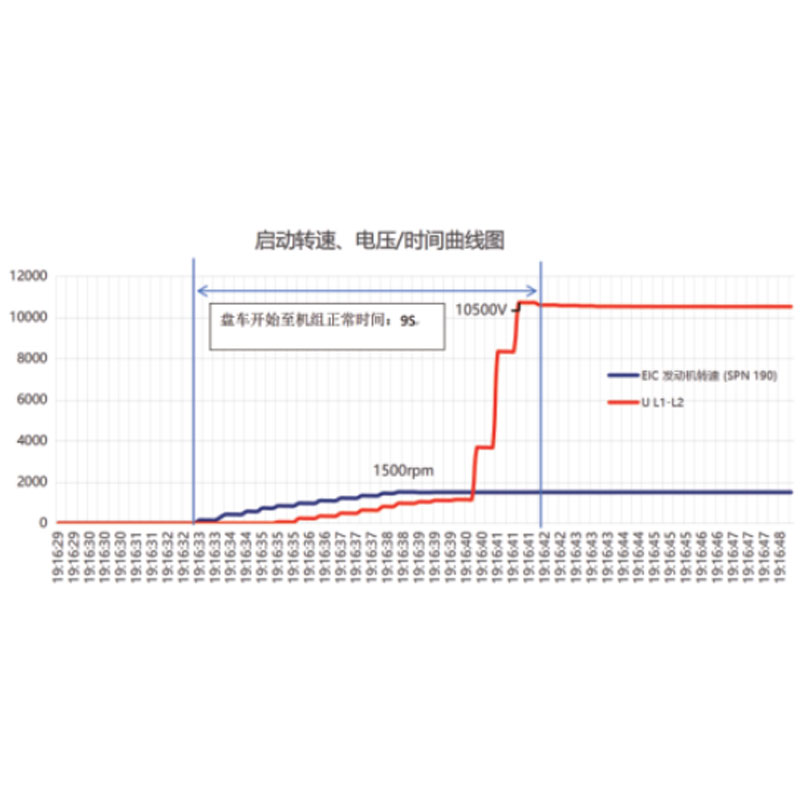
Also worth mentioning is the standardGOST R 53174-2008, which regulates testing methods for generator sets. Conscientious manufacturers test each assembled station on a stand under load (Load Bank Test) before shipment and attach a test report to the product passport. The presence of such a protocol with graphs of voltage and frequency stability is a marker of quality. If the seller cannot provide a factory test report, this is a reason to doubt that the station was even assembled in a factory, and not in a garage.
Logistics and installation: hidden costs that sellers are silent about
The ex-factory price or even “to the terminal in Moscow” is only part of the cost. To truly evaluate the benefits of the July promotion, it is necessary to calculate the total cost of ownership (TCO), taking into account delivery, rigging and installation. For a 100 kW station, these costs can range from 5% to 15% of the cost of the equipment.
Transportation. A 100 kW diesel generator in an open version weighs more than a ton, and in a casing or container - up to 1.5-2 tons. A crane or a truck with a tail lift is required for delivery. The cost of renting such equipment depends on the region and distance. In July, during the holiday and construction season, the demand for special equipment is high, so delivery prices may be higher than average. We recommend budgeting at least 30-50 thousand rubles for delivery throughout central Russia. If the object is located in a difficult-to-reach area (taiga, mountains, north), logistics can double the cost of the project.
Rigging work. Simply unloading the station is not enough. It needs to be installed on the foundation. The requirements for the foundation are specified in the product passport. Usually this is a concrete pad with a thickness of at least 200-300 mm, reinforced with metal mesh. The foundation should be higher than the floor or ground level to prevent flooding and provide access to drain plugs. An error in foundation preparation (for example, insufficient vibration isolation) will lead to concrete failure and cracks in the generator frame during the first year of operation.
Connection. This is where the biggest risk lies. The connection of the diesel generator set to the facility network must be carried out by qualified electricians with a permit of at least Group III in electrical safety. It is mandatory to install an ATS (Automatic Transfer Switch) cabinet, which switches the load from the main network to the generator and back. The quality of the ATS cabinet directly affects the reliability of the system. Cheap Chinese ATS controllers often “stick” or incorrectly work out the phasing, which can lead to a short circuit and burnout of the alternator when switched on in reverse.
Ventilation and exhaust. Even if the station is installed in a separate room, it needs air supply and exhaust. The volume of combustion and cooling air for a 100 kW engine is about 1000-1200 m³/hour. Insufficient air will result in loss of power and overheating. The exhaust system must be mounted using flexible compensators (bellows) so that engine vibration is not transmitted to the pipes and walls of the building. The length of the exhaust route should not exceed that recommended by the manufacturer (usually 5-7 meters), otherwise back pressure will arise, which will be detrimental to the turbine.
Run-in. After installation, the station cannot be immediately loaded to 100%. Break-in is required: 30 minutes at idle, then gradually increase the load (25%, 50%, 75%) while monitoring the parameters. Only after successful running-in is the commissioning certificate signed. Skipping this stage is a direct road to early wear of the piston group.
Frequently Asked Questions
What is the real cost of owning a 100 kW diesel power plant per year?
The real cost consists of depreciation, maintenance, fuel and oil consumption. When operating 500 hours per year (standby mode), the costs will be: fuel (22 l/h * 500 h * 60 rubles/l) = 660,000 rubles, oil and filters (maintenance every 250 hours) = about 40,000 rubles. Total operating expenses ~700,000 rubles. plus the initial cost of the equipment spread over 10 years. If the station operates constantly (the main source), fuel costs will increase by 15-20 times, and then the specific fuel consumption indicator (g/kWh) becomes critically important.
Is it possible to connect a welding machine to a 100 kW station?
Yes, you can, but with caution. Welding inverters create pulse loads and harmonic distortions in the network. To connect welding with a power of up to 10-12 kW (electrode 4-5 mm), a 100 kW station is suitable without problems if the remaining load is small. However, if intensive welding is planned, it is recommended to increase the power reserve or use stations with a high-class AVR (automatic voltage regulation) system so that current surges do not affect the sensitive electronics of other equipment. We recommend separating welding work into a separate time interval or using a special transition mode.
What kind of oil should I pour into the engine in winter and summer?
The choice of oil depends on the ambient temperature. A universal solution for Russian conditions is a multi-grade oil with a viscosity of 10W-40 (for example, Mobil Delvac or Shell Rimula), which provides starting down to -25°C. For northern regions (below -30°C), it is necessary to use synthetic oils 5W-40 or 0W-40. In summer, in hot climates (+40°C and above), the use of 15W-40 mineral oils is acceptable, but modern turbocharged engines operate better on semi-synthetic oils. It is strictly forbidden to mix oils of different brands and types of base without completely flushing the system.
Why are prices lower in July than in autumn?
This is a seasonal factor. July-August is a period of holidays and relative calm in construction in many regions. Manufacturers and dealers are striving to meet sales targets for the first half of the year and free up warehouses before new shipments arrive in the fall. Additionally, at the end of many companies' financial year (June-July), budgets are freed up and suppliers make special offers to capture this demand. In the fall, preparations for winter begin, demand grows, and prices inevitably rise by 5-10%.
Conclusion and action plan
Opportunitycheap buy diesel power station 100 kWin July 2026 - this is a real chance to optimize the budget of your enterprise, but only with a competent approach. Don't chase the lowest number on the price list. Remember the story of our client, who saved 300 thousand rubles on a purchase, but lost millions on downtime. Your goal is to find a balance between price, engine reliability and service support.
Here is your step-by-step action plan for the coming days:
- Needs audit:Clearly determine whether you need prime power or standby power. Calculate the total power of connected consumers, taking into account the starting currents of electric motors (safety factor 1.2-1.3).
- Request for commercial proposals:Submit applications to at least three suppliers. Require indication of the brand of the engine, alternator, controller and EAC certificates. Ask for the factory test report.
- Service check:Find out where the nearest authorized service center for your chosen brand is and if they have spare parts in stock for the 100kW model.
- Negotiations:Use the fact of the July shares as leverage. Ask for an additional discount for prepayment, free shipping or an extended warranty. In July, managers are more accommodating.
- Agreement:Carefully read the clauses on warranty obligations and the conditions for their preservation. Make sure that the specification contains the exact models of components.
Energy is the circulatory system of your business. A reliable 100 kW diesel power plant will guarantee process continuity and protect against external risks. Don't put off your decision until the last minute while promotions are running and warehouses are full.
Ready to discuss the details of your project and select the optimal configuration?Contact us todayto receive a personal calculation and consultation with an engineer. We'll help you choose a station that will last for decades, not months.
For an in-depth study of the topic, we recommend that you read our material aboutrules for maintenance of diesel generators, which will help extend the life of your equipment.
-


-
-


WeChat

-
WeChat