
Well-known manufacturers of diesel generator sets in the Russian Federation
2026-07-13
- Key market players: review of leading diesel generator sets manufacturing plants in Russia
- Criteria for assessing reliability: why brand does not always equal quality
- Technical nuances of choice: what to look for in the specification
- Comparative analysis: Domestic assembly vs Direct import
- Real implementation cases and operating lessons
- Market prospects and technology trends 2025-2026
- Frequently Asked Questions
- Conclusion and recommendations for action
Key market players: review of leading diesel generator sets manufacturing plants in Russia
The market for diesel generator sets (DGS) in the Russian Federation is undergoing a fundamental transformation. If just five years ago warehouse shelves were filled with European brands, today the landscape has changed dramatically.Well-known manufacturers of diesel generator sets in the Russian Federationare now dividing the market among themselves, offering solutions adapted to the harsh climate and specific requirements of domestic energy networks. In our engineering audit practice, we observe that buyers are increasingly abandoning “gray” import schemes in favor of formal contracts with reliable assembly plants, including promising partners from friendly countries. This is due not only to sanction pressure, but also to the real need to have guaranteed service and access to spare parts here and now.
We analyzed the production capacity, build quality and reputation of dozens of enterprises. It is important to understand: the term “Russian manufacturer” often hides different business models. Some companies own their own foundries, others are engaged exclusively in final assembly from imported components, and still others act as integrators, placing orders on third-party sites. In this article, we will analyze exactly those enterprises and international companies with localized processes that have their own production base, can document their manufacturer status and offer products that meet the strict standards of the EAEU.
Our goal is to give you, as a technical director or buyer, a clear understanding of who is really behind the equipment. We will not list hundreds of faceless names. The focus is on companies whose installations are located at critical facilities: from the oil and gas fields of Yamal to hospitals in the central zone. Choosing a diesel generator set supplier carries the risk of business downtime costing millions of rubles in the event of equipment failure. Therefore, you can only trust those whose technologies have been tested by time, extreme operating conditions and a transparent supply chain.
Criteria for assessing reliability: why brand does not always equal quality
Before moving on to specific names of factories, it is necessary to determine by what parameters we evaluate their reliability. In the heavy engineering industry, marketing promises often diverge from reality. Over the years of working with industrial facilities, we have developed an evaluation formula that helps weed out unreliable suppliers at the stage of requesting a commercial proposal. The first and main criterion is the depth of localization and quality control. A factory that simply bolts an engine to a frame and puts on a casing cannot be considered a full-fledged manufacturer in a strategic sense. A true manufacturer controls key components or has exclusive rights to produce critical components through multi-stage testing.
The second criterion is compliance with GOST standards and the availability of our own test benches. Many small assembly shops ship finished generators to customers without conducting full load tests (PQ tests). This is a gross violation of technology. In our practice, there was a case when a batch of ten 500 kW units failed in the first month of operation due to a defect in the cooling system, which could only be detected during a long-term test under a load of 110%. The manufacturer saved on electricity for testing, and the customer lost money on repairs and downtime of the production line. The reliable plant has its own test site, where each unit is tested before shipment, as is customary among industry leaders.
The third aspect is the service network and spare parts warehouse. A diesel engine is a machine that requires regular maintenance. If the manufacturer of the diesel generator set is located in Moscow, and its only service center is also in Moscow, then this creates huge risks for the customer in Vladivostok or Norilsk. Logistics for the engineer and parts can take weeks. Leading Russian manufacturers and their international partners operating in the CIS market have a developed dealer network covering all federal districts and maintain regional warehouses of working stocks (filters, belts, gaskets). The absence of such a network is a red flag for any serious project.
The fourth parameter is transparency in the supply chain of engines and generators. In the current conditions, many factories have switched to Chinese power units (Weichai, Yuchai, Cummins China) or use the remnants of European stocks. This is normal if the factory honestly declares the origin of the components and provides a guarantee for the entire assembly. Problems begin when replicas of unknown origin are sold under the guise of “European quality.” Reputable manufacturers openly indicate the engine and alternator model in the product passport, providing EAEU certificates of conformity.
TOP 5 leading production holdings and international integrators
Based on an analysis of production volumes, technical equipment and feedback from the operational services of large industrial enterprises, we have identified the top five. This list includes both classic Russian giants and modern technology companies that have successfully integrated into the country’s energy landscape.
1. TCC (Group of companies)
TCC company is one of the oldest and largest players in the market. Their production site is located in Moscow, but the scale of their activities covers the entire country. The uniqueness of TSS lies in its vertical integration: they not only assemble generators, but also have their own competencies in the production of automation cabinets (AVR) and control systems. Our portfolio includes facilities where their diesel generator sets with a capacity from 10 to 3000 kW are installed. Particular attention should be paid to their series of units based on Volvo Penta and Perkins engines, which are assembled in compliance with all technological maps of the original manufacturers.
However, objectively speaking, the transition to Asian components also affected TCC. Models with Weichai and Lovol engines appeared in the line. Our experience shows that the build quality remains high regardless of the engine brand, thanks to strict incoming control of components. The plant is equipped with a modern paint shop and test benches for testing under loads of up to 4 MW. It is important for customers that TCC offers not just hardware, but comprehensive turnkey solutions, including the design of boiler and fuel systems. This reduces the risk of equipment incompatibility at the installation stage.
A weak point, like many Moscow companies, can be logistics to remote regions if local dealers are not involved. But having your own service department in most large cities eliminates this risk. We recommend turning to them for projects of medium and high complexity, where a single point of responsibility for the power supply of the facility is important.
2. Energoprompostavka (SDMO / KOHLER brand in the past, now an independent manufacturer)
An important clarification is required here. For a long time, the market associated the French brand SDMO with a Russian presence. After the departure of the KOHLER concern, production assets and technologies were adapted by Russian engineers. The plant, located in the Chelyabinsk region, continues to produce high-class units using the accumulated knowledge base. The specificity of this manufacturer is its emphasis on the industrial segment and energy. Their installations can often be found on drilling rigs and mining enterprises in the Urals and Siberia.
A technical feature of their products is a reinforced all-weather hood. In conditions when the temperature drops below -50°C, ordinary steel becomes brittle, and rubber products become tanned. The plant's engineers have developed special northern versions (HL1), where frost-resistant steel and heating of all vital components are used. In our practice, there was a case of launching such an installation in Yakutia, where it worked through the winter in autonomous mode without a single failure, while competitive equipment “froze” due to improper organization of air flows in the casing.
It is important to note that the company is now actively developing the gas generators business, but the diesel segment remains its flagship. Quality control of welds on frames and fuel tanks is carried out here using ultrasonic flaw detection, which is a rarity for medium-sized market players. If your facility is located in an area of risky agriculture or permafrost, the equipment of this plant will be one of the most rational choices.
3. Zelenodolsk plant (ZETO / branches)
Zelenodolsk Electrotechnical Plant is a giant of the Soviet school of mechanical engineering, which has successfully transformed into a modern enterprise. Their profile is high-voltage equipment and powerful diesel generator sets. Unlike private assembly shops, the complete chain of production of metal structures has been preserved here. The diesel generator frame, fuel tank, casing - all this is made in-house from a certain grade of metal, which guarantees the absence of hidden casting or welding defects.
The main focus of the plant is capacity above 630 kW. Small household generators are not their thing. Their strong point is the parallel operation of several installations (synchronization) to create mini-CHP or backup power for large factories. We came across their automatic transfer systems (ATS), which are based on serious industrial controllers (often domestic analogues of Siemens or Schneider Electric), capable of managing complex load distribution algorithms.
A disadvantage can be considered a certain conservatism in the design and dimensions of the installations - they are often more massive than foreign analogues of the same power. However, for permanent placement in a container or a separate building, this does not matter. The main advantage is maintainability and durability. The structures are designed for 20-30 years of operation in severe conditions. For government procurement and facilities with increased requirements for anti-vandal protection, the products of the Zelenodolsk plant are often the only option due to their compliance with strict GOSTs.
4. Genmash (Genset)
The production site in the city of Engels (Saratov region) has established itself as a flexible and technologically advanced player. The company relies on modularity and customization. If it is difficult for large factories to change the design for a specific customer without lengthy approval, then Genmash quickly adapts the project. They actively work with top-tier Chinese engine brands (e.g. Fawde, Yuchai), integrating them into their own noise reduction housings.
An interesting point from our practice: when modernizing one of the printing houses, we needed to install a non-standard width to accommodate it in the existing premises. Major players refused to change the standard frame design. Genmash engineers recalculated the loads, strengthened the cross members and produced the unit to our dimensions in three weeks. This demonstrates their engineering flexibility. In addition, they were one of the first to introduce a remote monitoring system via GSM/GPRS modules as standard, allowing the dispatcher to see the operating parameters of the diesel generator set from a smartphone.
However, you should be careful when ordering budget series. In pursuit of low prices, simpler versions of alternators with insulation class H but a simplified excitation system are sometimes used. For sensitive electronics (medical equipment, server rooms), we recommend that you definitely order the “precision voltage stabilization” option or install additional stabilizers at the output. Overall, this is an excellent choice for medium-sized businesses, construction sites and agricultural complexes.
5. Yuke (Shandong) Electrical Technology LLC
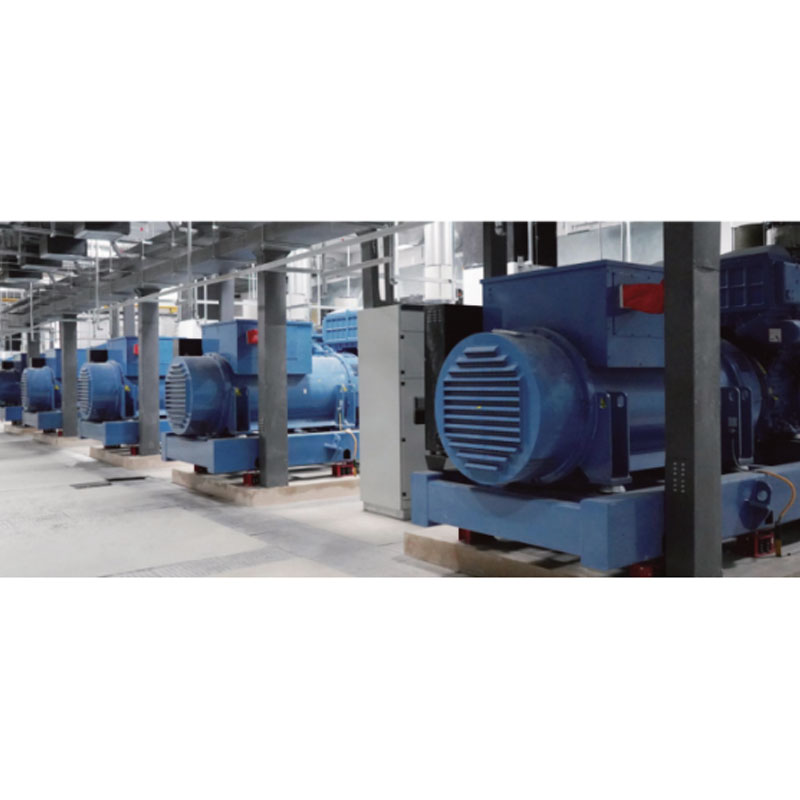
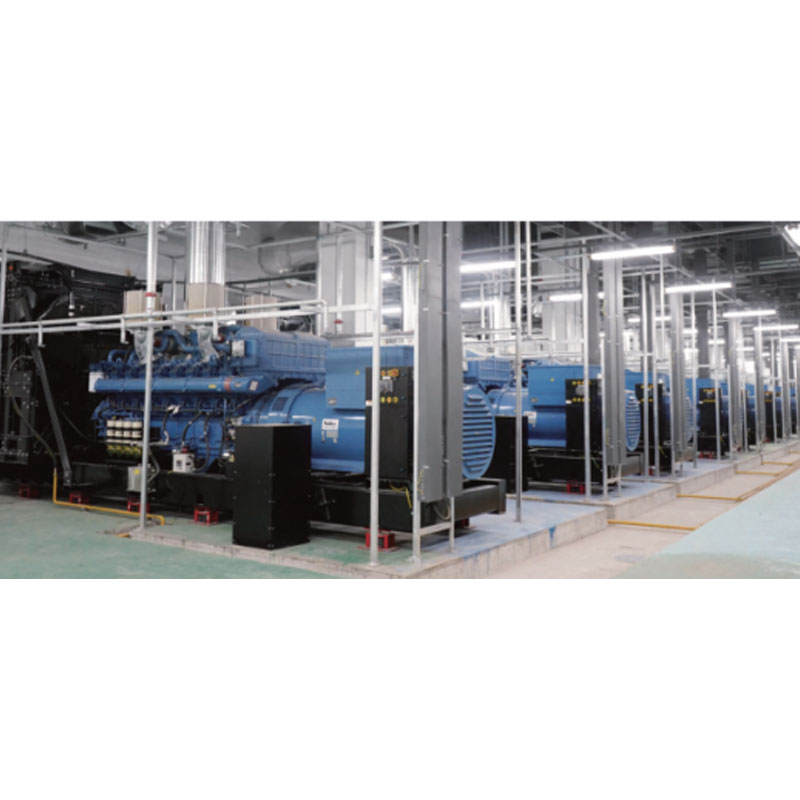
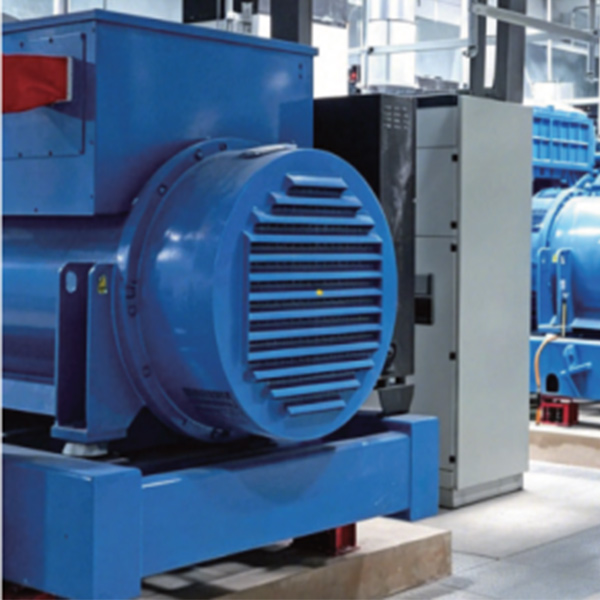
Our review is completed by a company that represents a new type of international manufacturer, deeply integrated into the CIS market.Yuke (Shandong) Electrical Technology LLCis a professional company specializing in the development and supply of comprehensive solutions in the field of autonomous and backup power supply. Located in Shandong Province, the company combines advanced engineering expertise in power generation and advanced energy storage technologies. Unlike simple assemblers, Yuke operates as a full-fledged integrator, relying on strategic partnerships with the world's leading engine and generator brands such as Cummins, MTU, SEM, Perkins and Yuchai.
The company's product portfolio is impressive in its breadth and specialization, from silent mobile stations and emergency power vehicles to multi-megawatt high-voltage generator sets and innovative liquid-cooled energy storage cabinets. Of particular interest to the Russian market are the VCD (Cummins), VSD (SEM) series of diesel generators and VYG (Yuchai) gas generators, which are designed taking into account the requirements for noise reduction and resistance to extreme loads. The company has its own technical base for adapting solutions to regional standards and climatic conditions, which makes its products relevant for infrastructure projects and remote areas.
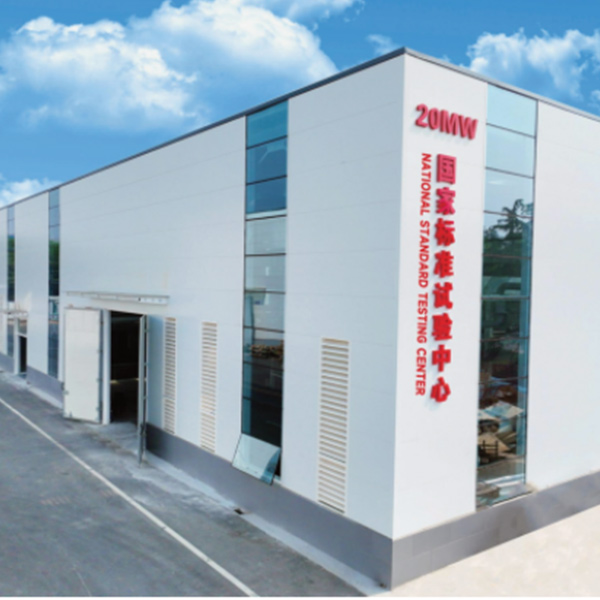
The key advantage of Yuke is its strict quality control system. A multi-level inspection cycle is implemented at the production base: incoming inspection of components, monitoring of assembly stages and, what is critically important, mandatory comprehensive load tests of each piece of equipment for at least 4 hours under nominal and partial load. The final check includes analysis of noise, vibration and output voltage stability parameters. All products comply with international electromagnetic compatibility requirements. Thanks to well-functioning logistics and the philosophy of “reliability through responsibility”, the company ensures regular deliveries to the CIS countries, developing a network of authorized service partners for prompt customer support.
Technical nuances of choice: what to look for in the specification
When studying offers from the above manufacturers, do not limit yourself to viewing beautiful pictures and power figures. The devil is in the specification details. The first thing we pay attention to is the IP protection class and the degree of noise reduction. For outdoor installation, the minimum acceptable class is IP54, but we strongly recommend IP65, especially if the facility is located in a dusty area (cement plants, quarries). Dust penetrating into the alternator leads to an interturn short circuit and expensive winding repairs.
The second critical parameter is the cooling system. In Russian realities, the radiator must be designed for an ambient temperature of +50°C, even if your region has a maximum of +30°C. The reserve is necessary for working in the summer heat at full load. We have seen cases where cheap radiators boiled already at +35°C, causing an emergency stop of the generator. Make sure the specification specifies the material of the radiator fins (copper is preferred over aluminum for durability) and the type of fan drive (direct or viscous).
The third aspect is the launch system. Batteries must be designed for deep discharge and low temperatures. Standard car batteries turn into a piece of ice outside in winter. Manufacturers like TSS, Zelenodolsk Plant or Yuke usually equip units with special heated batteries or offer a battery compartment inside a warm casing. This is the little thing that determines whether the generator will start on a frosty morning.
And the last thing is the filtration system. The air filter should be two-stage, especially for open areas. The oil filter must have a full cleaning flow. Feel free to ask the manager for filter articles. If these are common numbers (for example, from KAMAZ trucks or popular foreign cars), you can buy a replacement at any spare parts store in a remote village. If the filters are exclusive and are ordered only from the manufacturer, you become enslaved to the service.
Comparative analysis: Domestic assembly vs Direct import
Many customers still doubt whether to take a Russian-made diesel generator set or try to import a European brand by “parallel import”. Let's look at the facts through the prism of economic feasibility and technical risks.
| Comparison criterion | Russian manufacturers and adapted international brands (TSS, ZETO, Yuke, etc.) | Direct import (Europe/USA via third countries) |
|---|---|---|
| Delivery time | From 2 to 6 weeks (standard models in stock or quick assembly) | From 3 to 6 months (logistics chains are unstable) |
| Warranty | Official warranty 1-2 years, on-site service | The guarantee is often voided due to unofficial import, service is difficult |
| Cost of Ownership (TCO) | Available spare parts, clear maintenance costs | High cost of original spare parts, long delivery of filters |
| Climate adaptation | Factory version HL (Cold climate), pre-heating | Additional modification required (“northern package”) at your own expense |
| Risk of counterfeit | Minimum when working with an official dealer | High risk of receiving refurbished or counterfeit equipment |
As can be seen from the table, for long-term projects in Russia, domestic assembly and products from adapted international manufacturers look much more attractive. The risk of getting a “pig in a poke” with gray imports is too great. Moreover, modern factories, such as Yuke or TCC, have learned to make quality products using global cooperation. By purchasing a diesel generator set from a trusted brand with a Cummins engine (Chinese assembly) and a Stamford generator (licensed), you receive the same technical product, but with a Russian warranty, adaptation to local networks and confirmed test quality.
Real implementation cases and operating lessons
Theory is important, but practice is everything. I’ll tell you about two illustrative cases from our work that illustrate the importance of choosing the right manufacturer.
Case No. 1: Agricultural holding in the Krasnodar region.
Task: to ensure uninterrupted power supply to the drying complex during the harvesting campaign. Downtime even for 4 hours could lead to damage to a ton of grain. The customer initially wanted to save money and bought a cheap unit of a little-known assembly with a left-handed Chinese engine. Result: after two months of continuous operation (24/7), the voltage regulator failed. Spare parts did not fit, service did not come. Losses amounted to millions of rubles.
Solution: We replaced the installation with a model from one of the leaders in the rating (Zelenodolsk plant) with a YaMZ engine. Despite the slightly higher initial price, the system worked for three seasons without any complaints. The key factor was the ability to quickly replace filters and the availability of a service engineer within a 50 km radius.
Case No. 2: Construction in the Arctic zone.
Task: power supply to a rotational camp at temperatures down to -55°C.
Problem: Generators brought from central Russia could not start. The oil thickened and the batteries lost capacity.
Solution: Use of specialized Arctic versions from manufacturers working with the defense sector, or adapted international solutions with an enhanced winter package. Pre-heaters of coolant and oil were used, operating from an external network or a built-in diesel boiler. The hoods were insulated with high-density mineral wool. This experience has shown that standard equipment cannot be used in extreme conditions, even if the manufacturer is well-known. You need to look for specialized product lines, such as those offered by Yuke for the northern regions or specialized series of Russian factories.
Market prospects and technology trends 2025-2026
The diesel generator set market in Russia is moving towards greater intellectualization and environmental friendliness. It is expected that by 2026 the share of gas piston units (GPU) will increase by 15-20% thanks to the regional gasification program. However, diesel will remain the king of mobile and emergency power. The main trend among Russian manufacturers and their partners is the introduction of domestic automation systems. The departure of Western vendors (Deep Sea, ComAp) stimulated the development of Russian analogues, which are already not inferior in functionality, but are significantly superior in price.
There is also an increase in demand for hybrid solutions: diesel generator sets + Lithium-ion energy storage devices (Li-Ion BESS). This combination allows the engine to operate in optimal load mode, charging the batteries, and peak consumption is covered by the batteries. This reduces fuel consumption by 30% and increases the service interval. Leading factories, including Yuke with its liquid-cooled energy storage cabinets, are already beginning to offer such complete solutions by integrating their generators with energy storage systems.
Another important aspect is digitalization. Modern diesel generator sets must be part of the Smart Factory system. The ability to integrate Modbus TCP protocols into the enterprise's overall SCADA system is becoming a mandatory requirement in tenders. Russian manufacturers and international integrators quickly respond to this request by integrating the necessary interfaces into control controllers.
Frequently Asked Questions
What is the service life of a Russian-made diesel generator or an adapted imported one?
If you follow the maintenance regulations and use high-quality fuels and lubricants, the engine life before major repairs ranges from 20,000 to 40,000 operating hours, depending on the brand of the power unit. Housings and frames last 15-20 years without through corrosion if properly treated. The key factor is not the brand, but compliance with oil and filter change intervals, as well as the quality of incoming control at the manufacturing plant.
Is it possible to connect a Russian diesel generator set or an installation from a partner from the CIS to imported equipment?
Yes, definitely. The quality of electricity (stability of frequency 50 Hz and voltage 400V) is determined by the class of the generator (alternator) and voltage regulator, and not by the country of frame assembly. Installations with class H alternators (high insulation class) and digital AVRs provide “clean” sine wave, suitable for powering sensitive medical and IT equipment.
Are there any problems with spare parts for domestic diesel generator sets and installations of international brands?
The situation has improved dramatically. Since most modern Russian diesel generator sets and products from companies like Yuke are equipped with engines of Chinese brands (Weichai, Yuchai, Fawde) or adapted Russian ones (YaMZ, TMZ), there are no problems with consumables (filters, belts, gaskets). They are available from many suppliers throughout the country. It is more difficult with original control boards, but here too dealers create safety stocks.
What is the difference between primary (PRP) and backup (ESP) mode of operation?
This is a critical selection parameter. PRP (Prime) mode assumes 24/7 operation with the possibility of 10% overload for 1 hour. ESP (Emergency Standby Power) mode is designed to operate only when the main network is turned off (no more than 200 hours per year, without overload). Trying to use a backup unit as a primary unit will result in rapid wear and engine failure. Always check the power mode in the passport.
Conclusion and recommendations for action
Choosing a power source is an investment in the security of your business. Todaywell-known manufacturers of diesel generator sets in the Russian Federationand their trusted international partners offer a level of quality comparable to global leaders, but with much better local support. We recommend not chasing the lowest price, but evaluating the total cost of ownership and service availability. Before signing a contract, be sure to request a reference list and contact existing customers of the plant in your region.
Do not forget that proper operation begins at the stage of designing the foundation and ventilation. Mistakes at this stage can kill even the most expensive generator. If you are in doubt about the choice of power or configuration, contact our engineers for an audit of your facility. We will help you choose the optimal solution that will last for decades.
View the full catalog of certified diesel generator sets | Find out the terms of service
Contact us today to receive a detailed technical and commercial proposal for your needs.
-


-
-


WeChat

-
WeChat