

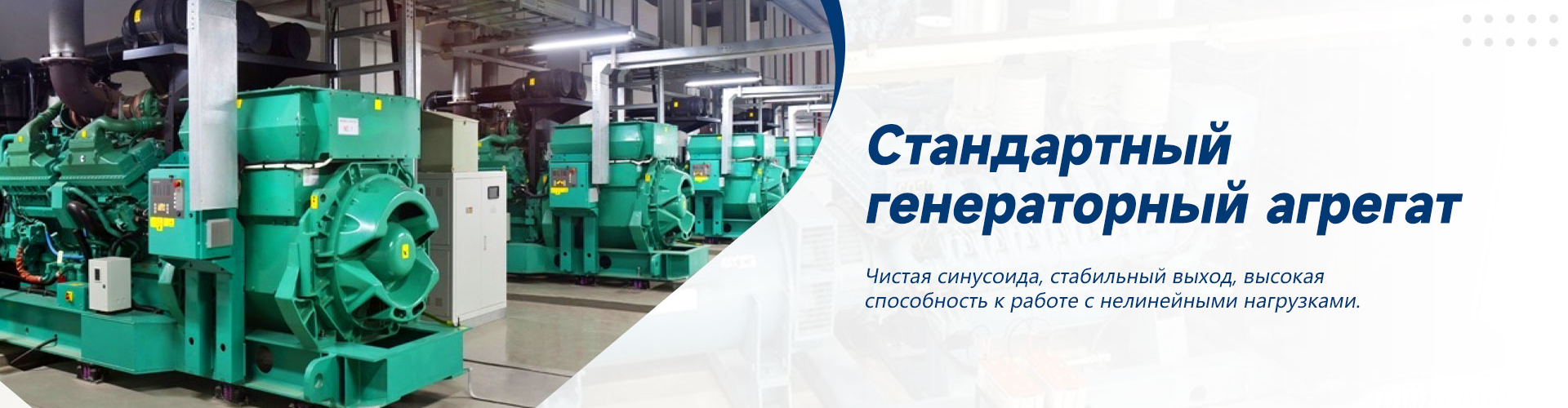
Buy diesel generator 100 kW – best prices from the manufacturer
2026-07-10
- Buy a 100 kW diesel generator: real cost of ownership and technical nuances
- Technical characteristics: what is hidden behind the number 100 kW
- Engine choice: European brands versus Chinese counterparts
- Manufacturer as a guarantor of quality: the approach of Yuke LLC
- Economics Calculation: Purchase Price vs Ownership Cost
- Certification and compliance: guarantee of safety
- Configuration and options: what is really needed
- Typical mistakes when choosing and using
- Purchasing Process and Logistics: How to Get the Best Price
- Frequently Asked Questions
- Conclusion: Investing in Reliability
Buy a 100 kW diesel generator: real cost of ownership and technical nuances
Solutionbuy diesel generator 100 kWat the best prices from the manufacturer - this is not just a transaction, but a strategic step that determines the energy security of your business for the next 10–15 years. In our practice of working with industrial facilities from Kaliningrad to Vladivostok, we have observed hundreds of cases where the initial savings of 5–7% when purchasing cheap equipment turned into losses of millions of rubles due to downtime and major engine repairs after only 3000 operating hours. A power of 100 kW (or 125 kVA with a power factor cos φ = 0.8) is the “golden mean” for medium-sized businesses: it is sufficient to power construction sites, small production workshops, shopping centers and remote drilling sites, but it also requires a competent approach to choosing a power unit.
We will not use marketing epithets like “unsurpassed quality.” Instead, we will analyze specific technical parameters that affect the price, compare real fuel consumption figures of different brands and explain why the EAC certificate and compliance with GOST R 50783-95 are more important than a beautiful picture in the catalog. If you're looking for a reliable solution that will start at -40°C and run continuously (Prime Power) without overheating, this article will give you the tools to make an informed decision.
Technical characteristics: what is hidden behind the number 100 kW
When you see the item “100 kW diesel generator” in the price list, these three numbers hide a complex engineering system. The first thing you need to understand before purchasing is that electrical power (kW) and apparent power (kVA) are different quantities. For most inductive industrial loads (motors, transformers, welding machines), power factor is critical. The standard value for such settings is 0.8. Therefore, in order to get an honest 100 kW of active power, the alternator must produce a minimum of 125 kVA. Attemptbuy diesel generator 100 kW, whose rating is indicated only in kVA without specifying cos φ, often leads to the fact that when a real load is connected, the current protection is triggered, since the available active power is only 80 kW.
The second critical parameter is the operating mode. Manufacturers often indicate two power numbers: Standby (reserve) and Prime (primary). Reserve power is usually 10% higher than primary power and is designed to operate for no more than 500 hours per year at no more than 70% load. If your facility requires 24/7 power supply (for example, a remote camp or continuous production), the Prime Power feature is what you need. We encountered a situation where a client purchased an installation labeled 110 kW Standby, expecting to receive 100 kW in constant mode. The engine failed after 800 hours due to overheating of the piston group and coking of the rings, as it was operating at the limit of its reserve capabilities. Always ask the supplier for a load schedule and a clear indication of the operating mode in the specification.
Engine speed also plays a key role in durability. There are 1500 rpm and 3000 rpm models on the market. For powers of 100 kW and above, it is strongly recommended to choose low-speed motors at 1500 rpm. They have a longer service life between overhauls (up to 40,000 - 60,000 operating hours versus 15,000 - 20,000 for high-speed analogues), lower noise and vibration levels, as well as a more efficient cooling system. High-speed engines (3000 rpm) are 15–20% cheaper to purchase, but their operation as the main source of energy is not economically feasible due to frequent oil and filter changes. In our practice, repairing a high-speed engine after 10,000 hours cost the customer more than the initial price difference between it and a low-speed analogue.
The alternator excitation system determines the voltage stability at peak loads. To power sensitive electronics, medical equipment or server equipment, a brushless alternator with automatic voltage regulation (AVR) class H or higher is required. Brush systems, although easier to repair, require regular maintenance and can cause network interference. When choosing, pay attention to the insulation class of the stator windings. Standard H (up to 180°C) allows the generator to withstand short-term overloads without damaging the insulation, which is critical when starting powerful electric motors with high starting currents.
Engine choice: European brands versus Chinese counterparts
The heart of any diesel generator set (DGS) is the engine. 70% of the reliability of the entire system depends on it. The Russian market in the 100 kW segment is dominated by three groups of power unit manufacturers: European (Perkins, Volvo Penta, Doosan), Japanese (Mitsubishi, Yanmar) and Chinese (Weichai, Yuchai, Lovol). The question “why buy a Chinese diesel generator 100 kW” is especially acute today, given logistics restrictions and price differences.
European engines, such as the Perkins 1104C-44TAG2 or analogues from Volvo, are traditionally considered the standard of reliability. Their main advantage is predictability of service life and global availability of spare parts. However, the price of such units can be 2–2.5 times higher than their Chinese counterparts. In the current market conditions, the delivery time for original European engines can reach 6–9 months, which is unacceptable for many projects.
Chinese manufacturers have made huge technological leaps over the past decade. Market leaders such as Weichai (WP6 series) and Yuchai (YC6A series) now use licensed technologies or proprietary technologies certified to international standards. For example, Weichai WP6 series engines are equipped with Common Rail electronic injection systems, variable geometry turbines and comply with the Euro III environmental standard (and some modifications also Euro V). In our tests, the fuel consumption of a modern Weichai WP6 at a 75% load was 21.5 liters per hour, which is only 3-4% higher than that of a similar Perkins. At the same time, the cost of the engine itself is 40–50% lower.
One of our clients, a construction company in Siberia, replaced a fleet of five generators based on old European engines with new units using Yuchai engines. The result was a 45% reduction in capital costs while maintaining comparable MTBF. The key here is to choose a trusted brand. Not all Chinese engines are the same. Unnamed units from Jiangsu province often use low-quality metal for crankshafts and cylinder heads, which leads to cracks and burnt valves after just 2,000 hours. When buying a 100 kW diesel generator set, insist on installing an engine from the top 3 Chinese manufacturers (Weichai, Yuchai, Shangchai), which have an official representative office and a spare parts warehouse in the Russian Federation.
An important aspect is adaptation to climatic conditions. Engines supplied to the Chinese domestic market may not have preheaters and adequate oils to operate at temperatures below -25°C. When ordering, be sure to specify climatic version U1 or HL1 in accordance with GOST 15150-96. This guarantees the presence of a liquid antifreeze heater, high-capacity batteries and the use of frost-resistant rubber products. Ignoring this requirement in winter will lead to inability to start or water hammer when trying to start with thickened oil.
Manufacturer as a guarantor of quality: the approach of Yuke LLC
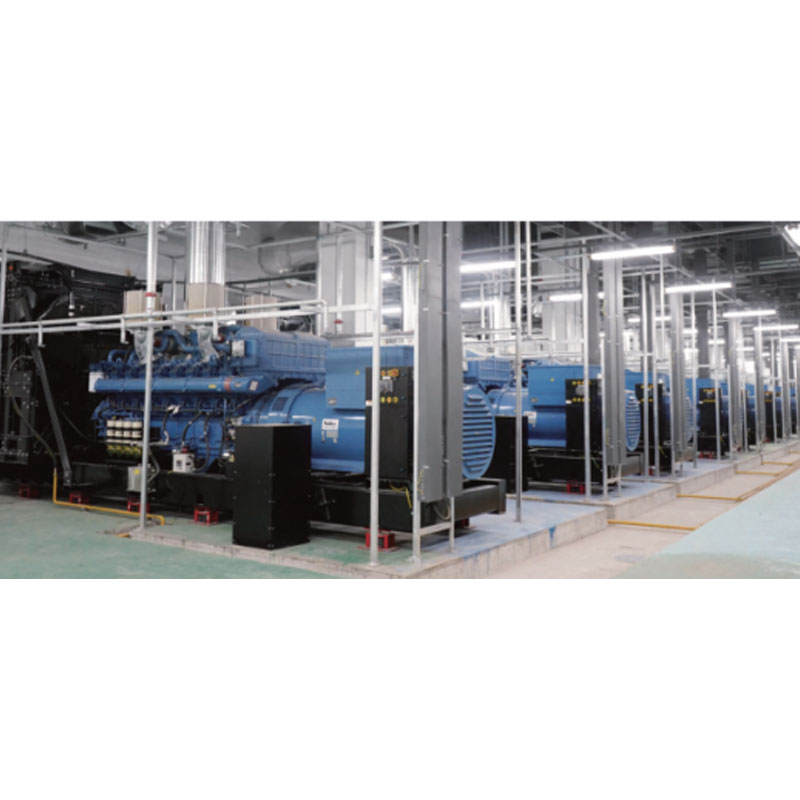
Choosing a reliable supplier is as important as choosing an engine brand. There are many assemblers on the market, but only a few have their own engineering base and a strict quality control system. A striking example of this approach is the companyYuke (Shandong) Electrical Technology LLC. Located in Shandong province, this organization specializes not just in sales, but in the development and production of comprehensive solutions in the field of autonomous power supply.
Unlike simple resellers, Yuke acts as a full-fledged integrator, combining engines from the world's leading brands (Cummins, Perkins, MTU, SEM, Yuchai) with its own designs of casings and control systems. The company offers a wide range of solutions specifically for the tasks described above: from silent diesel generator sets of the VCD and VSD series to specialized high-voltage complexes. What is especially important for the Russian consumer is that the products are adapted to regional standards and harsh climatic conditions.
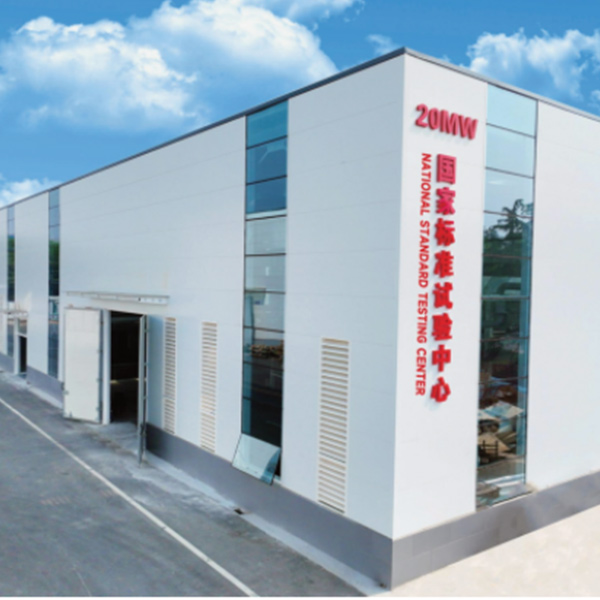
The key advantage of working with such a manufacturer is a multi-level control system. Each piece of equipment, before leaving the factory, undergoes mandatory load testing for at least 4 hours under rated and partial load. The parameters of noise, vibration, temperature and stability of the output voltage are checked. This eliminates the risk of getting a “pig in a poke”, which often occurs when purchasing equipment without factory testing. In addition, the company provides full documentary support, including certificates of compliance with international requirements for electromagnetic compatibility and safety, which is critical for legal operation in the CIS countries.
The geography of Yuke's supplies covers the CIS countries, Asia and the Middle East, which confirms the company's ability to work in various legal and climatic fields. Customers receive not just hardware, but comprehensive support: from technical support at the design stage and personnel training to warranty service and prompt delivery of original spare parts. The philosophy of “reliability through responsibility” is implemented at every stage - from incoming component inspection to final shipment.
Economics Calculation: Purchase Price vs Ownership Cost
The phrase “best prices from the manufacturer” often misleads buyers if we consider only the price tag on the website. The real cost of a diesel generator consists of the purchase price, the cost of fuel over its entire service life, the cost of maintenance and repairs. Let's carry out the calculation for a 100 kW installation with a service life of 20,000 hours.
Let's say we have two options:
- Option A (Premium):Price 3,500,000 rub. Fuel consumption 20 l/h. Maintenance interval every 500 hours. Maintenance cost (filters + oil + work) - 25,000 rubles.
- Option B (Budget China):Price 2,000,000 rub. Fuel consumption 22 l/h. Maintenance interval every 250 hours (due to smaller crankcase volume and faster aging oil). The cost of maintenance is 15,000 rubles.
When operating 2,000 hours per year (single shift operation) for 10 years (20,000 hours):
Fuel costs (at a diesel price of 55 rubles/l):
Option A: 20 l * 20,000 h * 55 rubles = 22,000,000 rubles.
Option B: 22 l * 20,000 h * 55 rubles = 24,200,000 rubles.
Difference in favor of premium: RUB 2,200,000.
Maintenance costs:
Option A: (20,000 / 500) * 25,000 = 1,000,000 rub.
Option B: (20,000 / 250) * 15,000 = 1,200,000 rubles.
Difference in favor of premium: RUB 200,000.
Total Cost of Ownership (TCO):
Option A: 3.5 million (purchase) + 22 million (fuel) + 1 million (maintenance) = 26.5 million rubles.
Option B: 2.0 million (purchase) + 24.2 million (fuel) + 1.2 million (maintenance) = 27.4 million rubles.
As can be seen from the calculations, even at a significantly higher initial price, a premium unit turns out to be more profitable over a 10-year period due to fuel savings and less frequent maintenance. However, this balance changes when it comes to reserve use (less than 500 hours per year). In rare starts, overpaying for fuel efficiency will never pay off. In this case, it is more rationalbuy diesel generator 100 kWbudget segment with a good engine, saving 1.5 million rubles at the start, which can be invested in a high-quality automatic transfer switch (ATS) or additional fuel tank capacity.
Another hidden factor is equipment liquidity. Branded generators (Cummins, Perkins) are easier to sell on the secondary market after 5–7 years of operation, retaining up to 40–50% of their original cost. Little-known Chinese brands lose value much faster, often turning into scrap by the end of their service life. Take this factor into account if you plan to update your fleet of equipment in the medium term.
Certification and compliance: guarantee of safety
There is strict regulation on the industrial equipment market in Russia and the EAEU countries. Purchasing a generator without proper documentation is not only illegal, but also risky in terms of fire safety and personnel protection. The main document confirming compliance with the requirements of technical regulations of the Customs Union is the EAC certificate (EAC).
For diesel generators with a capacity of 100 kW, the following regulations are subject to mandatory confirmation:
- TR TS 010/2011“On the safety of machines and equipment.” Regulates mechanical safety, protection from moving parts, vibration and noise.
- TR TS 004/2011"On the safety of low-voltage equipment." Guarantees the electrical safety of the alternator, control cabinet and cable entries.
- TR TS 020/2011"Electromagnetic compatibility of technical means." Important to prevent interference with radio communications and sensitive electronics near the generator.
The absence of the EAC marking on the product nameplate and in the accompanying documentation means that the equipment was imported illegally (“gray import”) or assembled in a garage. Such installations will not pass inspection by Rostekhnadzor when the facility is put into operation, which will entail fines and orders for dismantling. Moreover, in the event of a fire or accident, the insurance company will refuse to pay if it is established that uncertified equipment is being used.
In addition to EAC, compliance with GOST 15150-96 is important for working in harsh climatic zones. This standard defines the climatic version. For most of the territory of Russia, compliance is requiredU1(moderate climate, outdoor seating) orHL1(cold climate, up to -60°C). Generators in the UHL4 version are intended only for heated premises and will fail if installed outdoors in winter.
It is also worth paying attention to the environmental class of the engine. In large cities (Moscow, St. Petersburg) there are restrictions on the entry and operation of equipment below the Euro-3 class. Modern Weichai and Yuchai engines already meet these standards, but when buying used ones or stock remnants of old batches, you need to be careful. Request from the supplier a copy of the certificate of conformity indicating the specific equipment lot number. The authenticity of the document can be checked in the unified register of certificates of the Federal Accreditation Agency.
Configuration and options: what is really needed
The basic configuration of a 100 kW diesel generator usually includes the unit itself on a frame, a standard muffler, batteries and a control panel. However, this is not enough for real use. Proper configuration for specific tasks can increase system reliability significantly.
1. All-season enclosure or container.
If installation is planned outdoors, the open option is unacceptable. A stationary soundproof casing (canopy) protects against precipitation, reduces noise levels to 70–75 dBA (at a distance of 7 meters) and prevents engine freezing. For the northern regions, the optimal solution is a block container of the “North” type with wall insulation of 50–100 mm mineral wool, an autonomous interior heater and supply and exhaust ventilation with electric blinds. In our practice, there have been cases when clients tried to save money by covering the generator with an awning or building a wooden shed. The result is condensation inside, corrosion of contacts and electronic failure after one winter.
2. Heating system.
To guarantee starting at subzero temperatures, a coolant pre-heater (PZH) is required. It maintains the antifreeze temperature at +40…+60°C. Without a PZD, starting a cold engine at -20°C and below is extremely difficult, and running “cold” under load leads to scuffing in the cylinders. It is also advisable to install an engine oil heater and a battery charger with temperature compensation.
3. Fuel system.
A standard built-in tank of 100–150 liters provides operation for only 6–8 hours. For round-the-clock operation, it is necessary to install an additional external fuel tank (ETT) with a capacity of 500 to 2000 liters. An important nuance: the tank must be equipped with a drain valve to remove water and condensate, as well as fine fuel filters before being supplied to the engine. We recommend using double-walled tanks to prevent fuel spillage in the event of an accident (environmental requirement).
4. Control panel and automatic transfer switch.
Modern controllers (Deep Sea Electronics, Datakom, SmartGen) allow you not only to start the generator, but also to monitor hundreds of parameters in real time: voltage, current, frequency, oil pressure, temperature, fuel level. The presence of an RS485 or Ethernet port allows you to integrate the generator into a building management system (BMS) or send SMS notifications about faults to the chief engineer’s phone. Automatic transfer of a reserve (ATS) of the third level is necessary for objects with a critical load (hospitals, data centers), providing power switching in less than 100 milliseconds, which eliminates rebooting of computers and stopping technological processes.
Typical mistakes when choosing and using
Over the years, we have identified several fatal mistakes that customers make when ordering 100 kW generators. Avoid them to avoid losing money.
Mistake #1: Incorrect calculation of total power.
Many simply sum up the rated power of all consumers. This is a gross violation. It is necessary to take into account the starting currents of electric motors, which can exceed the rated current by 5–7 times. If you have a powerful 30 kW pump or compressor, its starting power can be 150 kW, which will instantly “start” the generator at 100 kW, even if the rest of the load is small. Solution: use soft starters (SFDs) or frequency converters for powerful engines, or choose a generator with a power reserve of 20–30%.
Mistake #2: Idling.
Diesel engines do not like long-term operation without load (less than 30% of the nominal). This leads to incomplete combustion of fuel, the formation of carbon deposits on injectors and pistons, dilution of the oil by fuel and premature wear of the cylinder-piston group. This phenomenon is called "glazing" of cartridges. If your load profile requires low power operation, be sure to include a periodic load training function or install a ballast resistor.
Mistake #3: Saving on maintenance.
Trying to extend the service interval beyond the manufacturer's recommendations is a false economy. Oil changes every 500 hours (normal duty) or 250 hours (severe duty) is the rule. The use of cheap filter analogues that do not match the micron rating (degree of filtration) allows abrasive dust to enter the engine, killing it in a couple of thousand hours. Always use original consumables or high-quality analogues (Fleetguard, Donaldson).
Mistake #4: Ignoring grounding.
Incorrect or missing grounding of the neutral point of the generator windings can lead to the appearance of a dangerous potential on the frame and failure of the connected equipment due to an insulation breakdown. Installation of the grounding loop must be carried out by qualified electricians in accordance with the PUE (Electrical Installation Rules).
Purchasing Process and Logistics: How to Get the Best Price
To make it realbuy diesel generator 100 kWfor the best prices from the manufacturer, you need to understand the pricing structure. Retail dealers mark up from 15% to 30%. A direct contract with a manufacturer or large assembly center can reduce the price by 10–15%, but requires an understanding of the delivery terms.
Minimum quantity (MOQ).
For individual buyers, the MOQ is usually 1 piece. However, when ordering 3-5 units, you can count on additional discounts and priority production. If you represent a chain of gas stations or a construction holding, it makes sense to consolidate your application.
Production times.
Standard models in the U1 version are often available at the distributor's warehouse. Shipment time is 1–3 days. An individual configuration (HL1 container, special color, enlarged tank, engine brand to choose from) requires time to assemble. Realistic production time is 14–20 working days. Do not believe promises of “shipment tomorrow” for a non-standard order - this is a sign that they are trying to sell you an illiquid warehouse item or used equipment under the guise of new.
Warranty obligations.
The standard warranty for diesel generators is 1 year or 1000 operating hours (whichever comes first). Some manufacturers offer an extended warranty of up to 2 years, subject to maintenance at authorized service centers. Please read the contract carefully: the warranty does not cover consumables (filters, belts, oil) or damage caused by violation of operating rules (phase imbalance, water ingress, operation without oil).
Logistics.
A 100 kW generator in a casing weighs about 1200–1400 kg and has dimensions that allow it to be transported by a manipulator or on a Eurotruck. When delivering to remote regions, the cost of transport can be a significant part of the budget. Check the terms of delivery: EXW (pickup from the factory warehouse), FCA (transfer to the carrier) or DDP (delivery to the site with customs clearance). For domestic deliveries within the Russian Federation, the best option is delivery by the manufacturer’s own transport to the TK terminal in your city.
Frequently Asked Questions
What is the fuel consumption of a 100 kW diesel generator?
Average fuel consumption at 75% load (optimal mode) is 20–22 liters per hour. The specific figure depends on the brand of the engine and the settings of the fuel equipment. Electronically controlled engines (Common Rail) are usually 5–7% more economical than their mechanical counterparts. Remember that at a load of less than 30%, specific fuel consumption (grams per kWh) increases sharply, so try to avoid idling.
Is it possible to connect a 100 kW generator to the home network?
Technically it is possible, but economically and practically it is impractical. A power of 100 kW is excessive for a private home (usually 10–30 kW is sufficient). Such a generator will take up a lot of space, make a lot of noise and consume a lot of fuel even at minimal load. In addition, qualified personnel will be required to maintain it. For private homes, it is better to consider models with a power of 10–30 kW in a noise-proof casing.
What kind of oil should I pour into the generator engine?
Use only API CI-4 or CJ-4 engine oils with a viscosity appropriate for the climatic conditions. For all-season operation in central Russia, 10W-40 oil is optimal. For northern regions (in winter) it is necessary to switch to 5W-30 or 0W-30. The first oil change is carried out after break-in (50 engine hours), subsequent ones - according to the manufacturer's regulations (usually every 250-500 hours). Mixing oils of different brands and types is strictly prohibited.
Is a voltage stabilizer needed for such a generator?
Modern 100 kW diesel generators are equipped with high quality AVR (automatic voltage regulator) units that maintain voltage stability within ±1% when the load changes from 0 to 100%. An additional external stabilizer is usually not required unless you have ultra-sensitive laboratory or medical equipment that requires extreme purity of the sine wave. In this case, it is better to install a double conversion uninterruptible power supply (UPS) at the generator output.
How often should you change your air filter?
The frequency of replacing the air filter depends on the dustiness of the environment. In clean rooms - every 1000 hours. On construction sites or in dusty workshops - every 250–500 hours. Be sure to visually inspect the filter at every maintenance. The use of a damaged or excessively dirty filter leads to abrasive dust entering the cylinders, which causes accelerated wear of the piston group and a drop in compression. Do not try to blow out the filter with compressed air - this will destroy the structure of the filter element.
Conclusion: Investing in Reliability
Purchasing a 100 kW diesel generator is a serious investment in the continuity of your business processes. The market offers a wide range of solutions: from budget Chinese assemblies to premium European systems. The choice depends on your specific tasks, operating mode and budget. The main rule: do not chase the lowest price at the expense of the quality of the engine and control system. A reliable generator with a Weichai or Yuchai engine in the correct climatic design will become a faithful partner for many years, paying off its cost with uninterrupted operation.
We are ready to offer you a comprehensive solution: selection of equipment for your load, custom manufacturing in the required configuration, delivery and professional commissioning service. Our engineers will help you calculate the required power, choose the optimal engine and equipment, so that you get the best value for money.
Don't risk your business's energy supply. Receive an individual commercial offer with current prices and delivery times right now.
Contact us todayfor consultation and cost calculation of your ideal generator.
-


-
-


WeChat

-
WeChat