

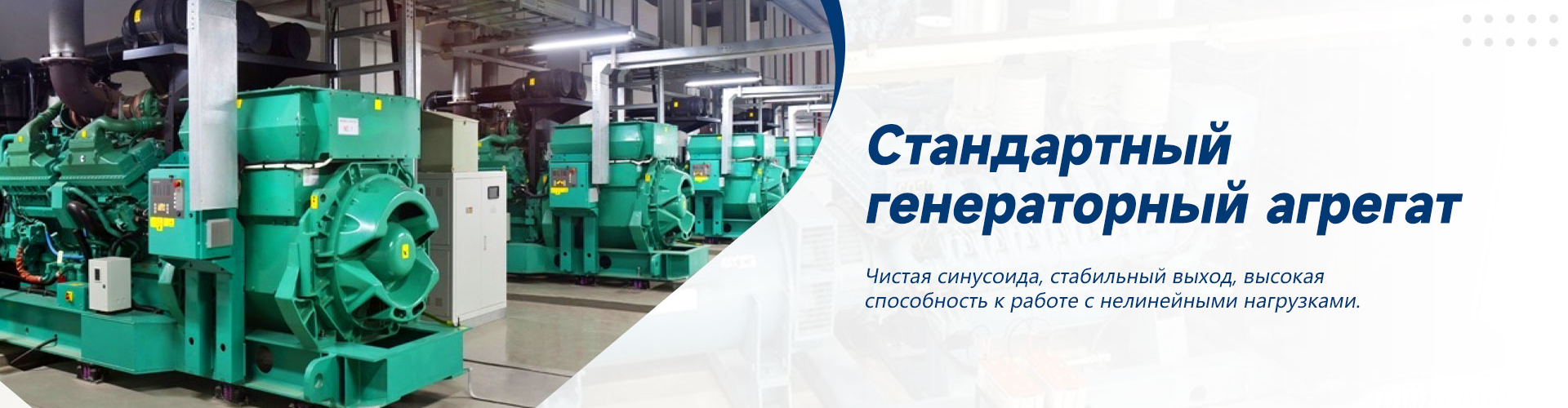
Is China the main buyer of mobile generators?
2026-01-12
You see this headline and you immediately want to say, of course, yes. What volumes? But if you dig deeper, everything is not so clear. In statistics, China is often understood as a giant re-export hub, and not as an end consumer. Or they confuse production with domestic demand. I myself have been observing this market for many years, and the main conclusion is: China is not one buyer, but dozens of different markets in one, each with its own logic. And mobile power plants are just one tool in a huge energy arsenal.
What's behind the import numbers?
When you look at the data on the import of generators into China, the numbers are impressive. But the key nuance is the destination port. A huge flow goes through Shanghai, Ningbo, Guangzhou. Much of this technology does not last long. It undergoes customs clearance, minimal assembly or adaptation, and then is sent further - to Africa, the Middle East, and Central Asia. China acts as a powerful logistics and distribution center. Therefore, calling him a core buyer in the classical sense is a bit of an oversimplification.
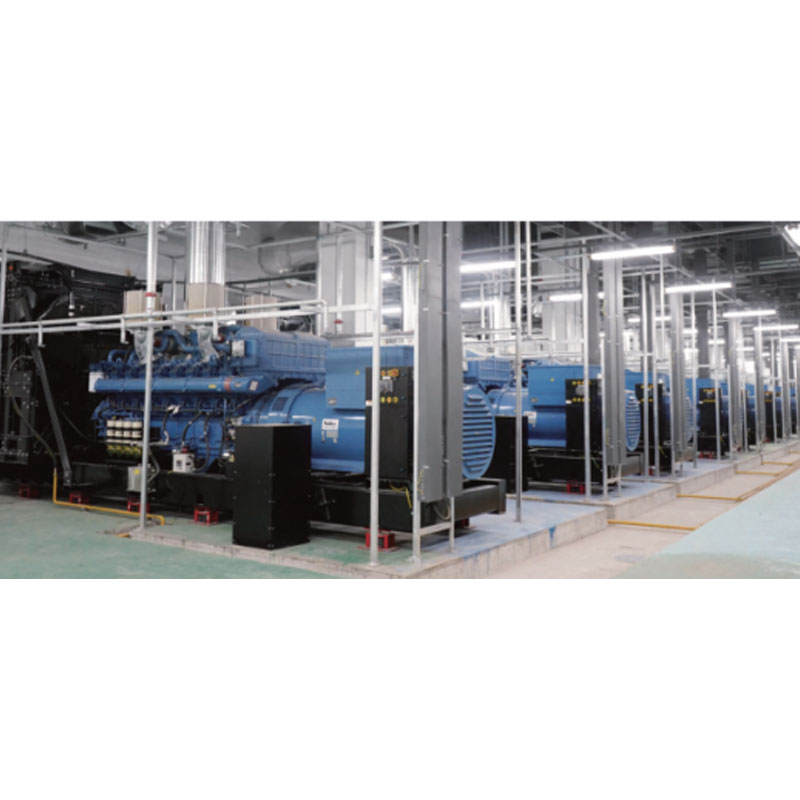
Domestic demand is extremely segmented. On the one hand, you have megacities with stable networks, wheremobile generators- This is a reserve for hospitals, data centers, and premium construction sites. There requirements for noise, emissions, and reliability are at European levels. And often it is proven brands like Cummins, FG Wilson that are bought or leached, although local manufacturers like the same DEVER (they are also the basisYuke (Shandong) Electrical Technology Co.,Ltd) are already firmly on their heels in terms of quality.
On the other hand, there are endless inland regions, remote construction sites, and mining operations. They need a workhorse: simple, repairable, with accessible spare parts. This is where Chinese manufacturers reign, and the demand is often not for purchase, but for rental through local contracting firms. I saw it myself at a project in Sichuan: there is a row of unsightly-looking installations operating around the clock. I asked if it was a local production, but the engines, interestingly enough, were often Perkins or Deutz. The frame and generator part are our own.
Demand is born from problems, not from statistics
We tried to somehow promote an ideal solution in one region - a generator with an automatic transfer system (ATS) and remote monitoring. It didn't work. It turned out that the customer’s main pain was not the moment of switching when the network was disconnected, but the theft of diesel fuel at night in an unguarded area. What they needed was not a smart, but a strong unit with a lock on the tank and a level sensor that could not be fooled. This is about real needs.
Another driver that is often overlooked is government programs for electrification and the creation of backup systems for social facilities. Tenders are huge, but specifications can change unpredictably, and requirements for component localization are increasing. For a foreign supplier it is a maze. For locals likeYuke Electric, who have the experience of DEVER Electric since 2003, is a domain field. They know how to complete the documentation, pass CCC certification, and can quickly adapt the design to the desired percentage of localization.
It's worth checking out the sitevoyoko.ruis the Russian-language platform of that same company. It is clear that they are relying not just on the sale of hardware, but on the complex: development, supply, construction, service. This is the answer to the market request - it is not enough to buy a generator, you need to properly integrate it into the infrastructure of the facility. And Chinese companies that grew out of engineering teams can do just that.
Failures and lessons: when cheaper does not mean more profitable
I had personal experience with the purchase of a batch of compact gasoline generators for a chain of small hotels. We chose an attractively priced model from a new manufacturer from the catalogue. When they arrived, they looked great. But in practice: there is a problem with carburetors when there are differences in altitude (hotels are in the mountains), the noise is higher than stated, and the service instructions were translated with such errors that it was easier to figure it out yourself. I had to hire a local mechanic to fine-tune it. Saving turned into a headache.
This is a common disease of the low price range segment. China is a gigantic market, and there is everything there: from outright rubbish to products that are superior to world analogues. The buyer’s task is not to buy from China, but to find the right manufacturer. Those who have been in the game for a long time, like the same team behindYuke LLC, have long understood that the battle is won by reliability and after-sales service, and not just the price tag. Their strength lies in vertical integration: they design themselves, produce key components themselves, and control logistics themselves.
The trend now is towards hybrid solutions. Not just a generator, but a generator in conjunction with solar panels and an energy storage system. Especially for remote communication base stations or eco-resorts. This is where Chinese companies feel like fish in water, because the entire technological cycle - from the panel to the battery and power electronics - is within their country. And the mobile power plant becomes part of the microgrid, and not an emergency crutch.
So who is buying anyway?
To summarize, the main buyer of mobile generators is not abstract China, but specific sectors of its economy that live in conditions of shortage or instability of network infrastructure. These are the construction industry (especially in the western regions), the mining industry, telecom operators, expanding logistics hubs, as well as the growing segment of commercial and household reservations in second- and third-tier cities.
Imports remain significant, but their nature is changing. They are importing more and more not ready-made installations, but high-tech components, engines, control systems - things that are currently more profitable or more reliable to buy abroad. And assembly and adaptation are already underway. This is the very innovative technological enterprise model that many people declare, includingYuke Electric.
So, to answer the question from the title: yes, China is the largest player in the mobile generator market. But rather as a complex ecosystem, where it is at the same time a powerful producer, a key re-export hub, and a huge but extremely picky domestic consumer. And understanding this triple role is the only way to build a business here. It’s no longer possible to simply bring it and sell it. You need to integrate into the chain, offer a solution, not a product. This is exactly what those who are truly rooted here do.
-


-
-


WeChat

-
WeChat