

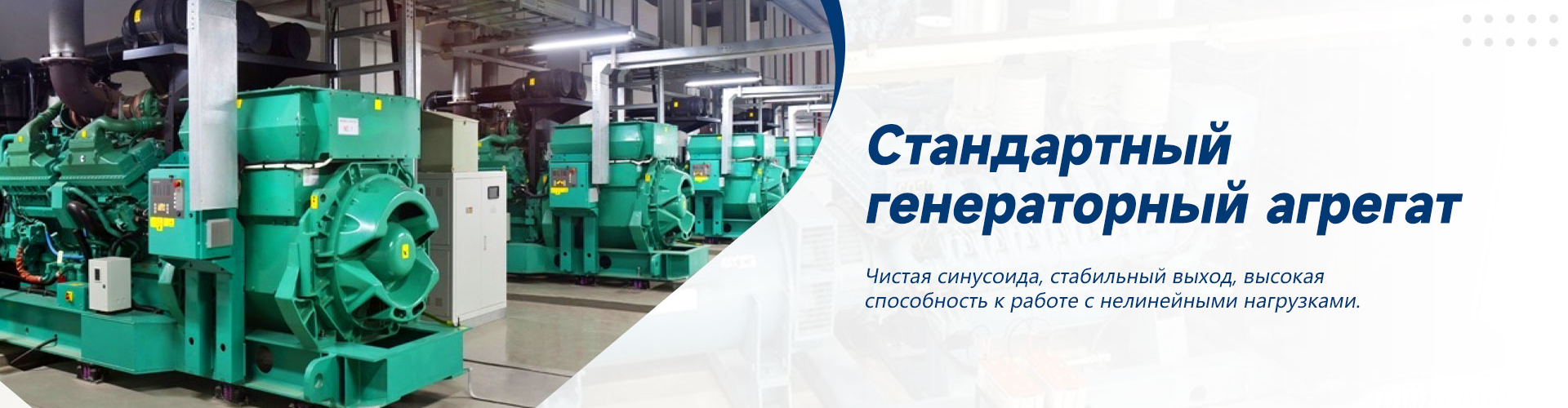
Chinese diesel generators: main markets?
2026-01-12
I hear this question often, and usually people expect a simple list of countries. But the reality, as usual, is more complicated. Many people immediately think of Africa or Southeast Asia as the main “dump” for inexpensive equipment. This is partly true, but if you dig deeper, it turns out that the markets there are completely different in terms of requirements, and a Chinese generator is no longer synonymous with “cheap for one season?” I’ll try to sort it out based on what I saw myself and what we worked on inYuke (Shandong) Electrical Technology Co.,Ltd.
Not just “emerging markets”: gradation by demand
If we take traditionally strong export destinations, then, of course, sub-Saharan Africa and Southeast Asia are in first place. But separation is important here. Nigeria, Angola, Ghana are markets where there is enormous demand for energy supply for the mining industry, telecoms and simply to meet basic needs in conditions of unstable networks. There, there is a demand for installations in containers, with enhanced protection from humidity and dust, often with noise reduction requirements for urban facilities.
But in Southeast Asia, for example, in Vietnam or Indonesia, the picture is different. There is a lot of construction there and production is developing. What is needed is not just “electric generators”, but comprehensive solutions for backup power supply to factories, shopping centers, and hospitals. Price is important, but along with it comes reliability and availability of service support. I remember how for one project in Indonesia it took a long time to agree on exhaust specifications - local regulations became stricter, and the standard equipment did not pass.
And the third layer is within the “developing” ones. - these are the CIS countries, especially Kazakhstan, Uzbekistan, Belarus. Here the buyer is often more technically savvy and compares them with European analogues. The key is adaptation to cold climates (pre-heaters, frost-resistant materials) and, importantly, the ability to quickly supply spare parts. Competition with Turkish and, more recently, Belarusian manufacturers is very intense.
Europe and the Middle East: entrance ticket - certification and "smart" functions
Many manufacturers dream of entering the European market, but this is not a story about mass sales, but about niche projects. The main buyers are contractors who work on temporary sites (construction sites, events), or small businesses for which a German or Italian generator is too expensive. But! Without a CE certificate, not just on paper, but with real emission and safety test reports, there is nothing to do there. Noise should be minimal.
In the Middle East (UAE, Saudi Arabia, Qatar) the specifics are different. There are many infrastructure projects there, and the events industry is developed. Generators are often leased rather than purchased. Therefore, the key is trouble-free operation in hot and sandy conditions, maximum reliability and ease of maintenance. They have to compete with giants such as Caterpillar or Cummins, so Chinese manufacturers are betting on the best price-performance ratio for a certain power, say in the range of 20-500 kVA.
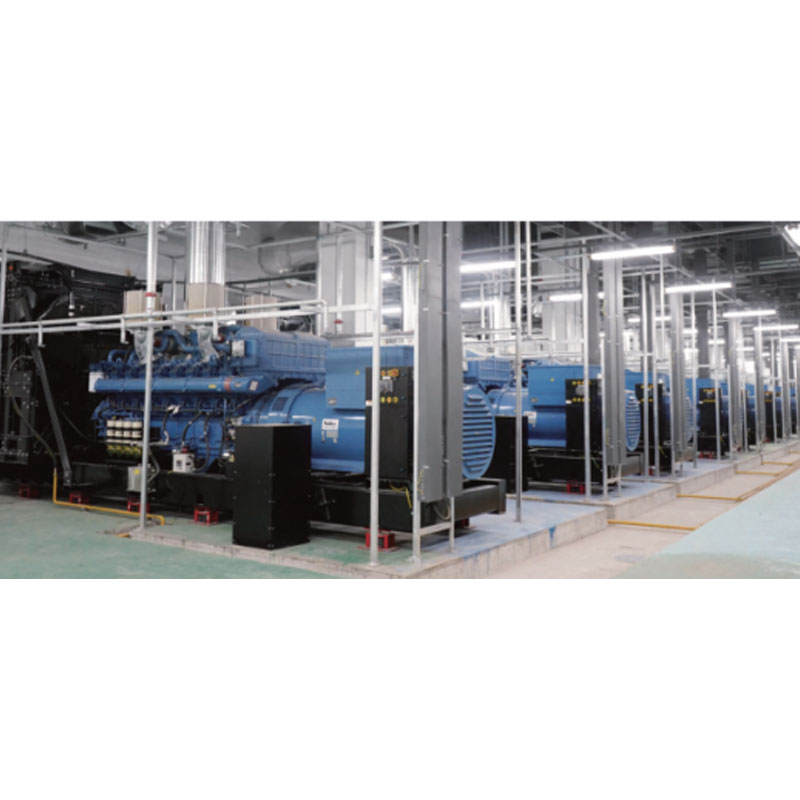
There was an interesting case involving the delivery of severaldiesel generator setsto ensure construction in the UAE through our partner. The main headache was not the machine itself, but compliance of the documentation and labeling with all local requirements. I had to quickly redo the nameplates and manuals. A trifle, but it could disrupt the acceptance process.
The role of integrators and specialized companies
Direct sales to the end user are rare. Most often, the distribution channel is local engineering or trading companies that act as integrators. They take care of adaptation, commissioning and service. For example, our companyYuke Electric, often works in precisely this logic: we don’t just sell equipment from the sitevoyoko.ru, but we offer technical solutions for the task, be it power supply to a remote telecom base or a backup source for a factory.
There are such integrators in every region. Their loyalty is a huge asset. They know local nuances: which banks give loans for equipment, how to get through customs, what hidden requirements power engineers have. Without them, even the best generator can gather dust in a warehouse for years, because there are no necessary papers for connection.
Therefore, it is important for the manufacturer to build long-term relationships not with hundreds of small dealers, but with several proven integrators in key countries. For example, we once “got burned” in one of the countries of Eastern Europe, working with an unverified agent who promised mountains of gold, but did not have the technical competence for installation. The result is reputational losses and litigation.
Trends that are changing markets
Beyond geography, it is important to look at trends. Firstly, this is the tightening of environmental standards everywhere, even in Africa. Tier 2, Tier 3 engines are becoming a must-have. Secondly, there is a growing demand for hybrid solutions: generator + solar panels + energy storage system. This is especially true for remote sites, where it is expensive to constantly transport diesel fuel.
Thirdly, digitalization. Remote monitoring of parameters, predictive analytics for maintenance, integration into smart building systems - this is no longer fantasy, but a real request from advanced customers. Chinese manufacturers who can offer not just “hardware”, but such digital hardware, will receive a serious advantage.
And fourth is production flexibility. Demand is increasingly for customization: non-standard color marking, specific equipment with automation (for example, only certain brands), installation on special chassis. Conveyor production ?one model for all? becomes a thing of the past. The ability to quickly and affordably fulfill a non-standard order is now a key competency.
Conclusions for those who want to work with this market
So, to summarize. The main sales markets are not countries, but rather types of tasks and segments: providing industry and infrastructure in developing countries, niche projects in Europe, contracts in the field of construction and events in the Middle East. There is no universal solution.
Two links are critically important: a reliable local integrator partner and our own ability to flexibly adapt to the technical requirements and documentation standards of a particular region. Without this, even the best product can fail.
And one last thing. MarketChinese diesel generatorsIt has long ceased to be a market for simply cheap goods. This is a market for technologically advanced, adaptive solutions, where competition is based on price, quality, service and speed of response. And those who understand this find their clients from Latin America to Central Asia. As, in fact, our team is trying to doYuke Electric, combining engineering experience with an understanding of local specifics.
-


-
-


WeChat

-
WeChat