

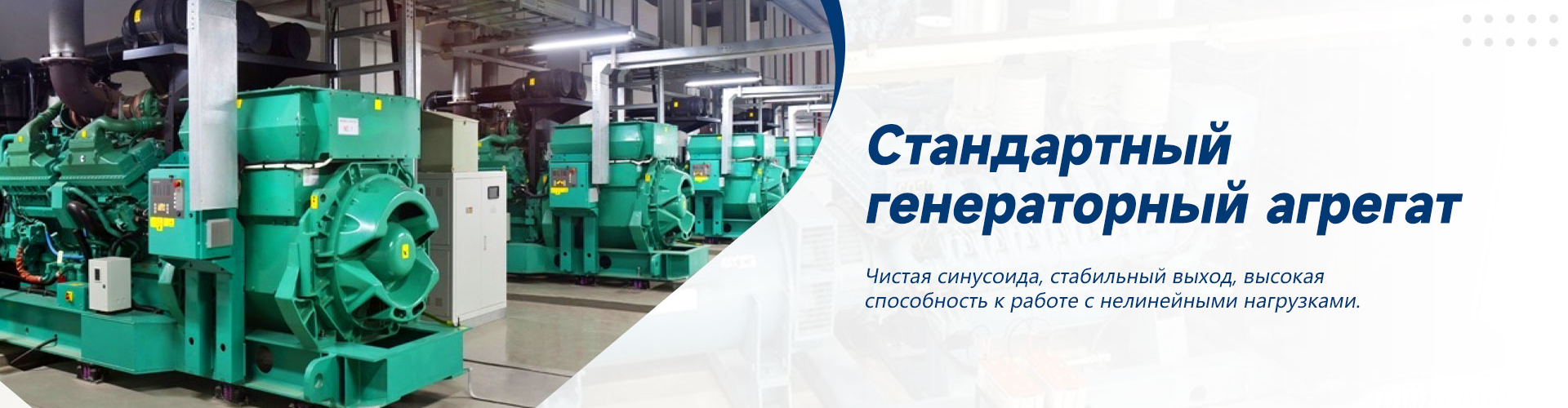
Is China the main buyer of generators?
2026-01-12
I often hear this question at exhibitions and in negotiations. Many immediately imagine giant construction projects or government procurement. But reality, as usual, is more complex and interesting. If you look at the net import of finished diesel or gas power plants, then China, of course, is not in first place; it has its own powerful industry. But if we talk about the market as the final consumer of power, components and technologies, then yes, the scale is colossal. And most importantly, the structure of demand is constantly changing. I’ll try to sort it out based on what I saw myself.
Where does this question come from?
The misconception about the main buyer often comes from high-profile news about contracts for the supply of equipment for infrastructure projects in Africa or Asia, which are financed by Chinese banks. But there the buyer is often a Chinese construction company, and the end user is foreign. This is an important distinction. China itself is, rather, the main producer and an increasingly important developer. But their domestic market is a separate universe with its own rules.
Within the country, demand is highly segmented. Yes, there are government tenders for large facilities - ports, railways, backup systems for hospitals. But the giant layer is small and medium-sized businesses: factories, hotels, farms, small mining enterprises. They rarely buy ready-made boxes from well-known Western brands because of the price. More often they look for an engine (say, Weichai, Yuchai) and an alternator separately, assemble it on site or order assembly from local engineering companies. This is a different type of purchase - not a product, but a solution.
Here lies the key point: China is the main buyer not so much of generator sets as the final product, but of components, licensed production technologies and engineering solutions for specific needs. For example, the demand for parallel operation systems for solar-diesel hybrids or cogeneration plants has been growing by leaps and bounds over the past five years. And this demand was satisfied, among other things, through partnerships with European and American engineers.
Practical case: what are they really looking for?
Let me give you an example from experience. Visit us atYuke (Shandong) Electrical Technology Co.,LtdClients often contacted us with a seemingly simple request: we needed a 500 kW diesel power plant. But during the discussion, it turned out that the object was a seafood processing factory in Shandong province. And the main problem is not just a reserve, but salty, aggressive air, which eats up ordinary radiators and control units in two seasons.
The standard catalog option did not work here. We had to develop a custom solution: a special coating for the radiator, placement of critical panels in a separate box with forced ventilation and filtration, plus a transition to more corrosion-resistant materials for the casing. The client did not buy a generator, but this engineering solution. And such cases are the majority. Here's their website, by the way:voyoko.ru, it is clear that the emphasis is on technological solutions, and not just on selling hardware.
Another common request is integration with existing smart building or industrial automation (SCADA) systems. Many Chinese equipment manufacturers offer their own protocols, which are often not friendly with foreign ones. Therefore, the buyer is looking not just for a generator, but for a supplier who will take care of all the integration and pair the equipment. This is already the level of technical consulting and engineering, which is precisely within the scope of activityYuke Electric.
Trends that are shaking up the market
Now the green agenda is putting more and more pressure. Not only in megacities, but also in industrial clusters, restrictions on emissions and noise are introduced. Demand is shifting sharply towards gas generators (where there is access to gas), and, more interestingly, towards hybrid systems. For example, solar panels + diesel + energy storage system (ESS).
Five years ago, only a few people thought about this. This is now almost a standard requirement for new logistics centers or factories seeking green status. The buyer wants not just an energy source, but a tool for optimizing energy costs in the long term. And here China is truly becoming one of the main buyers of advanced technologies in this area, actively testing and implementing them at home.
Another trend is the digitalization of services. Clients are less and less willing to understand the technical details themselves. They need remote monitoring, predictive breakdown analytics, and automatic reports. In fact, they are not buying a generator, but an energy security service. And companies that simply offer hardware without a digital platform are quickly losing this market. At one time, we spent a lot of time refining our monitoring system to meet the needs of local clients who wanted to see all the data in WeChat, and not in a separate application.
Errors and failed attempts
Not everything was smooth sailing. I remember about seven years ago we tried to promote very reliable and efficient European middle-class engines to the domestic market. The price was 40-50% higher than Chinese analogues. The emphasis was on long service life and fuel efficiency. And they faced a wall of misunderstanding.
For many customers, especially in the construction or temporary power supply industry, a key parameter wasinitial cost. They rented a generator for a specific project for a period of 2-3 years, after which they sold it on the secondary market. They didn't care about efficiency over the next 10 years. It was a painful but important lesson: you need to deeply understand the end-user business model. You cannot sell reliability for decades to someone who needs it cheaply and for three seasons.
Another mistake is underestimating the importance of the service network. You can sell a great car, but if at the first breakdown the engineer has to travel from the regional center for two days, the reputation will be destroyed. China is a huge country, and local presence and partnerships with local service centers are often more important than technical specifications. We had to rebuild logistics and training partners, which took years.
So who is the main buyer?
Returning to the title question. If we talk about the market volume in monetary terms and the variety of tasks, yes, China is, of course, one of the main, if not the main, testing ground and consumer of solutions in the field of energy generation. But it consumes them in a special way: often through localization, adaptation, assembly from components and with the obligatory requirement for integration into complex systems.
This is not a passive buyer who takes what they give. This is an active, demanding and fast-learning market that creates trends on its own. For example, the request for super-quiet generators for installation in densely populated residential complexes arose here, due to the specifics of urbanization.
Therefore, companies that want to work here, be itYuke Electric LLCor any other player, you need to sell not equipment, but competence. The ability to solve a client's problem, which he himself may not be fully aware of. The main asset here is not a warehouse with generators, but engineers who can design a system for salt air, digitalization and green quotas at the same time. And in this sense, China is not buying generators. He buys reliability, adaptability and the future of energy supply, building it brick by brick to suit his grandiose needs.
-


-
-


WeChat

-
WeChat