

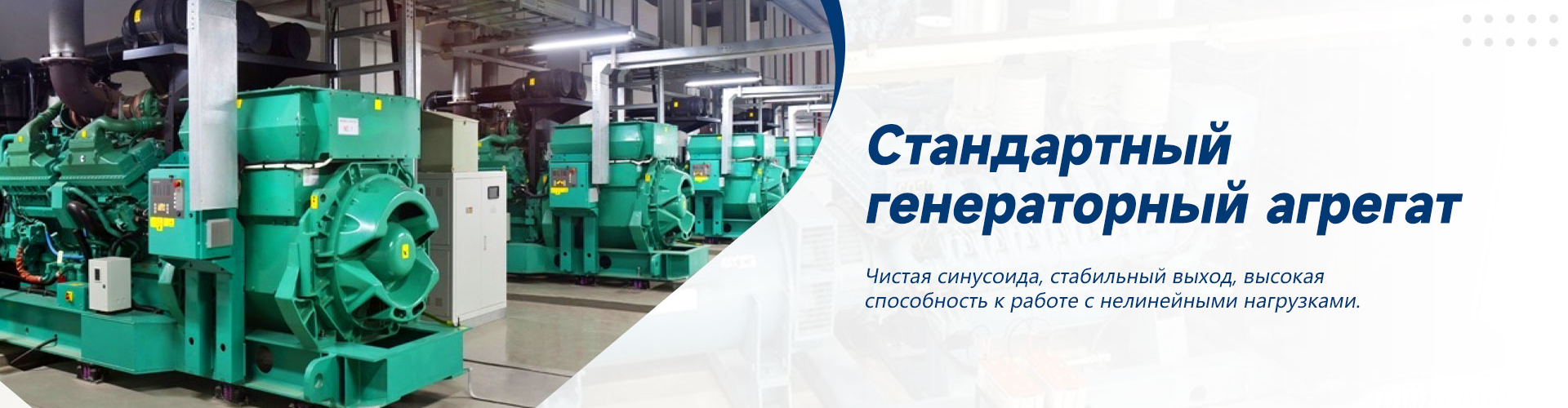
Chinese 1500 kW gas generators: main markets?
2026-01-21
I often see this question, and I immediately want to say: guys, look not just for “markets,” but for niches where this specific power and type of fuel solves a real, often not obvious at first glance, problem. Many people mistakenly believe that 1500 kW is a universal “average” power supply. for everyone, but in practice it turns out to be either an ideal solution or an overly expensive toy, depending on the context. My observations over the last seven or eight years, working with different suppliers, including those who make really high-quality installations, revolve around this discrepancy between expectations and actual application.
Where does it take root? this power? Unobvious geography
If we discard general phrases about ?industry? and “backup energy supply”, then the picture becomes more interesting. The main demand forgas generators 1500 kWI would divide it into two streams. The first is, oddly enough, not giant plants, but medium-sized processing enterprises in regions with an unstable network, but accessible main or associated gas. For example, woodworking in some areas of the Northwestern Federal District or food factories in Kazakhstan. There, 1.5 MW is often just the power that covers the main technological lines when the network “falls”. Not the entire plant, but critical equipment.
The second stream is decentralized energy projects in remote villages or mining areas. But there is a nuance here: cogeneration, that is, the use of heat, is often required. And here many Chinese models, especially of early generations, were inferior to Europeans in terms of heat recovery efficiency. The situation is changing, but the reputation remains. Therefore, the market here is capricious, the buyer is already more savvy.
I had experience promoting similar installations for a small gas compressor station. It would seem ideal: you need your own gas, you need reliable energy. But in the end, the client chose three 500 kW units, citing flexibility of the load schedule and redundancy. This case shows well that 1500 kW is not always the answer, sometimes modularity and fault tolerance are more important.
Key players and brand perception
There are several types of manufacturers on the market now. There are large Chinese factories with big names that have really reached a good level; many people supply their products. But there are also more interesting, in my opinion, players who grew up from engineering teams and focus on adaptation to specific tasks. This is precisely what applies to, for example,Yuke (Shandong) Electrical Technology Co.,Ltd(Yuke Electric). I am familiar with their approach not from advertising, but from several implemented partner projects. Their websitevoyoko.ruis more of a showcase, but behind it there is a story coming from the DEVER Electric team, founded back in 2003 in Qingdao. This is important because it means accumulated experience in power electronics and generation, and not just assembly from third-party components.
Their positioning as an innovative enterprise combining R&D, technical consulting and engineering is more than just lip service. site. In contextgas piston power plantsthis is critical. Because buy ?hardware? - that's half the battle. But correctly integrating it into the customer’s system, providing connection points for heat recovery, adjusting the control system to local requirements - this is where 80% of after-sales service problems arise. Companies that can close this cycle have a serious advantage in difficult markets such as Central Asia or the Far East.
At the same time, the brand ?Yuke Electric? is not massively recognizable, like some giants. And this has its own strength: they often work through engineering companies and distributors, offering more flexible terms and a willingness to refine solutions. For niche projects withgas generators 1500 kWthis approach sometimes works better than a standard offering from a major brand.
Technical nuances that decide everything on the spot
This is what is rarely written about in the specifications, but what pops up the first time you try to launch it “in the field”. Firstly, the sensitivity of the control system to gas quality. Chinese manufacturers used to often calibrate everything to ideal methane. But in practice, either associated gas with impurities or liquefied propane-butane with composition fluctuations is supplied. Modern good rigs, including those made by Yuke, now usually have more adaptive systems, but this needs to be determined on a case-by-case basis. I saw a project where, because of this, they could not reach rated capacity for six months.
Secondly, the issue with heat exchangers. The standard kit is often designed for certain average coolant parameters. If you need to integrate into an existing heating network with, say, a lower return temperature, a recalculation and, possibly, replacement of the unit is required. Companies that offer complete engineering as stated in the descriptionYuke (Shandong) Electrical Technology Co.,Ltd, are usually ready to calculate such things at the design stage. This saves a lot of nerves and money later.
And the third point is spare parts and service. For sales markets remote from China, it is not so much the price of the unit that is critically important, but rather the availability of the critical consumption in the region. Smart suppliers are now creating logistics hubs with a basic set of filters, spark plugs, sensors in key countries. Without this, even the most reliablegas generatorturns into a pile of metal after the first serious breakdown.
Sales markets: from theory to specifics
Based on the above, the main markets are not countries, but types of objects within countries. Several segments can be distinguished. Segment 1: Medium-sized industrial enterprises in the EAEU countries (Russia, Kazakhstan, Belarus) that have access to main gas and face high tariffs or power outages. Payback calculations and assistance in connecting to gas networks are important here.
Segment 2: Extractive companies (oil, gas, mining) for power supply to rotational camps or auxiliary equipment. The key factors here are survivability in harsh conditions and the ability to operate on associated gas. A power of 1500 kW often meets the needs of such a compact village or group of installations.
Segment 3: Agricultural and processing complexes in regions with developed gas pipelines. For example, greenhouse plants or elevators. For them, cogeneration (electricity + heat for heating or drying) is an ideal option that dramatically reduces costs. This is where the very technological innovations and integrated engineering that companies likeYuke Electric.
Segment 4, promising: Small local energy networks (microgrids) in isolated areas, often in conjunction with renewable energy sources. So far these are more pilot projects, but the trend is obvious.Gas piston power planthere acts as a guaranteed source, leveling the schedule in the absence of sun or wind.
Mistakes and pitfalls when entering the market
The main mistake a supplier makes is trying to sell a “unit” rather than a “solution”. You come to the director of the plant, talk about kilowatts, efficiency, price. And his main pain is coordinating the technical connection with the gas industry and obtaining permits. If you can’t even provide advice on this matter or give contacts of a trusted integrator partner, the conversation reaches a dead end.
The second mistake is ignoring climate control. The same station for Krasnodar and for Yakutia are two different stations. Insulation of the all-weather casing, pre-heating system, special oils - all this should be an option, and a well-developed one. On the websitevoyoko.ruit is clear that the company positions itself as a supplier of complex “turnkey” solutions, which, in theory, should include such adaptation. But in practice, you always need to check a specific project.
And finally, pricing policy. Chinese1500 kW gas generatorsThey often win in terms of purchase price, but can lose in terms of total cost of ownership if service is expensive or spare parts take three months to arrive. Successful players in these markets build a transparent service system with an understandable price list. This is perhaps even more important than a small gain in starting cost. Because the buyer, especially in the industrial segment, does not buy a car, but kilowatt-hours and confidence in their uninterrupted supply.

-


-
-


WeChat

-
WeChat