

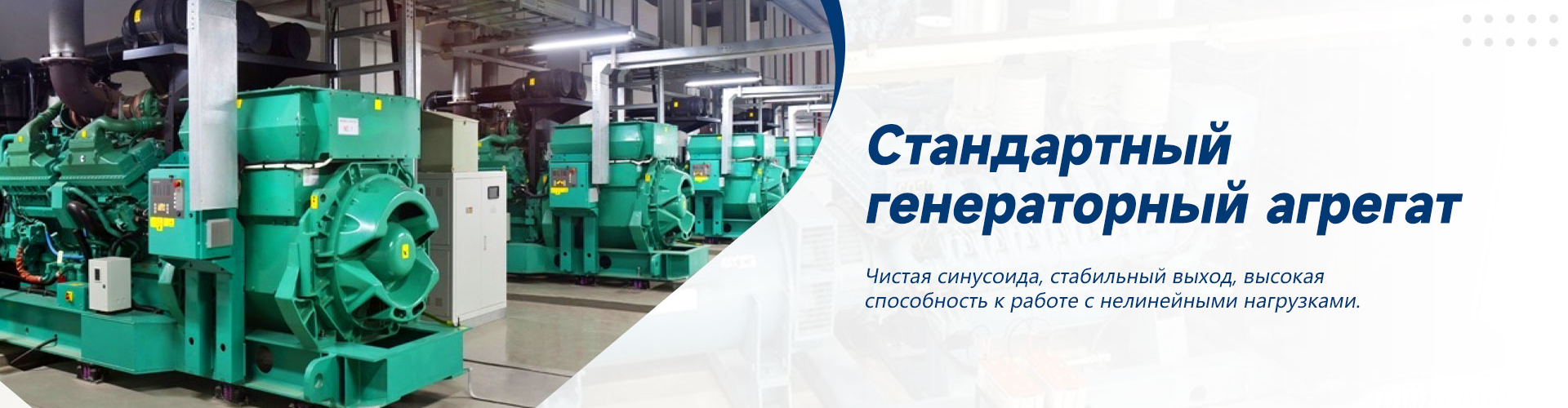
Is China the leader in the supply of container generators?
2026-01-21
A question that is often heard at negotiations and in industry chats. I’ll say right away: yes, China is the absolute leader in terms of volume. But the catch is that many buyers, especially new ones, confuse leadership in quantity with leadership in quality and the adequacy of the solution. The market has been flooded - it’s a fact. But at what cost and with what pitfalls? This is rarely talked about in fancy brochures.
Where did this “title” come from? leader?
This is not an accident, but the result of a long evolution. It all started with Chinese manufacturers learning how to perfectly optimize their supply chain. Steel, engines, generator set components - all nearby, in one industrial ecosystem. This gives a huge advantage in speed and cost. A European or American competitor simply physically cannot assemble and ship a similar product so quicklycontainer generator.
But here lies the first trap. This speed is sometimes achieved through unification. They take a standard power plant, put it in a standard shipping container - and here you have a product. For simple tasks, like backup power to a warehouse, it might work. And when specific conditions are needed - high humidity, sandstorms, working in parallel with the network - problems begin. I myself saw how ?universal? a Chinese generator in Central Asia became clogged with dust within a week, because the air intake system was designed for a conditional temperate climate.
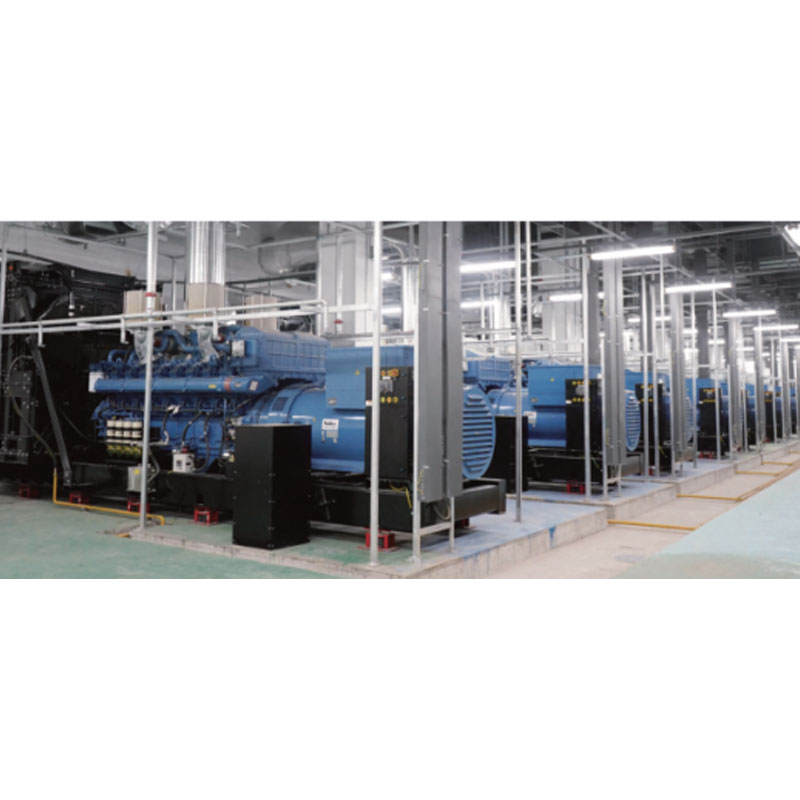
Therefore, leadership - yes. But it requires the customer to have a deep understanding of their needs. You can’t just buy a “container from China”. You need to buy a solution for a specific task. And this is where companies appear that work differently. For example,Yuke (Shandong) Electrical Technology Co.,Ltd(Yuke Electric). They grew out of an engineering team founded back in 2003 in Qingdao. Their websitevoyoko.ruis not just a catalog, but rather a portal of technical solutions. Their trick is not to sell you a container, but to integrate the necessary “filling” into it: a control system, noise reduction, fuel equipment for a certain quality of diesel engine. This is already a different level.
Price vs. "Cost of Ownership": Where's the Catch?
This is the main stumbling block. Chinese unit prices are often eye-watering. Let me give you an example from practice: in 2021, we compared proposals for a project in Siberia. The difference in the starting price between the conditional ?no-name? from China and an adapted solution from the same Yuke Electric reached 40%. The customer almost fell for the cheap option.
But when we wrote out the estimate for 5 years, the picture changed. In the cheap version: a general-purpose engine (not for constant operation), a simplified cooling system, a basic controller. This meant higher fuel consumption, frequent technical inspections, and the risk of failure under prolonged load. And most importantly - no technical support from the supplier. All this ate up all the initial savings by the end of the second year.
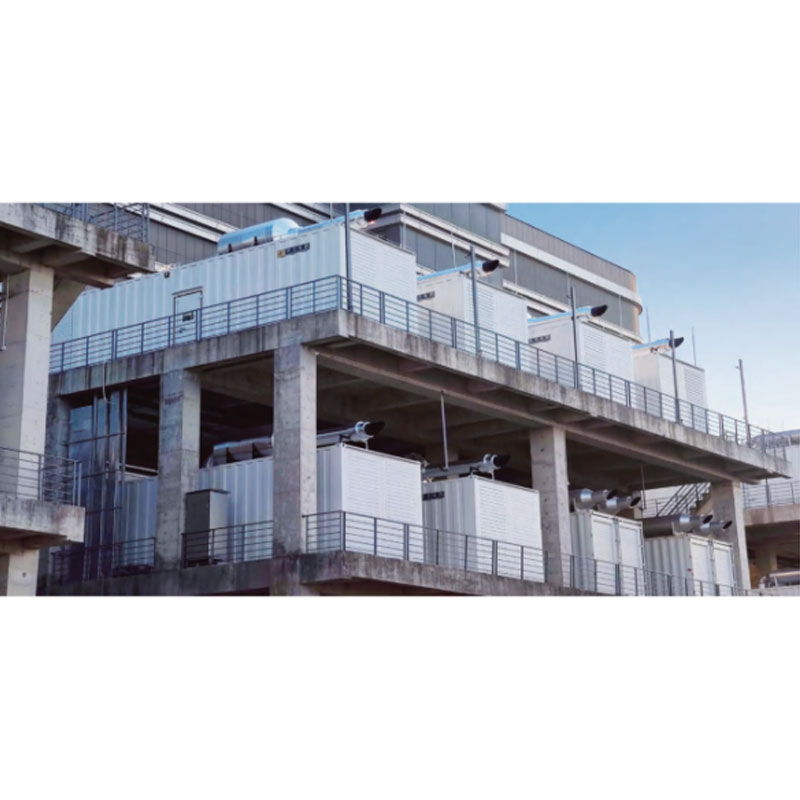
Container power plantsis an asset for years. Their price is not the price on the website. This is the purchase price + installation + fuel + maintenance + downtime in case of breakdown. Chinese market leaders understand this and offer this complex. On the same voyoko.ru it is clear that they emphasize R&D and engineering. They do not sell hardware, but a guarantee that this hardware will work under your conditions. This is the transition from the status of “box supplier?” to the status of a technology partner.
Complexities of logistics and “last mile”
The supply volumes from China are huge, but the path of a generator from factory to construction site is a story full of nuances. An ideal picture: the generator was shipped from the factory in Qingdao, arrived at the port of Nakhodka, went through customs and is on its way to the customer. The reality is often different.
The main problem is documentation and certification. European CE standard, Russian TR CU, local noise and emissions standards. Not all Chinese manufacturers are initially ready to make a complete package for a specific country. Often you have to finish it on site, which is expensive and time-consuming. Companies that specialize in exports, like Yuke Electric, usually have well-developed schemes and standard packages of certificates for different regions. This is an invisible but critical part of the job.
Another point is pre-launch preparation and commissioning. Having received the generator, the customer sometimes discovers that to start it they need a specialist who is not there. Large players necessarily include installation supervision and commissioning in the contract. This is the “last mile” that separates a pile of metal on the site from a working energy source. Without this, any delivery becomes meaningless.
Case: why not every project is a success story
I'll tell you about an incident that taught me a lot. There was a project to supply energy to a remote geological exploration base. The customer bought a powerfulcontainer diesel generatorfrom a well-known Chinese factory, but directly, bypassing engineering companies. The price was great. The problems started at -45°C. The standard coolant and oil heating system could not cope. The batteries drained instantly. The generator could not start automatically; constant duty personnel were required.
As a result, we had to urgently hire local engineers to “rework” it. container: strengthen thermal insulation, install more powerful pre-heaters, change the type of oil. These works and downtime cost almost half the cost of the generator itself. If temperature specifications had been specified from the start and the supplier had arctic design competency (as stated, for example, by Yuke Electric in their “custom processing?” approach), this situation could have been avoided.
This failure is a vivid illustration. China supplies solutions of any complexity, but communication between “customer and manufacturer” must be flawless. It’s better when there is a professional between them who will translate in the language of engineers “we need it to work in the north?” to a specific list of technical requirements for the engine, materials and automation.
The future: leadership in technology, not just tonnage
So, will China remain the leader in supplies? Without a doubt. But the vector is shifting. Previously, the one who did it cheaper and faster won. Now the one who does things smarter and more reliably is starting to win. The market is saturated, customers have become more sophisticated.
The trend is hybridization, remote monitoring and control systems (IoT), integration with renewable energy sources. Simply putting a diesel in a box is no longer enough. This box needs to be able to “communicate?” with solar panels, accumulate energy and report every milliliter of fuel to the cloud. This is where the real one is testedcompetitiveness.
Companies that, like Yuke Electric, define themselves as an “innovative technology enterprise combining R&D, technical consulting and engineering” are in a better position. They are not selling a container, but an energy service. Their website is a demonstration of this philosophy.
So, to answer the question in the title: yes, China is the leader and will most likely remain so. But this leadership is now determined not by the number of units shipped, but by the ability to solve complex, non-standard energy problems of the client around the world. And in this race, those who have invested in engineering, and not just assembly lines, will survive.
-


-
-


WeChat

-
WeChat