

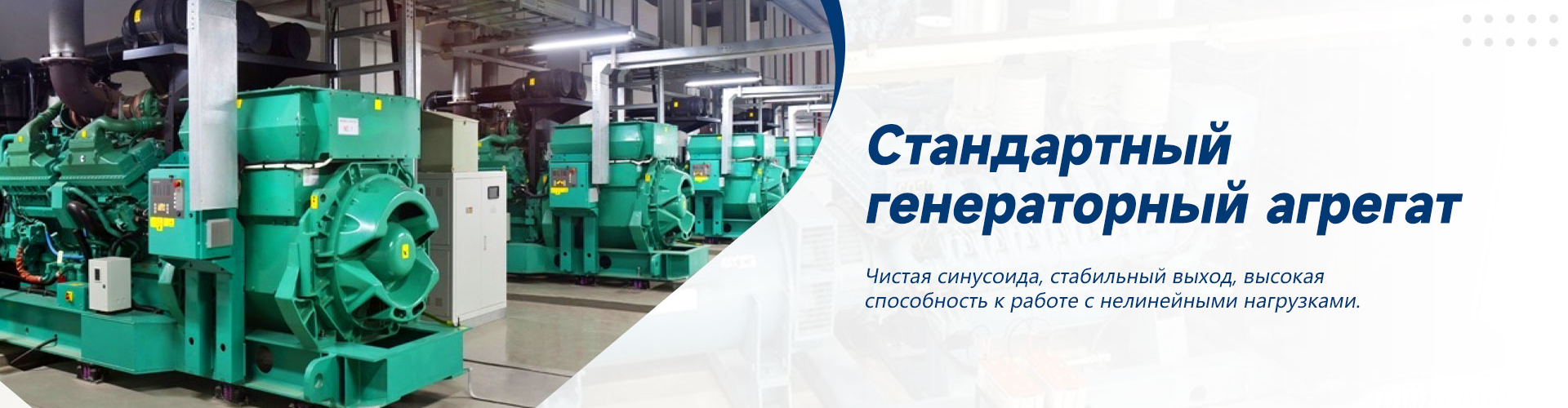
China: the main buyer of diesel power plants 400?
2026-01-26
You see this headline and you immediately want to ask: ?400? what exactly? Kilowatt? Or are we talking about a batch of 400 pieces? This is often the case in our field—a catchy number in the title, but the context is blurred. If we talk about the market, then China is indeed a huge consumer of diesel generator sets (DGS), but the focus is rarely on any one, strictly fixed power. Rather, it is a wide range, and ?400 kW? - this is simply one of the very popular segments in the range from 200 to 800 kW. But why him? And is China really the main buyer? Let's understand it without gloss, from what is visible in practice.
?400 kW? - not magic, but pragmatic calculation
A power of 400 kW is not an accidental figure. This, one might say, is the “golden mean?” for many medium-sized industrial facilities. Light and food industry enterprises, regional logistics centers, small mining and processing plants - their peak load often falls in this range. Installing a smaller capacity will not cover the needs, and a more powerful one will already result in excessive capital investments and operating costs.
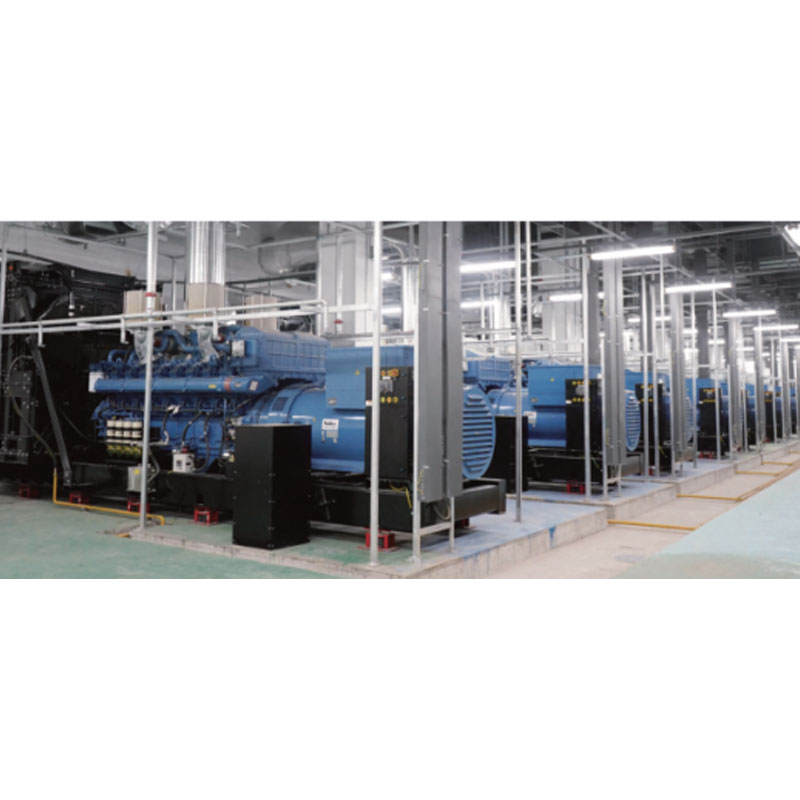
It is important to understand the Chinese infrastructure development context here. Many industrial parks and new manufacturing zones are being built to capacity, but connections to central grids, especially in the less developed western provinces, can be slow or unreliable. DGS becomes not just emergency, but oftenmain or backup sourceto ensure cycle continuity. The customer is looking for not just a “generator”, but a solution that will work for years under intense load.
I had experience in supplying a batch of such installations for a textile cluster in Shandong province. The customer initially wanted 500 kW, but after a detailed audit of the loads and analysis of switching schedules for heavy equipment (dying lines, compressors), together with the engineers, they arrived at exactly 400 kW with the possibility of short-term overload. They saved him money on the unit itself, on the fuel tank, and on maintenance. The key is in-depth technical consulting before the sale, rather than simply shipping hardware.
Who really buys and why not only ?China?
The assertion that China is the main buyer requires reservations. If you look at the volume of production within the country for domestic consumption, yes, it is a colossal market. But if we talk about international trade, Chinese companies have long acted not only as buyers, but also as key producers and exporters. Domestic demand stimulates well-functioning production, which then reaches the global level.
It is interesting that China itself purchases abroad mainly two types of products for this segment: either unique high-speed engines for special applications (for example, for the sea shelf), or ready-made turnkey solutions. for supercritical facilities, where the brand and history of the manufacturer play a decisive role. But the mass segment of 300-500 kW has long been closed by local manufacturers with excellent quality.
Take, for example, the companyYuke Electrical Technology Co., Ltd. (Shandong). It grew out of an engineering team founded back in 2003 in Qingdao (DEVER Electric Energy Technology). Their websitevoyoko.rudemonstrates the approach well: this is not just a generator warehouse, but an emphasis ontechnological innovationand a full cycle - from R&D and technical consulting to construction and service. Such companies precisely create domestic demand, offering not a product, but an engineering solution, which is what local industrialists need.
The flip side of demand: what you encounter on the spot
Working with this market, you see not only sales figures, but also problems. One of the main ones is ?heritage? past. About 10-15 years ago, the market was flooded with cheap units with engines of unknown origin and weak automation. They still work at many old enterprises, giving owners a distorted idea of the reliability of diesel generator sets in principle. Convincing such a client that a modern unit offers a different level of fuel consumption, noise and control can be more difficult than selling a new one.
Another subtlety is climate adaptation. The north of China has frosty winters, the south has high humidity and heat. The standard equipment, suitable for the temperate climate of Europe, may fail here. It is necessary to modify: reinforced systems for heating the coolant and oil in the crankcase for the northern regions, radiators of increased capacity and anti-corrosion treatment for the south. These are the kind of details that you only learn through a few unfortunate incidents or through close work with service teams on the ground.
And of course, logistics. Delivery of heavy equipment inland, to the same western provinces, is a separate story with its own costs and risks. Sometimes the cost of delivery and installation can be a significant percentage of the cost of the power plant itself, which forces you to reconsider the choice in favor of more localized manufacturers, even if their base price is slightly higher.
Not only diesel: how the landscape is changing
The focus on diesel units is gradually eroding. Yes, they remain king for base load and reliability, but the trends towards "greening" and efficiency gains are here to stay. In China, too, they are increasingly looking towards hybrid systems: diesel + solar panels + energy storage system (ESS).
For the ~400 kW segment, these are still rather pilot projects, but there are more of them. For example, for remote mountain hotels or scientific stations. The diesel generator operates in optimal mode to charge the batteries, and they, in turn, smooth out peak loads, reducing engine hours and fuel consumption. This is no longer the sale of an “iron box”, but a comprehensive engineering design, wherediesel power plantbecomes just one element of the system.
Companies that want to stay afloat are forced to develop these competencies. Let's return to the Yuke Electric example. Their declared specialization is precisely the integration of scientific developments, technical consulting and construction. In the future, demand will shift towards such complete solution providers who can assemble a turnkey hybrid system, rather than simply offering a catalog of generators.
Bottom line: what's behind the question in the title?
So is China the main buyer of 400 kW diesel generator sets? To summarize, yes, it is one of the largest, if not the largest, market for this power class. But that's not the point. The bottom line is that this demand is complex, technological and rapidly evolving.
What they buy here is not just a device for generating electricity. They buy a guarantee of continuity of business processes, energy security of the facility and, increasingly, part of a more complex environmentally friendly system. Price is an important factor, but increasingly the availability of engineering support, the ability to customize and a strong service network is becoming a deciding factor.
Therefore, when you see such headlines, it is worth thinking not about dry statistics, but about the processes that lie behind them: about the industrialization of internal regions, about the modernization of old factories, about finding a balance between reliability and efficiency. And in this sense, China is not just a “buyer”, but a living laboratory and driver for the entire energy generation industry. And ?400 kW? is just a convenient marker behind which hides a huge layer of engineering and business problems.
-


-
-


WeChat

-
WeChat