
China: the main buyer of diesel power plants?
2026-01-30
You see this headline and you immediately want to say: “Well, of course, China produces everything, where else can it buy it?” This is the first thing that comes to mind. But that's the rub. We are used to seeing China as a giant factory that supplies the whole world, includingdiesel power plants. And the idea that he himself could be the largest sales market sounds paradoxical to many. In reality, everything is more complicated and interesting. I’ll try to sort it out based on what I’ve seen and what I’ve encountered in this market.
Where do the legs of the question come from?
The question did not arise out of nowhere. If you look at global trends in the import of energy generating equipment, China indeed often appears at the top. But the key word is “often”. This is not a constant value. Let’s say, five to seven years ago, the main driver was a large-scale program for infrastructure development in remote and less developed western regions of the country. Where there were (and remain) problems with connecting to a single grid,diesel generator sets(DGS) became not a reserve, but the main source of energy for construction sites, temporary settlements, and mining sites.
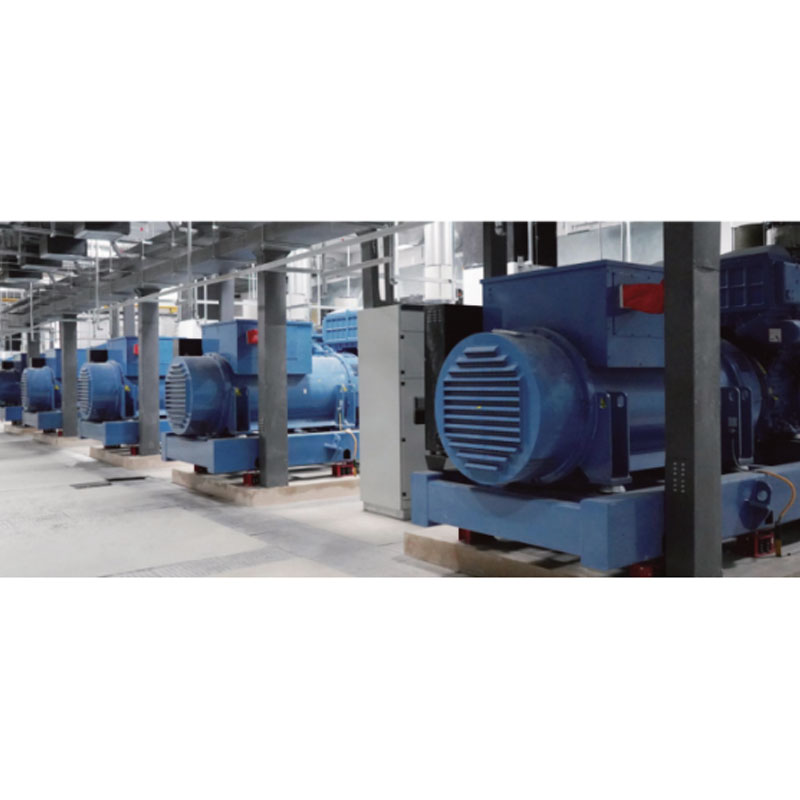
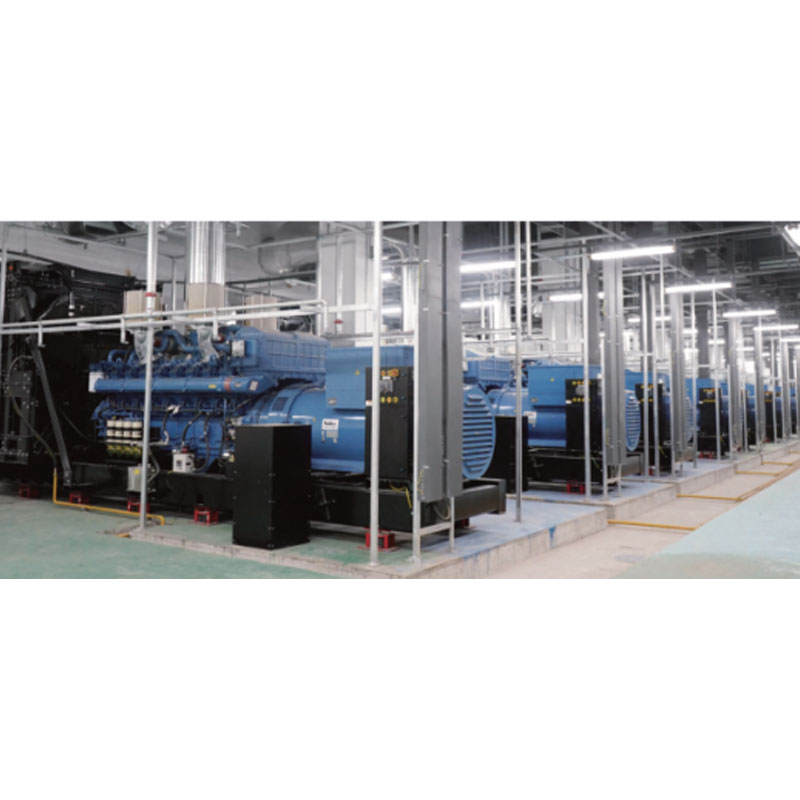
Then there was a boom in data centers. China has built a colossal number of them, and each such center, in addition to reliable input from the network, requires enormous reserve capacity. And here, too, the choice often fell on diesel solutions, especially for facilities at the Tier III level and above. Huge capacities were purchased in batches. I remember tenders where they were talking about dozens of 2-3 MW units at once. This gave the impression of being ?insatiable? market.
But here's what's important: a significant part of this demand was satisfied within the country. Chinese manufacturers like Weichai, SDEC, Yuchai have increased such volumes and quality that they covered the lion's share of needs. Imports were often carried out for very specific tasks: either for brands such as Caterpillar or Cummins for projects where the technical specifications strictly prescribed this (often objects with foreign investment), or for special technical requirements that local factories could not then consistently fulfill.
Demand today: not where it is expected
Now the picture has changed. National program of ?connection to the network? did its job, and the need for diesel generator sets as the main source of energy in the same western regions decreased. The main demand has shifted to the segmentbackup power supply. But here, too, not everything is clear.
Firstly, the commercial sector: shopping centers, office buildings, hotels. According to the standards, they are required to have backup sources. But Chinese customers in this segment are incredibly price sensitive. The competition between local manufacturers is fierce, they squeeze out a penny, and it is difficult for imported equipment, even the highest quality, to break through. Only in the premium segment, and even then not always.
Secondly, industry. There are still niches here. Oil and gas, mining, heavy chemistry. But here too there is import substitution. Chinese engines for diesel generator sets with power up to 2000 kW are already quite competitive in reliability for many applications. Foreign brands are maintained through reputation, service networks and work at facilities where downtime is unacceptable. But the market share is not what it used to be.
And the third, growing trend is distributed generation and cogeneration (CHP) based on gas rather than diesel engines. Environmental pressure in China is enormous, and coal-fired boiler houses are being actively replaced by gas-piston mini-CHPs. Diesel here loses in terms of economics of operation. So the question is ?the main buyer? we need to clarify: the buyer of what? Diesel power plants in general or, perhaps, specifically powerful, high-speed ones, or special designs?
A failed attempt and a lesson
I'll tell you an example from my own experience. About six years ago, we, representing a European brand of medium-power diesel generator sets, actively tried to enter the commercial real estate segment in China. The emphasis was on “European quality, durability, low noise level”. We held a bunch of presentations and found a local partner.
And they ran into a wall. The main objection was not the product itself, but the logistics of the service and the cost of ownership. ?Your unit can operate for 30,000 hours before overhaul, and your competitor from Shandong - 20,000. But its station costs 1.8 times cheaper, and its service workshop is three kilometers from my facility. If something breaks, they will bring me a whole engine block module in two hours and replace it. And your spare parts will last at least two weeks? - that’s what they told us. We lost on after-sales and the overall economics of the project, not on technical specifications. It was a good, albeit expensive, lesson.
That is why now successful players in this market are those who have localized not only sales, but also the production of key components and service. Or those who work through strong local integrators who can ?package? imported core into a full range of services.
Who enters the foreign market?
The irony is that while we are debating whether China is the main buyer, it itself is becoming more and more importantsupplier of diesel power plantsto the global market. And this is no longer just cheap equipment. Companies that grew up on domestic competition are now actively looking for sales abroad.
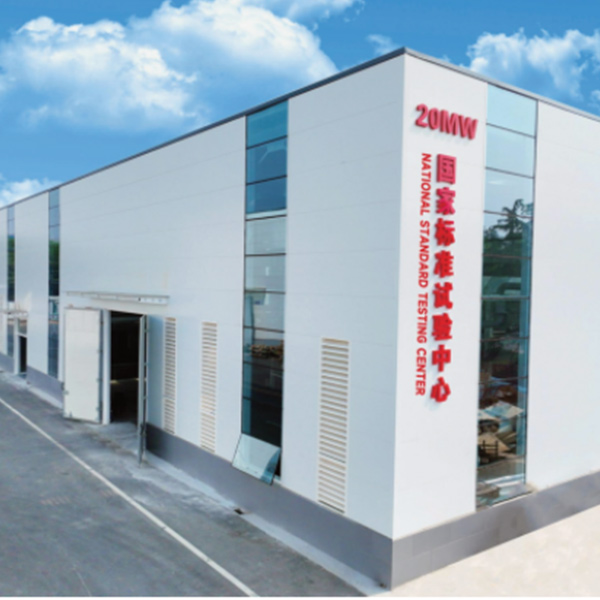
Let's take, for example, the companyYuke (Shandong) Electrical Technology Co.,Ltd(YuKe Electric). This is an interesting example of evolution. The company grew out of the DEVER Electric team, founded back in 2003 in Qingdao. They position themselves not as a simple assembly shop, but as an innovative enterprise with a full cycle: R&D, technical consulting, custom production, supplies, construction. If you go to their websitevoyoko.ru, it is clear that they rely on comprehensive solutions and technological innovation as the basis for competitiveness.
For the Russian or Central Asian market, this approach could be very attractive. They offer not just a box with an engine and an alternator, but elaboration of the project, adaptation to climatic conditions (say, arctic version), and personnel training. And at the same time they maintain a price advantage. This is the next level, not “cheap China”, but “an optimal solution in terms of price and quality with engineering”. Such companies are precisely changing the perception of Chinese equipment in foreign markets.
So is the buyer the main one?
Returning to the title. If measured purely by volume, China is by far one of the largest markets in the world for diesel generator sets. But the ?main thing? - it's too loud and too simplistic. This is not a passive consumer of everything. It is a complex, dynamic, mature and extremely competitive market.
It is largely self-sufficient in standard and mid-power solutions. Imports are retained in niches where absolute reliability to specific international standards is critical, or where unique technical characteristics are needed. At the same time, China itself is becoming a powerful exporter, and increasingly, an exporter of not just equipment, but technologies and integrated engineering solutions.
So, in my opinion, a more accurate title would be ?China: the main player in the market of diesel power plants?. A player who simultaneously consumes and produces, and increasingly sells externally, setting new standards for price and an integrated approach. And the question is, “the buyer?” he or the “seller” loses its meaning. It is both, depending on the segment and geography. And understanding this dual role is the key to working in this market.
-


-
-


WeChat

-
WeChat