

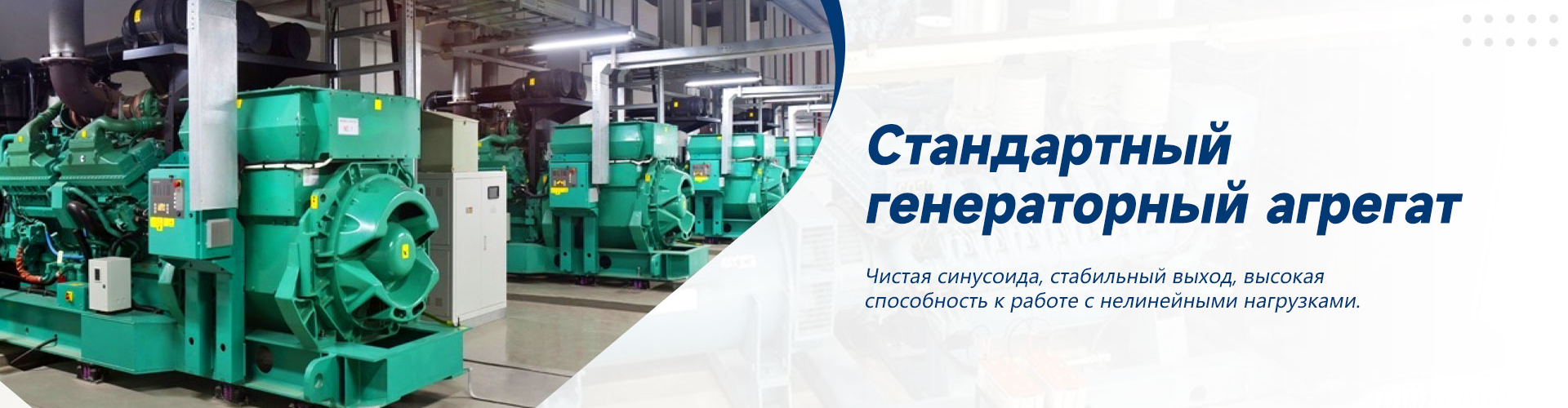
Is China the main buyer of diesel power plants?
2026-01-30
I often hear this question during negotiations. On the one hand, yes, the import figures are impressive. On the other hand, the question itself is a little disingenuous, because behind it is not just an interest in the market, but an attempt to understand which way the wind is blowing in the energy and industry. Many people, especially in Europe, imagine China as a giant factory that only produces and sells. But the reality is more complicated. It both produces and consumes on a colossal scale, and this consumption often has its own specifics, which are not always visible from the outside. I’ll try to sort it out based on what I’ve seen myself over the years of working with power equipment.
What's really behind the import numbers?
If we take dry data, China is indeed one of the largest markets fordiesel power plants. But the key word here is “markets”. This does not mean that all these stations remain within the country. A significant part of the imports are high-power, technologically advanced installations for specific projects, which can then be re-exported or used under turnkey contracts. abroad. Chinese contractors building infrastructure in Africa, Asia or even some regions of Russia often purchase equipment centrally from European or American manufacturers (like Caterpillar, Cummins, MTU) through Chinese trading companies. Statistics show import to China, but in fact the unit can be shipped directly to the port of Mombasa or Karachi.
The second part of imports is precisely those niche solutions that are still lacking in the domestic market. We are talking about stations for special conditions: arctic design, with increased requirements for exhaust purity (for projects in developed countries), or, for example, with noise reduction systems for urban facilities. Chinese industry has learned to make excellent serial units, but when you need a custom one to very strict standards, sometimes it’s easier and more reliable to buy a ready-made solution from a trusted Western brand. This is not so much a question of technology as of warranty and responsibility.
I had an illustrative case several years ago. A large Chinese developer in Southeast Asia insisted on German diesel generators for a commercial center, although the price of local analogues was 30-40% more profitable. The explanation was simple: attracting foreign investment and future tenants. Presence of “European iron” in the technical passport of the object increased its value and status. So import is often not about the lack of alternatives, but about business logic and marketing.
Internal demand: where does it live and what does it eat?
This is perhaps the most interesting part. Domestic demand for diesel generator sets in China is not a monolith. It is stratified into several thick layers. The first and most obvious is backup power for critical infrastructure: hospitals, data centers, telecom companies, government buildings. The requirements here are strict, and the market is divided between large international players and top Chinese manufacturers like Weichai, SDEC or Yuchai.
The second layer is industry and production. Mines, remote construction sites, temporary production. Endurance, maintainability and price reign here. Units based on Chinese diesel engines are often used, which can run on fuel that is not of the highest quality. I saw how stations were working at the construction site of a metallurgical plant in Liaoning province, the appearance of which spoke of a difficult life, but the mechanics knew every nut in them. The reliability of such a fleet is a separate issue; it is based not on ideal characteristics, but on the ability to quickly repair it.
The third layer, which many underestimate, is agriculture and small business in less developed regions. The network is not stable everywhere, and sometimes it simply isn’t there. They use relatively low-power, often used or locally assembled installations. This is a huge, but very fragmented and price-sensitive market. Suppliers work differently here, more through dealer networks and local contacts than through tenders.
Why hasn't Chinese production replaced imports completely?
Logical question. The answer lies in specialization and the value chain. Chinese factories have become absolute champions in the production of medium and standard power units. They benefit in price, speed of production and adaptation to mass demand. But in the high-end segment, where it is not just power that is critical, but a set of parameters (efficiency at partial load, emission level, integration with microgrid control systems, vibroacoustics), the leaders are still different.
There is one more nuance - the engine. The heart of any DES. Many Chinese manufacturers purchase licenses for engine production from the same Cummins, Perkins, Volvo Penta or use their ready-made power units. This gives quality, but eats up part of the price advantage. A fully independent, world-competitive high-power engine is a goal that is being worked on, but the path has not yet been completed. Therefore, for projects where the key parameter is the Total Cost of Ownership for 15-20 years, and not just the purchase price, customers often lean toward proven imported brands.
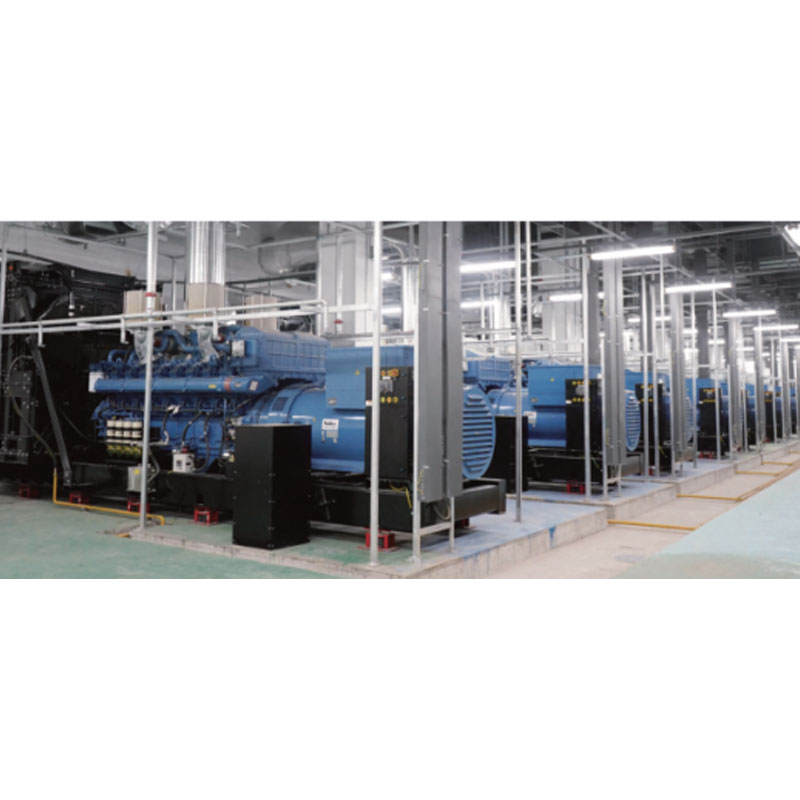
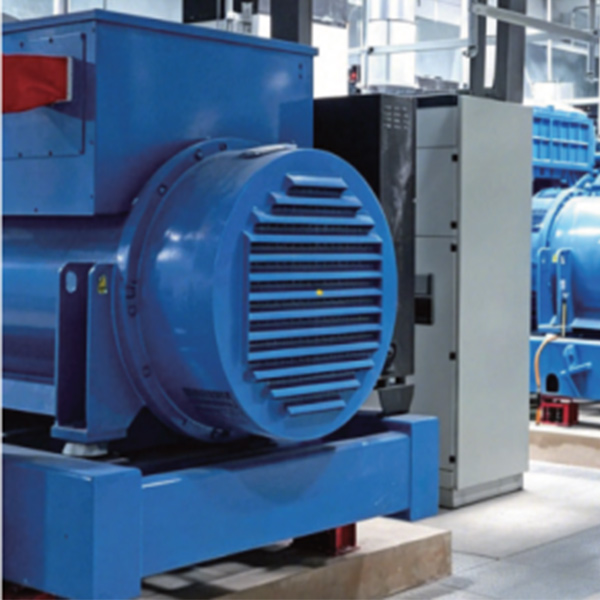
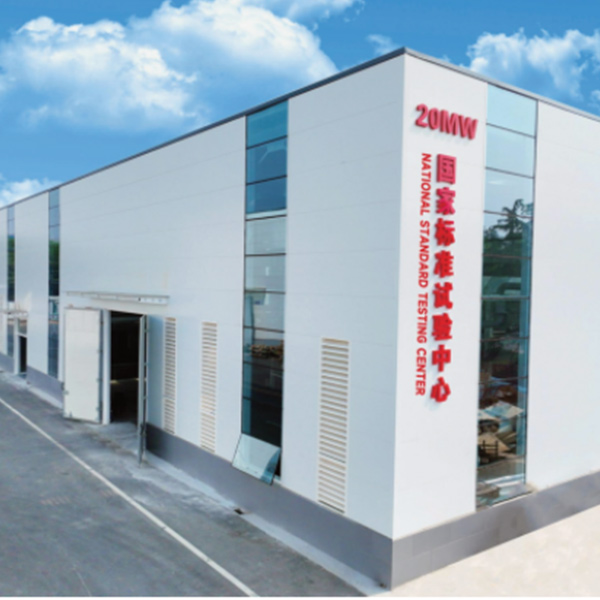
Here you can remember about the companyYuke (Shandong) Electrical Technology Co.,Ltd(Yuke Electric). They, based on the experience of the DEVER Electric team, founded back in 2003 in Qingdao, are trying to occupy this niche - to combine deep engineering development, technical consulting and equipment supply. Their approach, judging by the information onvoyoko.ru, is not just selling hardware, but creating comprehensive solutions. This is the very path that is followed in order to increase the share of added value and get away from competition only on price. Their focus on brand and technological innovation is a direct response to market challenges.
Practical experience: when is ?Chinese? - doesn’t mean “simple?”
While working on a project for the supply of equipment for a geological exploration base in Siberia, we considered various options, including Chinese diesel generator sets. The request was complex: offline operation at -45°C, minimum maintenance, automatic reserve input. Local contractors insisted on proven Soviet units, they say, “it’s easier to solder in the field?” But a Chinese manufacturer (I won’t name it so as not to advertise) offered an interesting custom solution: pre-heating of not only the engine, but also the fuel line, plus a remote monitoring system via satellite.
The price was comparable to European analogues, but higher than that of basic Russian or Chinese production models. In the end, they chose another option, but the fact itself was indicative. Chinese engineers are ready to delve deeply into the problem and offer non-standard engineering solutions. Their weak point is often not technology, but documentation and long-term logistics of spare parts in a particular region. At that time, we were not sure that in 5 years we would be able to quickly obtain the necessary control board for this particular modification. This is a typical dilemma.
A look into the future: what will happen to demand?
Demand will not go away, but its structure will change. Firstly, environmental regulations within China are becoming stricter. This will push out the old, “smoky” ones. units from cities and stimulate demand for cleaner models, including gas piston and hybrid systems. Secondly, the “Belt and Road” program. continues to create demand for mobile and containerized power plants for infrastructure construction abroad. Here, Chinese manufacturers will compete with global giants more and more actively.
Thirdly, there is growing interest in backup power systems for commercial real estate and high-end residential complexes. This is a market where not only watts are important, but also casing design, noise level, and integration into a smart home system. There is room for growth here, both for local brands like Yuke Electric, which rely on innovation and a full range of services, and for imports.
So is China the main buyer? If we count by gross volume, perhaps yes. But if you dig deeper, it is rather the main node in the global chain: here there is consumption, production, re-export, and a huge testing ground for technologies. He buys not just “diesel generators”, but specific solutions for specific, often very different tasks. And understanding this detail is the only way to truly work in this market.
-


-
-


WeChat

-
WeChat